Nvidia and Hyundai are co-developing a $5.9 billion AI and robotics hub in South Korea powered by 50,000 Blackwell GPUs, shifting their relationship from technology supplier to joint innovator.
Nvidia and Hyundai Launch $5.9 Billion AI and Robotics Development Hub in South Korea
Nvidia and Hyundai Motor Group are converting a technology supplier relationship into a co-development partnership, committing $5.9 billion to build an AI and robotics innovation hub in South Korea powered by 50,000 NVIDIA Blackwell GPUs. The deal signals a broader shift in how automakers are approaching physical AI — not as software to license, but as infrastructure to build together.
The context: Nvidia has spent the past two years embedding itself in physical industries through its Omniverse simulation platform and Isaac robotics framework, moving from chip supplier to AI infrastructure partner for manufacturers, logistics operators, and automakers. Hyundai has been restructuring around software-defined vehicles and automation since acquiring Boston Dynamics in 2021. This partnership is where both strategies meet — and both companies have something to gain from the merge.
What Was Announced
Nvidia CEO Jensen Huang met Hyundai executive chair Euisun Chung in Seoul on June 8 to announce the expanded alliance. The $5.9 billion joint development hub will focus on three areas:
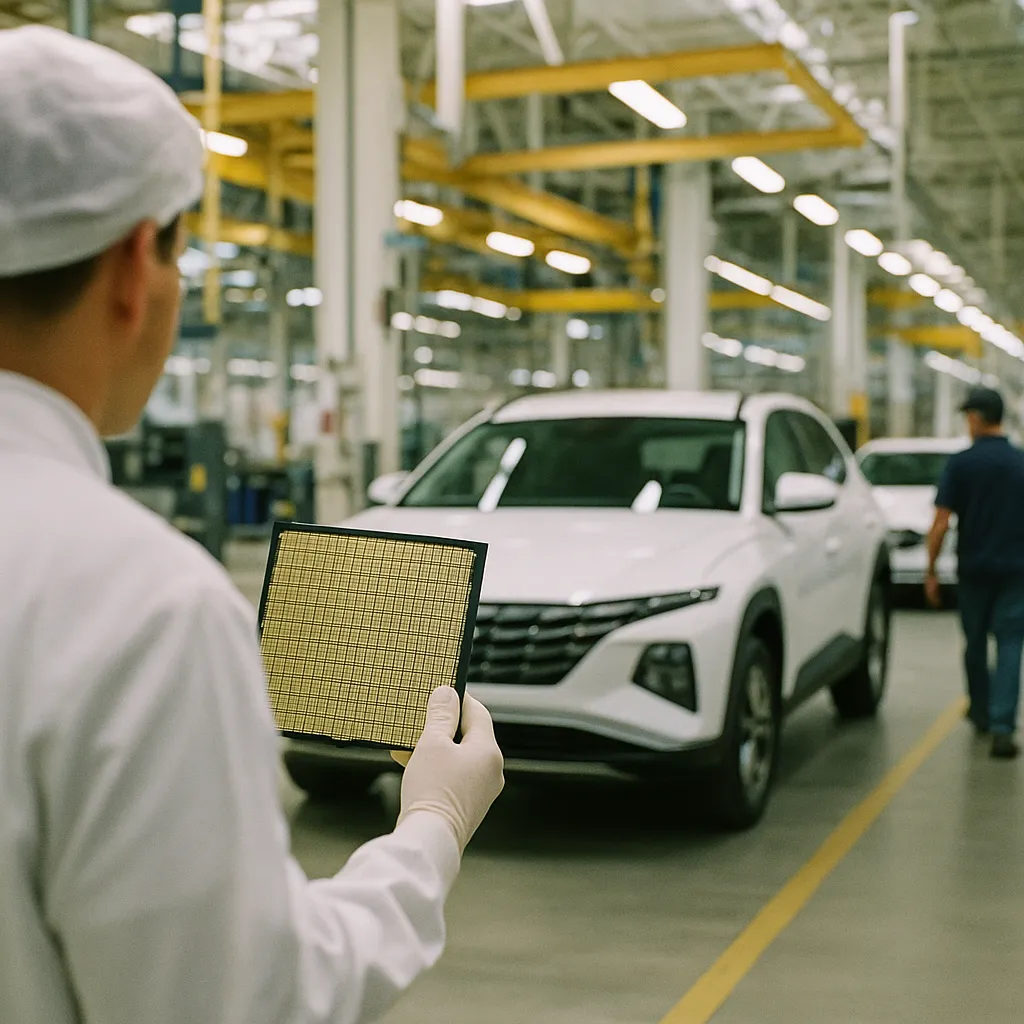
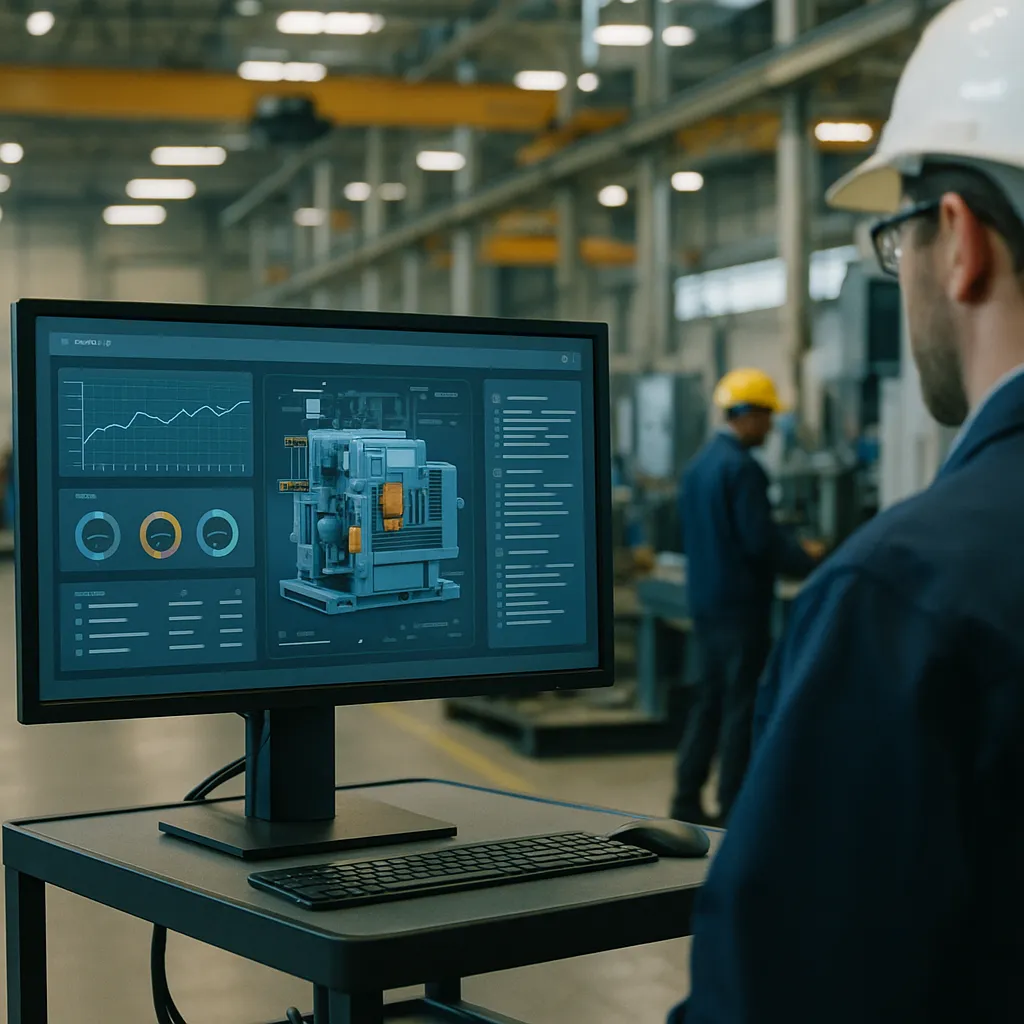
- Smart factory automation — AI-powered production line monitoring, defect detection, and adaptive manufacturing processes
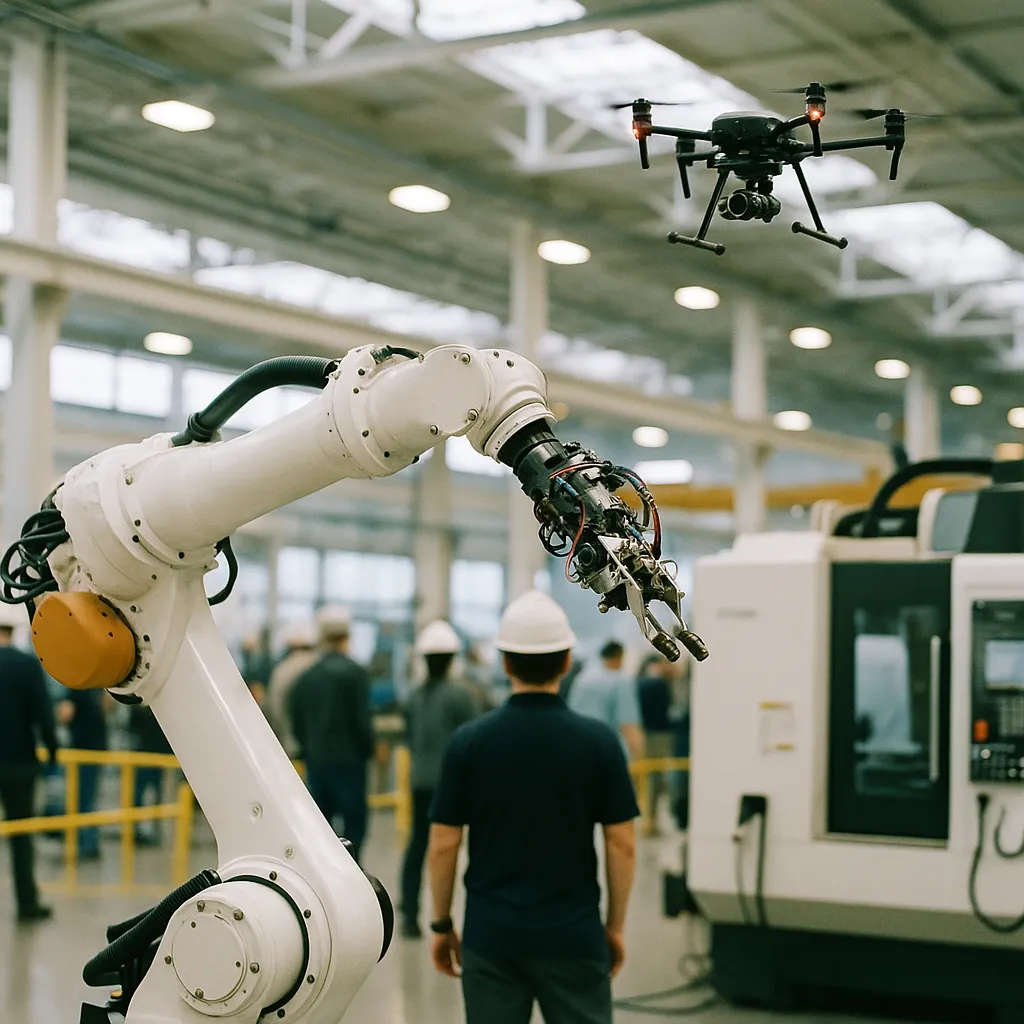
- Mobility and autonomous systems — physical AI models for Hyundai's vehicle and robotics lineup, including Boston Dynamics platforms
- On-device semiconductors — custom chip development optimized for edge AI deployment in vehicles and factory equipment
The hub infrastructure centers on 50,000 NVIDIA Blackwell GPUs — Nvidia's current-generation accelerators designed for large-scale AI training and inference. At current pricing, the GPU allocation alone represents a multi-billion dollar commitment before accounting for facility construction, staffing, and integration costs.
From Buyer to Builder
Previous Nvidia-Hyundai announcements framed the relationship as Hyundai adopting Nvidia technology. The June 8 announcement explicitly describes a shift "from technology adoption to joint innovation" — a meaningful distinction. Hyundai isn't just procuring compute infrastructure; it's co-designing the AI models that run on it.
That framing mirrors how Nvidia has structured its deepest industrial relationships. With Toyota, the partnership centers on autonomous vehicle simulation. With TSMC, it extends to chip packaging. With Hyundai, the emphasis is physical AI for production environments — exactly the kind of real-world deployment that Nvidia's Omniverse platform was built to accelerate.
The distinction matters because it determines who owns the resulting models and workflows. Joint innovation typically implies shared IP arrangements, which could give Hyundai a proprietary edge in deploying AI factory systems that competitors can't simply replicate by buying the same chips.
Get this in your inbox.
Daily AI intelligence. Free. No spam.
Why .9 Billion, Why Now
The scale of the commitment is notable. $5.9 billion is a long-term infrastructure bet, not a proof of concept. It reflects two converging pressures on Hyundai:
Manufacturing efficiency targets — Hyundai and its Kia subsidiary operate plants across South Korea, the U.S., Europe, and Southeast Asia. Even marginal improvements in defect detection rates and line throughput translate to hundreds of millions in annual savings at that production scale.
Competitive pressure from Chinese EV manufacturers — BYD and other Chinese automakers are deploying AI-enabled factory automation aggressively, lowering their per-unit production costs. A $5.9 billion AI development investment is partly a response to that competitive pressure.
For Nvidia, the deal deepens South Korea as a strategic geography. Samsung and SK Hynix — critical suppliers for Nvidia's high-bandwidth memory — are both based there. A major development hub in Seoul tightens Nvidia's presence across the Korean technology ecosystem.
What This Means for the Sector
For manufacturing broadly, the Nvidia-Hyundai deal sets a template: deep physical AI deployment now requires more than buying compute — it requires dedicated engineering infrastructure built around that compute. Companies without the capital to build at this scale will face pressure to adopt vendor-managed AI solutions instead, potentially ceding control over their own production intelligence.
For the auto industry specifically, Nvidia continues consolidating its position as the preferred AI infrastructure provider for mobility. It is already embedded with Toyota, Mercedes-Benz, and BYD, making Hyundai's commitment part of a broader pattern: the world's largest automakers are converging on Nvidia as the AI layer beneath their next-generation products.
For workers in Hyundai's manufacturing plants, the practical implication is accelerated automation of quality control and assembly inspection — tasks currently performed by human workers on production lines. The June 8 announcement did not address workforce transition plans.
What to Watch
The first concrete test of the partnership will be which Hyundai plants or vehicle lines begin running AI systems developed at the new hub, and on what timeline. Watch also for Boston Dynamics: Hyundai's ownership of the humanoid and quadruped robotics company gives this partnership a dimension beyond factory automation — the hub could become the development engine for next-generation commercial robots trained on Hyundai production environments.
Whether the hub produces models that Hyundai licenses externally, or keeps proprietary for competitive advantage, will shape how broadly this investment reshapes the manufacturing AI landscape.
By Hector Herrera
Did this help you understand AI better?
Your feedback helps us write more useful content.
Get tomorrow's AI briefing
Join readers who start their day with NexChron. Free, daily, no spam.