MIT Technology Review finds that AI robotics advances, including Tesla Optimus, remain years from meaningful factory deployment — while five million traditional industrial robots already run the world's factory floors.
A new MIT Technology Review analysis published October 8 argues that the most-publicized AI robotics breakthroughs — including Tesla Optimus's factory rollout — remain years from meaningful operational deployment, offering a systematic counter to the wave of humanoid robot announcements that have dominated manufacturing headlines in 2026. The piece matters because MIT Technology Review carries credibility that press releases do not: this is not a skeptical blog post, it is a peer-reviewed publication calling out the gap between demos and reality.
The article's argument is precise: there is a fundamental difference between a robot that can walk across a stage, fold a shirt in a controlled environment, or lift a box in a viral video — and a robot that can operate reliably in an actual factory for 10,000 hours without supervision or failure. The second category is what industrial deployment requires. Almost no humanoid AI system currently meets it.
Tesla Optimus: The Case Study
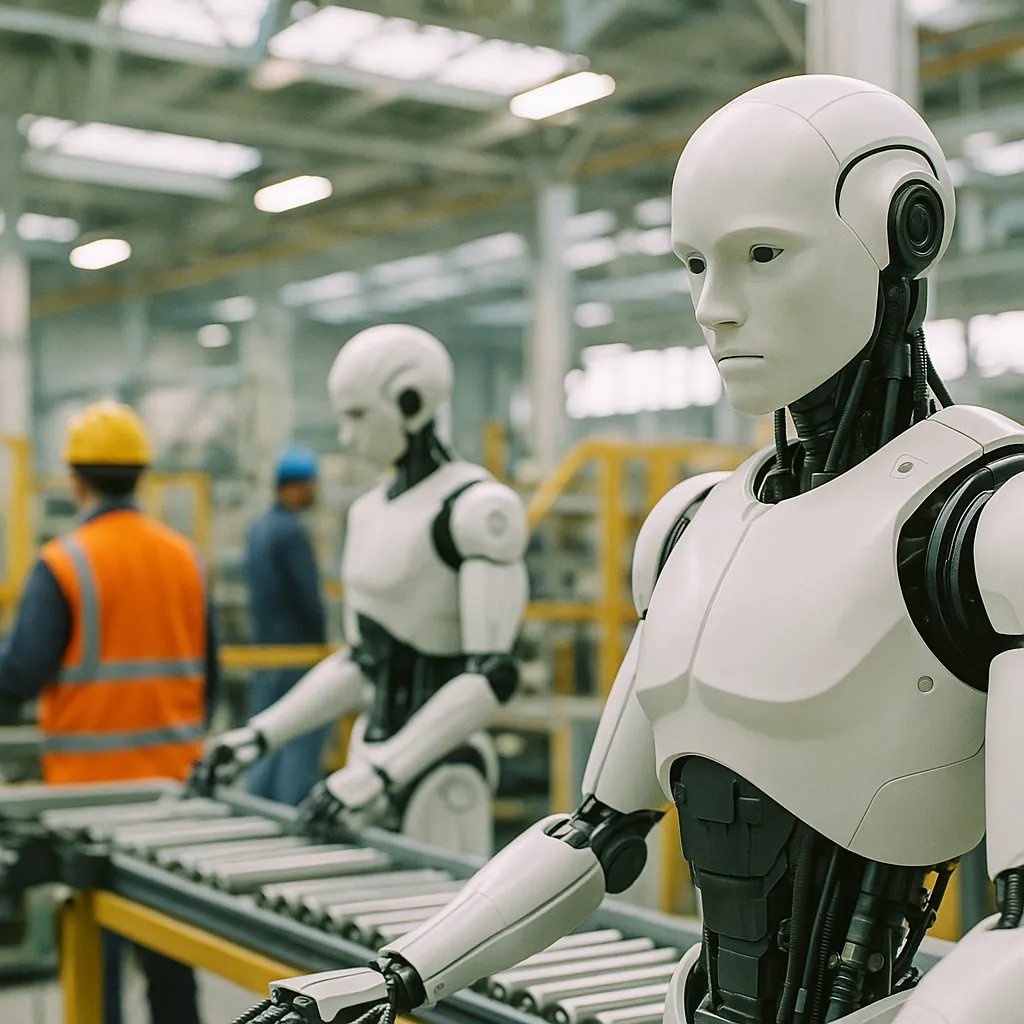
Elon Musk's timeline for Optimus has been specific and public: thousands of humanoid robots working in Tesla factories by the end of 2025. MIT Technology Review found what actually happened: "some robots doing simple tasks."
That description does not mean Optimus failed as a research project. It means the gap between announced timelines and operational deployment is measured in years, not quarters. And Tesla, with more resources and manufacturing integration than any other humanoid robotics developer, is the most favorable case. If Tesla is at "some robots, simple tasks," the rest of the humanoid field is further behind.
This matters for two reasons. First, companies making workforce planning decisions based on humanoid robot deployment timelines are working from bad data. Second, the coverage of robotics announcements — which tends to report demos as deployments — is creating a distorted picture of where the technology actually stands.
What the IFR Data Shows
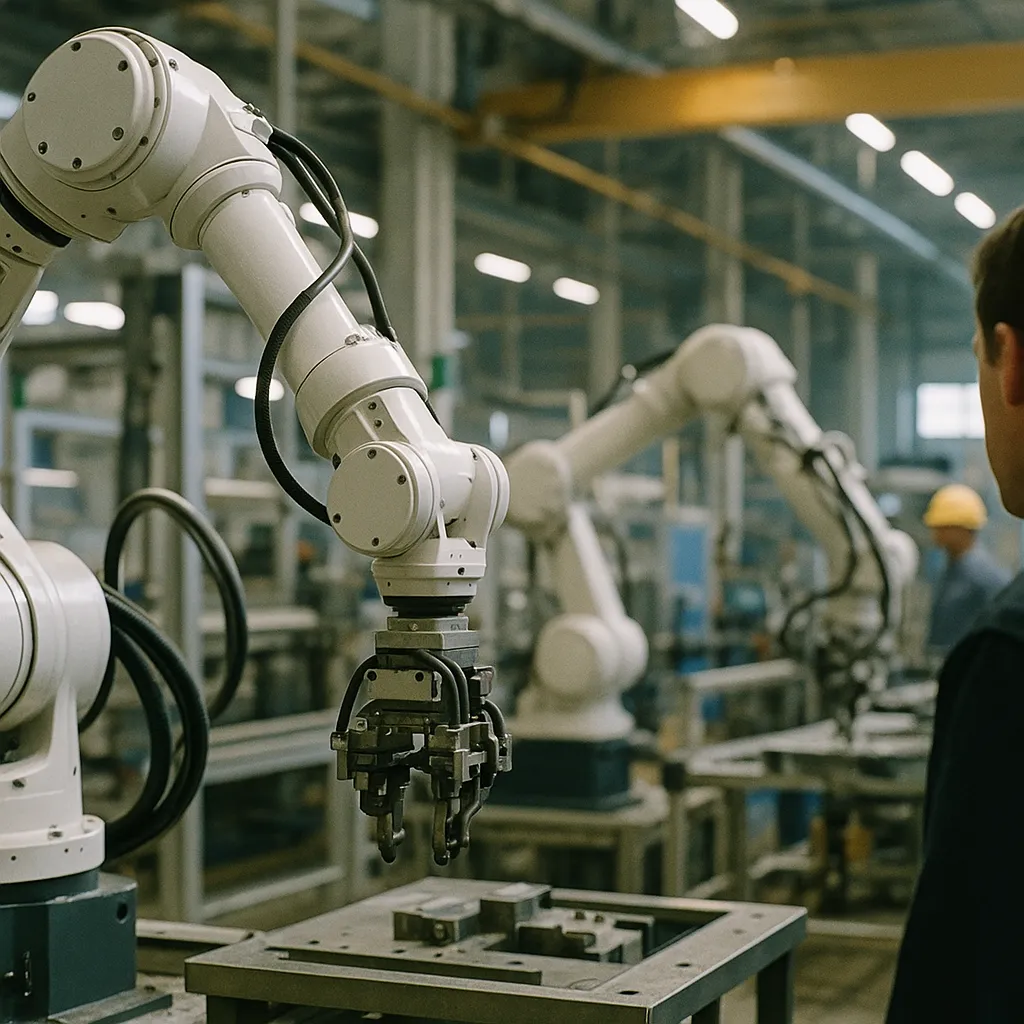
The International Federation of Robotics (IFR) confirmed earlier this month that five million traditional industrial robots are currently active in factories worldwide. These robots — articulated arms, CNC systems, automated guided vehicles — do not walk, do not use natural language, and do not appear on TED stages. They also work 24 hours a day, handle payloads measured in hundreds of kilograms, and operate with the kind of reliability that real manufacturing requires.
Get this in your inbox.
Daily AI intelligence. Free. No spam.
The contrast is clarifying. The five million robots that are actually running factory floors were not announced at press conferences with countdown clocks. They were deployed incrementally, validated against real production requirements, and scaled where the unit economics worked.
Humanoid AI robots are solving a genuinely harder problem — generalized manipulation in unstructured environments — and they may eventually displace traditional automation in roles that currently require human dexterity and judgment. But the MIT Technology Review analysis is correct that the timeline for that displacement is not 2026 or 2027.
Where AI Robotics Is Actually Delivering
The distinction the analysis draws is between humanoid robots and AI-enhanced traditional robotics — and the latter category is where real progress is happening. AI vision systems, predictive maintenance models, and reinforcement-learning-trained manipulation software are generating genuine productivity gains when integrated with conventional industrial hardware.
The companies delivering results are not the ones doing Optimus-style press events. They are the ones deploying AI software layers on top of existing factory automation infrastructure — improving yield rates, reducing downtime, and extending the capability envelope of machines already on the floor.
That work is less photogenic than a robot walking across a stage. It is also what is actually happening at scale.
What This Means for Manufacturers
For manufacturers evaluating AI robotics investments, the MIT Technology Review analysis offers a useful framework:
- Deployment-ready today: AI-enhanced traditional automation, computer vision for quality control, predictive maintenance systems, AI-assisted pick-and-place for defined task sets
- Deployment-ready in 2–4 years: Humanoid robots for narrowly defined, high-repetition tasks in controlled environments (think: specific assembly lines, not general factory floors)
- Beyond 2030: Generalized humanoid deployment capable of replacing broad categories of factory labor
Companies that build workforce and capital investment plans around the 2030 timeline rather than the demo-to-deployment fantasy will be better positioned than those chasing announcements.
What to Watch
Tesla will eventually release verified operational data on Optimus deployment — production units, uptime rates, task completion accuracy. That data, when it appears, will be the most reliable signal of where humanoid AI robotics actually stands. Until then, treat demo footage as demo footage.
Did this help you understand AI better?
Your feedback helps us write more useful content.
Get tomorrow's AI briefing
Join readers who start their day with NexChron. Free, daily, no spam.