Taiwan's ITRI argues that humanoid and quadruped robots won't achieve real deployment in factories and hospitals until hardware, AI, sensing, and virtual-physical integration are engineered as a unified stack.
ITRI: Robots Won't Deploy at Scale Until Hardware, AI, and Sensing Are Engineered Together
Taiwan's Industrial Technology Research Institute (ITRI) has published a roadmap arguing that quadruped and humanoid robots will not achieve meaningful deployment in manufacturing, inspection, welding, or medical care until hardware durability, AI software, sensing fidelity, and virtual-physical integration are designed as a single unified stack — not four separate components built by different teams and bolted together at the end. The analysis challenges the dominant framing of the current robotics investment wave, which has been led primarily by AI software companies.
The Unified Stack Argument
The prevailing commercial narrative around robotics in 2026 is that AI is the missing ingredient. Get the AI right — the perception, the planning, the task generalization — and the hardware problem is essentially solved. ITRI's roadmap explicitly rejects this framing.
According to Digitimes, ITRI's analysis identifies four interdependent components that must be engineered as a coherent system for robots to achieve the mean time between failure (MTBF) — the average time a machine operates before breaking down — and operational reliability that manufacturing and healthcare environments actually require:
- Hardware durability — mechanical resilience under dust, vibration, moisture, temperature extremes, and repetitive load cycles that real factory floors and hospital environments generate continuously
- AI software — perception, reasoning, and task execution models that generalize across the variability of real-world conditions rather than just performing well on lab benchmarks
- Sensing fidelity — vision, tactile, proximity, and environmental sensors that maintain accuracy under conditions that degrade consumer-grade hardware
- Virtual-physical integration — digital twin infrastructure that allows robots to be trained, tested, and updated in simulation before changes are deployed to physical units in the field
The argument is that companies leading with AI software alone are shipping robots that perform in controlled environments and fail in deployment — not because the AI is wrong, but because the hardware and sensing layers weren't designed for the conditions where the robot will actually operate.
Why This Matters Right Now
The timing of ITRI's analysis is pointed. Humanoid robot commercialization interest has hit record levels in 2026. Figure AI, Boston Dynamics, 1X Technologies, Agility Robotics, and a dozen Chinese manufacturers are actively racing to ship general-purpose robots to warehouse, manufacturing, and care settings. Most of the investment narrative is concentrated on AI capabilities: Can the robot learn new tasks quickly? Can it handle language instructions? Can it generalize across unfamiliar environments?
Get this in your inbox.
Daily AI intelligence. Free. No spam.
ITRI's counterargument is that none of those AI capabilities matter if the robot breaks down after two weeks on a factory floor. The conditions in real industrial and medical environments — temperature cycling, vibration from nearby machinery, airborne particulates, humidity, chemical exposure, and the physical stress of thousands of repetitive task cycles — are systematically harsher than anything robots encounter in demonstration videos or controlled evaluations.
The Defense of Below-the-Line Engineering
One of ITRI's more pointed arguments is institutional: the robotics industry has a systematic incentive to overfund AI software development and underfund mechanical engineering, because AI software stories attract venture capital and mechanical durability engineering doesn't photograph well for product launch announcements.
This creates a predictable failure mode. Companies raise rounds on impressive demo videos, ship robots to early commercial customers, encounter real-world failure rates that exceed expectations, and retreat to "Phase 2" roadmaps while burning cash on field engineering support. The customer — the factory or hospital — absorbs the cost of deployment failures and concludes that robotics "isn't ready yet," reinforcing the cycle.
The Sectors That Face This Most Acutely
ITRI specifically calls out manufacturing (welding, inspection, assembly) and medical care (patient handling, procedure assistance, logistics) as the sectors where the unified stack gap is most consequential:
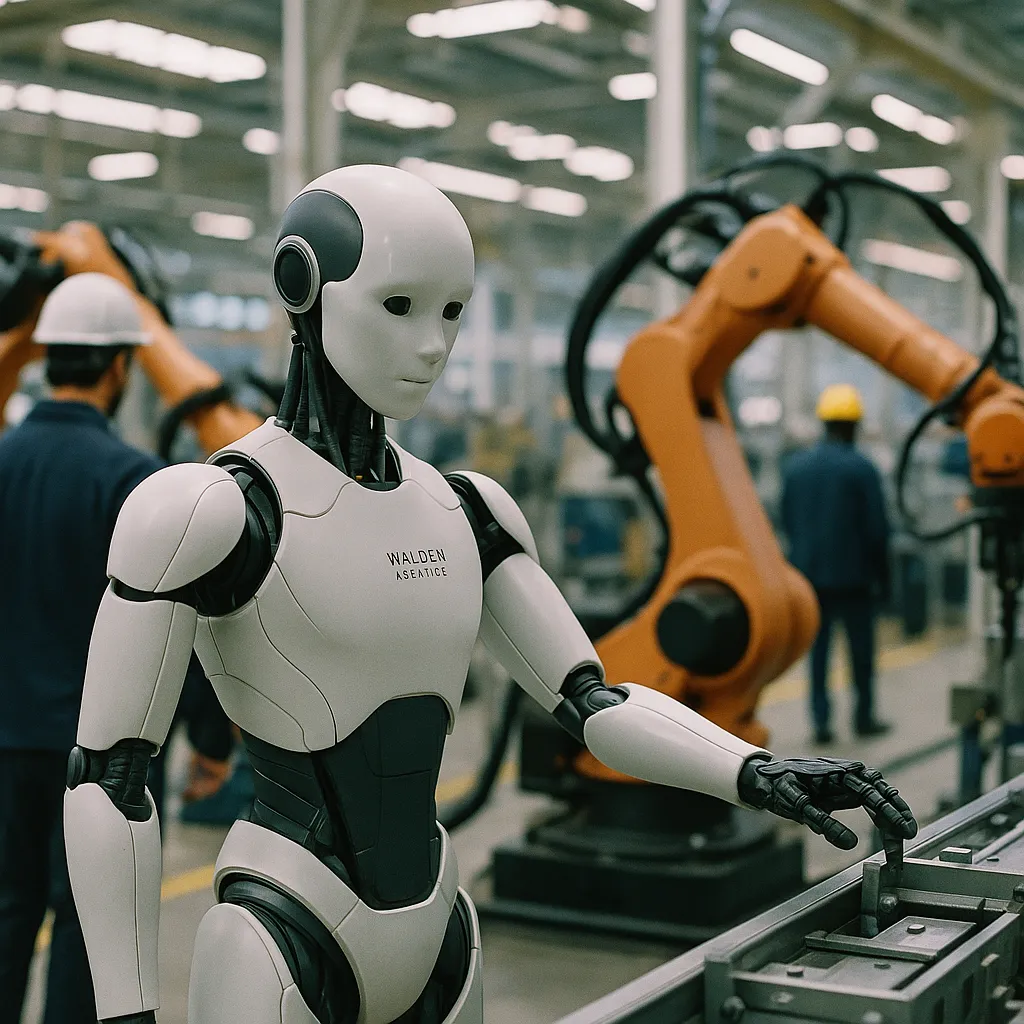
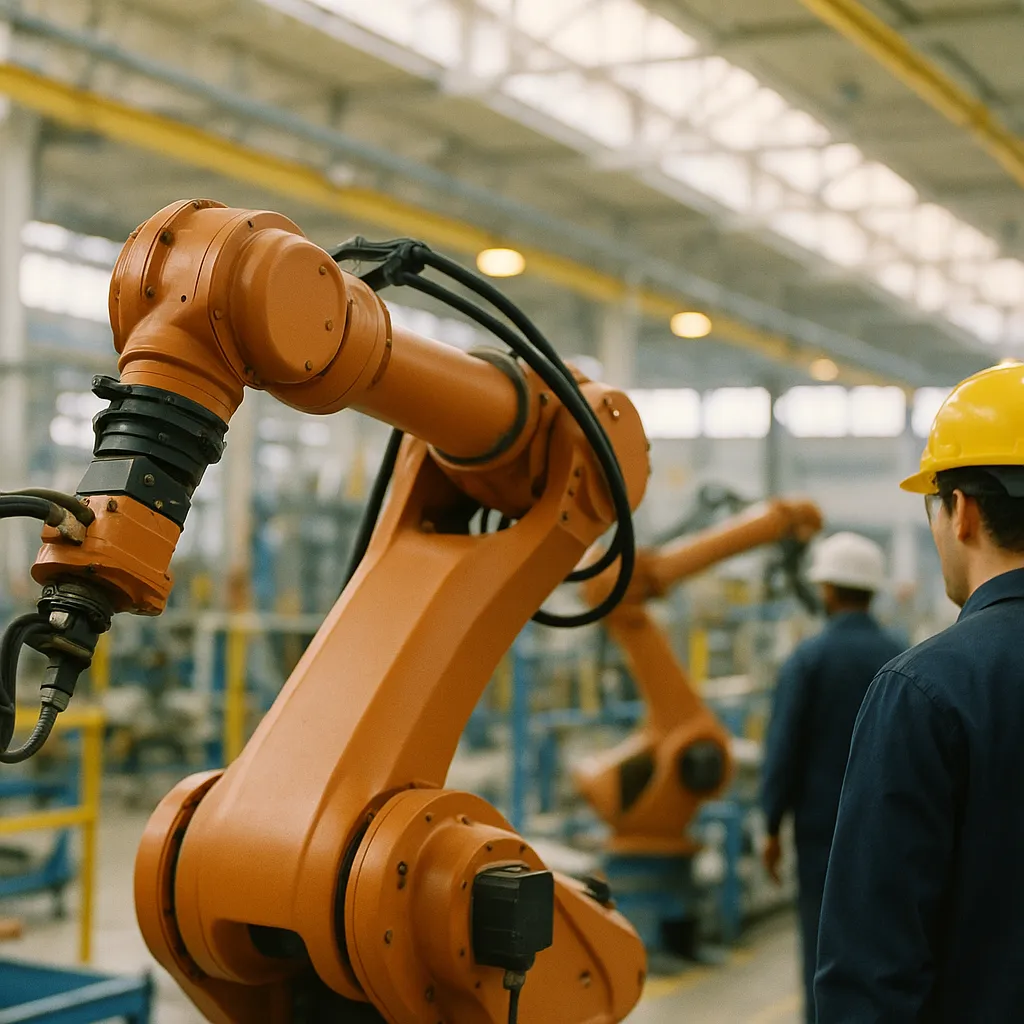
- Welding robots operate in high-heat environments with UV exposure, spatter contamination, and load cycles that test joint durability continuously for hours at a time
- Inspection robots may need to operate outdoors, in confined spaces, or in areas with chemical or radiation exposure — conditions that require enclosures and sensor protection that add complexity and cost
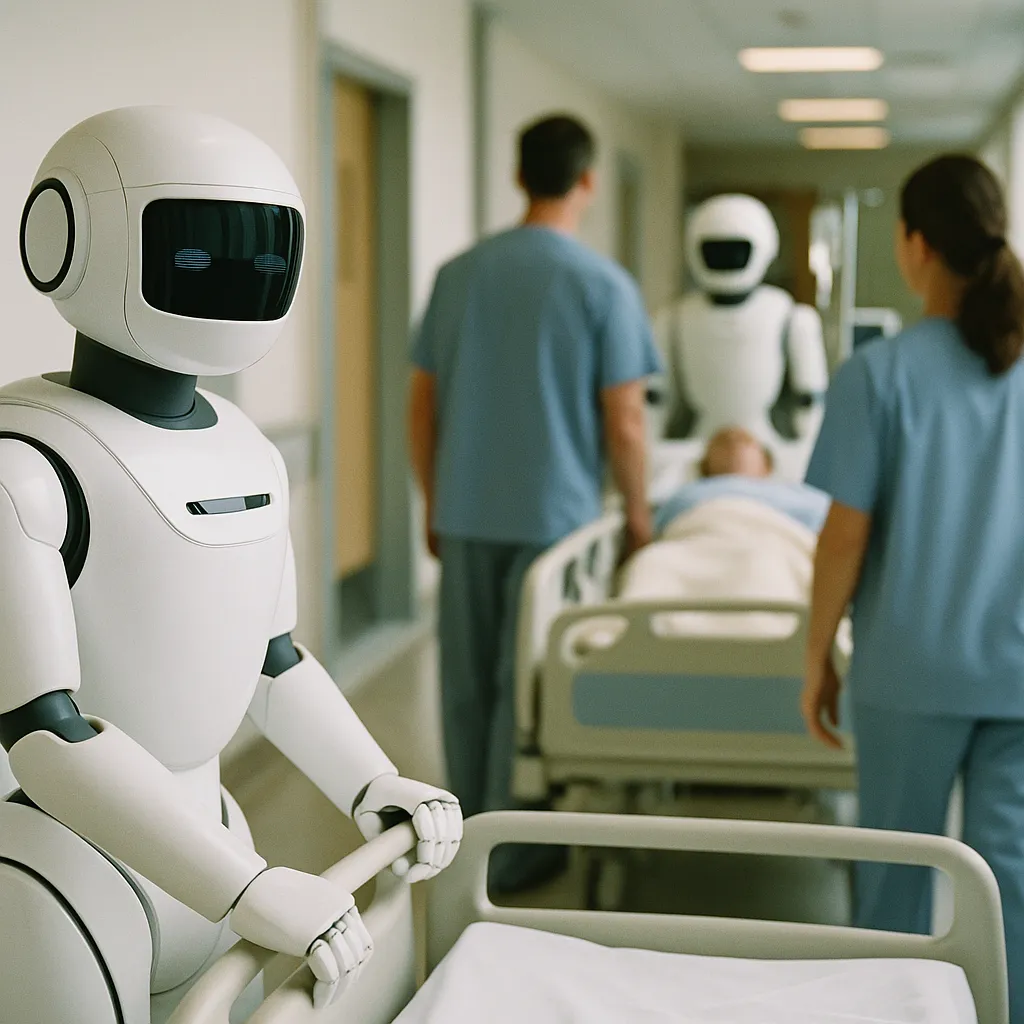
- Hospital robots face the additional requirements of sterilizability and electromagnetic compatibility with sensitive medical equipment — constraints that consumer-grade sensing hardware cannot meet
In all three cases, a robot that fails unpredictably creates either direct safety risk or downstream production disruption that makes AI-driven automation economically counterproductive, regardless of how impressive the AI layer is.
The Virtual-Physical Integration Piece
The fourth component ITRI emphasizes — virtual-physical integration through digital twins — is the least discussed in most robotics coverage but arguably the most strategically important for commercial durability.
The ability to update robot behavior through simulation before deploying changes to physical units is what allows robots to improve over their operational lifespan without causing downtime. Without tight digital twin infrastructure, software updates require either taking robots offline for testing or accepting the risk that a behavioral update causes unexpected physical consequences. Neither option is acceptable at commercial deployment scale in manufacturing or healthcare settings where uptime is measured in dollars per hour.
What to Watch
- MTBF disclosures from early commercial deployments — whether humanoid robot manufacturers begin publishing reliability data comparable to industrial robot standards will tell you whether the unified stack argument is being incorporated or dismissed
- ITRI partnerships with robot manufacturers — as a research institute, ITRI typically influences the sector through joint development agreements; which manufacturers align with the unified stack roadmap signals who is investing in the durability problem seriously
- The China comparison — Chinese humanoid robot manufacturers are scaling production at speed in 2026; whether they're building hardware-AI integration from the ground up or taking the same AI-first shortcut with hardware added later is a critical competitive variable for Western manufacturers
The robotics commercialization wave is real, and the AI capabilities driving it are genuine. ITRI's argument is simply that the companies that survive it commercially — rather than burning through early customer trust — will be the ones that treated mechanical engineering and sensing fidelity as core problems rather than secondary constraints. The history of industrial automation suggests that prediction is correct.
Did this help you understand AI better?
Your feedback helps us write more useful content.
Get tomorrow's AI briefing
Join readers who start their day with NexChron. Free, daily, no spam.