Factory AI inference speeds now allow vision-based defect detection to run inline on production stations, cutting floor space and cycle times while covering 100% of units produced.
Factory AI inference speeds have reached the point where vision-based defect detection can be folded directly into production stations rather than requiring a separate quality inspection cell, cutting floor space requirements and cycle times simultaneously. Industry data from Robotics & Automation News, citing Deloitte and MPI Group surveys, shows 45% of manufacturers now have IIoT (Industrial Internet of Things) connectivity on some equipment and 42% have deployed predictive maintenance in some form — the infrastructure base that inline AI inspection requires.
What "Inline" Actually Means
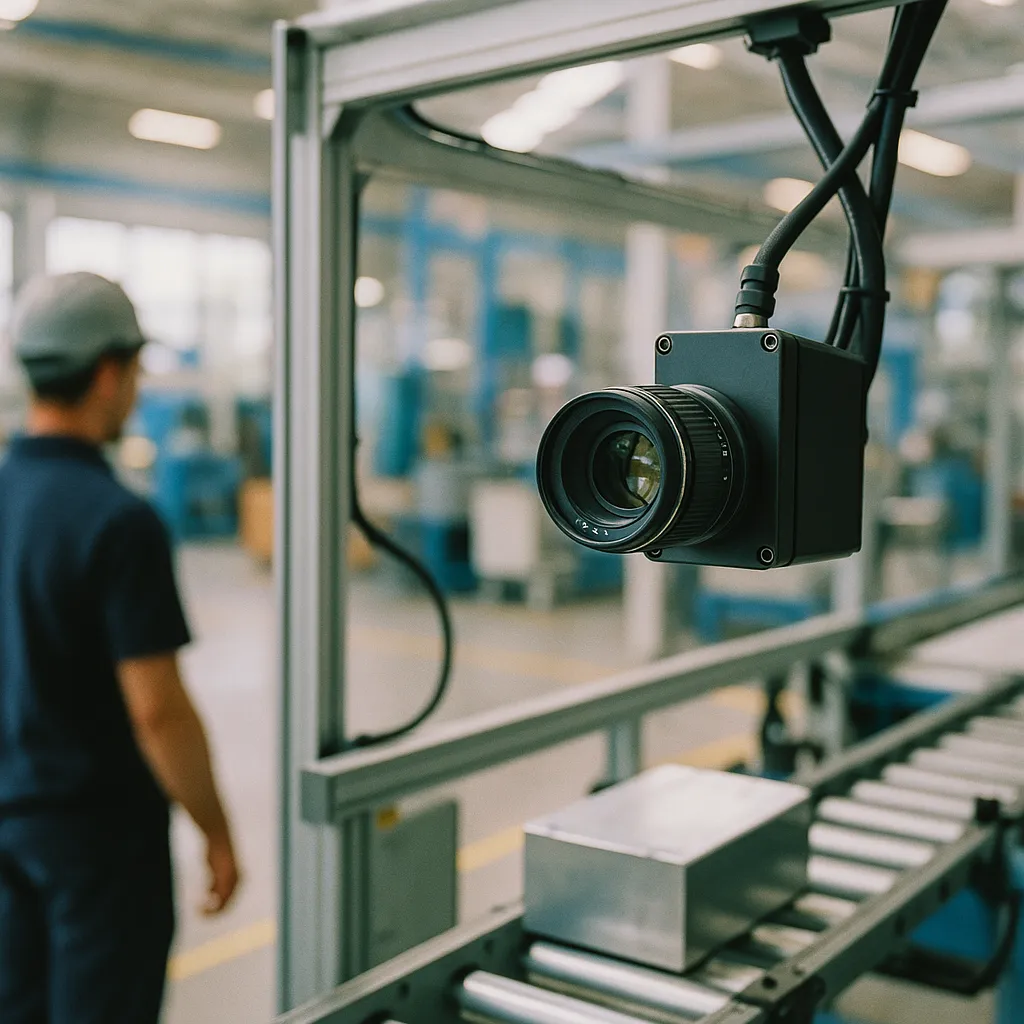
Traditional quality control architecture placed inspection stations at the end of production lines or between major process steps. A camera system, a lighting rig, a rejection mechanism, and a workstation running inspection software occupied dedicated floor space and added a discrete cycle time to every unit processed.
The new model eliminates that separation. Vision AI running on edge hardware — inference accelerators built into production machinery or mounted in sub-100ms detection cycles — inspects each unit at the same moment it is being processed. Rejection or rework flagging happens within the production step itself rather than after the fact.
The practical requirements:
- Edge inference hardware fast enough to process full-resolution images within production cycle times (which can be under 100 milliseconds in high-speed packaging and semiconductor lines)
- Continuous model retraining to handle the natural drift in product appearance that comes from raw material variation, tooling wear, and seasonal changes
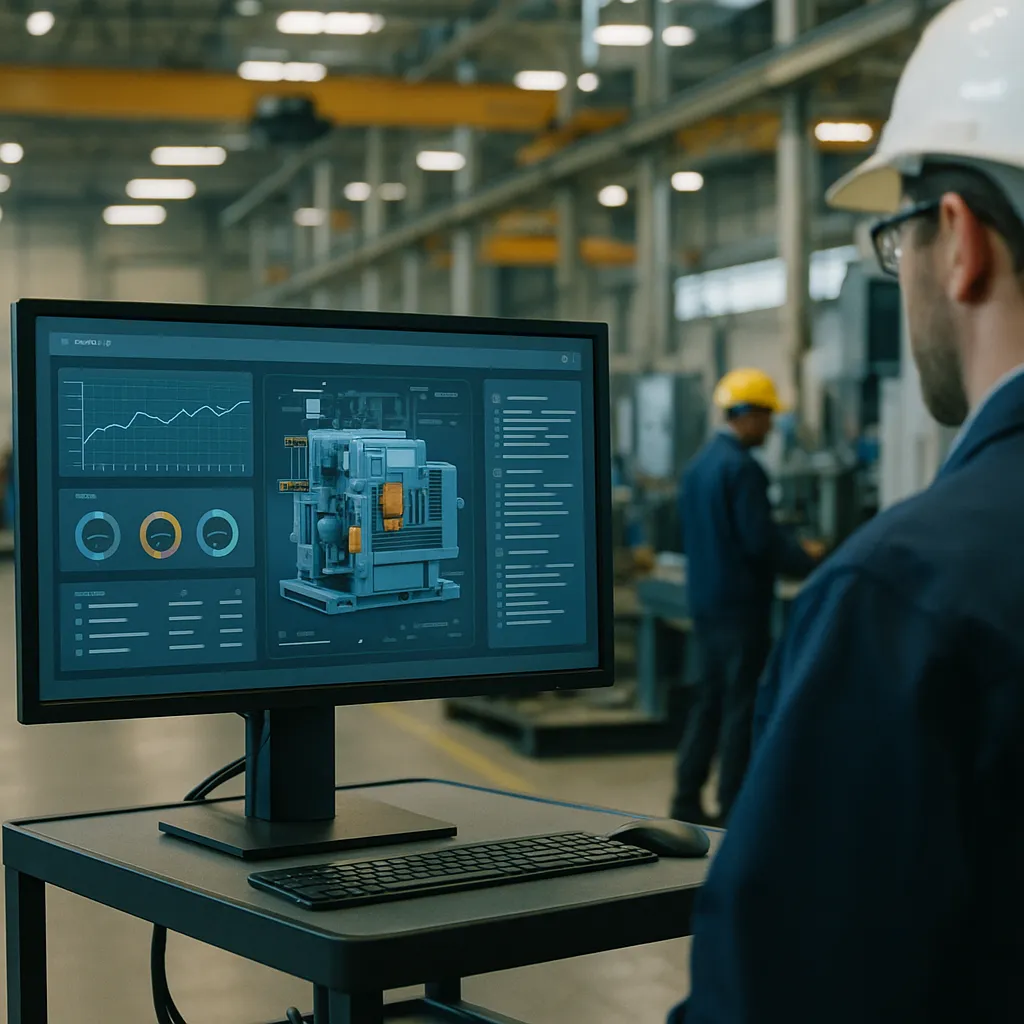
- Integration with MES (Manufacturing Execution Systems) so defect data feeds directly into production analytics rather than sitting in a standalone quality database
What the Survey Data Shows
The Deloitte and MPI Group figures cited in the Robotics & Automation News analysis reveal a manufacturing sector in uneven transition:
45% have IIoT connectivity on some equipment — but "some" is doing significant work in that statistic. A plant with one connected conveyor and ten disconnected machining centers is counted in that 45%. The actual share of production equipment that is networked and sensor-instrumented is considerably lower.
42% have deployed predictive maintenance in some form — again, "some form" ranges from a single vibration sensor on a critical pump to a fully integrated condition monitoring platform covering every piece of rotating equipment. The meaningful question is at what percentage of their equipment base companies are actually running predictive maintenance, and that figure is much lower.
Digital twins are moving from pilot to daily operations in 2026 — this is the more interesting transition. A digital twin is a virtual replica of a physical production system that runs in sync with the real system, allowing operators to simulate changes, predict failures, and optimize processes without disrupting actual production. Moving digital twins from engineering projects to daily operational tools represents a genuine shift in how production decisions get made.
Get this in your inbox.
Daily AI intelligence. Free. No spam.
Where the ROI Shows Up
For manufacturers evaluating inline AI inspection, the business case concentrates in a few areas:
Defect escape rate reduction. Defects that reach customers generate warranty costs, recall risks, and reputational damage that are disproportionately expensive compared to the unit value. AI inspection systems running at 100% inspection coverage outperform statistical sampling approaches, which miss defects that cluster in ways sampling doesn't catch.
Throughput improvement. Eliminating a dedicated inspection station removes a bottleneck. On high-volume lines where inspection was the rate-limiting step, inline AI can meaningfully increase output per shift.
Labor redeployment. Manual visual inspection is cognitively demanding and difficult to staff consistently, especially in tight labor markets. AI inspection running continuously without fatigue or shift variation improves consistency regardless of the labor situation.
The Implementation Gap
Despite compelling ROI in the right applications, deployment is slower than the technology availability would suggest. The barriers are predominantly operational rather than technical:
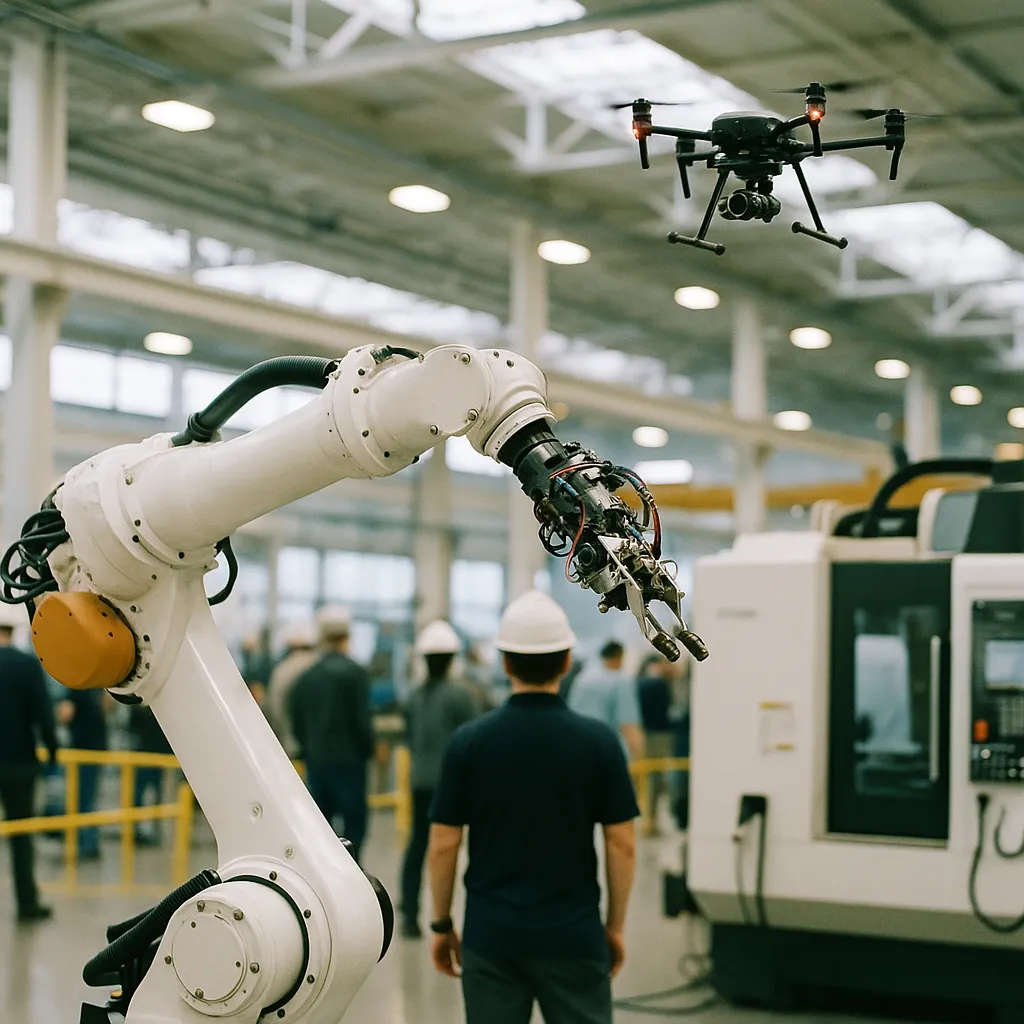
Legacy systems integration. Most production equipment running in manufacturing plants today was installed before IIoT connectivity was standard. Retrofitting sensors, networking, and edge compute onto legacy machinery requires engineering time and often production downtime — costs that don't show up in the technology vendor's ROI model.
Model development expertise. Training computer vision models for specific defect detection requires labeled datasets of defective units — which means either collecting real defects over time (slow) or using synthetic data generation (technically complex). Most manufacturers don't have this capability in-house and depend on vendors whose models may not transfer well across different product specifications.
Maintenance of deployed models. A vision AI system that worked well when installed can degrade as product formulations change, tooling wears, or lighting conditions shift. Managing model drift in production is an ongoing operational requirement that many initial deployments underestimated.
What to Watch
The manufacturers that will realize the most value from inline AI inspection in 2026 and 2027 are those already running connected, instrumented production lines with MES integration. For them, adding vision AI is an extension of existing infrastructure. For manufacturers still operating largely disconnected equipment, the foundation needs to be built first.
Watch for automotive and semiconductor manufacturers to publish measurable outcome data — defect escape rates, throughput gains — from inline AI deployments. Both sectors have the instrumentation and scale to generate statistically significant results, and public data from credible operators would accelerate adoption across less technically advanced manufacturing sectors.
By Hector Herrera
Did this help you understand AI better?
Your feedback helps us write more useful content.
Get tomorrow's AI briefing
Join readers who start their day with NexChron. Free, daily, no spam.