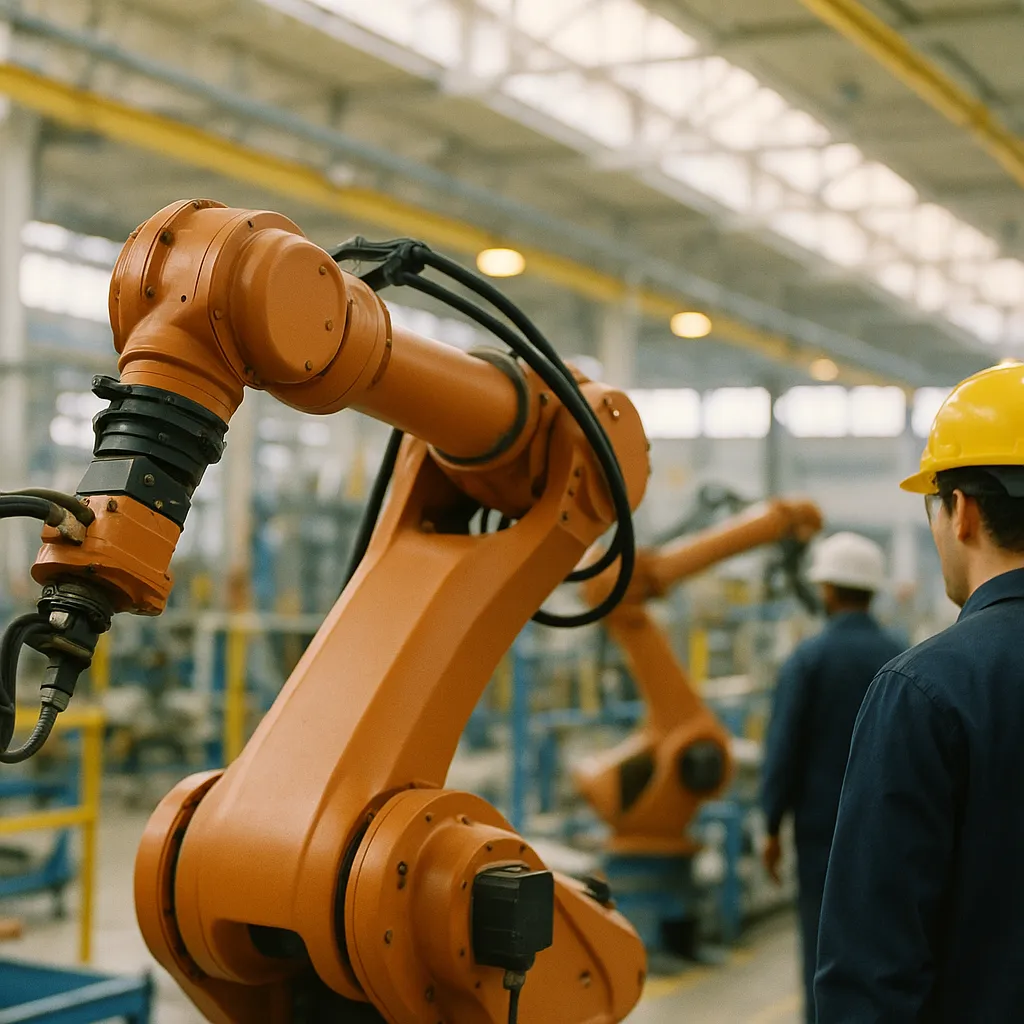
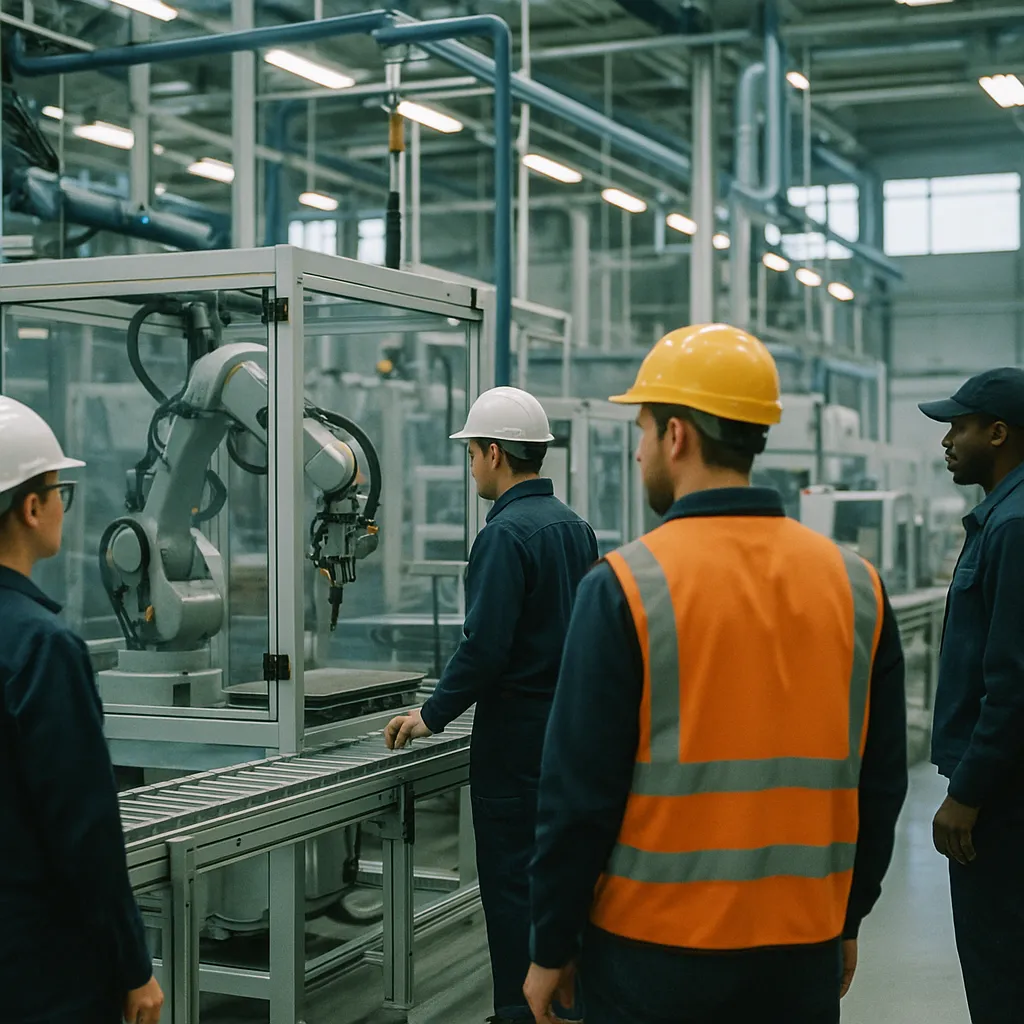
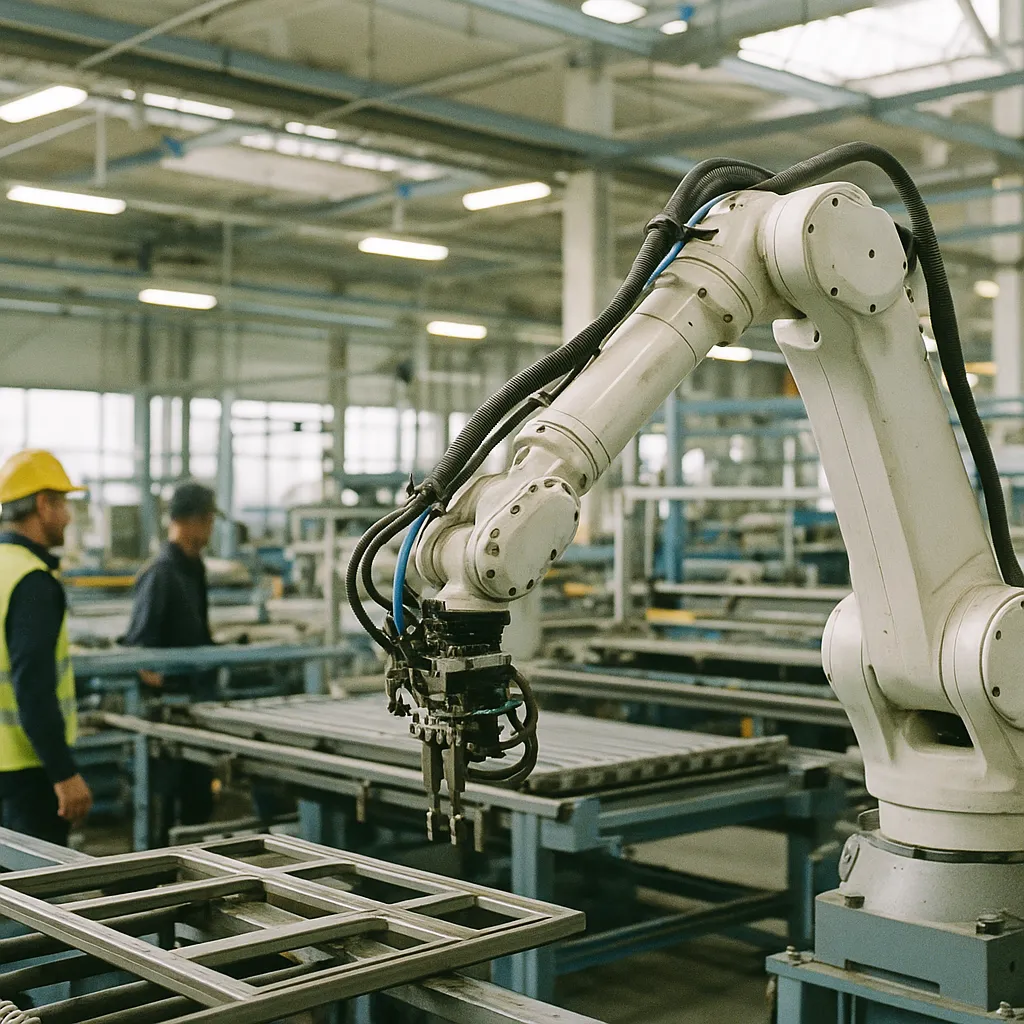
The global active industrial robot fleet has crossed 5 million units, with China installing 354,000 new robots — 59% of global deployments — pushing Japan to third place for the first time.
World's Active Industrial Robot Fleet Crosses 5 Million Units — China Claims 59% of New Installs
The global active industrial robot inventory has crossed 5 million units for the first time, with annual new installations jumping 11% to more than 600,000 machines, according to the International Federation of Robotics. China alone installed 354,000 robots in the latest reporting period — 59% of the entire global total — pushing Japan into third place behind China and the United States in the all-time installed-base ranking. The milestone marks a structural shift: AI-driven automation is no longer a competitive edge for early-adopting manufacturers. It is the baseline from which competition now starts.
The 5 million figure is an active inventory count, not cumulative installations. It reflects robots currently operating in factory environments after accounting for decommissioning. That the active fleet has reached this level — roughly double what it was a decade ago — reflects both the accelerating pace of new deployments and the improving operational lifespan of modern industrial systems.
China's Dominance in Context
China's 354,000 new robot installations in a single year represents a figure that would have been considered the entire global annual market as recently as 2018. The country's manufacturing sector has been deploying automation at a pace driven by several converging pressures: rising domestic labor costs, government industrial policy prioritizing "smart manufacturing," a strategic push to reduce dependence on foreign-made components, and the acceleration of export-oriented electronics and consumer goods production.
The IFR's breakdown shows China's lead across the key sectors:
- Automotive assembly and component manufacturing remain the highest-density robot application globally
- Electronics and semiconductor manufacturing — where China has heavily invested — is the fastest-growing segment
- Consumer goods and food processing are the newest volume sectors, driven by hygiene and consistency requirements rather than labor scarcity alone
Japan's displacement to third place in installed base is notable for a country that invented modern industrial robotics and still produces a significant share of the world's robot hardware. The distinction is between being a manufacturer of robots and being a user of them. Japan continues to export; China is deploying.
Get this in your inbox.
Daily AI intelligence. Free. No spam.
AI Changes What Robots Can Do
The 5 million milestone coincides with a qualitative shift in what industrial robots are capable of. Earlier generations of factory automation were defined by rigid programming — a robotic arm could repeat the same motion thousands of times with high precision, but retooling it for a different task required physical reconfiguration and weeks of reprogramming.
The generation of industrial robots entering deployment now operates differently. AI-driven vision systems allow robots to handle variable parts, irregular shapes, and unpredictable inputs without being pre-programmed for each scenario. Reinforcement learning (a training method where robots improve performance through repeated trial-and-error in simulation) enables industrial arms to learn manipulation tasks in days rather than months. Digital twin technology — virtual replicas of factory environments — allows robots to be trained and tested before physical deployment, compressing commissioning timelines.
This is why the 600,000 annual installation rate is significant beyond the raw count. A substantial portion of those installations are systems with capabilities that were not commercially available five years ago. The 5 million active robot fleet is not a homogeneous installed base — it spans four decades of technology generations, with the newest systems dramatically more flexible and AI-dependent than what preceded them.
What This Means for Global Manufacturing Competition
For manufacturers in countries outside China, the IFR data presents a compounding challenge. The automation gap — the difference in robot density per 10,000 employees between leading and lagging manufacturers — is widening at the same time that AI capabilities are increasing the productivity differential of high-density automation.
Sectors facing the most acute pressure:
- Automotive: Traditional U.S. and European plants are competing with Chinese EV manufacturers whose greenfield facilities are built from the ground up around robotic density levels that legacy plants cannot match
- Electronics: The supply chain security push to move production out of China runs into the reality that alternative production locations have robot density far below what Chinese facilities have normalized
- Consumer goods: Retail demand for customization and rapid SKU (stock-keeping unit) turnover is driving automation investment even in traditionally labor-intensive mid-market manufacturers
For workers, the implications are straightforward and well-documented: the roles most directly affected are repetitive, high-precision assembly tasks in predictable environments — exactly the work that has provided stable employment for millions of manufacturing workers across Asia, Europe, and North America. Retraining programs and automation transition support remain substantially underfunded relative to the pace of deployment.
What to Watch
The IFR's next annual robotics survey will be the key data point for whether the 11% installation growth rate sustains or accelerates in 2027, and whether any country outside China is closing the density gap. U.S. and EU industrial policy incentives for domestic manufacturing automation — including provisions in recent infrastructure and semiconductor legislation — are designed specifically to drive a catch-up investment cycle. Whether they produce meaningful movement in the robot density gap is the question.
Did this help you understand AI better?
Your feedback helps us write more useful content.
Get tomorrow's AI briefing
Join readers who start their day with NexChron. Free, daily, no spam.