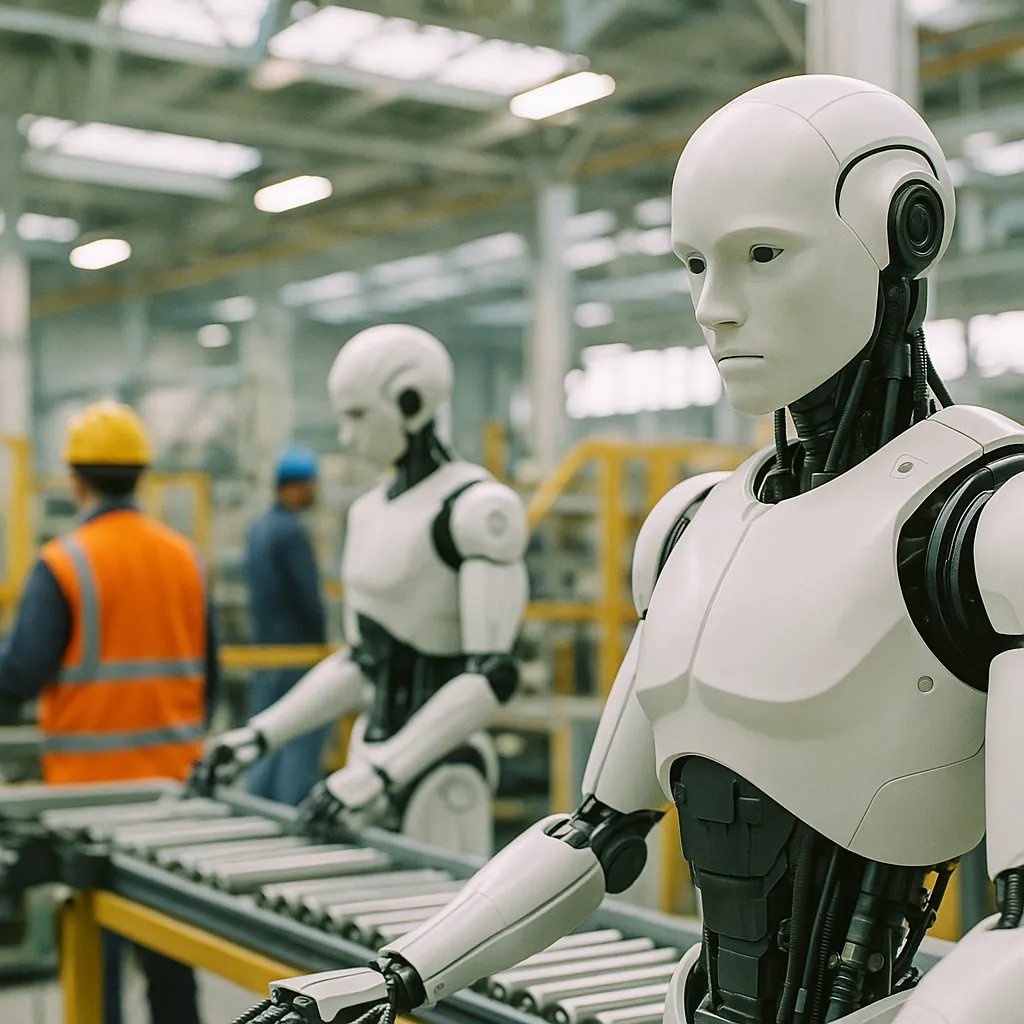
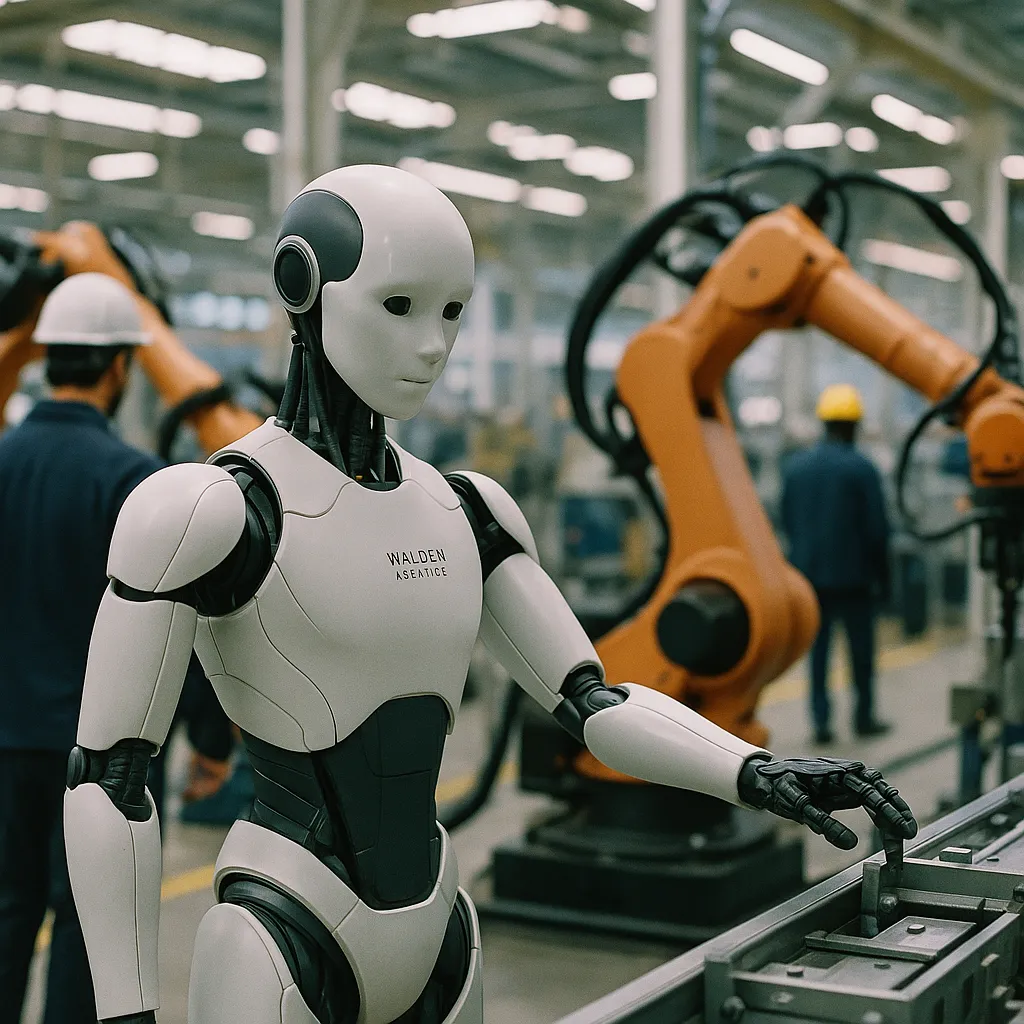
AI, robotics, sensors, cloud platforms, and connected supply chains are converging into factory operating environments that adjust production dynamically — without fixed rules or human review — as global robot installs top 655,000 in 2026.
Factory floors are undergoing a structural shift that goes beyond automation. AI models, robotics, sensor networks, cloud platforms, and connected supply chains are merging into single operating environments that adjust production dynamically — detecting quality problems before they compound, anticipating equipment failure before it happens, and revising schedules in response to supply chain signals without waiting for human review, according to an October 8 industry analysis. The shift changes not just how factories operate, but what manufacturers need to build, manage, and measure.
The numbers behind the shift. Global robot installations are forecast to exceed 655,000 units in 2026. Humanoid robot deployments — designed for general-purpose tasks alongside human workers — are projected above 50,000 units for the year. Both figures reflect not just falling hardware costs, but the maturation of AI software that makes robots useful in complex, variable manufacturing environments where pre-programmed rules cannot anticipate every condition.
What "self-adjusting" means in practice. A conventional automated factory follows rules: if sensor reading X exceeds threshold Y, trigger action Z. These rules are designed by engineers and updated manually. A self-adjusting factory uses AI models that continuously interpret sensor data, equipment telemetry, quality control outputs, and supply chain signals to make decisions without predefined rules for every scenario:
- A quality defect pattern emerges in real time — the system identifies the likely equipment cause, adjusts parameters, and flags for human review before scrap rates escalate
- Equipment shows early degradation signals — maintenance is scheduled before failure occurs
- An incoming supply chain disruption is detected — production schedules revise automatically within defined parameters
- Demand signals shift — the system reconfigures production priorities without an engineering change order
The five converging layers. The analysis identifies five distinct technology layers that are now integrating into unified environments:
Get this in your inbox.
Daily AI intelligence. Free. No spam.
- Robotics — physical task automation across assembly, handling, and inspection
- Sensors and IoT — real-time data capture at every point in the production process
- AI and machine learning — pattern recognition, anomaly detection, predictive optimization
- Cloud and edge computing — processing power at or near the factory floor for low-latency decisions
- Connected supply chains — live integration with supplier and logistics data so production decisions account for what is actually available
When these layers remain separate systems, manufacturers get incremental efficiency gains. When they integrate, the factory becomes something different — a system that makes its own operational decisions within defined parameters.
What this means for manufacturers. The first-order benefit is operational: fewer unplanned downtime events, lower scrap rates, faster defect response. The second-order effect is strategic. The capability gap between manufacturers who have integrated AI decision systems and those running conventional automation is compounding. A facility that can guarantee high uptime and respond to quality issues in under an hour is a structurally different supplier than one that cannot — and that difference is showing up in contract terms, not just efficiency metrics.
The workforce dimension. Self-adjusting factories change what workers need to do, not simply how many are needed. Operators managing these systems need to interpret AI outputs, intervene when models fall outside expected performance ranges, and make judgment calls the AI is not configured to handle. This requires different skills than conventional factory work, and it requires training that most manufacturing workforces have not yet received. The skills gap is as much a workforce challenge as the capital investment required.
The barriers to adoption. Large manufacturers with capital for integration projects are moving fastest. Smaller manufacturers face the same economics but higher relative investment costs. Legacy equipment without sensors and network connectivity creates integration complexity that is expensive to resolve. And AI models require quality historical data — manufacturers with incomplete or inconsistent production records start at a disadvantage.
What to watch. How quickly integration costs fall as platform vendors build more standardized tooling for legacy equipment, and whether the 655,000 robot installation forecast holds given ongoing supply chain pressures on industrial hardware.
Did this help you understand AI better?
Your feedback helps us write more useful content.
Get tomorrow's AI briefing
Join readers who start their day with NexChron. Free, daily, no spam.