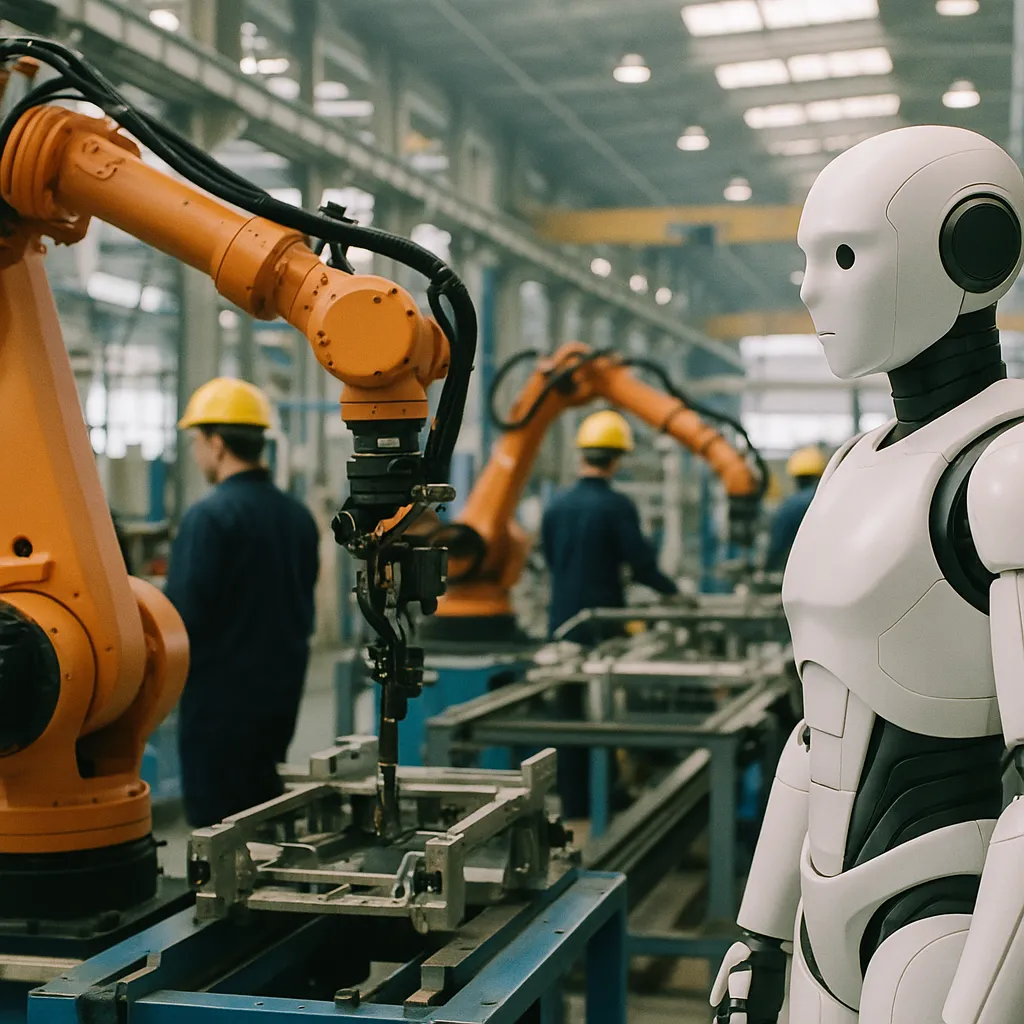
Intrinsic CEO Stefan Nusser says conventional factory automation is too expensive and inflexible for most manufacturers — and AI-driven systems configurable by generalists are rewriting the economics.
Traditional Factory Automation Is Pricing Itself Out. AI Is Writing a New Cost Equation.
By Hector Herrera | May 14, 2026
The CEO of Intrinsic — Google's industrial robotics software company — says conventional factory automation has priced itself out for most manufacturers. AI-driven alternatives are rewriting the cost structure, and the shift could finally move industrial AI from pilots to widespread deployment.
In an interview with Robotics and Automation News published May 13, Intrinsic CEO Stefan Nusser made the case directly: traditional automation is "too expensive and too inflexible" for most manufacturers — and the economics that made it viable for large-scale, high-volume production no longer hold in an environment where product cycles are shorter and variety is higher.
What Makes Traditional Automation So Expensive
Conventional industrial automation has a specific cost profile that hasn't fundamentally changed in decades. Deploying a robotic system for a new task requires:
- Specialized programming — robotics engineers with domain-specific skills, typically unavailable in-house at mid-size manufacturers
- Long deployment timelines — months of integration, calibration, and testing before a system reaches production readiness
- Rigid task definitions — once programmed, the system performs its specific task and nothing else; adapting to a new product variant requires reprogramming
- High capital expenditure — the combination of hardware, software, integration labor, and ongoing maintenance creates a total cost that many manufacturers cannot justify at lower production volumes
For the largest manufacturers — automotive plants running the same assembly sequence millions of times — this model works. For the broader manufacturing base, it excludes them from automation entirely.
Get this in your inbox.
Daily AI intelligence. Free. No spam.
What AI Changes
Nusser's argument is that AI-driven factory automation systems built on modern software platforms change the economics at each point of friction:
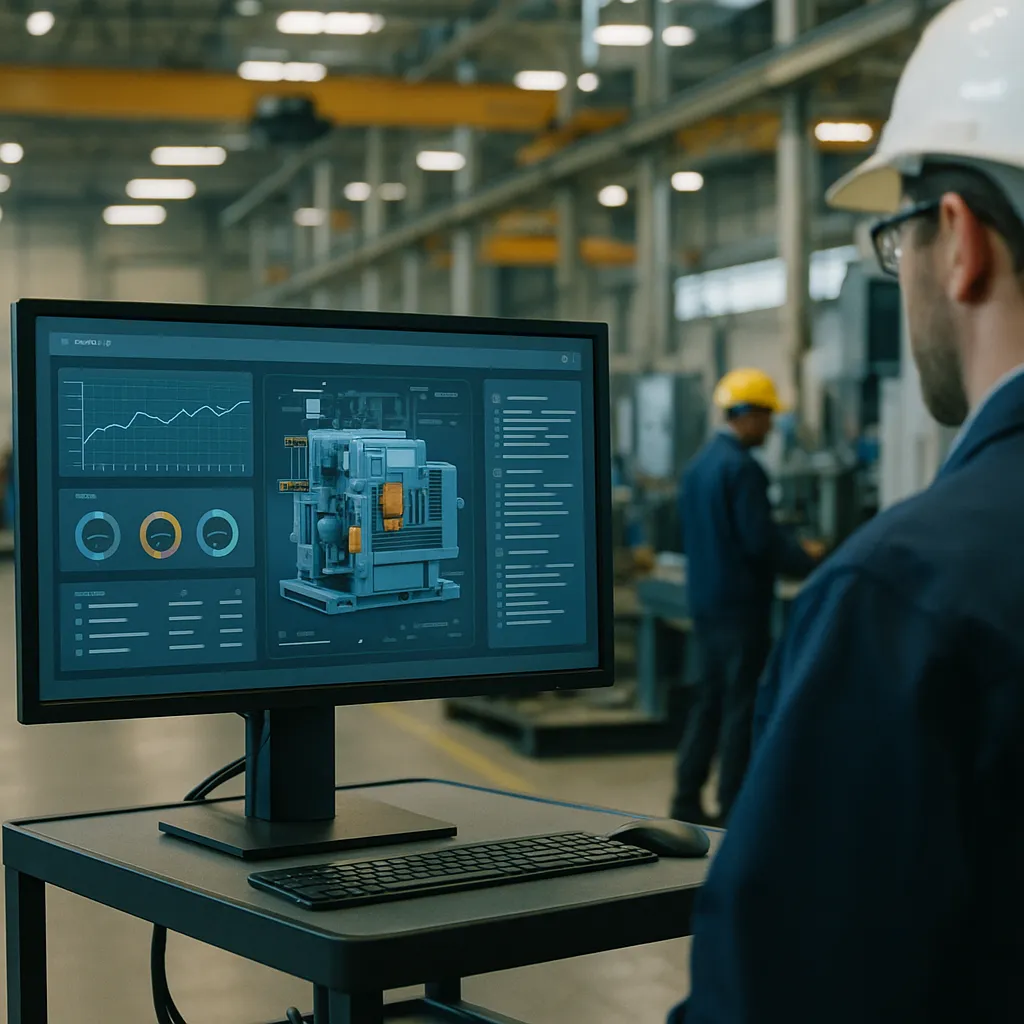
- Natural language configuration — generalists can instruct AI systems using plain language rather than specialized code, reducing the skills barrier
- Real-time adaptation — AI systems adjust to variation in parts, environments, and conditions without reprogramming, unlike rigid fixed-path robots
- Faster deployment — software-defined automation can be configured and updated faster than hardware-first systems
- Lower total cost — when the deployment cost drops and the flexibility increases, the minimum viable production volume at which automation makes sense also drops
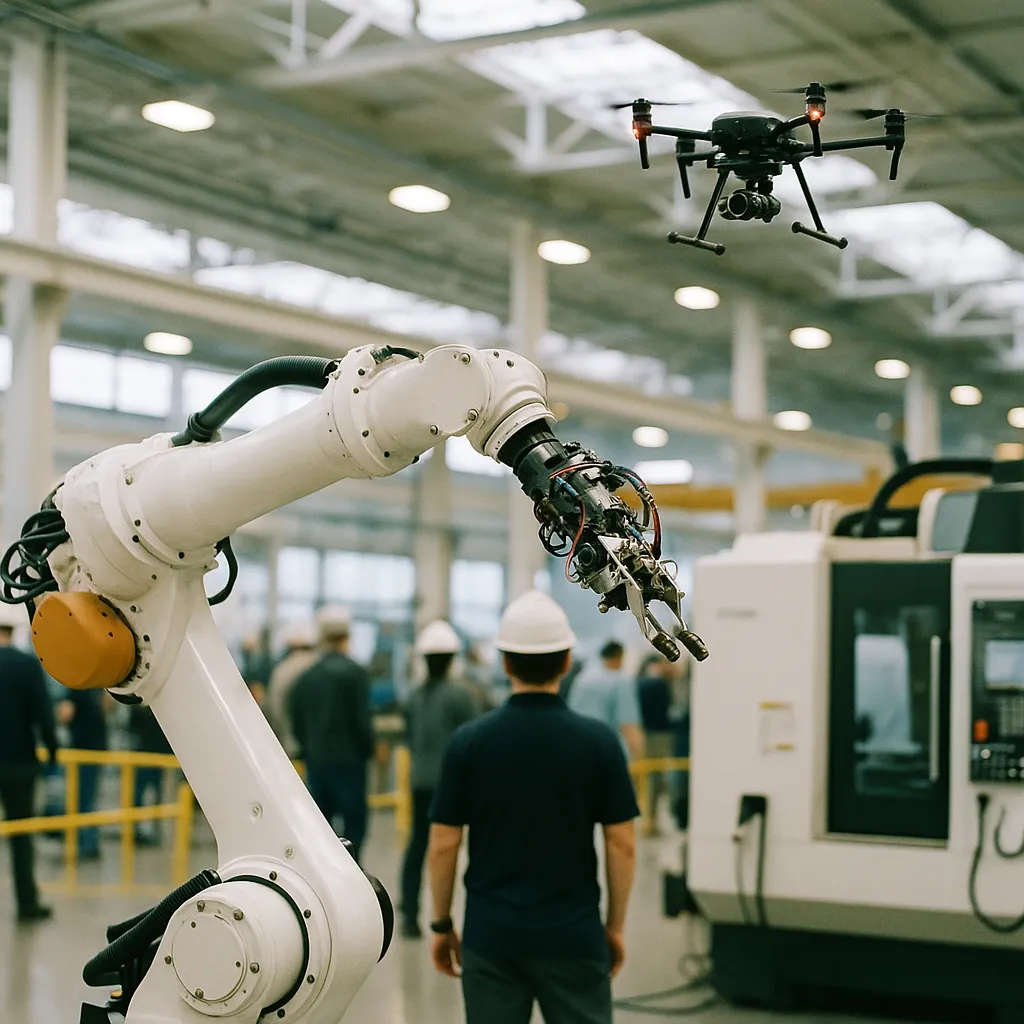
Intrinsic's platform — built on Google's robotics research and designed to run on third-party hardware — is positioned as infrastructure for this shift. The company is not selling a specific robot; it's selling the AI layer that makes various robots more adaptable and accessible to deploy.
The Displacement Side of the Equation
Nusser's framing focuses on the productivity gains and market expansion that flexible AI automation enables. There is an inverse side that the interview does not address directly.
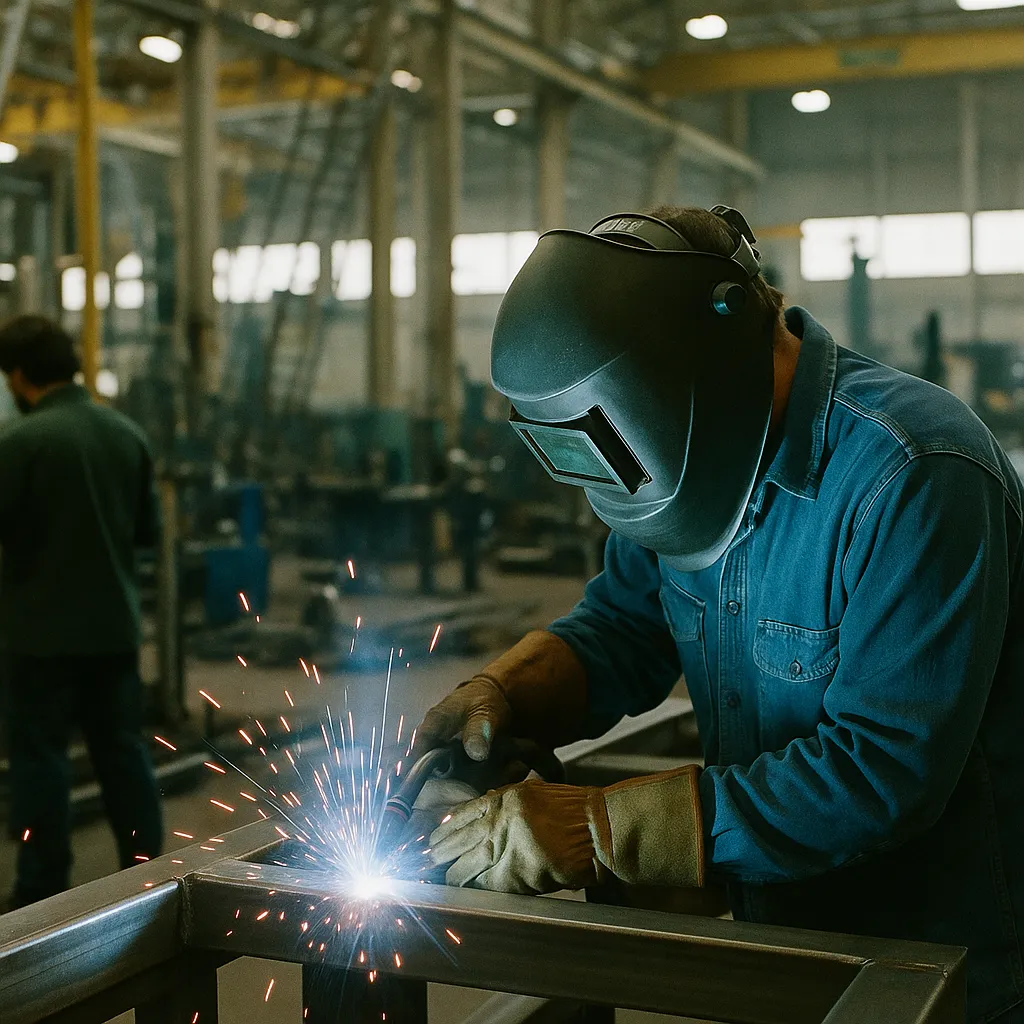
Fixed robotic systems replaced specific human roles while generally requiring the specialized operators who programmed and maintained them. AI-driven flexible automation is specifically designed to require fewer specialists. If a generalist can configure and manage an AI automation system, the workforce implications differ from prior automation waves — both in which roles are displaced and in what replaces them.
The transition timeline is also less predictable. Traditional automation required long lead times, which gave manufacturers and workforces time to plan. AI systems that can be deployed and reconfigured faster may shorten that window.
What to Watch
The immediate test is performance outside controlled demonstrations. Intrinsic and competitors including Machina Labs, Vention, and Dexterity are all making versions of the same argument — flexible AI automation is ready for general deployment. The proof will come from sustained production environments running at commercial scale, not press interviews.
The broader signal to watch is how large manufacturers — automotive OEMs, aerospace primes, consumer electronics contract manufacturers — respond to flexible AI automation in their labor agreements and capital planning cycles. When companies with multiyear automation procurement cycles start redirecting budget from traditional robotics to AI-driven systems, the transition will be measurable.
By Hector Herrera. Published May 14, 2026.
Did this help you understand AI better?
Your feedback helps us write more useful content.
Get tomorrow's AI briefing
Join readers who start their day with NexChron. Free, daily, no spam.