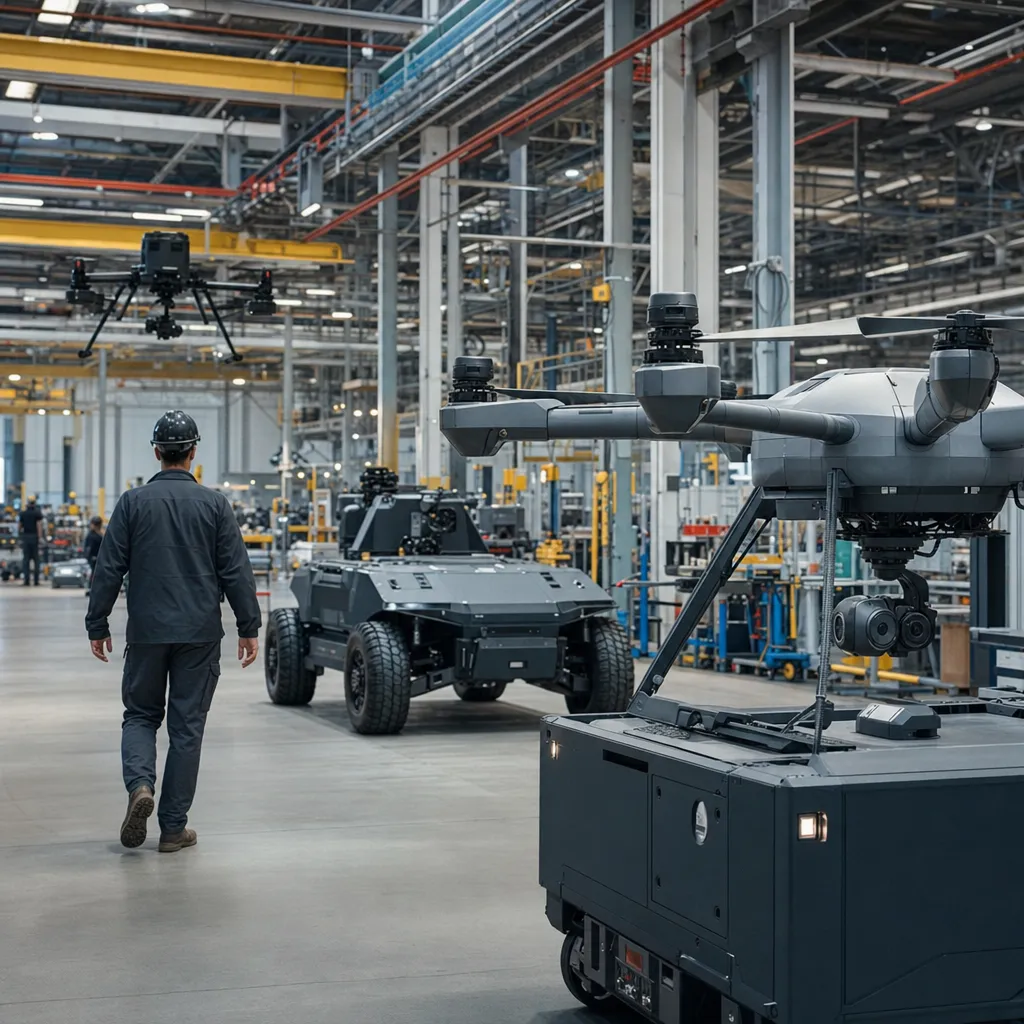
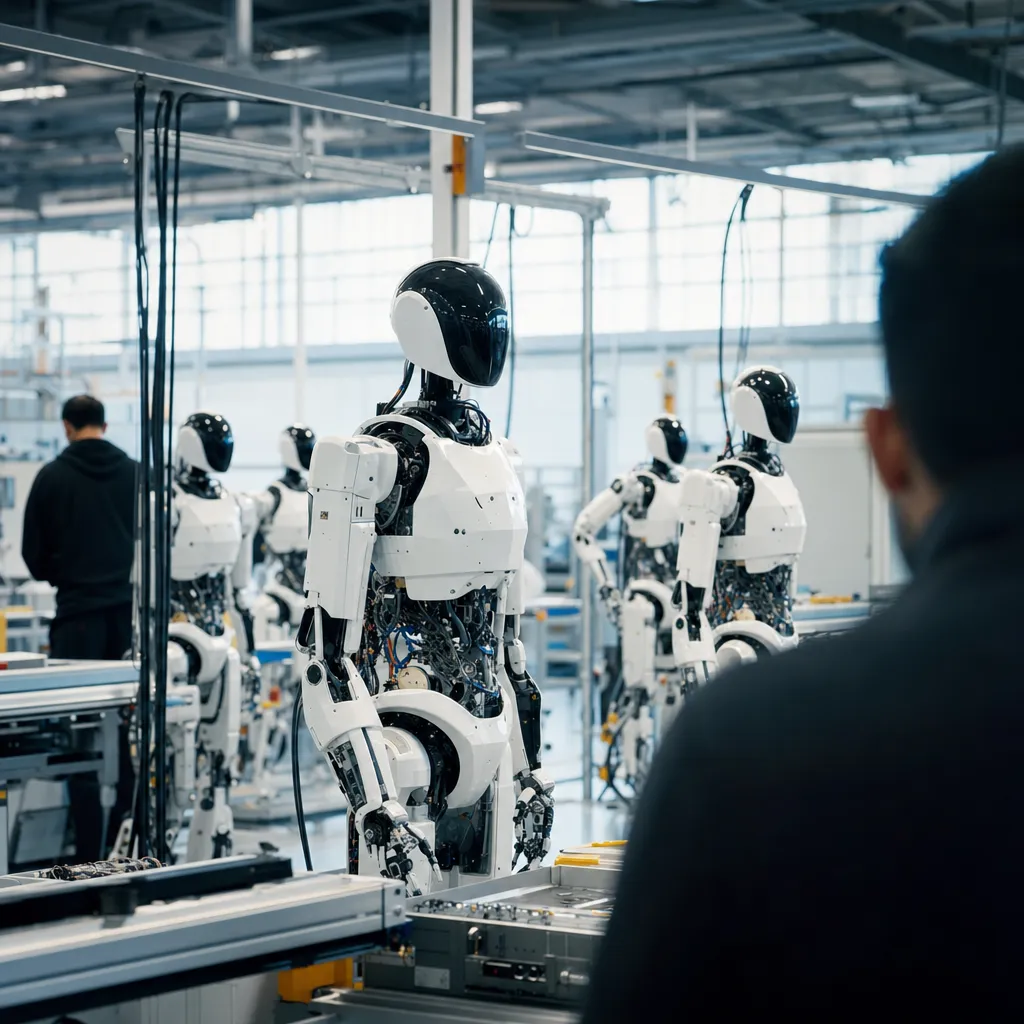
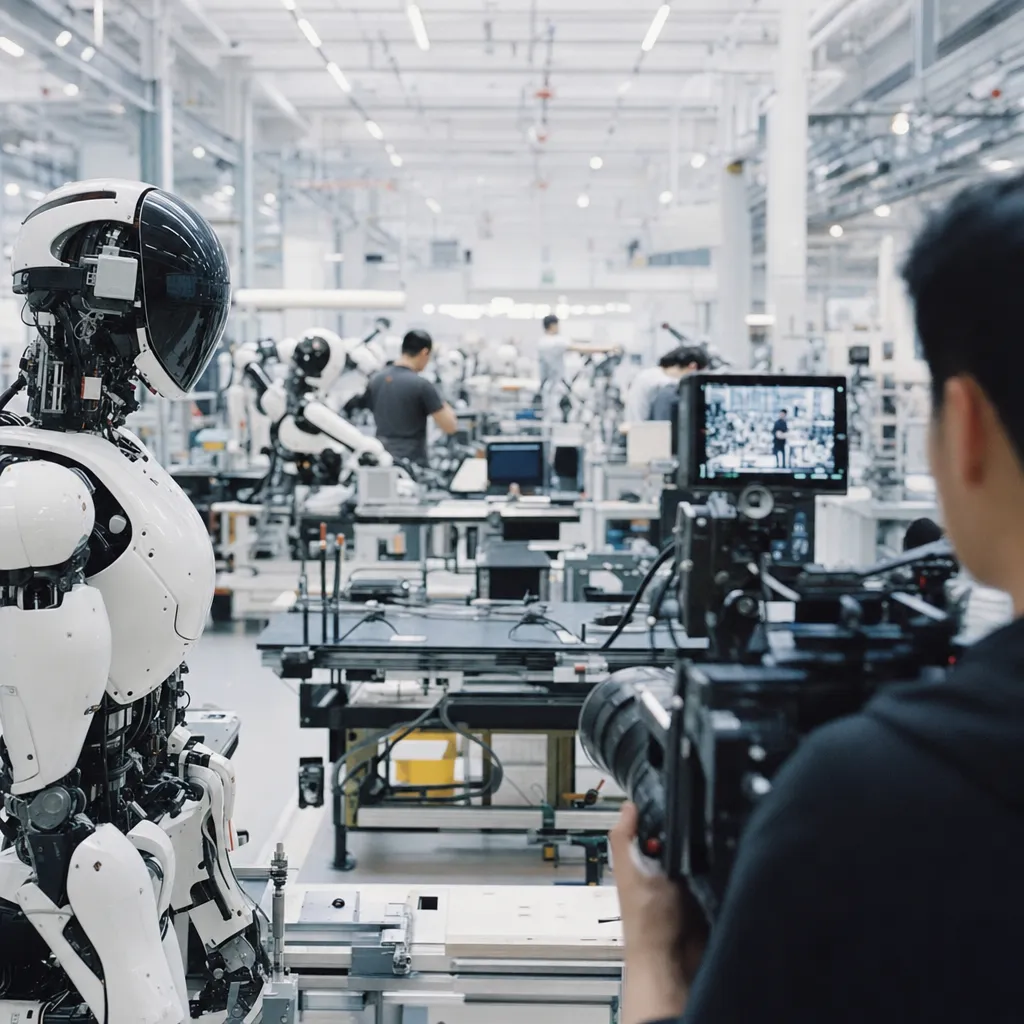
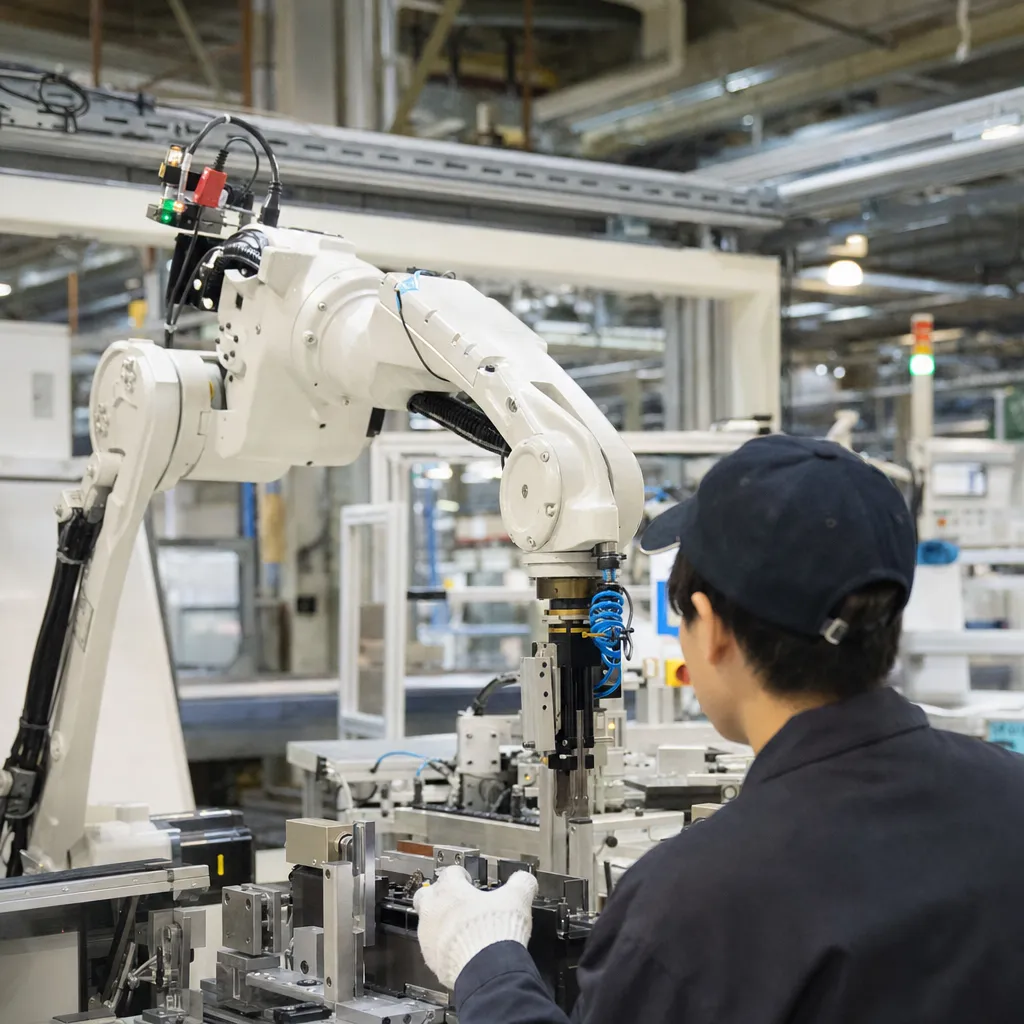
Foundry Robotics closed a $100 million Series A to build a 130,000-square-foot autonomous factory in Emeryville, California for defense and industrial hardware using its FoundryOS platform.
Foundry Robotics Raises $100M to Build America's First Fully Autonomous Assembly Factory
Foundry Robotics closed a $100 million Series A on November 18 to build a 130,000-square-foot fully autonomous factory in Emeryville, California for defense and industrial hardware. The round lands in the top 3% of all US deep-tech Series A rounds on record and positions Foundry as one of the best-funded bets on the thesis that AI-powered robotics can close the domestic manufacturing gap in strategically sensitive industries.
What Foundry Robotics Is Building
The company's model is manufacturing-as-a-service for complex physical hardware — drones, autonomous vehicle components, satellites, and ground robots. Customers bring product designs; Foundry programs and operates the assembly lines. The Emeryville facility runs on FoundryOS, the company's proprietary operating system for robotic assembly cells, which handles task planning, quality inspection, and adaptive manufacturing without line-specific human programming.
What makes this different from standard factory automation is the degree of generality. Traditional factory robotics is rigidly programmed — a line built to assemble one drone model cannot quickly pivot to a satellite bracket. FoundryOS is designed to be reprogrammed through natural language instruction and product specification uploads, allowing the facility to shift between product types on a timescale of days rather than months. The company claims this is the core capability that unlocks manufacturing-as-a-service economics.
The factory is physically located in Emeryville, adjacent to Berkeley — a geography that matters for talent (access to UC Berkeley robotics and ML researchers) and for supply chain (proximity to West Coast ports and the Bay Area hardware ecosystem).
Why Defense Contracts Are the Wedge Market
The defense market is an unusual starting point for a manufacturing startup — procurement is slow, compliance requirements are extensive, and contracts can take years to close. But it offers two structural advantages that consumer or commercial hardware does not:
Get this in your inbox.
Daily AI intelligence. Free. No spam.
First, unit economics. Defense hardware commands prices that justify the per-unit labor of complex autonomous assembly. A commercial drone assembled at Foundry might carry a Bill of Materials cost where robotics assembly is marginal; a defense-grade autonomous ground vehicle or satellite payload has price points where even expensive domestic autonomous assembly is competitive with offshore production.
Second, domestic sourcing requirements. ITAR (International Traffic in Arms Regulations) and Buy American provisions in defense contracts create a legal mandate for domestic manufacturing of certain hardware categories. As the Pentagon accelerates procurement of AI-enabled defense systems — drones, autonomous vehicles, ground sensors — the supply base of compliant domestic manufacturers is thin. Foundry is building directly into that gap.
The timing is deliberate. The Defense Department has signaled publicly that it views autonomous manufacturing capacity as a national security concern, citing the production scale advantages China has demonstrated in commercial and military drone manufacturing. Foundry's Series A investors are betting the federal government will direct significant procurement dollars toward the first domestic facilities that can demonstrate autonomous production at scale.
The FoundryOS Bet
The underlying technology thesis is that software-defined manufacturing — where assembly instructions are code rather than mechanical fixtures — will eventually do to factory operations what cloud computing did to data centers: allow capacity to be provisioned flexibly and costs to follow utilization rather than capital investment.
FoundryOS sits at the intersection of three technical disciplines: robotic motion planning (how individual arms and cells move), computer vision and quality inspection (automated defect detection replacing human QA), and orchestration (how hundreds of robotic cells coordinate without human supervision). The company has not disclosed benchmark data on assembly error rates or throughput, but the $100 million investment signals that institutional investors with deep hardware expertise have reviewed the technology stack and believe it is production-ready.
What 0M Buys
For context on the round size: the median US deep-tech Series A is roughly $20-25 million. At $100 million, Foundry is not raising to build a prototype — it is raising to build operating infrastructure at scale. The Emeryville facility alone will cost tens of millions to construct and equip. The remainder funds FoundryOS development, defense customer acquisition (which requires dedicated business development teams with security clearances), and working capital for the manufacturing-as-a-service business model, where Foundry bears upfront capital costs before contract revenue begins.
What to Watch
Watch for Foundry's first publicly disclosed defense contract — a named DoD program would validate both the product and the sales cycle. Also watch whether the company's manufacturing-as-a-service model attracts commercial aerospace or industrial automation customers as a secondary revenue stream, which would de-risk the defense concentration. The Emeryville facility is expected to begin production in 2027; actual throughput data from that facility will be the first real test of whether FoundryOS performs at the claimed level of generality.
Did this help you understand AI better?
Your feedback helps us write more useful content.
Get tomorrow's AI briefing
Join readers who start their day with NexChron. Free, daily, no spam.