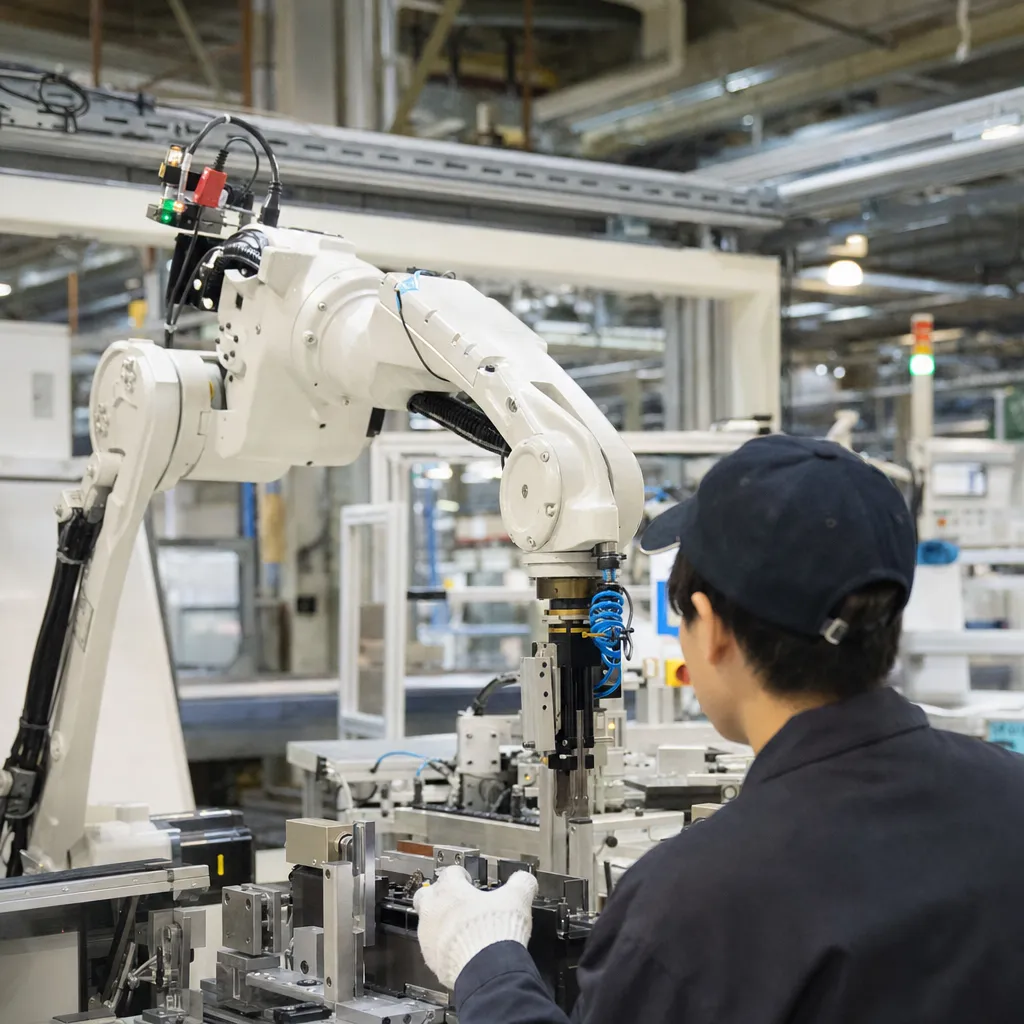
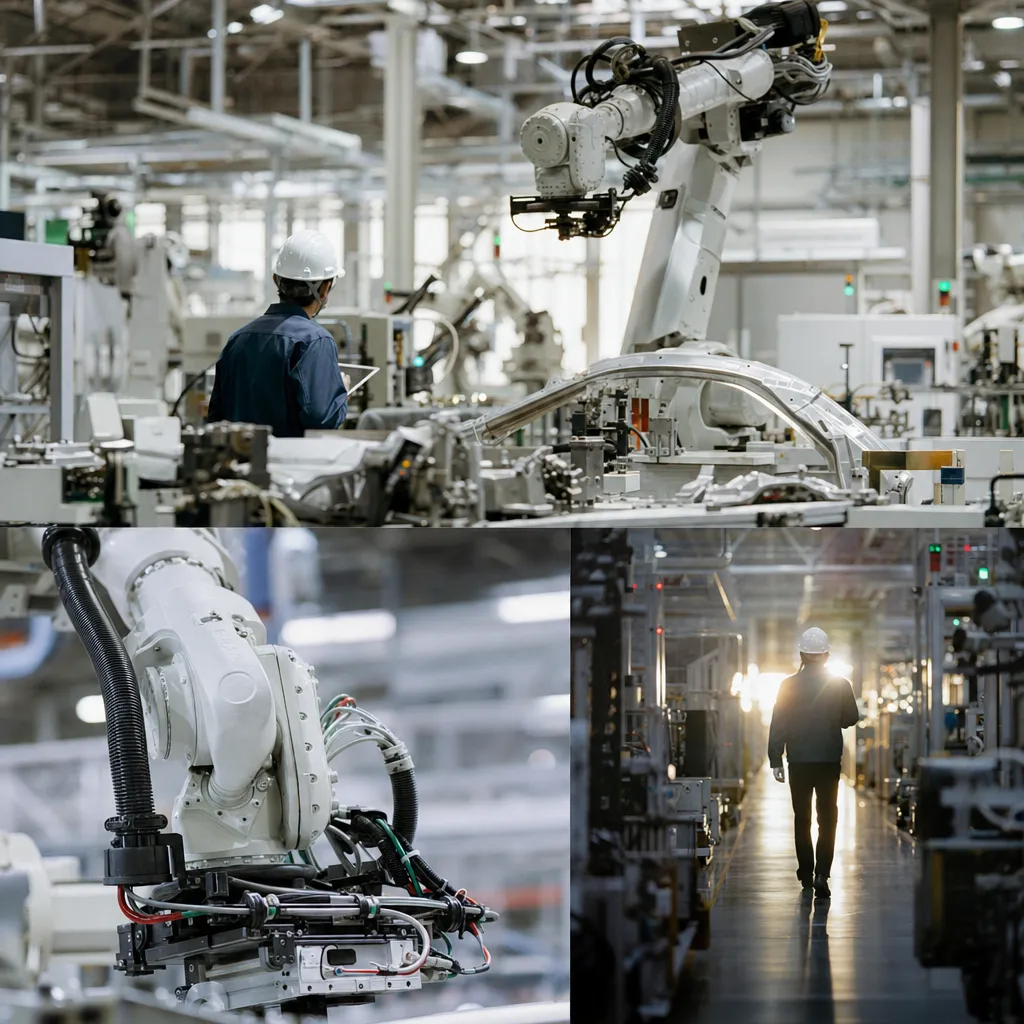
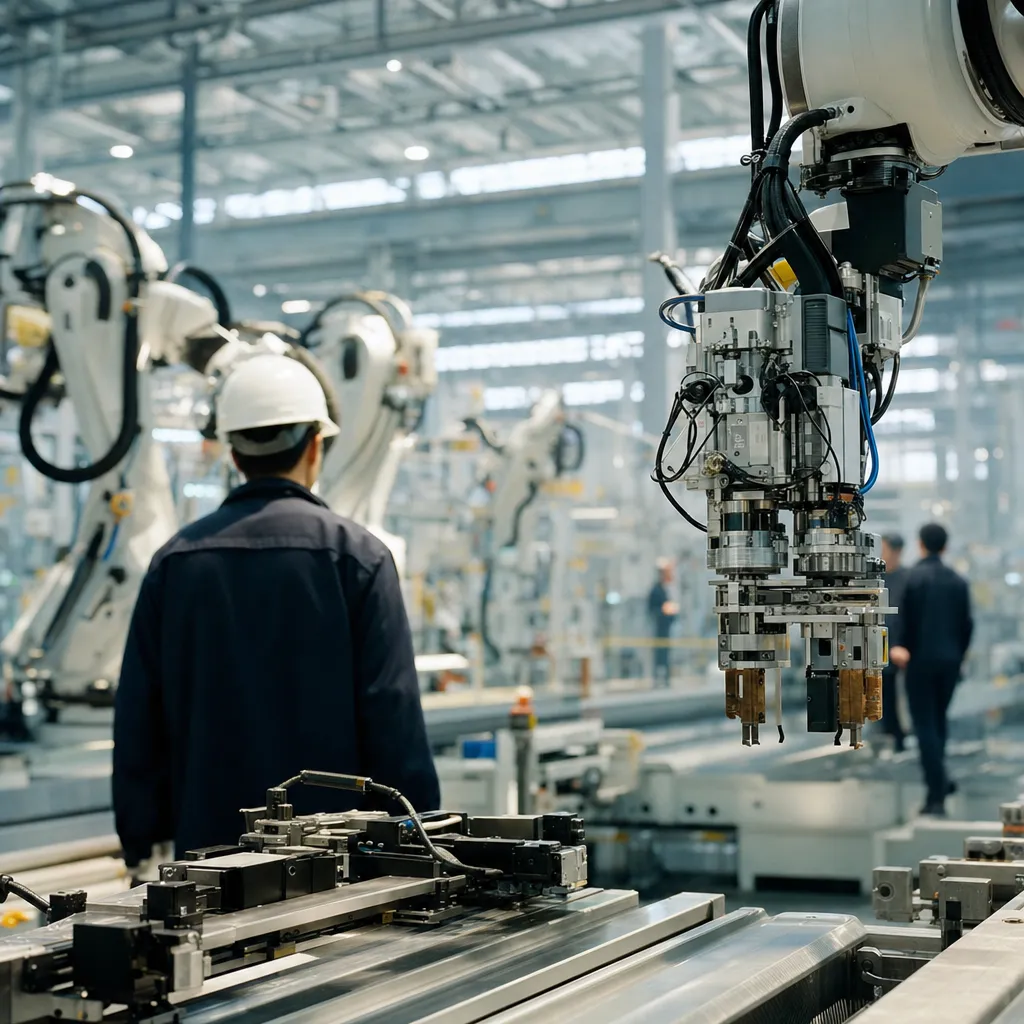
Swiss startup Embodied AI launched AIR, a two-armed wheeled robot that operates in human-occupied factory spaces without physical safety barriers — targeting the cage requirement that has blocked mass deployment of collaborative industrial robots for decades.
Swiss startup Embodied AI has launched AIR, a two-armed wheeled robot that operates in human-occupied factory spaces without physical safety barriers — directly targeting the cage requirement that has prevented mass deployment of industrial robots alongside workers for decades.
Safety enclosures — the physical fencing that separates most factory robots from people — are mandated by OSHA in the United States and equivalent regulatory bodies worldwide. Traditional industrial robot arms move faster than a person can predict or dodge, and physical barriers have been the standard engineering solution since the 1980s. The practical tradeoff is severe: cages anchor robots to fixed floor positions, require expensive facility reconfiguration during installation, and make genuine side-by-side human-robot collaboration structurally impossible. Embodied AI says AIR eliminates that constraint.
How AIR works
AIR uses a wheeled base rather than bipedal legs — a deliberate design decision that lets it move efficiently across flat factory floors without the balance engineering and payload limitations that have extended commercial timelines for legged humanoid robots. The robot's two arms are paired with onboard AI perception that tracks workers in real time and adjusts movement patterns to maintain safe proximity as people move through the shared workspace.
Interesting Engineering reports that AIR achieved a 95% average task success rate across paid manufacturing pilots. Embodied AI has not disclosed the number of pilot sites, the specific task categories measured, or the names of participating manufacturers.
Get this in your inbox.
Daily AI intelligence. Free. No spam.
The economics of safety guarding
Industrial robot installation costs — covering safety guarding, floor modification, and system integration — typically run between $50,000 and $200,000 per cell by industry estimates. For large automotive, aerospace, and consumer electronics manufacturers, that overhead is absorbed into capital planning. For the tens of thousands of small and mid-sized manufacturers that make up the broader industrial base, it pushes robotics economically out of reach.
Collaborative robots, known as cobots, have made inroads for lighter tasks at lower speeds — companies like Universal Robots have built significant businesses in that category. What Embodied AI is claiming is heavier manipulation at faster speeds while remaining cage-free: a performance profile that cobots generally cannot match.
The physical AI wave
AIR launches into a year of intense investment in human-compatible factory robotics. Nvidia's GROOT program has funded multiple humanoid startups. Agility Robotics' Digit robot is being piloted at Amazon warehouses. Figure AI and 1X Technologies have both raised large rounds in 2026. The common thread across this investment wave is a shift from fixed-arm automation to mobile, general-purpose robots that can share space with people.
Embodied AI's wheeled bet is that factory floors don't need legs — they need reliability, speed, and fast deployment on existing infrastructure. Skipping bipedal locomotion removes a significant source of engineering complexity and potentially shortens the path to paying customers.
What to watch
Pilot metrics and commercial scale are different benchmarks. Embodied AI has not announced volume manufacturing capacity, pricing, or named industrial customers. The next meaningful signals will be either a named manufacturing partner or a fundraising round with institutional validation — indicators that AIR is on a path from successful pilot to deployable product at scale.
Did this help you understand AI better?
Your feedback helps us write more useful content.
Get tomorrow's AI briefing
Join readers who start their day with NexChron. Free, daily, no spam.