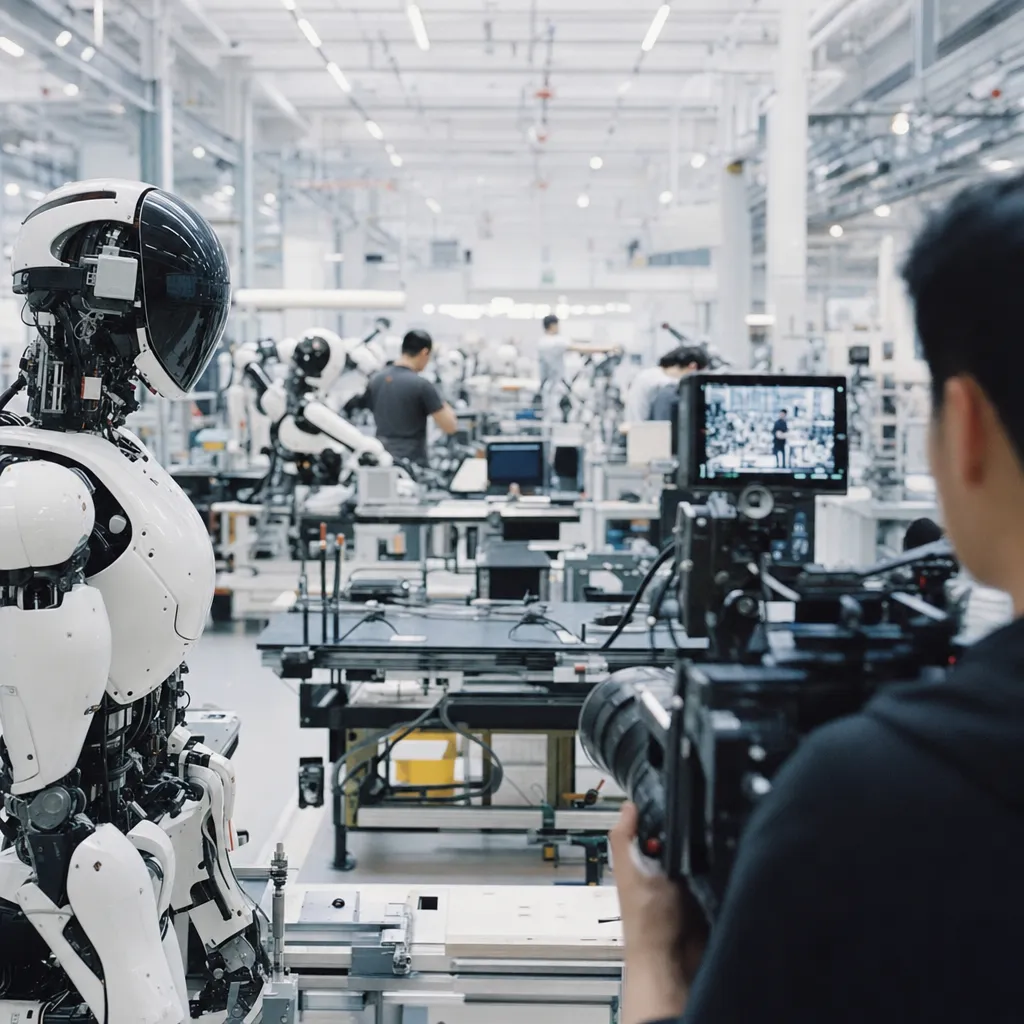
OpenAI has shut down its dedicated robotics research team after finding that general-purpose AI models are now capable enough to operate robots without specialized training — a turning point for the entire physical AI industry.
OpenAI has shut down its dedicated robotics research team, folding researchers into other groups within the company. Fortune reported on November 13 that the decision stems from a straightforward finding: general-purpose AI models have become capable enough to operate robots without domain-specific training. The specialized robotics team, in short, is no longer needed.
For the broader manufacturing and robotics industry, this is an inflection point. The logic that made robotics AI a separate discipline — that physical intelligence required its own models and training pipelines — is being dismantled.
Why OpenAI Built a Robotics Team
OpenAI launched its robotics group to tackle what seemed like a fundamentally different problem from language AI. Teaching a machine to write coherently is not the same as teaching it to pick up a coffee cup. Physical intelligence requires spatial reasoning, real-time sensor processing, manipulation planning, and feedback loops that language models were not designed to handle.
For years, this meant that building commercially useful robots required two separate AI investments: a large language or multimodal model for understanding instructions and context, plus a custom-trained physical control system. That separation required dedicated researchers, proprietary training data, and ongoing investment in specialized robotics AI.
What Changed
Multimodal foundation models — trained on massive datasets spanning text, images, video, and increasingly sensor and robotic data — have crossed a capability threshold. They can now interpret camera feeds, reason about physical environments, plan action sequences, and issue low-level robot commands without task-specific fine-tuning.
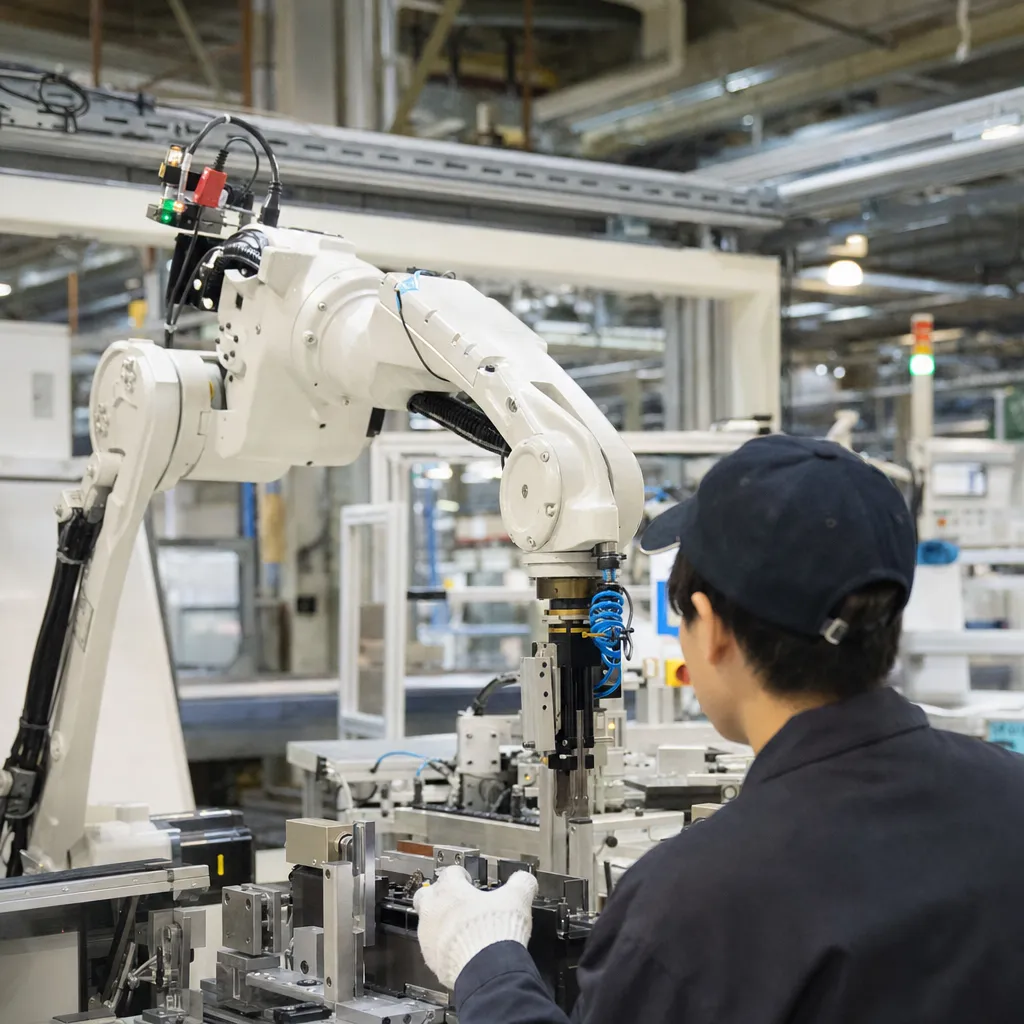
The same model powering a customer service chatbot or a coding assistant can now serve as the brain of a factory arm or a warehouse robot. OpenAI's decision to dissolve the robotics team reflects an internal acknowledgment that this transition has arrived.
CEO Sam Altman has argued for years that general AI systems would eventually subsume specialized verticals. The robotics dissolution is the most concrete organizational proof of that thesis yet.
Get this in your inbox.
Daily AI intelligence. Free. No spam.
Implications for Robot Makers
The barrier to building AI-enabled robots has dropped significantly.
Previously, a hardware startup entering robotics had to either build a robotics AI team from scratch or buy expensive proprietary systems from AI-robotics specialists. Neither option was cheap or fast.
Now, the same foundation model APIs available to any software developer can serve as the core intelligence layer for a physical robot. This changes the economics dramatically:
- Hardware companies can focus on motors, sensors, and mechanical design while plugging into general AI models for reasoning and control
- Manufacturers deploying robots get faster capability improvements through model updates rather than waiting for hardware upgrades
- AI-robotics startups that built their value proposition on proprietary physical AI face direct competition from general models available via API
Companies already aligned with the foundation model approach are best positioned. Figure AI, Apptronik, and 1X Technologies have been integrating OpenAI and Google DeepMind models as robot reasoning layers rather than training specialized systems from scratch. OpenAI's move validates their strategy.
Who Faces Pressure
Not all robot makers are equally positioned for this shift.
Companies like Boston Dynamics have pursued a hybrid path: proprietary locomotion and motion planning combined with general model integrations for reasoning and instruction-following. That balance may need recalibrating as general models encroach further into the physical control layer.
Specialized robotics AI vendors — companies whose business model was selling purpose-built physical AI stacks to hardware manufacturers — face the most direct pressure. If OpenAI's general models can match or outperform their specialized systems while also serving as a customer's LLM and reasoning backbone, the case for buying a separate physical AI stack weakens.
For manufacturers and logistics operators deploying robots at scale, the message is practical: robot software is becoming a commodity. Competitive differentiation will increasingly come from integration quality, proprietary operational data, and mechanical design — not from who built the most sophisticated physical AI.
What to Watch
Watch Q1 2027 for robotics hardware partnership announcements. Whether OpenAI's general models land commercial integrations with major robot builders — Figure, Boston Dynamics, Agility Robotics — will be the clearest signal of how complete the transition from specialized to general robot AI really is. Competing AI labs making similar organizational decisions in the next 12-18 months would confirm the pattern is industry-wide, not OpenAI-specific.
Did this help you understand AI better?
Your feedback helps us write more useful content.
Get tomorrow's AI briefing
Join readers who start their day with NexChron. Free, daily, no spam.