China installs 295,000 industrial robots annually versus 34,200 in the US — an 8.6-to-1 gap that signals the US-China AI competition is moving from model benchmarks to factory floors.
China Deploys 295,000 Industrial Robots Per Year as US-China AI Race Shifts to Factories
By Hector Herrera | May 18, 2026
The US-China AI competition has always been framed around model benchmarks, chip access, and research talent. A new analysis from Alpine Macro argues that framing is increasingly incomplete. China now deploys 295,000 industrial robots annually versus just 34,200 in the US — a 8.6-to-1 gap that reflects a divergence not just in manufacturing capacity, but in the physical infrastructure on which AI's next competitive layer will run. The race for AI supremacy is moving from the data center to the factory floor.
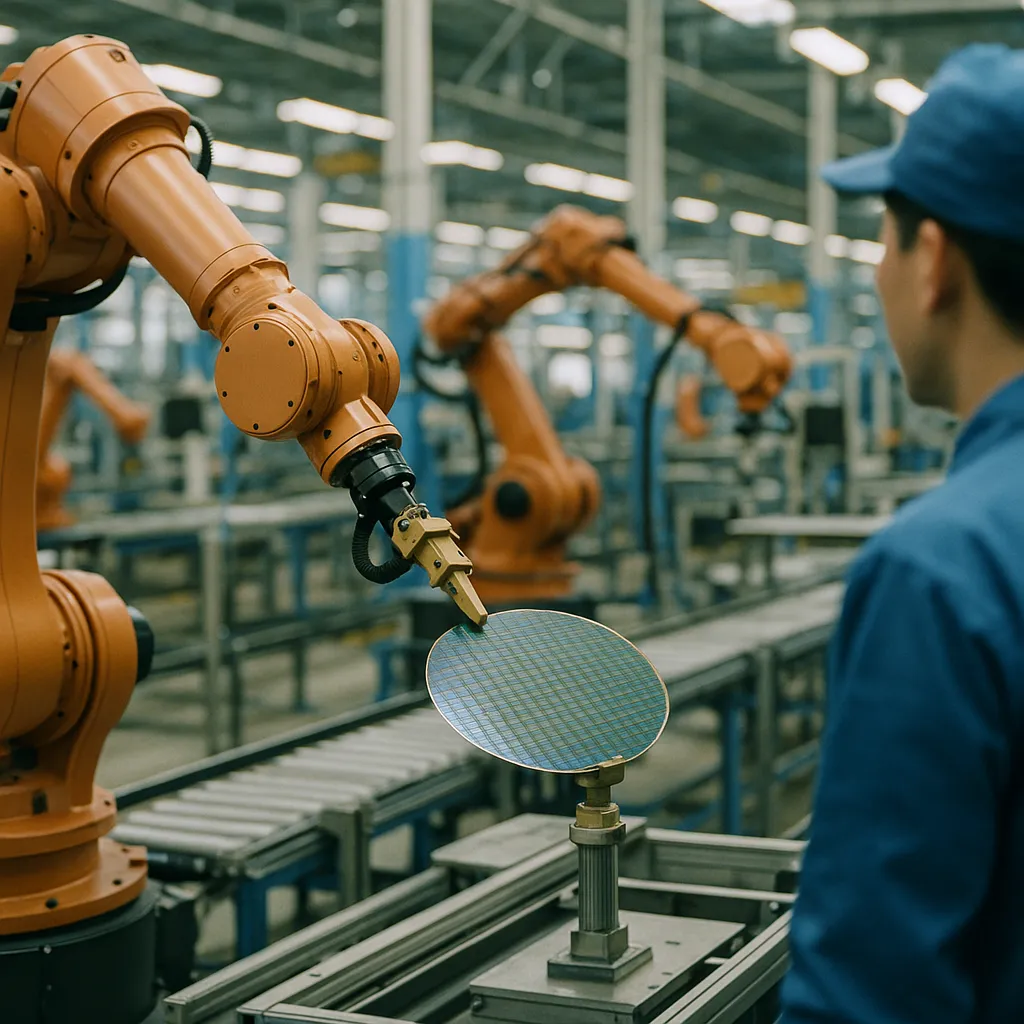
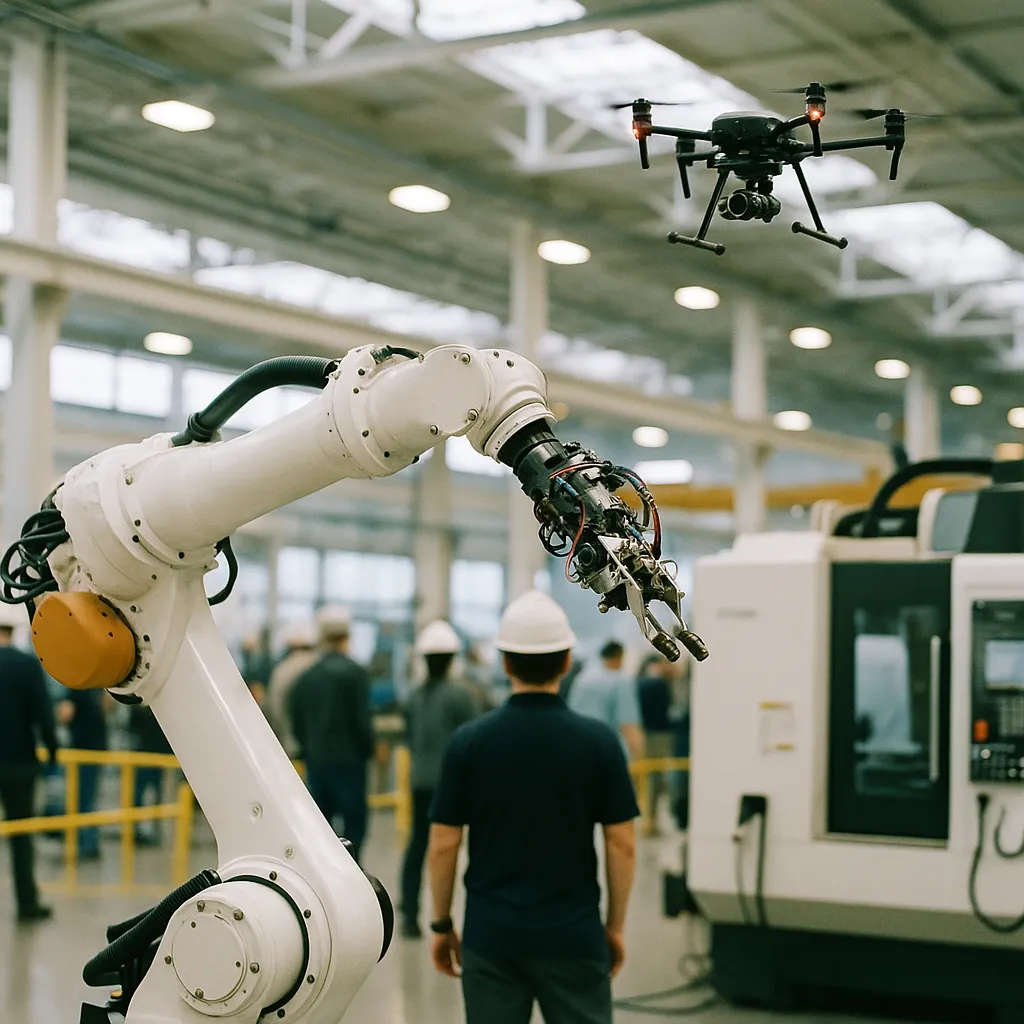
This is not simply a manufacturing story. Industrial robots are the endpoints through which AI translates into physical production — the actuators of a broader "physical AI" stack that includes machine vision, real-time process control, quality inspection, and autonomous logistics. The country that scales physical AI deployment fastest is building an economic feedback loop: more robots generate more operational data, which trains better AI, which enables more capable robots.
The Numbers in Context
The robotics gap between China and the United States is not new, but its magnitude has accelerated sharply. According to the International Federation of Robotics, China surpassed the US in annual robot installations in the early 2010s and has widened the gap every year since. The 2026 Alpine Macro figures show that gap at nearly a 9-to-1 ratio — a disparity that compounds across supply chains, manufacturing sectors, and geographies.
China's robot density is also climbing. Robot density measures installed robots per 10,000 manufacturing workers — a metric that captures how deeply automation has penetrated an industrial workforce. China's density has grown from below the global average a decade ago to near the top of the G20. The country is not just installing more robots in absolute terms; it is restructuring its entire manufacturing labor model around them.
The United States, by contrast, has seen industrial robot adoption constrained by a combination of factors: higher wages relative to automation costs in many sectors, longer capital expenditure cycles in legacy manufacturing, and a manufacturing base that shifted toward high-value, lower-volume production in the 1990s and 2000s. Rebuilding that base — the goal of recent US industrial policy — requires physical infrastructure that takes years to stand up, not quarters.
Why This Connects to the AI Race
The Alpine Macro analysis makes a specific argument: that the conventional scoreboard of the US-China AI competition — focusing on foundation model capabilities, GPU export controls, and research publication counts — is measuring only part of the competition.
Get this in your inbox.
Daily AI intelligence. Free. No spam.
Physical AI is the emerging category where model capability meets real-world deployment at scale. It includes:
- Industrial robotics controlled by AI vision and decision systems
- Autonomous logistics — warehouse robots, autonomous forklifts, port automation
- Quality control AI — machine vision systems running inspections at production speed
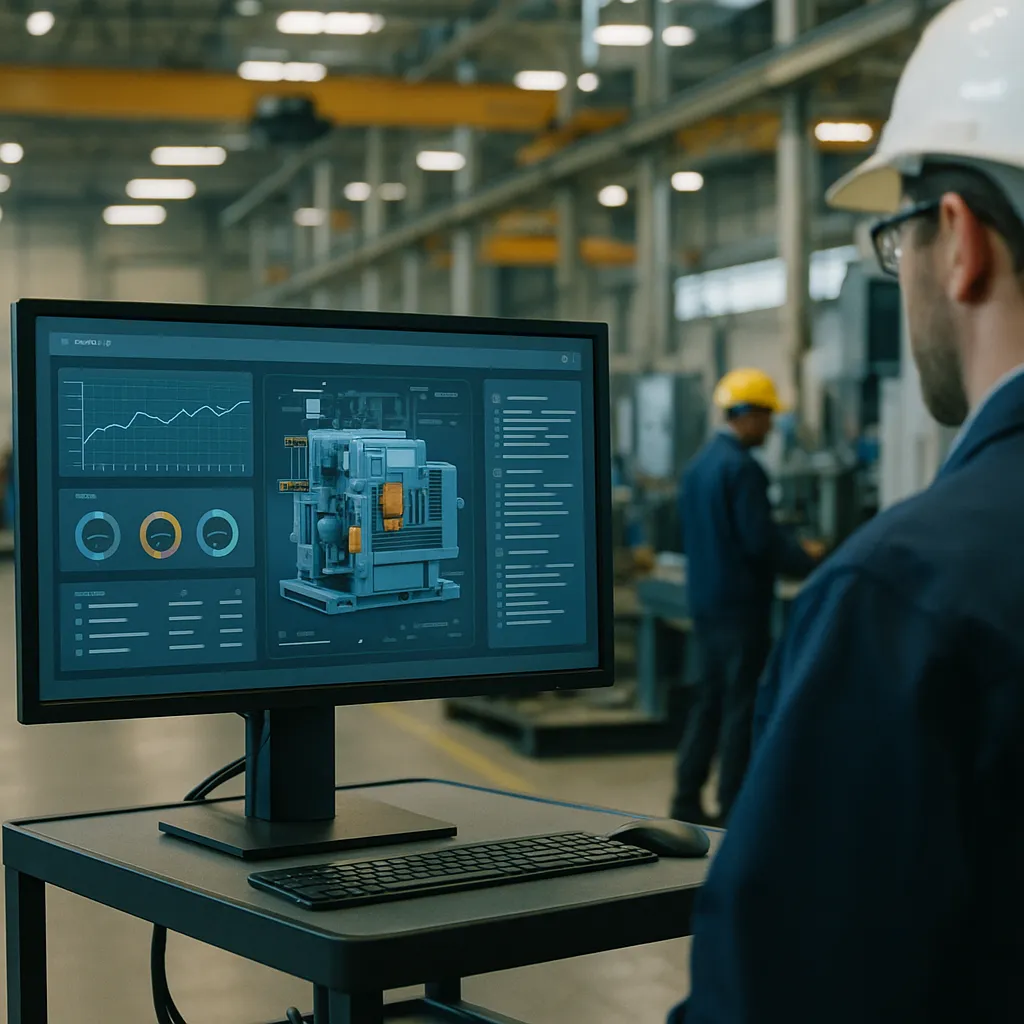
- Predictive maintenance — AI systems that monitor factory equipment in real time and flag failures before they occur
China's manufacturing scale gives it a structural advantage in deploying and improving these systems at volume. A factory running 500 AI-controlled robots generates orders of magnitude more operational data than a factory running 50. That data advantage compounds over time.
NexChron has covered the physical AI buildout across multiple angles — including Siemens [and NVIDIA](/health/hoppr-nvidia-hospital-ai-foundation-models)'s industrial AI operating system, NVIDIA's Omniverse manufacturing push, and the humanoid robot deployments beginning to hit factory floors in 2026. Each of these technologies requires scale to improve — and China's factory infrastructure provides that scale at a ratio the United States currently cannot match.
The US Industrial Policy Response
The CHIPS and Science Act, the Inflation Reduction Act's manufacturing provisions, and recent executive orders on reshoring AI-related supply chains represent the United States' policy response to this divergence. The implicit bet is that investment in semiconductor fabrication, clean energy manufacturing, and advanced production will rebuild the physical AI substrate the country needs to compete.
The challenge is timing. Policy investment announced in 2022 and 2023 translates into operational factories in 2026 and 2027 — and those factories need to be roboticized and AI-enabled to be competitive with Chinese counterparts that have been running automated operations for years. Rebuilding manufacturing capacity and simultaneously automating it is a harder problem than automating existing capacity.
NVIDIA's push to position the United States as the global hub for physical AI development — including its partnerships with GE Vernova, Siemens, and other industrial players — is the private sector complement to the policy investment. But hardware sales and software platforms do not by themselves close a 9-to-1 robot deployment gap.
What to Watch
The Alpine Macro report frames this as a medium-term competitive risk, not an immediate crisis. The US still leads on AI model capability, semiconductor design, and the software infrastructure that runs global AI deployment. But if physical AI becomes as economically decisive as cloud AI has been, the manufacturing deployment gap will matter in ways that model benchmark comparisons do not capture.
Watch for IFR's annual robotics data later in 2026, for US manufacturing investment figures in AI-enabled facilities, and for whether the humanoid robot deployments at US factories — Tesla, Figure, Apptronik — begin to close the density gap at the high-value production layer where American manufacturing is strongest.
Source: EconoTimes / Alpine Macro, May 2026
Did this help you understand AI better?
Your feedback helps us write more useful content.
Get tomorrow's AI briefing
Join readers who start their day with NexChron. Free, daily, no spam.