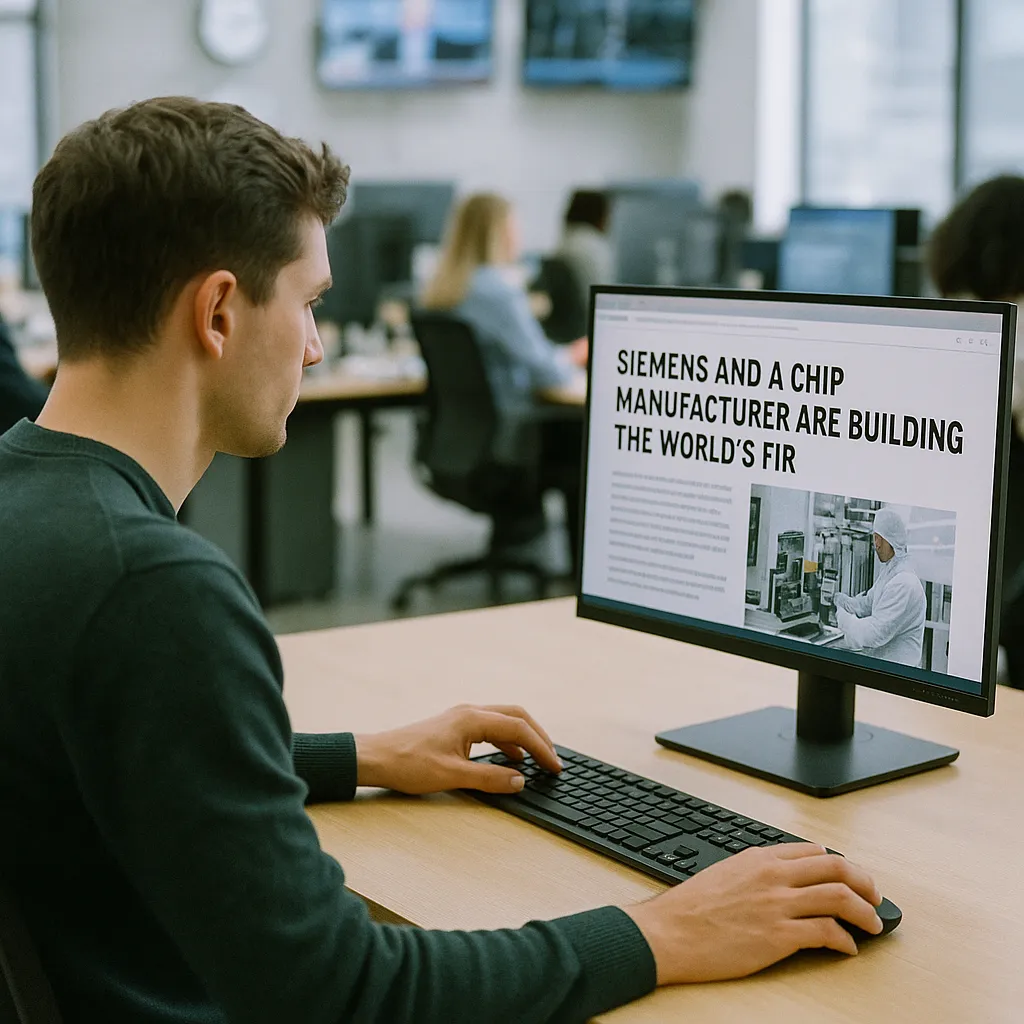
Siemens and NVIDIA are building what they call the world's first fully AI-driven industrial operating system — starting with Siemens' Erlangen factory — with plans to replicate the model globally.
Siemens and NVIDIA Are Building the World's First Industrial AI Operating System
By Hector Herrera | May 2, 2026 | Manufacturing
Siemens and NVIDIA have announced an expanded partnership to build what they're calling the world's first fully AI-driven industrial operating system — a platform designed to make manufacturing facilities adaptive in real time, from inbound logistics to final quality inspection. The Siemens Electronics Factory in Erlangen, Germany is the first live deployment, serving as the blueprint the companies plan to replicate globally.
The announcement, published on the NVIDIA Newsroom, marks a significant escalation of a partnership that has been building for several years. What's new is the framing and the ambition: this isn't a pilot program or a single-use-case integration. The goal is a full-stack factory intelligence layer that runs continuously and learns from every machine, sensor, and process in a facility.
What an Industrial AI Operating System Actually Does
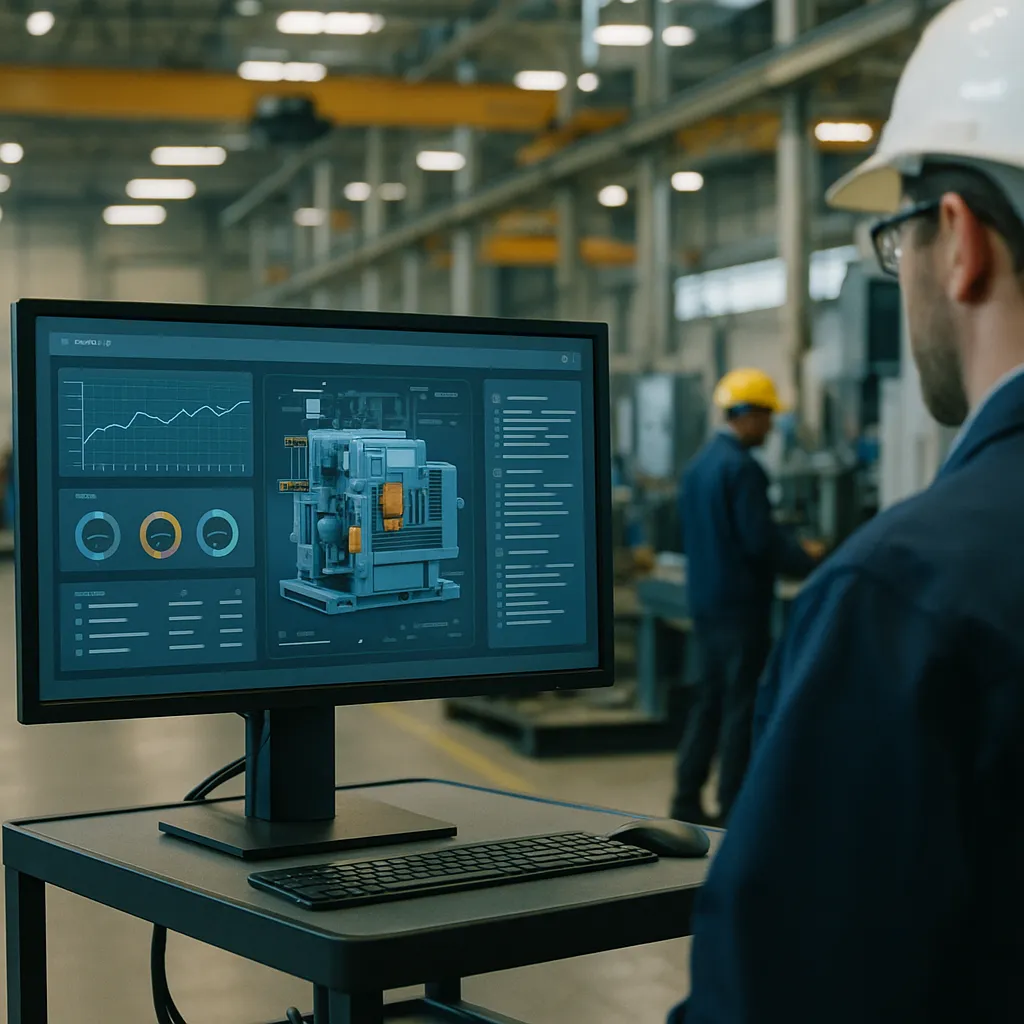
An industrial operating system, in this framing, is a software layer that sits above a factory's existing machines and control systems — collecting data from every source, modeling the current state of production, and making or recommending adjustments in real time.
The Siemens/NVIDIA version combines:
- Siemens' Industrial Copilot and Xcelerator platform — Siemens' existing AI and automation software stack, which already integrates with its own PLCs (programmable logic controllers), MES (manufacturing execution systems), and digital twin tools
- NVIDIA's Omniverse and Metropolis platforms — Omniverse powers physics-accurate digital twins of factory environments; Metropolis handles computer vision at the edge for quality inspection and anomaly detection
- NVIDIA's AI computing infrastructure — the GPU clusters that run the inference models powering real-time decisions
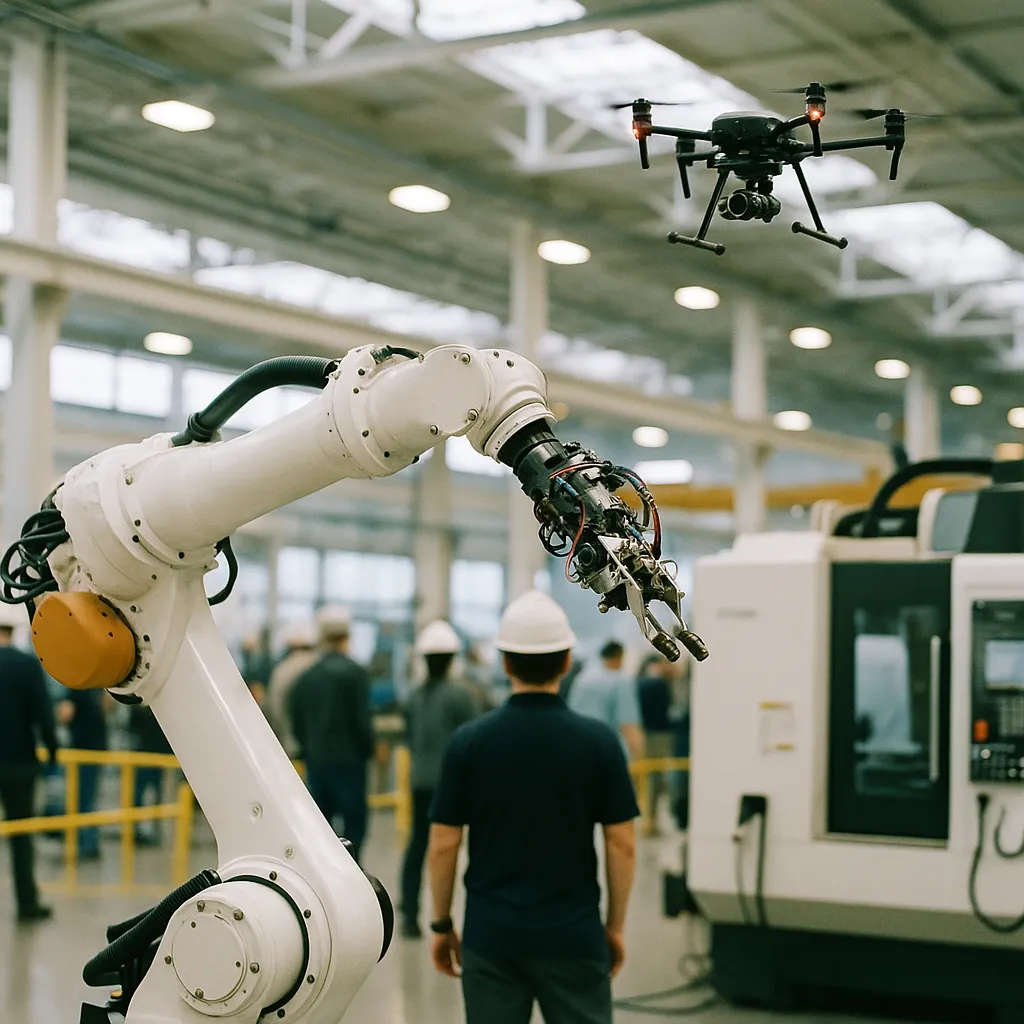
Together, the system is designed to handle the functions that currently require significant human judgment: scheduling production runs, routing materials through the factory floor, detecting defects as parts come off the line, predicting when machines will need maintenance, and adjusting to supply chain disruptions without halting production.
At the Erlangen electronics factory — which builds Siemens' own industrial automation products — this is already operating, making it a credible proof of concept rather than an aspirational announcement.
Get this in your inbox.
Daily AI intelligence. Free. No spam.
Why the "Operating System" Framing Matters
Calling this an operating system is a deliberate positioning move, and it's worth taking seriously. Operating systems create ecosystems. If Siemens and NVIDIA establish their platform as the standard infrastructure layer for factory AI, every application built on top of it — whether from Siemens, third-party vendors, or enterprise customers building custom tools — runs in their environment. That's a fundamentally different business than selling individual AI modules.
The parallel to Windows or iOS is not perfect — factory environments are far more heterogeneous and capital-intensive than consumer computing — but the strategic logic is the same: control the platform, and you capture value from every application that runs on it.
For Siemens, which already sells the physical hardware (motors, PLCs, sensors) in many of the factories it would deploy this to, the OS layer creates a recurring software revenue stream on top of its existing hardware base. For NVIDIA, it creates enterprise compute contracts at a scale that rivals hyperscaler cloud deals.
What This Means for Manufacturers
For companies running industrial facilities, the implications are significant across several dimensions:
Productivity and throughput: The Erlangen factory deployment gives Siemens real performance data to share. Watch for specific efficiency numbers as the companies disclose more results — energy per unit produced, defect rates, unplanned downtime — from the Erlangen pilot.
Workforce: An AI operating system that handles scheduling, routing, and quality inspection doesn't eliminate factory workers, but it substantially changes what factory workers do. The skilled roles in AI-enabled facilities shift toward maintaining, configuring, and overriding AI systems rather than performing the tasks those systems now handle. This requires investment in retraining.
Vendor lock-in: This is the underexamined risk. A factory that adopts the Siemens/NVIDIA industrial OS will build years of operational data, model configurations, and process integrations inside that platform. Switching to a competitor's equivalent system — if one emerges — will be expensive. Procurement teams evaluating this technology need to think carefully about data portability and interoperability terms before signing.
Capital timeline: The global rollout plan signals that Siemens and NVIDIA believe they have a deployable product, not just a demo. For manufacturers weighing AI investments, the question is no longer whether this technology is real — it's how quickly they need to move to avoid falling behind competitors who adopt early.
What to Watch
The Erlangen factory will generate the first real-world performance data for this system. Siemens has historically been willing to share specific operational metrics from its flagship deployments — look for case studies and technical publications from the Erlangen implementation in the second half of 2026. Also watch whether other industrial automation incumbents — Rockwell, Honeywell, ABB — accelerate their own platform plays in response to this announcement. The "industrial OS" category is now officially a competitive battleground.
Source: NVIDIA Newsroom
Did this help you understand AI better?
Your feedback helps us write more useful content.
Get tomorrow's AI briefing
Join readers who start their day with NexChron. Free, daily, no spam.