Humanoid robot interest among manufacturers jumped from 8% to 13% year-over-year, while LLM adoption in factory settings nearly doubled to 35%. Physical AI is leaving the lab.
Physical AI Craze Reaches Factory Floors as Humanoid Robots Move From Lab to Production Lines
By Hector Herrera | May 4, 2026 | Manufacturing
Manufacturers are deploying humanoid robots and large language models on factory floors at a pace that would have seemed speculative two years ago. Two data points define where the industry actually stands: interest in humanoid robots among manufacturers jumped from 8% to 13% year-over-year, while LLM adoption in factory settings jumped from 16% to 35% in the same period. These are not pilot program numbers — they reflect operational deployments.
Background
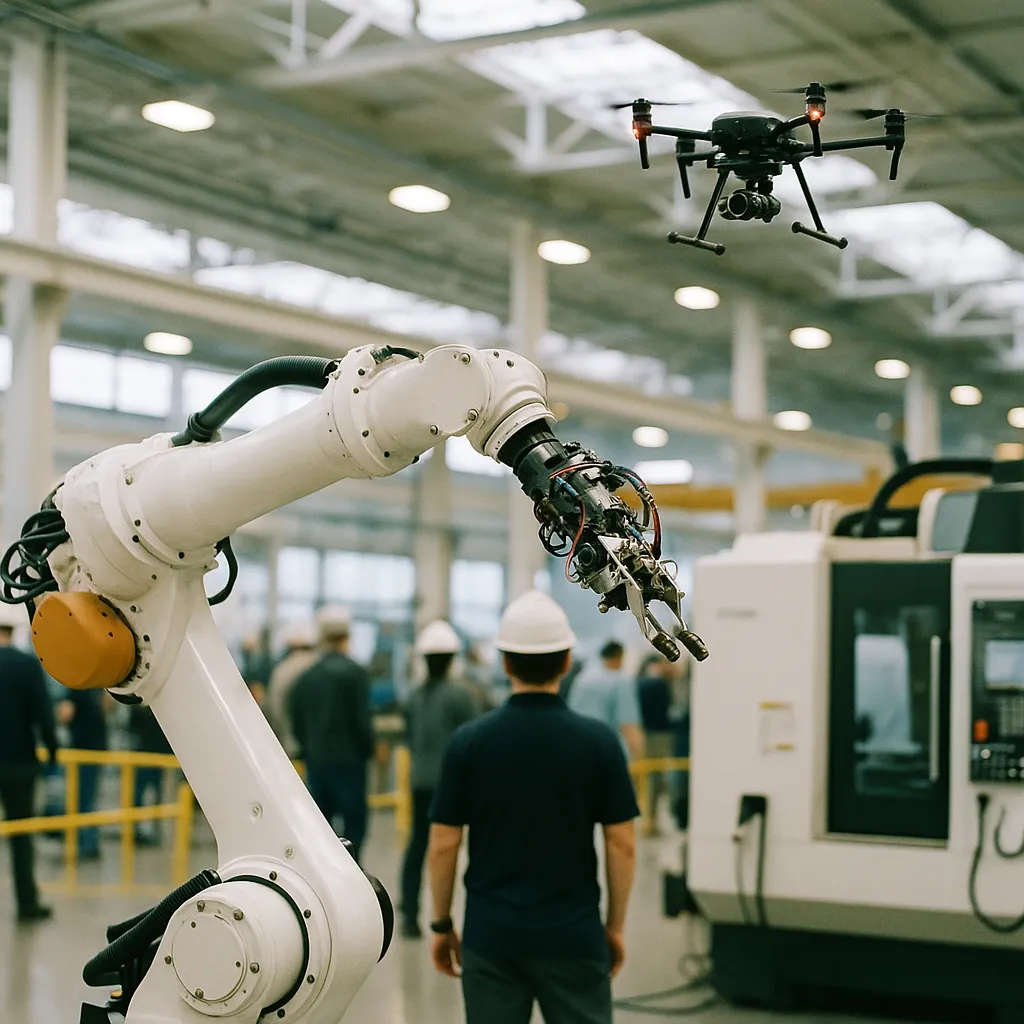
Industrial automation has been reshaping factories for decades, but it has historically meant purpose-built machines locked to specific tasks: a robotic arm that welds a single joint in a fixed sequence, a conveyor system optimized for one product line. The promise of "physical AI" — robots and intelligent systems that can reason about their environment, adapt to novel situations, and operate in spaces designed for humans — has been the aspirational end state of that long automation arc.
In 2026, that arc is bending sharply. The combination of improved robot hardware, more capable AI models, and simulation-based development tools has compressed the timeline from research demonstration to factory deployment faster than most industry analysts projected.
What the Data Shows
Manufacturing Dive's analysis of 2026 automation trends identifies several concrete shifts:
Humanoid robot adoption:
- Interest in humanoid robots among factory operators grew from 8% to 13% year-over-year — a 62% relative increase
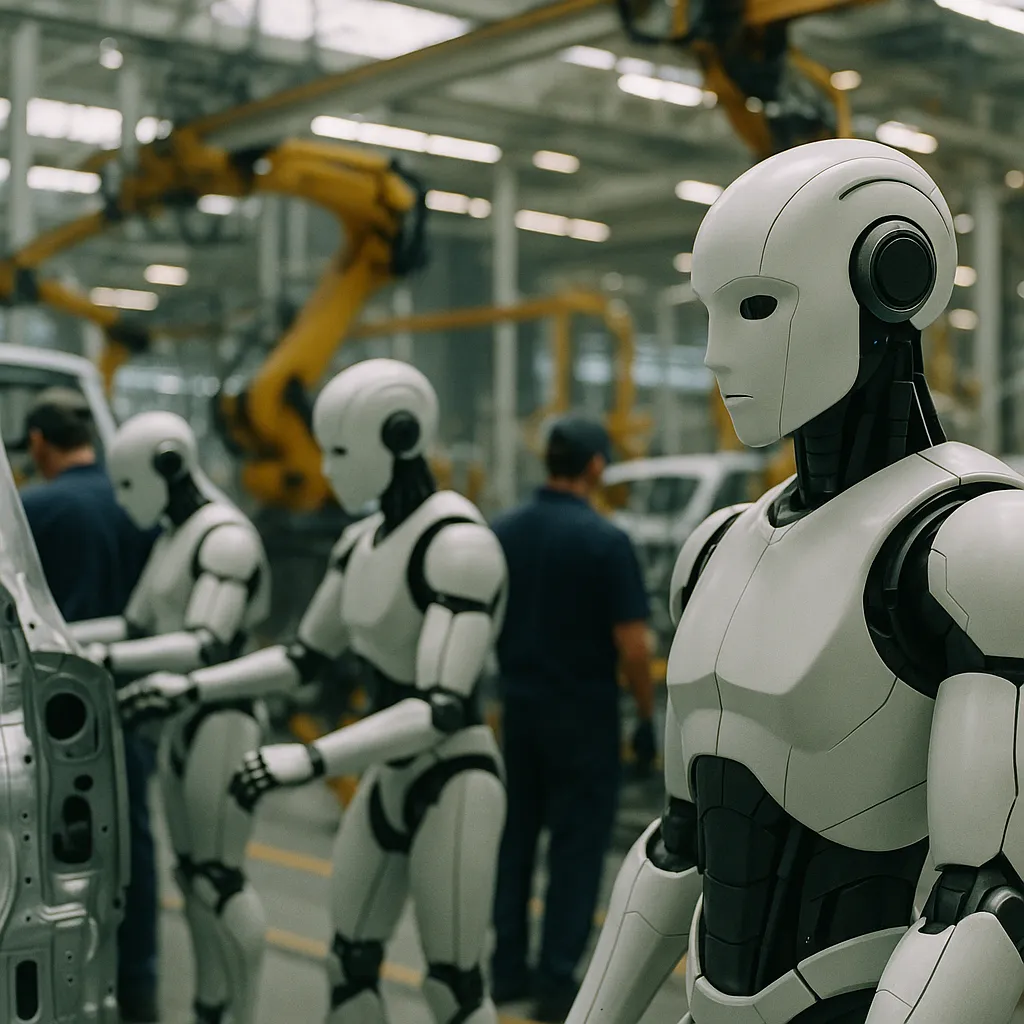
- The growth is concentrated in applications where flexibility matters: complex assembly tasks, handling irregular parts, and moving through existing factory layouts built for human workers
LLM adoption in manufacturing:
- Large language model use in factory settings grew from 16% to 35% in one year — a rate that exceeds adoption curves for most prior automation technologies
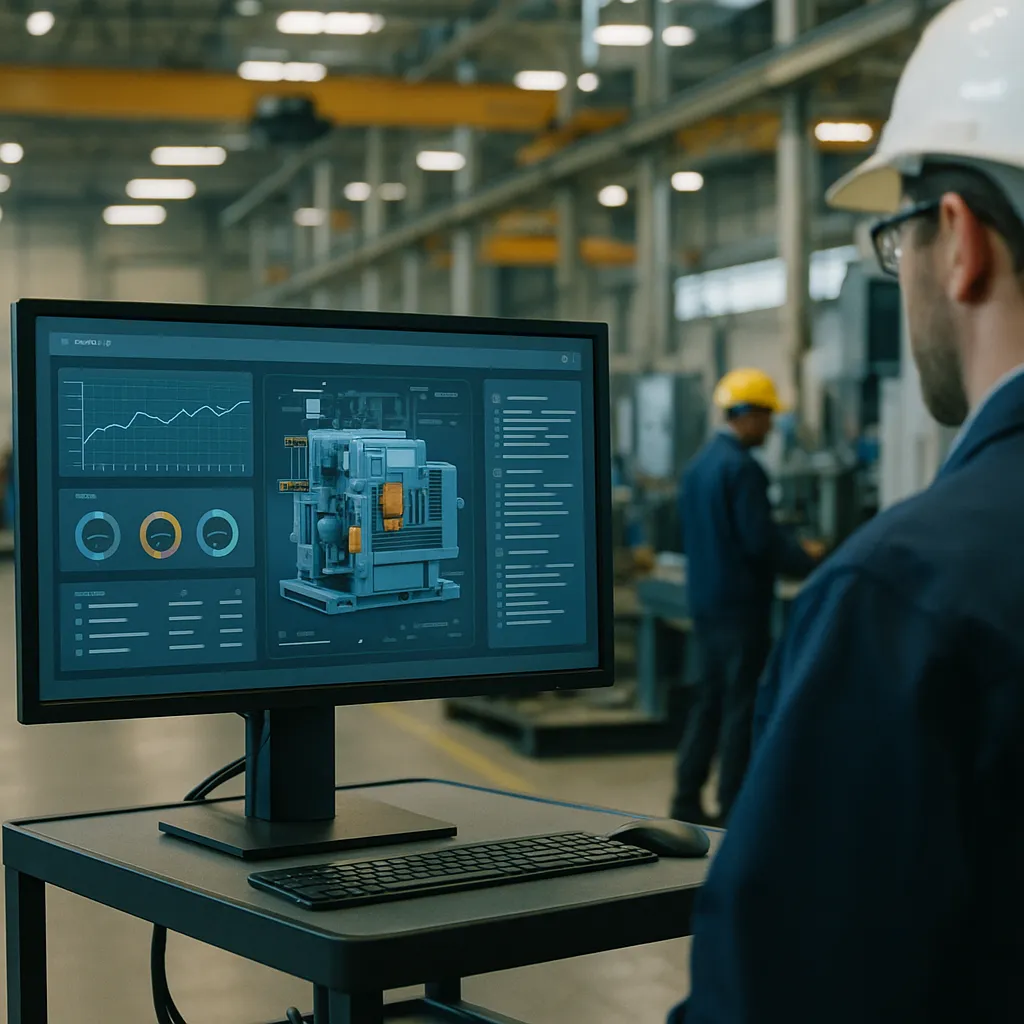
- Primary applications: AI diagnostics for equipment failure prediction, natural language interfaces for production data queries, and simulation-driven development that lets engineers test configurations virtually before committing to hardware
Deployment timelines compressing:
Get this in your inbox.
Daily AI intelligence. Free. No spam.
- The traditional hardware deployment cycle — from concept to production-ready installation — has historically run 18–24 months
- AI-assisted simulation tools are allowing manufacturers to compress that timeline to under eight months in some cases, by virtually testing thousands of configurations before a single piece of physical hardware is moved
Why Humanoid Robots Now
The question worth examining is why humanoid robots — as opposed to purpose-built industrial robots — are gaining traction now. The answer is primarily economic and infrastructural.
Factories are built for humans. Aisles, workbenches, stairs, loading docks, tool storage — all of it assumes a bipedal worker with two hands. Purpose-built industrial robots require expensive custom infrastructure to integrate into those environments. A humanoid robot, in principle, can work in an existing human-optimized space without a full facility rebuild.
Labor supply constraints are real. Manufacturing Dive's analysis cites persistent skilled labor shortages as a primary demand driver. Manufacturers that can't hire enough workers for complex assembly tasks are evaluating humanoid robots not as a cost-cutting measure but as a capacity solution.
The models have gotten good enough. The AI systems controlling physical robots in 2026 are meaningfully better at spatial reasoning, object manipulation, and error recovery than systems available in 2023. The gap between lab performance and real-world reliability has narrowed enough that factory operators are willing to accept some residual unreliability in exchange for increased capacity.
What's Actually Being Deployed
The "physical AI craze" framing risks overstating how mature the technology is. A useful distinction:
- LLMs in manufacturing (35% adoption) are largely running on existing hardware infrastructure: sensors, PLCs, SCADA systems, enterprise software. The AI is analyzing data and generating recommendations. This is genuine, in-production deployment at scale.
- Humanoid robots (13% interest — not 13% deployed) are still in early commercial stages. The gap between "manufacturing operators who are interested" and "manufacturing operators who have a humanoid robot on the line doing production work" is significant. Companies like Figure, 1X, and Agility Robotics have commercial deployments underway, but measured in hundreds of units, not tens of thousands.
The more accurate picture: AI for factory intelligence is a real, scaled commercial trend. Humanoid robots are a real but early-stage commercial trend with a credible trajectory.
What This Means for Manufacturers
For large manufacturers evaluating AI and robotics investment, the data from early deployers is increasingly actionable rather than speculative. The most defensible near-term investments are in AI diagnostics and simulation tools, where the ROI is established. Humanoid robot pilots are appropriate for operations with specific labor constraints and tolerance for integration work.
For equipment vendors and integrators, the LLM adoption surge is creating demand for AI-literate integration services. Factory operators don't want to manage raw AI models — they want pre-integrated solutions that connect their existing sensor infrastructure to AI analysis tools.
For workers, the distinction between AI that augments human judgment (diagnostics, quality inspection) and AI that replaces human physical labor (humanoid robots on assembly lines) will shape which roles are affected and on what timeline. The LLM wave is hitting manufacturing knowledge work first; the humanoid robot wave, if it continues, will hit physical assembly roles on a longer horizon.
What to Watch
Three signals worth tracking in the next six to twelve months: first, whether any major automotive or electronics manufacturer announces a multi-hundred-unit humanoid robot deployment — that would mark the transition from pilot to scale. Second, whether simulation-to-deployment timelines continue to compress, which would validate the timeline acceleration claim. Third, whether AI diagnostics tools produce measurable reductions in unplanned downtime at scale — that's the ROI metric that will drive the next wave of LLM adoption in factories.
Source: Physical AI Craze 2026: Automation Trends to Watch, Manufacturing Dive
Did this help you understand AI better?
Your feedback helps us write more useful content.
Get tomorrow's AI briefing
Join readers who start their day with NexChron. Free, daily, no spam.