IoT Analytics finds 96% of machine builders have deployed AI, while LLM adoption for factory diagnostics doubled to 35%—the fastest single-year jump of any AI category tracked.
AI in Manufacturing Has Crossed a Threshold: 96% Deployment, LLM Use Doubles in One Year
By Hector Herrera | May 21, 2026
AI deployment in manufacturing is no longer an adoption story—it is an implementation quality story. A new IoT Analytics study on AI in machine building finds that 96% of machine builders have deployed AI in internal operations, while large language model (LLM) adoption for factory diagnostics and technician training doubled year-over-year from 16% to 35%—the fastest single-year jump of any AI category tracked. The data marks a maturation inflection: the industry has moved past whether to use AI and into how well it is being used.
The pressure now is not on adoption breadth. It is on whether deployments are actually delivering the productivity and quality gains that justified the investment.
What the Data Shows
IoT Analytics surveyed machine builders across automotive, electronics, food and beverage, and industrial equipment sectors. Key findings:
- 96% of machine builders have AI deployed in at least one internal operation
- LLM adoption grew from 16% to 35% year-over-year—the largest single-category jump
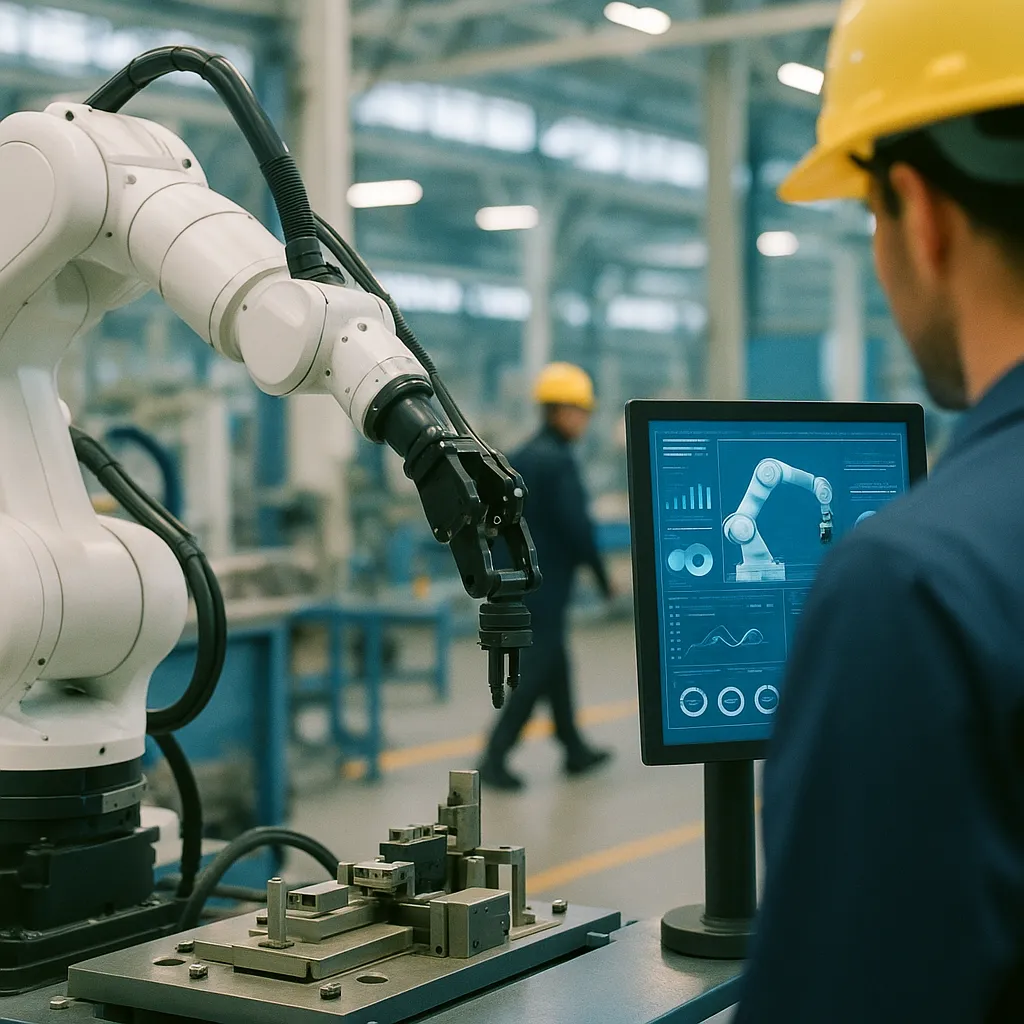
- Humanoid robot interest grew from 8% to 13%, reflecting expanding ambitions beyond passive monitoring
- Leading use cases: predictive maintenance, visual quality inspection, technician training, and process diagnostics
- Primary barriers: integrating AI outputs with legacy MES (manufacturing execution system) software, data quality gaps, and shortage of engineers who understand both AI and industrial operations
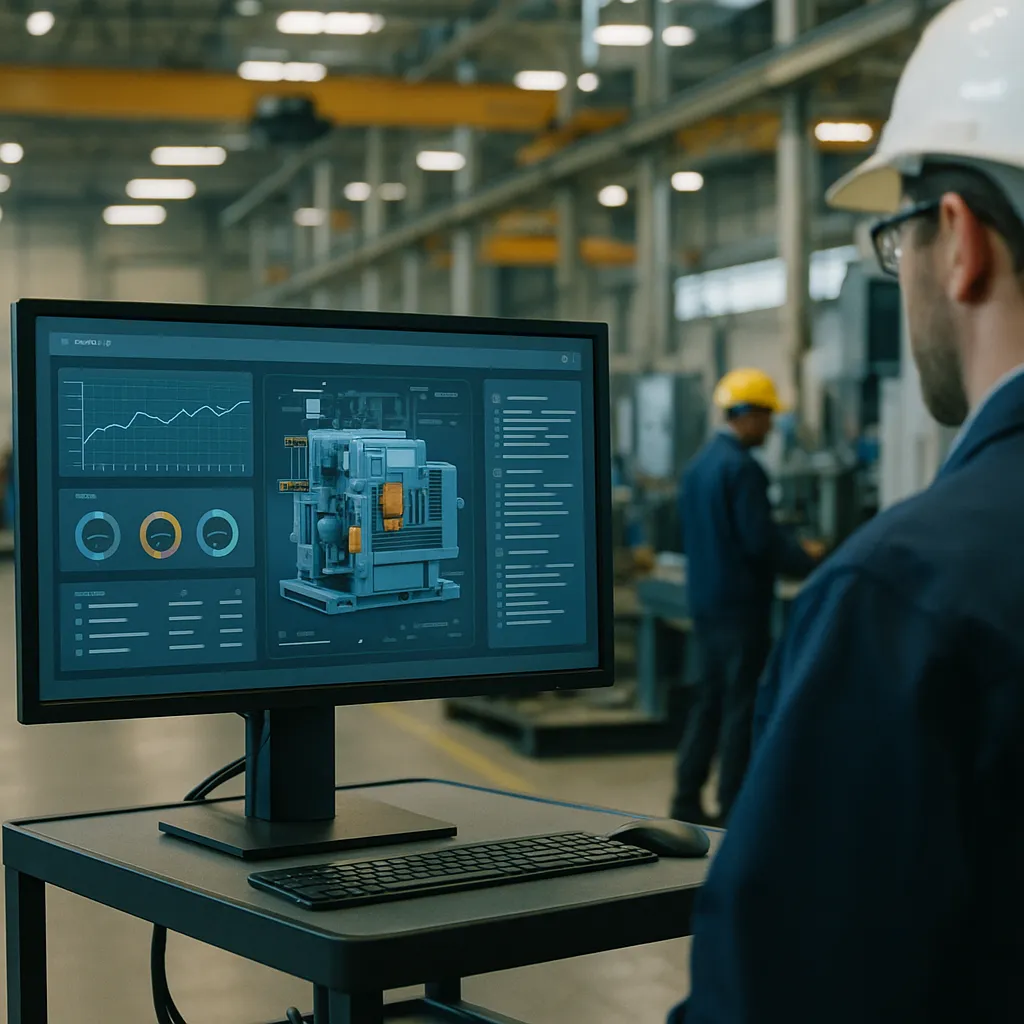
The LLM jump is the most significant signal. Machine builders are using large language models not just for text generation but for interpreting sensor data streams, producing natural-language maintenance instructions, and training line workers on new equipment through conversational interfaces. That is a qualitatively different use than computer vision inspection systems that dominated AI manufacturing deployments three years ago.
Why LLMs Are Taking Hold on the Factory Floor
Visual inspection AI—systems that scan product photos for defects—was machine manufacturing's AI entry point. It was clean, bounded, and measurable. LLMs present a harder integration challenge because they interface with unstructured knowledge: maintenance logs, equipment manuals, fault histories, operator experience.
Three things are making that integration tractable in 2026:
Get this in your inbox.
Daily AI intelligence. Free. No spam.
-
Retrieval-augmented generation (RAG)—a technique that grounds LLM responses in specific documents rather than general training data—lets manufacturers build diagnostic assistants that cite actual equipment manuals rather than hallucinating plausible-sounding procedures.
-
Edge deployment of smaller, fine-tuned language models means LLM-powered tools can run on shop-floor hardware without cloud latency, addressing a major objection from operations managers whose systems cannot tolerate unpredictable response times.
-
Technician acceptance has grown as AI-generated maintenance guidance has proven accurate enough to be trusted as a first reference rather than a second opinion.
Humanoid Robots: From 8% to 13%
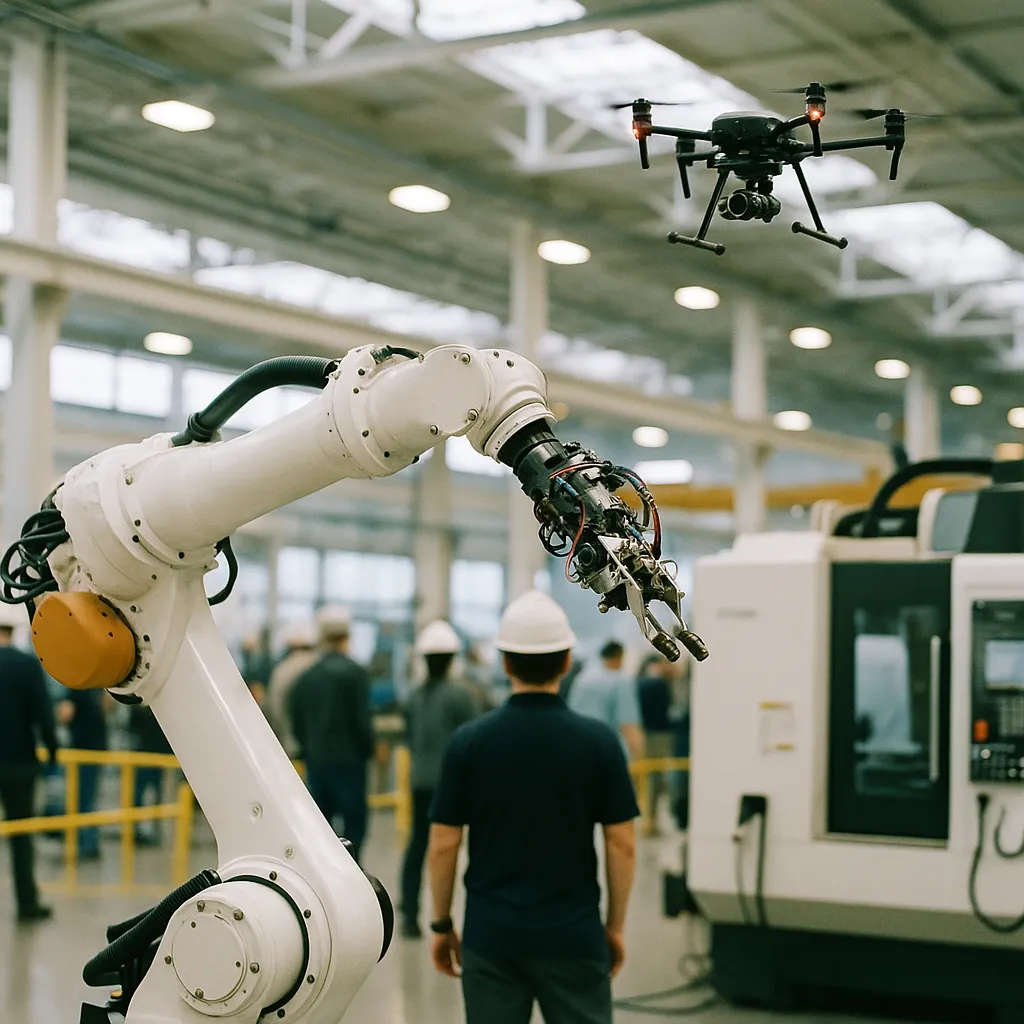
The growth in humanoid robot interest—from 8% to 13% of machine builders—is notable not for its absolute size but for its trajectory. A year ago, factory humanoids were largely confined to controlled proof-of-concept installations at BMW's Leipzig plant and a handful of Japanese tier-1 suppliers. The IoT Analytics data suggests the technology is cresting from curiosity to active evaluation across a meaningful slice of the industry.
Machine builders tracking humanoid deployments at peer companies are specifically watching whether the robots can handle the unstructured variability of real production lines—parts in non-standard orientations, unexpected floor obstacles, tasks that differ slightly from one production run to the next. That is the capability threshold that separates viable factory humanoids from expensive demo units.
The Schaeffler and ABB partnerships deploying 2,000+ humanoid robots announced earlier this year represent the first large-scale tests of that threshold at production scale.
The Implementation Quality Gap
The critical gap IoT Analytics identifies is between deployment and value realization. Having AI deployed is not the same as having AI that works well enough to rely on. Machine builders cite four recurring problems:
- Data quality: AI models trained on incomplete or inconsistently labeled production data produce unreliable outputs, particularly for anomaly detection where the training data may contain very few examples of the defects the system is supposed to catch
- MES integration: legacy manufacturing execution systems were not designed to ingest AI model outputs, requiring middleware layers that add latency and failure points
- Skills gap: the engineers who understand production physics are not the same people who understand AI model evaluation, and finding people who understand both is genuinely difficult
- Explainability: line supervisors will not act on maintenance recommendations they cannot explain to their shift managers, limiting the real-world adoption of technically functional AI systems
These are solvable problems, but they require dedicated integration work—not just software licensing. The machine builders capturing AI's full productivity upside in 2026 are the ones investing in integration engineering alongside the AI tools themselves.
What to Watch
The next milestone for manufacturing AI is autonomous physical intervention: AI systems that not only detect problems but initiate corrective action—adjusting machine parameters, halting production lines, or dispatching repair crews—without human approval at each step. The growth in humanoid robot interest and the expansion of AI-to-physical-action automation systems suggest the industry is actively building toward that capability.
When 96% of machine builders have AI deployed, the competitive differentiator shifts entirely to execution quality. The factories pulling ahead are those treating AI as a core operational competency—with dedicated staff, governance processes, and continuous improvement cycles—rather than a technology procurement decision made once.
Hector Herrera covers AI in manufacturing and industry for NexChron.
Did this help you understand AI better?
Your feedback helps us write more useful content.
Get tomorrow's AI briefing
Join readers who start their day with NexChron. Free, daily, no spam.