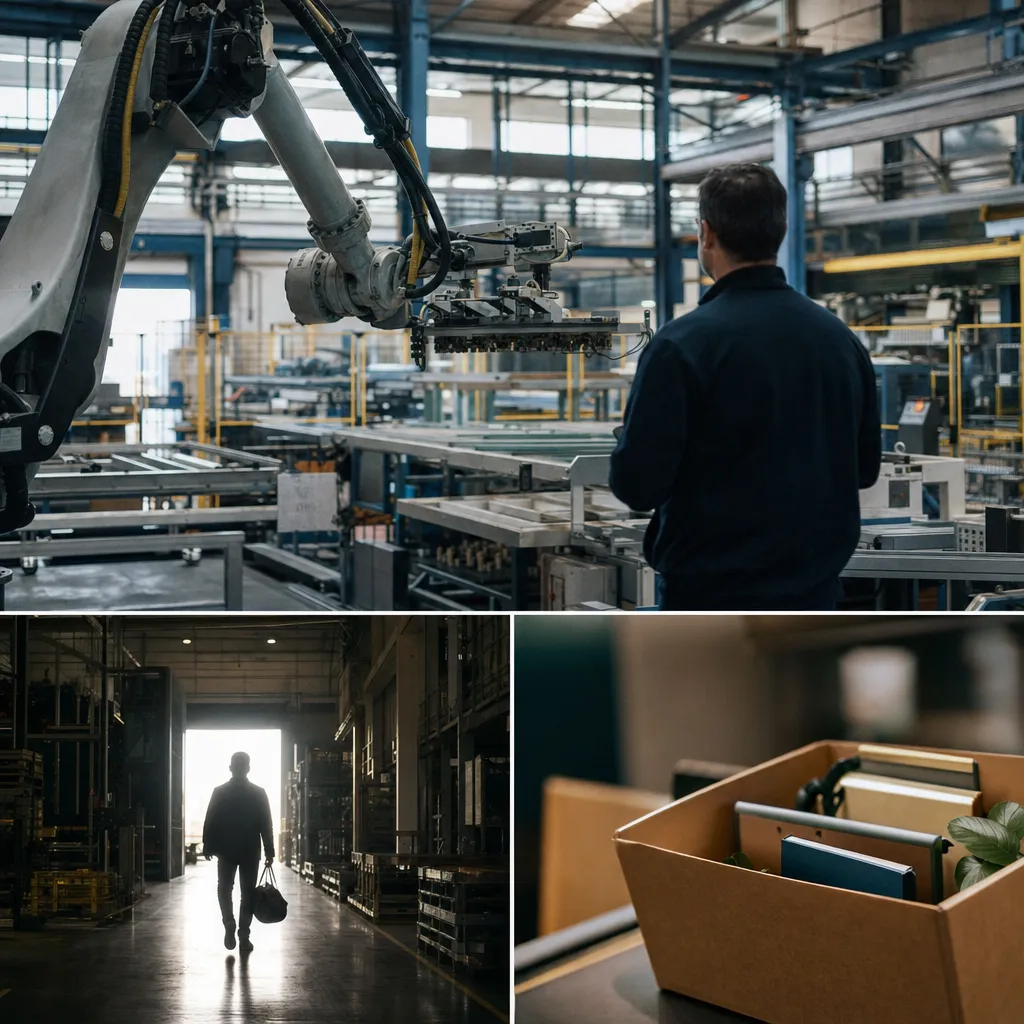
Gartner warns that roughly 30% of employees let go in AI-driven layoffs will be rehired by their former employers by 2029 at significantly higher cost, as early workforce automation experiments come back with real-world feedback that contradicts the original business case.
Roughly 30% of employees terminated in AI-driven layoffs will be rehired by their former employers by 2029 — at significantly higher cost — according to Gartner research published November 2. A separate Forrester study found that 55% of companies that cut staff for automation already regret the decision. Together, the data marks a measurable turn in the enterprise AI narrative: the workforce reduction experiments of 2025-2026 are now producing real-world feedback, and that feedback often contradicts the original business case.
This is not a small trend. Hundreds of thousands of workers have been displaced in AI-driven layoffs across technology, finance, customer service, legal, and healthcare administration since 2024. If Gartner's 30% rehire projection holds, that means a significant portion of those workers will return to the companies that let them go — having spent months or years developing skills elsewhere, negotiating from a position of demonstrated value, and carrying a salary expectation that reflects both market rates and their leverage as known quantities at institutions that need them back.
Why the business case broke down
ITPro's reporting on the Gartner research points to a set of recurring failure modes that companies are encountering when they try to replace human workers with AI at scale. Several patterns are showing up consistently:
Task scope underestimation. Companies automated the documented version of a job — the written procedures, the standard workflows, the repeatable tasks — without accounting for the undocumented judgment calls experienced workers make every day. When AI systems encounter edge cases, exceptions, or novel situations, there is no human escalation path if the position was eliminated. The documented 10% of a job was automated; the undocumented 90% became a liability.
Integration cost overruns. Deploying enterprise AI at scale requires more technical oversight, prompt engineering, quality assurance, and operations management than initial business cases projected. Some companies replaced human headcount with AI tools, then had to hire expensive AI operations staff to manage those tools — ending up with higher total labor costs than before the layoffs.
Client and customer response. In customer-facing roles — relationship management, advisory services, complex support — some clients responded negatively to AI-only interactions and shifted business to competitors that maintained human staff. The revenue impact of client attrition was not included in most layoff ROI calculations.
Talent flight from survivors. At companies where layoffs were abrupt or large, the employees who remained — often the most capable, with the most external options — read the signal and began looking. The talent hardest to replace left first. The resulting capability gap accelerated the need to rehire, often at roles different from those originally cut.
Get this in your inbox.
Daily AI intelligence. Free. No spam.
The Forrester data
The 55% regret figure from Forrester is, if accurate, a striking number. More than half of companies that eliminated positions for automation have already — before 2027 — decided the decision was a mistake. That is not a small sample of edge cases. It suggests that workforce automation ROI calculations, at least as they were being built in 2024-2025, were systematically optimistic.
The specific dimensions of regret are not broken out in the available reporting. Regret could reflect financial outcomes (costs were higher, savings were lower), operational outcomes (productivity fell short of projections), or reputational outcomes (client or talent consequences were underweighted). All three are plausible contributors.
What the rehire wave looks like in practice
Workers who return to former employers after AI-driven layoffs are negotiating from a fundamentally different position than they were when they left. They carry:
- Evidence that the AI replacement did not fully succeed — which functions as a negotiating anchor
- Skills developed at other companies or in new roles during the interim
- Salary benchmarks from the job market they just participated in as a candidate
- The understanding that their former employer is motivated — which shifts the negotiating dynamic
The result, according to Gartner, is "significantly higher" rehire cost. That phrase is doing a lot of work in the research summary. Significantly higher than original salary? Higher than market rate for the role? Higher than the cost of the AI tools that partially replaced the position? The full methodology will matter when Gartner releases the complete report.
For the 70% who do not return — the majority of displaced workers — the picture is more mixed and less well-documented. Some transition into AI operations roles at other companies. Others leave their industries entirely. The Gartner projection covers only the employer's rehire decision, not the broader workforce outcome for displaced workers as a group.
What this means for companies still planning AI workforce reductions
The practical implication for HR, finance, and operations teams currently modeling AI headcount reductions is that the 30%/55% data now belongs in the ROI calculation:
- What is the probability that this position will need to be rehired within 36 months?
- What is the estimated cost premium on that rehire, including recruitment, onboarding, and wage negotiation?
- What is the client relationship and talent departure risk from the layoff signal?
- What are the AI operations costs that were not included in the original model?
What to watch
Whether major consulting firms update their workforce automation ROI frameworks to incorporate rehire probability is the clearest near-term signal of whether this research changes enterprise behavior. Also watch for whether any large enterprise company publicly reverses a significant AI-driven workforce reduction — that would be the first visible data point confirming Gartner's projection in real time. Gartner's full report release and methodology disclosure will determine how durable the 30% figure proves to be under scrutiny.
Did this help you understand AI better?
Your feedback helps us write more useful content.
Get tomorrow's AI briefing
Join readers who start their day with NexChron. Free, daily, no spam.