Goldman Sachs forecasts up to 9% of the global workforce faces AI displacement — but argues mass layoffs will wait for the next economic downturn, when companies will execute cuts using automation infrastructure built during the current expansion.
Goldman Sachs: AI Will Displace One in Eleven Workers, But Layoffs Are Waiting on Recession
By Hector Herrera | October 26, 2026
Goldman Sachs forecast this week that up to 9 percent of the global workforce — roughly one in every 11 workers — faces displacement during the AI transition, but argues that large-scale layoffs will materialize during the next cyclical economic downturn rather than the current expansion. The report sets a floor and ceiling on the disruption timeline: significant in scale, deferred in timing.
The critical nuance: Goldman is not forecasting that AI displacement will be avoided. It is forecasting that companies will not accelerate mass layoffs while economic conditions are favorable — that the displacement will be expressed most sharply when business cycles turn and cost-cutting pressure returns.
According to Fortune, Goldman's October 2026 research estimates that AI automation will displace up to 9% of global workers — a figure that, applied to a global workforce of roughly 3.5 billion people, represents hundreds of millions of affected individuals. The bank's economists argue the timing mechanism is cyclical: companies retain workers during expansions and shed them during contractions, and AI provides the automation infrastructure to execute cuts more aggressively when the next contraction arrives.
This is a structurally different argument from "AI will take jobs slowly over time." Goldman is describing a potential shock event: companies that have been quietly automating workflows during a growth cycle deploying the full productivity gains as headcount reductions during the next recession.
Get this in your inbox.
Daily AI intelligence. Free. No spam.
The McKinsey Data Running in Parallel
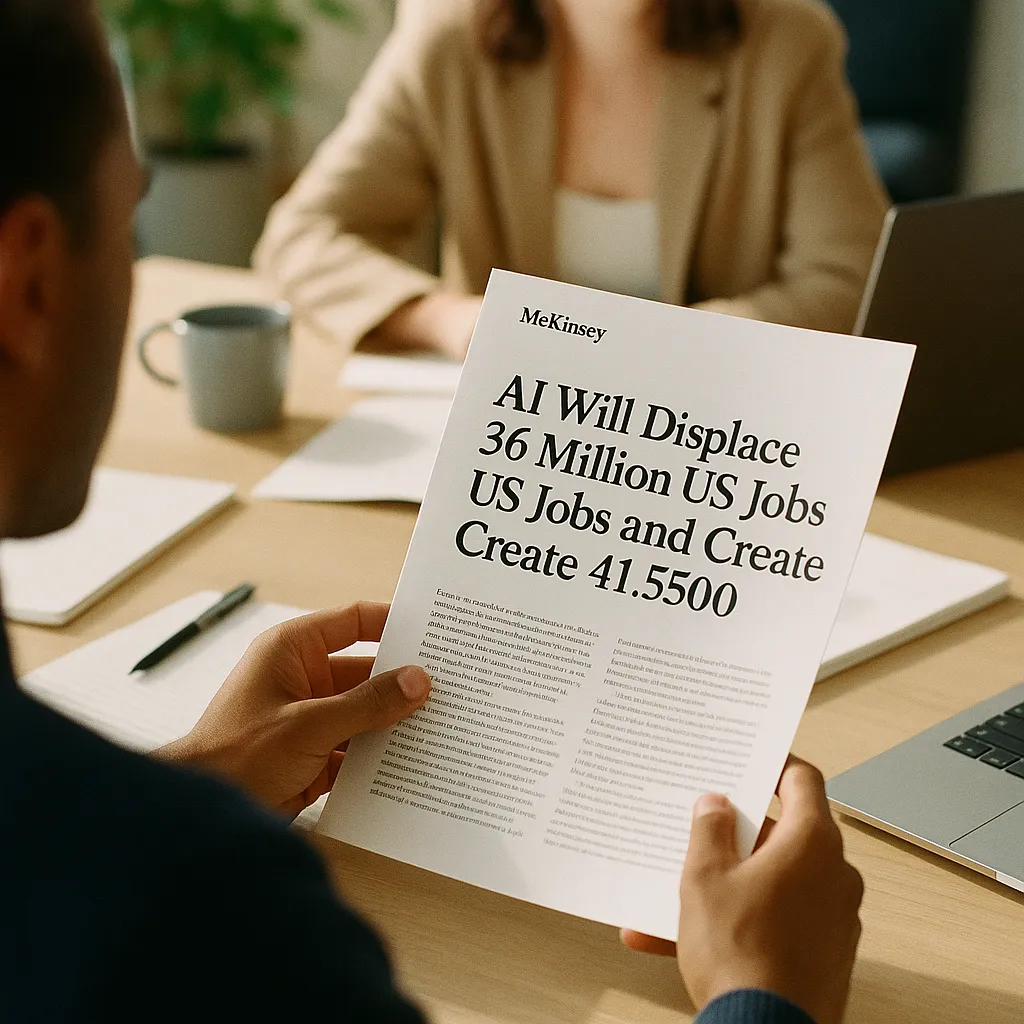
A McKinsey October 2026 report provides additional texture:
- 36 million US jobs face automation by 2035
- 41 million new roles are projected to be created — a net positive, on paper
- Only 1 in 7 displaced workers has a direct retraining path to a new role
That last number is the one that matters most for policy. A net job creation forecast is comforting until you ask which workers transition from which roles to which new ones. McKinsey's finding that only 14% of displaced workers have a clear retraining path means the gains and losses will not be evenly distributed — the workers who gain are largely not the same workers who lose.
The 2026 Baseline Is Already Elevated
Year-to-date through October 2026, 183,278 workers have been affected by AI-related layoffs at 52 companies — already 22% above 2025's full-year total, according to workforce tracking data cited in Fortune's coverage. This is happening during the economic expansion Goldman says will delay mass displacement.
What that suggests: the baseline pace of AI-driven workforce reduction is accelerating even before the cyclical downturn Goldman identifies as the trigger for larger-scale displacement. The recession Goldman is describing would be an acceleration of a trend already in motion, not the start of it.
What This Means for Workers, Companies, and Policymakers
For workers: Near-term displacement risk is real but concentrated — it is highest in roles involving routine cognitive tasks (document processing, basic customer service, data entry, first-level analysis) that are already being automated at scale. The Goldman forecast suggests that workers who transition now, before a downturn, are in a meaningfully better negotiating position than those who wait.
For companies: Organizations that have been quietly deploying AI automation are loading the gun for the next downturn. The ethical and reputational question — whether workforce reductions that were operationally prepared during expansion are disclosed proactively — is going to become a live corporate governance issue. Institutional investors are beginning to ask about AI-related workforce exposure in quarterly calls.
For policymakers: The retraining gap is the actionable policy variable. "AI will create more jobs than it destroys" is cold comfort to the six out of seven displaced workers with no clear path forward. The specific policy question is: what programs, at what scale and speed, can move that 1-in-7 ratio toward 1-in-2? No current proposal comes close to the required scale.
What to Watch
Goldman's recession timing argument is the crucial variable. Watch Q4 2026 and Q1 2027 earnings calls for whether companies begin disclosing accelerated automation timelines in their forward guidance — that is the leading indicator that the displacement clock is running faster than Goldman's central scenario. Also worth watching: Congressional hearings on AI and workforce displacement scheduled for early 2027, which will be the first major legislative opportunity to address the retraining gap McKinsey identified.
Did this help you understand AI better?
Your feedback helps us write more useful content.
Get tomorrow's AI briefing
Join readers who start their day with NexChron. Free, daily, no spam.