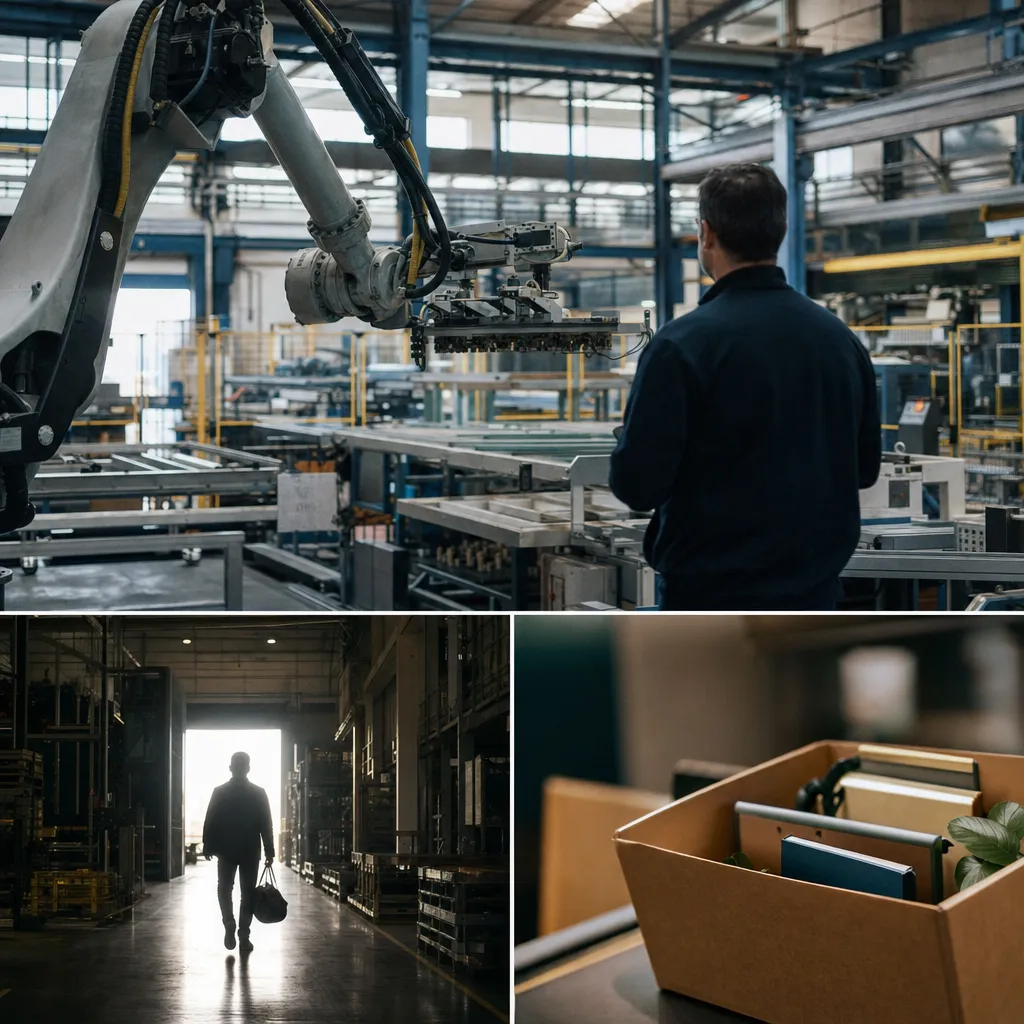
New research shows workers laid off due to AI automation take roughly a month longer to find new jobs and are 10 percentage points more likely to still be unemployed a year later — a gap that retraining programs aren't closing.
Workers whose jobs were eliminated because of AI automation take approximately a month longer to find new employment than other laid-off workers, and face a 10 percentage point higher probability of still being out of work a year after displacement. The skills being made obsolete by AI are not translating cleanly to the skills AI is creating — and existing retraining programs are not closing the gap.
This is the clearest data-backed challenge yet to the dominant optimistic narrative about AI-driven labor transitions: that disruption is temporary, that workers adjust, and that AI creates as many jobs as it eliminates. The data says the transition is harder, slower, and more painful than the narrative allows.
What the Research Found
According to new research reported by Yahoo Finance, workers displaced specifically due to AI automation experience meaningfully worse labor market outcomes than workers displaced by other causes:
- ~30 additional days to find new employment (roughly one month longer than the typical displaced worker)
- 10 percentage points higher probability of long-term unemployment — still out of work at the one-year mark
To understand why these numbers matter, consider the baseline. The median job search for displaced workers in the current market already runs three to five months. Adding another month extends an already difficult period. And long-term unemployment — typically defined as more than 26 weeks out of work — has compounding effects: the longer someone is unemployed, the harder it becomes to re-enter the workforce as skills atrophy and employer bias against gaps grows.
A 10 percentage point difference in long-term unemployment rates is substantial in public policy terms. If 20% of typically displaced workers are still unemployed after a year, then 30% of AI-displaced workers are in that position. That gap, multiplied across tens of thousands of workers per quarter who cite AI as the reason for their layoff, represents a significant welfare cost that the existing unemployment insurance system was not designed to absorb.
Why AI Displacement Is Different
The standard economic model for technology-driven labor displacement assumes something like this: automation eliminates specific tasks, workers who performed those tasks acquire adjacent skills, and they reenter the workforce in roles that complement the technology that displaced them. The transition involves friction and cost, but the displaced worker's underlying capabilities are mostly transferable.
AI automation breaks the adjacency assumption. The task clusters that AI is best at eliminating — data entry, pattern recognition in documents, routine code generation, standard customer service interactions, basic research synthesis — were also the tasks that were easiest for a broad range of workers to do without deep expertise. Workers who were good at those tasks were not necessarily good at them because they had specialized skills. Many were good at them because those tasks required reliable execution of a defined process, which is exactly what AI also does well.
The jobs being created by AI adoption — AI oversight, prompt engineering, AI trainer and evaluator roles, AI integration management — require a different cognitive profile. They demand comfort with ambiguity, ability to evaluate AI output critically, and willingness to intervene in AI workflows when output is wrong. Those are skills that cannot be acquired through a weekend certificate course, and they are not evenly distributed across the workforce.
The displacement is also happening faster than retraining programs can respond. Workforce development programs at the federal and state level typically require 18-24 months from funding allocation to trained workers. AI capability is evolving on a 6-12 month cycle. By the time a retraining cohort completes a program designed for the AI skills landscape of two years ago, the skills they've acquired may already be in lower demand.
Get this in your inbox.
Daily AI intelligence. Free. No spam.
Who Is Being Displaced
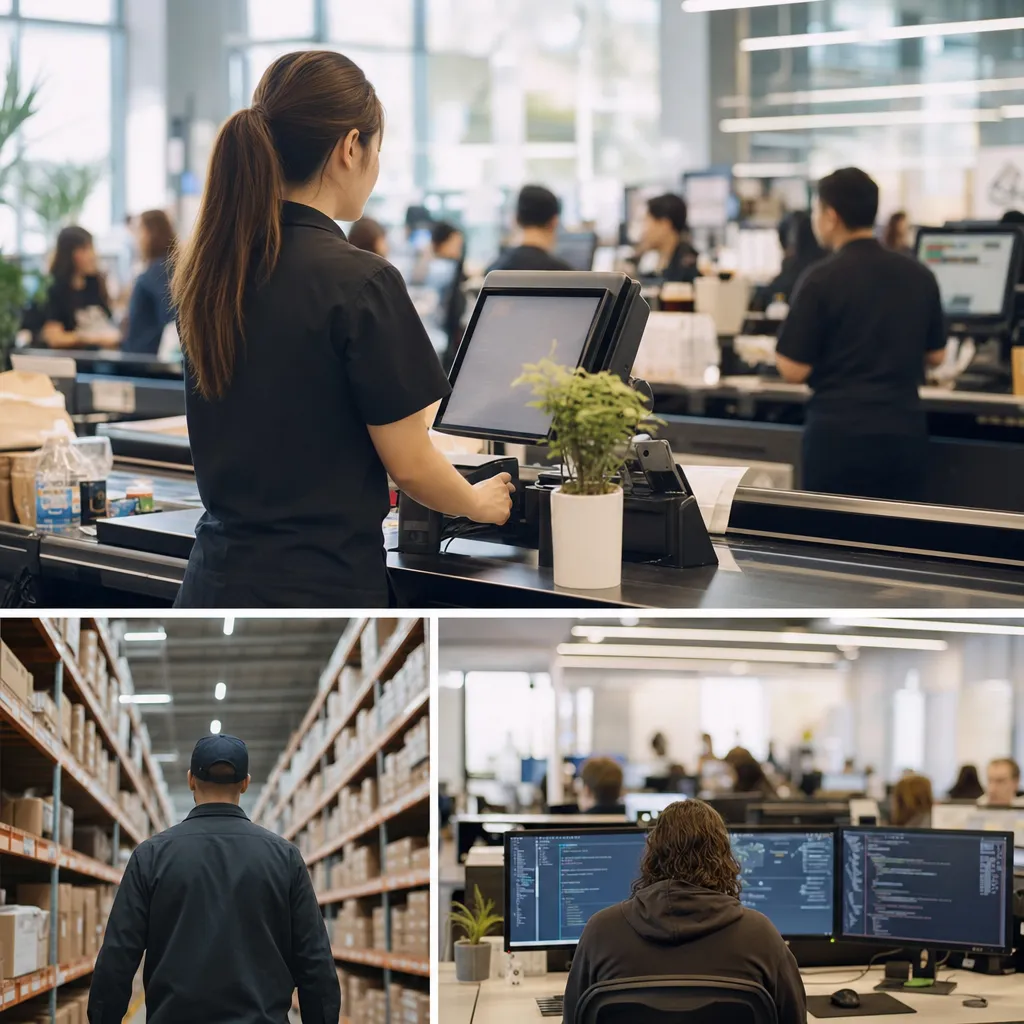
The workers facing the longest re-employment gaps are not necessarily the ones receiving the most attention in public discourse. High-profile AI-related layoffs at tech companies affect workers with college degrees and existing professional networks — people with higher baseline resilience to labor market disruption. The data suggests the harder displacement is happening in sectors that do not generate press releases about workforce transformation.
Insurance claims processing. AI has been systematically deployed to handle the routing, evaluation, and preliminary decision-making in insurance claims — work that was previously done by a large category of office workers without specialized credentials.
Logistics coordination. Route optimization, load matching, and shipment tracking have been targets for AI automation, displacing workers in freight brokerage and third-party logistics coordination.
Back-office financial processing. Document review, data reconciliation, and reporting functions at mid-size financial institutions have seen significant AI-driven headcount reduction.
Workers in these sectors are not "tech workers" and are not naturally positioned to pivot into AI-adjacent roles. They are facing displacement in their mid-30s or mid-40s with specific skills that now have diminishing market value and without the professional identity or network that would ease a transition into AI oversight work.
What the Policy Gap Looks Like
The research underscores that the existing policy toolkit was designed for a different kind of displacement. Trade Adjustment Assistance was built for manufacturing workers displaced by imports. Unemployment insurance was designed assuming job searches of a few months. Community college retraining programs were designed for workers in their 20s without family obligations.
None of these programs are specifically calibrated for the AI displacement profile: middle-career workers in white-collar service roles whose specific task cluster has been automated and whose skills do not map clearly to available openings.
What would actually help: targeted retraining support tied specifically to workers who can document AI automation as the cause of displacement, longer benefit duration for AI-displaced workers reflecting the documented longer search period, and employer-side incentives to hire AI-displaced workers into oversight and management roles rather than defaulting to lower-cost AI-adjacent contractors.
None of that exists at scale. The proposals are in circulation in policy circles, but no enacted legislation at the federal level specifically addresses AI displacement as a distinct labor market category.
What to Watch
Whether the Bureau of Labor Statistics begins tracking AI-displacement as a distinct category in its mass layoff statistics. Currently, most AI-related layoffs are classified under "reorganization" or "cost reduction" — categories that obscure the AI cause and make policy targeting impossible.
Watch also for whether any of the major workforce development grants from the Department of Labor begin requiring AI-displacement-specific programming from grantees. That would be a leading indicator of federal recognition that this displacement is structurally different and requires a different response.
The research adding a ~month gap and 10-point long-term unemployment differential to the AI displacement record is important precisely because it makes the policy stakes legible. The question is whether policymakers treat it as a data point worth responding to — or file it alongside the other evidence that the AI transition is harder than the press releases suggest.
Source: Yahoo Finance
Did this help you understand AI better?
Your feedback helps us write more useful content.
Get tomorrow's AI briefing
Join readers who start their day with NexChron. Free, daily, no spam.