Westwell has secured air cargo contracts at Fuzhou and Xiamen airports in China, deploying autonomous cargo tractors and an AI runway inspection system — the first systematic application of port and factory AI logistics to aviation ground operations.
Westwell Brings AI-Native Logistics Inside the Airport Fence
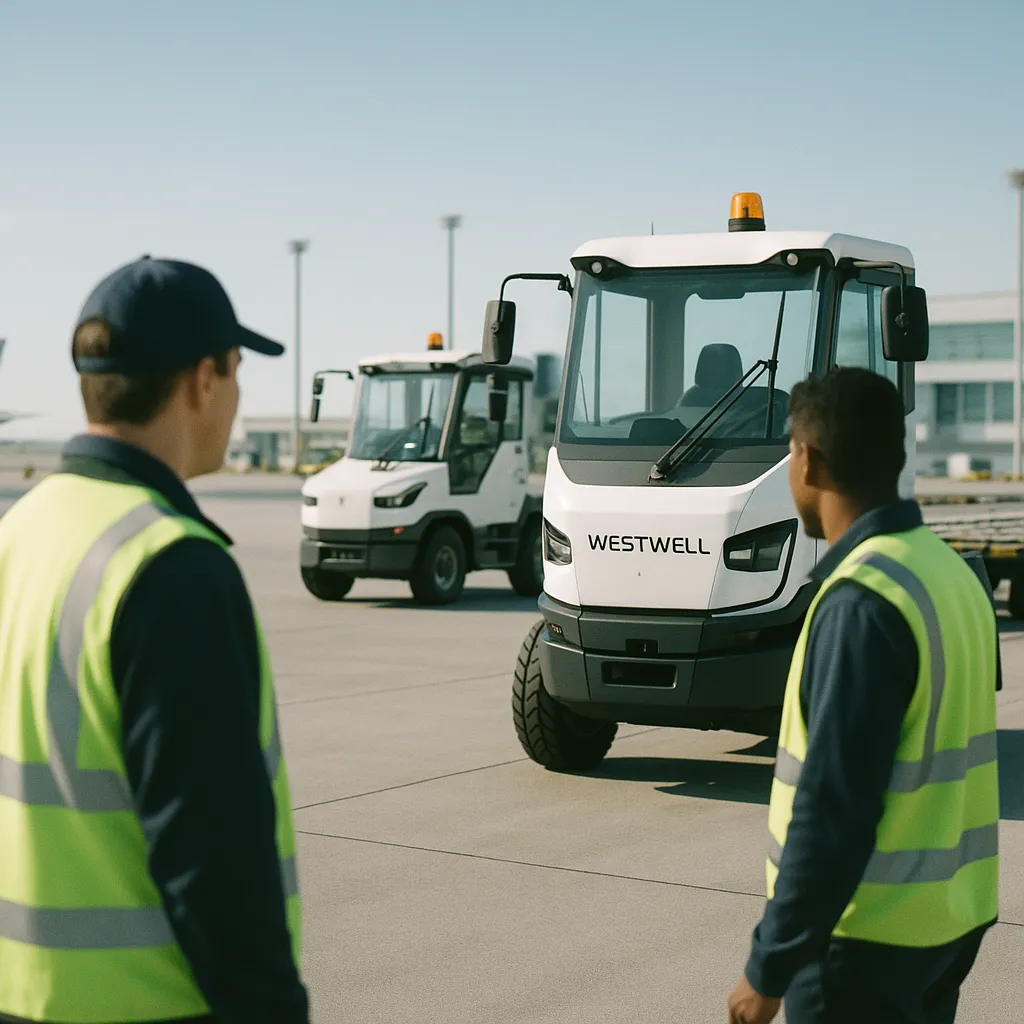
Westwell has secured new air cargo contracts at Fuzhou and Xiamen airports in China, deploying autonomous cargo tractors and an AI-powered runway inspection system — becoming what appears to be the first company to systematically apply the AI logistics architecture built for seaports and factories to aviation ground operations. The move signals that the automation wave reshaping container terminals and distribution centers is reaching the airport ramp.
The timing is not accidental. Global air cargo volumes have outpaced the ground crews needed to handle them, driven by cross-border e-commerce shipments that demand consistent throughput regardless of shift schedules or labor availability. Airlines and cargo handlers are looking at the same solution that ports found several years ago: replace variable human-operated equipment with predictable autonomous systems.
What Westwell Deployed
Westwell, which operates across more than 30 economies, brought two distinct systems to these airport contracts:
Autonomous cargo tractors operating on the airside — the secured, aircraft-side area of an airport — move freight between cargo facilities and waiting aircraft without human drivers. The vehicles use the same class of autonomous navigation technology Westwell has deployed in harbor and logistics environments, adapted for airport geometry and safety constraints.
AI runway inspection fuses three sensing layers: autonomous vehicles on the ground, radar, and computer vision. Together, they monitor runway surface conditions in real time. This addresses one of the more operationally expensive problems in airport management: foreign object debris (FOD) detection.
FOD — anything on a runway that shouldn't be there, from a bolt to a piece of luggage — can destroy jet engines or damage landing gear. Current detection practice relies on manual vehicle patrols that require temporary runway closures and depend entirely on driver attention. An AI system running continuous multi-sensor checks can, in principle, detect debris faster, run during lower-traffic windows without dedicated patrol crews, and eliminate the closure time that manual inspections require.
Get this in your inbox.
Daily AI intelligence. Free. No spam.
Why Airports, Why Now
The operational pressures on airport cargo handling are real and intensifying. E-commerce — particularly Asian cross-border logistics — has pushed air cargo volumes to levels that most airports weren't staffed to sustain. At the same time, aviation labor markets remain tighter than pre-pandemic levels in several major markets, and airlines face structurally higher operating costs.
Westwell's competitive position here stems from years of deploying autonomous systems in similarly constrained, safety-critical environments. Seaports are not easy operating conditions: enclosed lanes, 24-hour operations, heavy equipment, zero tolerance for position errors near ship berths. That operational hardening transfers to airport ground operations. The coordination problems are different in detail but similar in structure — predictable routes, defined cargo flows, high asset utilization requirements, and serious consequences for errors.
The key transfer is the multi-sensor data fusion layer. Port AI systems learned to integrate multiple input streams — vehicle sensors, crane positioning, vessel data — into unified operational awareness. The airport runway inspection system applies the same architecture to a different physical environment.
What This Means for Ground Operations
If autonomous cargo tractors prove reliable on the airside at Fuzhou and Xiamen, the operational argument becomes straightforward for airlines and ground handlers:
- Labor predictability. AI-scheduled tractor runs don't depend on break rotations, shift handoffs, or last-minute staffing gaps
- Throughput consistency. Automated cargo movement between the terminal and aircraft can be synchronized more tightly with departure schedules
- FOD detection efficiency. Continuous AI runway monitoring reduces the closure windows that manual inspection requires, recovering runway capacity
None of these are marginal improvements. They address direct cost exposure and safety liability in an industry where both are tightly measured.
What to Watch
Westwell's China airport deployments are the proof-of-concept data set that will determine whether this model can scale beyond China. The critical gating factor for international expansion isn't technology — it's regulatory certification for autonomous vehicles on airside surfaces in the U.S., EU, and Southeast Asian markets. Those frameworks are more complex than port or factory certifications and are still being written.
Watch for IATA (the International Air Transport Association) and airport operators' bodies to begin defining interoperability and safety standards for autonomous airside equipment. When that standardization process starts in earnest, it will signal that regulators see the market as real — and that global deployment timelines become credible.
By Hector Herrera | Source: Westwell press release via PR Newswire, June 12, 2026
Did this help you understand AI better?
Your feedback helps us write more useful content.
Get tomorrow's AI briefing
Join readers who start their day with NexChron. Free, daily, no spam.