PepsiCo deployed 41 fully driverless Gatik trucks in Arizona, Texas, and Arkansas to deliver Frito-Lay products to Walmart and Dollar General — the largest autonomous commercial delivery fleet in U.S. history, backed by a $600 million multiyear commitment.
PepsiCo Launches 41 Gatik Driverless Trucks Across Three States in the Largest U.S. Autonomous Delivery Fleet
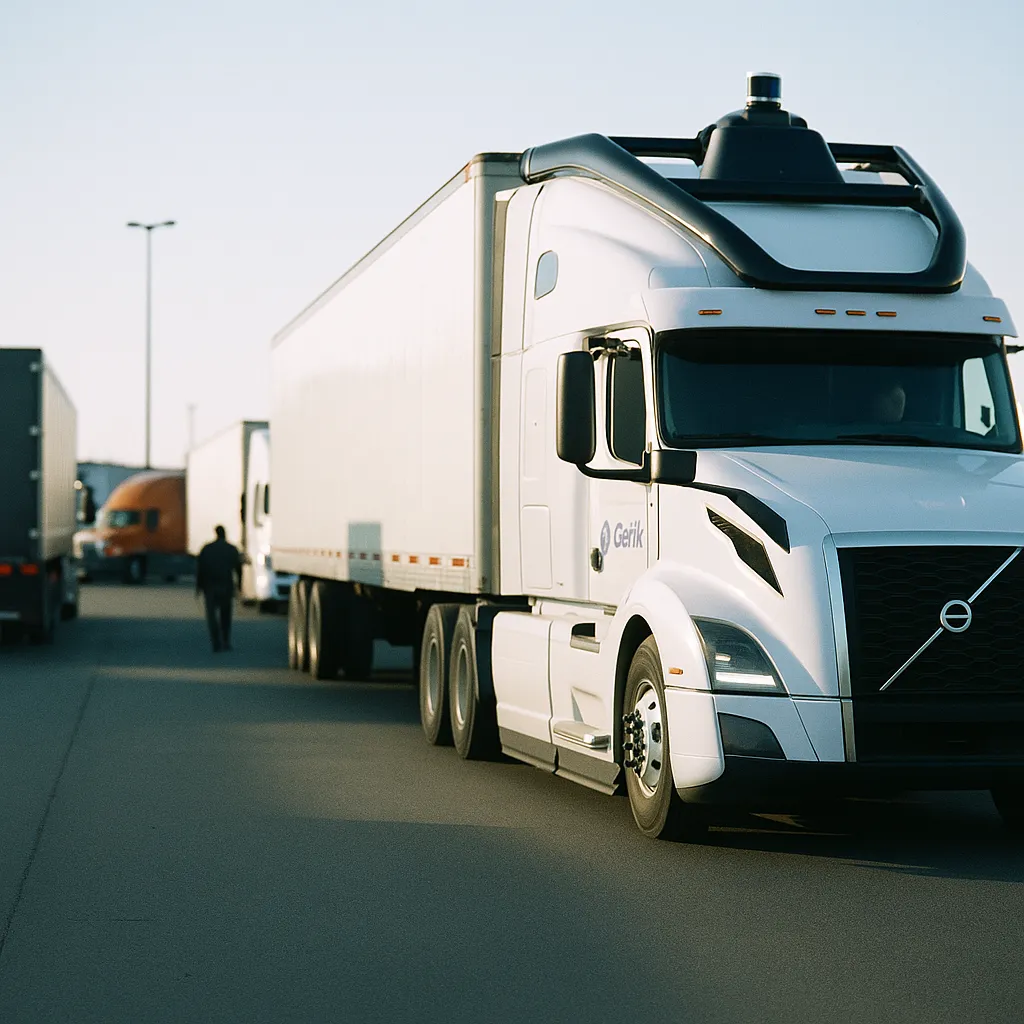
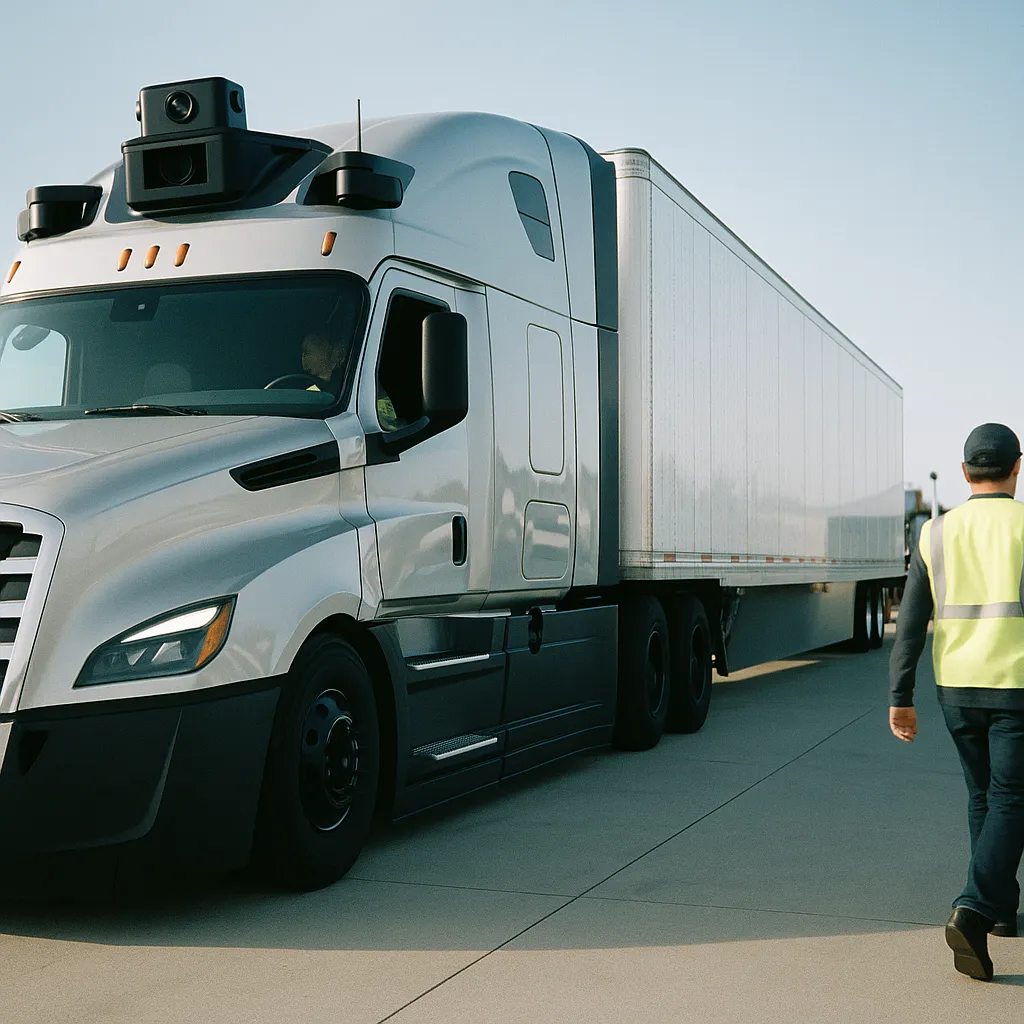
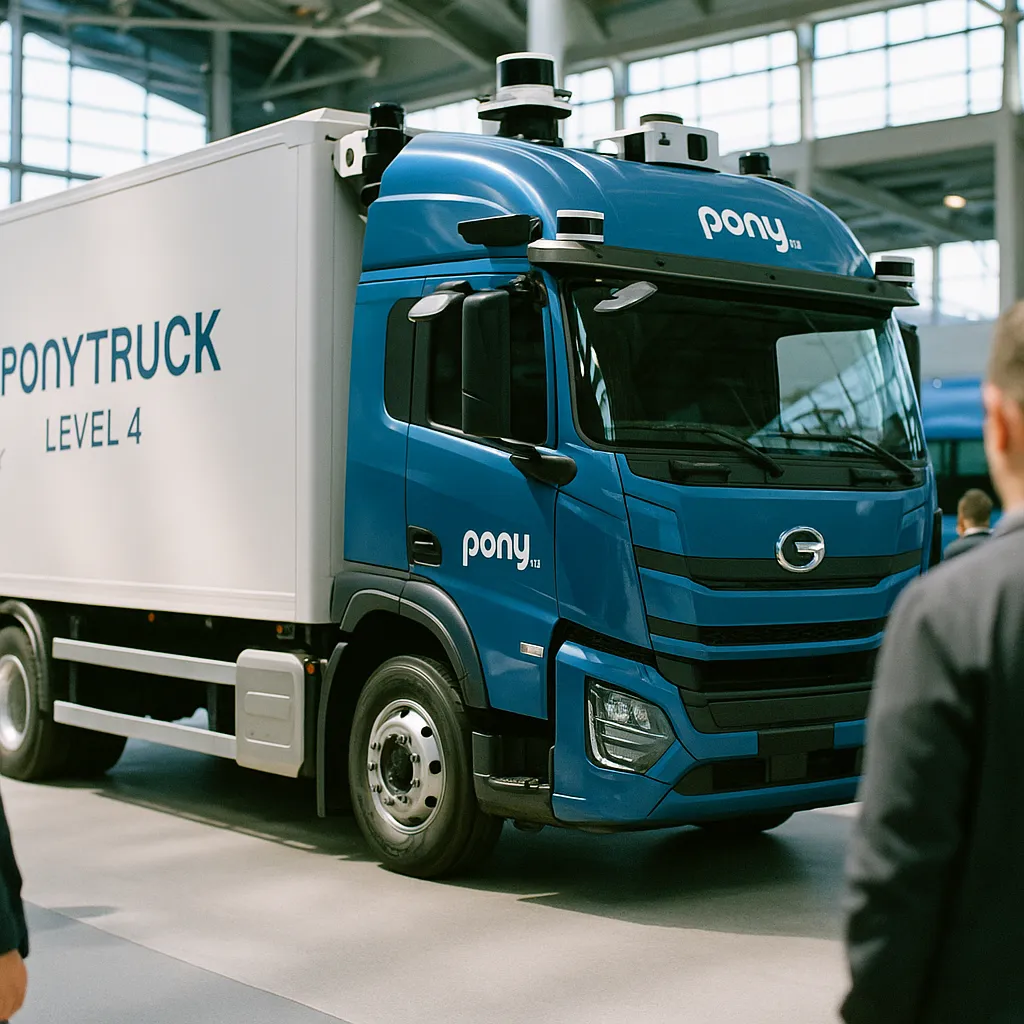
PepsiCo has deployed 41 fully driverless trucks powered by Gatik across Arizona, Texas, and Arkansas — hauling 26,000-pound loads of Doritos, Fritos, Pepsi, and Gatorade to Walmart and Dollar General stores with no safety driver in the cab. PepsiCo calls it the largest fully autonomous commercial delivery truck deployment in U.S. history. The $600 million multiyear commitment signals that autonomous middle-mile delivery — the segment connecting distribution centers to retail stores — has crossed from pilot program to operational infrastructure.
This is not a test. These trucks are running live commercial routes, delivering real products to real stores, with no human in the vehicle. The transition from supervised to fully driverless operations began in mid-2025 and has since logged zero public-road accidents and a 99% on-time arrival rate.
How It Works
Gatik specializes in middle-mile autonomous delivery — the fixed, repetitive routes between warehouses and retail outlets that differ from the unpredictable last-mile deliveries that have challenged other autonomous vehicle companies. Middle-mile routes are geographically constrained, the destinations are fixed, the schedules are predictable, and the road environments are more controlled than urban last-mile delivery. That specificity is the engineering advantage.
The 41 trucks operate across three states:
- Arizona — routes serving Walmart distribution to metro Phoenix stores
- Texas — routes serving both Walmart and Dollar General, including Dallas-Fort Worth area
- Arkansas — routes serving Dollar General in the Little Rock and Fayetteville corridors
Each truck is a purpose-built Gatik-integrated autonomous vehicle, not a retrofit of an existing semi-truck. The vehicles carry Frito-Lay's full snack portfolio alongside Pepsi and Gatorade products — all categories with established, high-frequency replenishment cycles that make route predictability easy to engineer around.
The Safety and Performance Record
The 99% on-time arrival rate and zero public-road accident record since driverless operations began in mid-2025 are the data points that will matter most to other consumer goods companies watching this deployment. Those numbers represent roughly 12 months of live autonomous operation across three states, multiple climate environments, and varying traffic conditions.
For context: the national average on-time delivery rate for commercial trucking is approximately 82-87%, depending on segment. PepsiCo's autonomous fleet is outperforming the human-driven industry average — not by a small margin, but by a significant one. The lack of driver fatigue, shift limitations, and human scheduling variability are the likely contributors.
Get this in your inbox.
Daily AI intelligence. Free. No spam.
The zero-accident record is meaningful but requires context. Gatik's middle-mile routes are designed to minimize risk exposure — fixed routes, lower speeds, no highway merging at 70 mph. The company is not claiming its technology can navigate every driving scenario; it's claiming it can handle the specific scenario it was engineered for. That is a more defensible claim, and the safety record reflects it.
Why the 0 Million Commitment Matters
PepsiCo's $600 million multiyear commitment to Gatik is not primarily a technology bet — it is a labor and logistics cost calculation. The United States faces a structural shortage of commercial truck drivers. The American Trucking Associations estimated a shortfall of 60,000 drivers in 2025, with projections pointing toward 160,000 by 2030. That shortage drives up wages, reduces scheduling flexibility, and creates supply chain fragility.
Autonomous middle-mile trucks don't replace all drivers. They eliminate the need for drivers on fixed, repetitive routes — exactly the routes where driver time is least efficiently used and where scheduling variability creates the most operational disruption. PepsiCo is effectively removing its most predictable routes from the driver shortage equation.
The math on cost per delivery is also changing. A human-driven delivery route incurs driver wages, benefits, regulatory hours-of-service limits, and insurance costs tied to driver risk profiles. An autonomous route incurs vehicle amortization, technology licensing, and remote monitoring costs. At scale, the autonomous cost structure is significantly lower — particularly as the technology fleet grows and fixed costs amortize further.
What This Means for the Industry
Consumer goods companies have been watching Gatik's partnership with PepsiCo since early deployments in 2021. Those early supervised runs — with safety drivers on board — were useful proof of concept but didn't change the economics. The removal of the safety driver is what changes the economics. A supervised autonomous vehicle still requires a human on payroll; a driverless vehicle does not.
Other major consumer goods manufacturers — Unilever, Procter & Gamble, Coca-Cola — operate nearly identical middle-mile logistics structures: high-frequency, fixed-route deliveries from regional distribution centers to major retail chains. The PepsiCo deployment gives them a production-grade benchmark to evaluate against their own operations.
Walmart and Dollar General are also notable in this picture. Both retailers have multi-year supply chain modernization programs underway, and both have been active investors in autonomous logistics technology through corporate venture arms. Their willingness to integrate autonomous delivery on the inbound side is as significant as PepsiCo's willingness to deploy on the outbound side.
What to Watch
Watch for PepsiCo to announce fleet expansion in Q4 2026 — 41 trucks across three states is large by current industry standards, but modest relative to PepsiCo's full middle-mile logistics network. If the safety record and on-time performance hold through the summer heat cycles in Arizona and Texas, expansion to additional states is a natural next step. Watch also for competitor CPG companies — particularly Coca-Cola and Anheuser-Busch InBev — to accelerate their own autonomous logistics evaluations in direct response to this deployment.
Hector Herrera covers AI in transportation and logistics for NexChron.
Did this help you understand AI better?
Your feedback helps us write more useful content.
Get tomorrow's AI briefing
Join readers who start their day with NexChron. Free, daily, no spam.