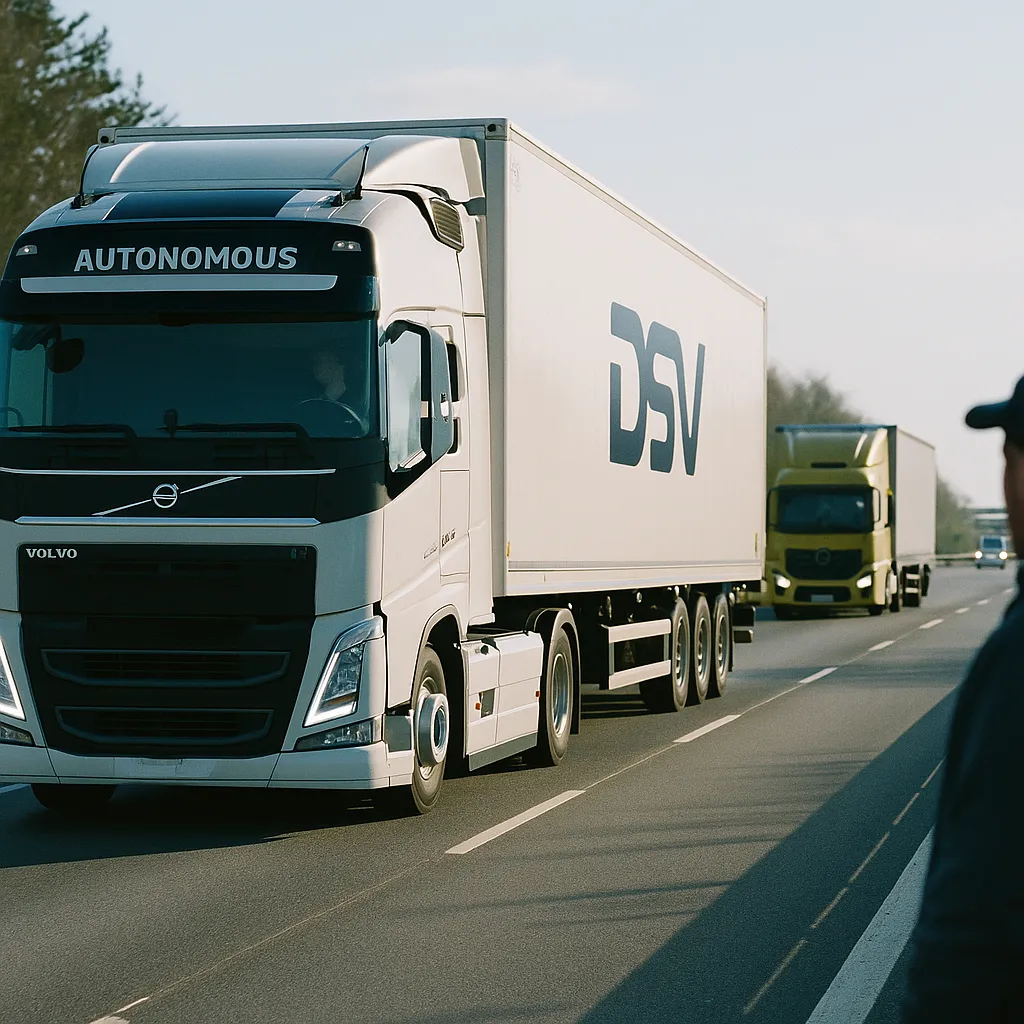
Volvo Autonomous Solutions and global logistics firm DSV have launched autonomous freight operations on the Dallas-to-Houston corridor in Texas, integrating Aurora's self-driving stack into commercial freight flows.
Volvo and DSV Begin Commercial Autonomous Trucking Between Dallas and Houston
By Hector Herrera | May 14, 2026 | Transport
Commercial autonomous freight is now running on a real Texas highway. Volvo Autonomous Solutions and global logistics company DSV have launched autonomous trucking operations on the Dallas-to-Houston corridor, hauling truckloads on Volvo VNL Autonomous trucks integrated with Aurora's self-driving stack. The program slots into DSV's existing logistics flows and runs between Aurora's terminal facilities in both cities. A safety driver remains in the cab during this initial phase.
This is not another pilot. DSV is one of the world's three largest logistics and freight companies by revenue, operating in more than 80 countries. When a company at that scale begins integrating autonomous trucks into production freight operations — even with a safety driver — it signals a commercial readiness threshold that press release announcements do not.
The Route and the Setup
The Dallas-to-Houston corridor is approximately 240 miles on Interstate 45 — a high-volume freight lane with relatively predictable highway driving conditions. Aurora has operated its commercial autonomous freight program on Texas highways since early 2024, when it became the first company to run driverless commercial trucks without a safety driver at highway speeds on public roads in the U.S. The Volvo-DSV service represents an expansion of that operational footprint, now incorporating a major European OEM's hardware and a Tier 1 global logistics partner.
The specifics per the announcement:
- Vehicle: Volvo VNL Autonomous, Volvo's Class 8 long-haul truck platform purpose-built for autonomous integration
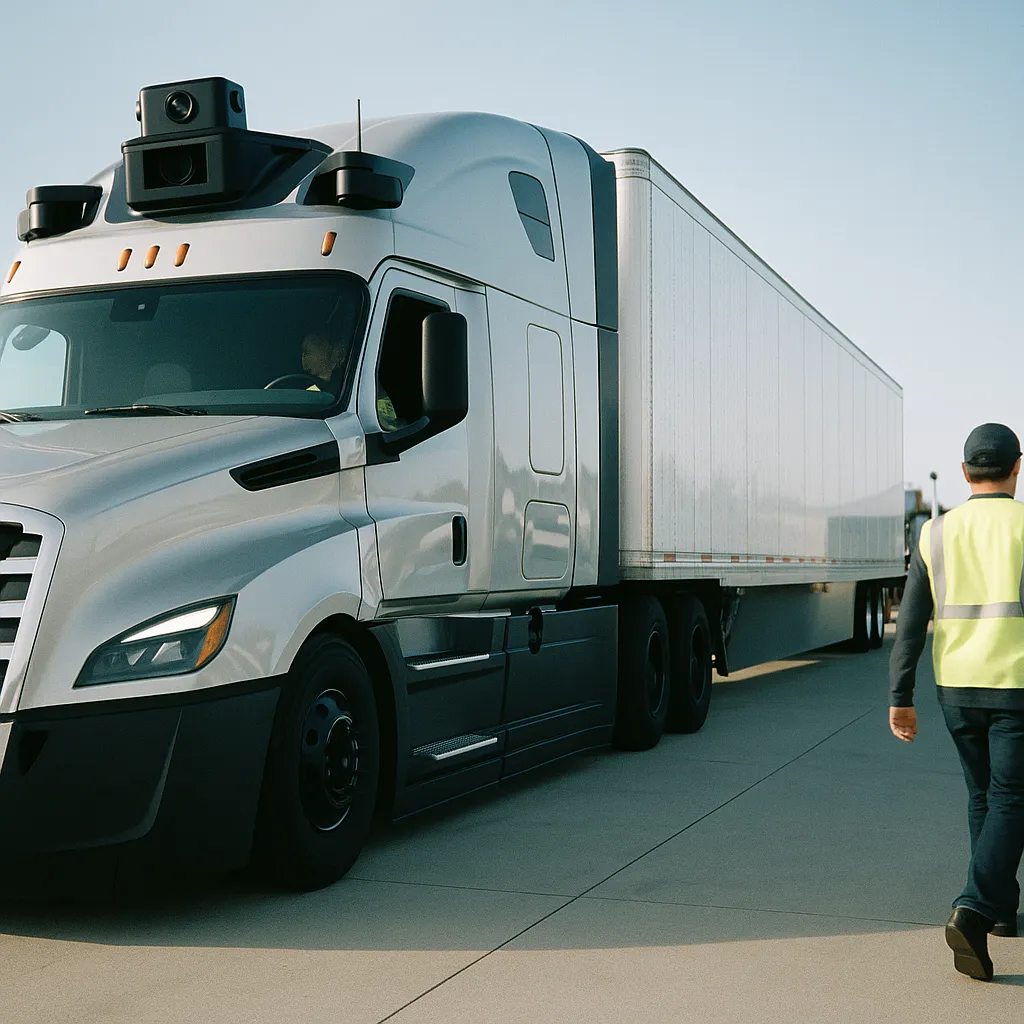
- Self-driving technology: Aurora Driver, Aurora's self-driving system
- Logistics provider: DSV, a Danish firm that ranks among the world's largest third-party logistics companies
- Route: Dallas terminal to Houston terminal, operating within Aurora's established Texas network
- Safety driver status: Present in cab during initial commercial phase
How This Fits Into Aurora's Strategy
Aurora has pursued a commercial deployment model built around ecosystem partnerships rather than operating its own trucking fleet. That means working with truck manufacturers — Volvo and PACCAR (Kenworth) — to produce vehicles integrated with its Driver system, and partnering with large freight operators — including Werner Enterprises, Uber Freight, and now DSV — to generate the freight volume those trucks carry.
The Volvo-DSV announcement deepens both sides of that ecosystem. Volvo's VNL Autonomous is the hardware side; DSV is the freight volume side. Aurora provides the self-driving software and the terminal infrastructure that anchors the Dallas-Houston lane.
Get this in your inbox.
Daily AI intelligence. Free. No spam.
DSV's involvement is particularly notable because of the company's size and operational complexity. DSV moved approximately 1.7 million tonnes of air freight and managed vast surface freight operations globally in 2025. When a logistics operator of that scale begins genuinely integrating autonomous trucks — not just testing them, but assigning them to existing freight flows — it changes the calculus for the entire sector.
What "Commercial" Actually Means Here
The word "commercial" in autonomous trucking announcements has been applied loosely. Clarifying what it means in this context matters:
What it is: Actual customer freight, shipped under commercial terms, running on public highways, generating real revenue, and integrated into DSV's operational planning.
What it isn't: Fully driverless. A safety driver remains in the cab. This is an important distinction — the economics of autonomous trucking shift dramatically when you eliminate the safety driver, and that milestone has not been reached in this program's initial phase.
Aurora achieved true driverless operation — no safety driver — on the same Texas corridor in early 2024 under its own commercial operations. The Volvo-DSV program appears to be starting with safety supervision before stepping to unsupervised commercial operation, which is a standard regulatory and insurance ramp-up sequence.
What This Means for Logistics
For DSV and other global logistics operators, the autonomous trucking question isn't whether the technology will arrive — it's when the unit economics justify full integration. The current phase — safety driver present, limited to high-volume highway lanes — is the bridging step between demonstration and scaled deployment.
The driver compensation savings, which represent the largest single cost component in U.S. long-haul trucking at roughly 35–40 cents per mile, do not fully materialize until the safety driver is removed. That economic pressure means the industry's focus over the next 18–24 months will be on the path from safety-supervised commercial operations to fully autonomous revenue miles.
The Volvo-DSV program contributes real-world operational data — on reliability, cargo integrity, weather performance, and customer acceptance — that will inform that transition timeline.
What to Watch
Volvo Autonomous Solutions and DSV have indicated ambitions to expand the program to additional lanes beyond Dallas-Houston as the initial phase matures. Watch for announcements about unsupervised commercial operations — that will be the milestone that signals the economics are close to working.
More broadly, the accumulation of named commercial freight programs — Aurora with Werner, McLane, and now Volvo-DSV; Kodiak with Roehl; Waabi with Uber Freight — is building the operational track record that insurers, shippers, and regulators need to see before the industry can scale. Each program that runs without incident adds to that foundation.
Hector Herrera covers autonomous vehicles and logistics technology for NexChron.
Did this help you understand AI better?
Your feedback helps us write more useful content.
Get tomorrow's AI briefing
Join readers who start their day with NexChron. Free, daily, no spam.