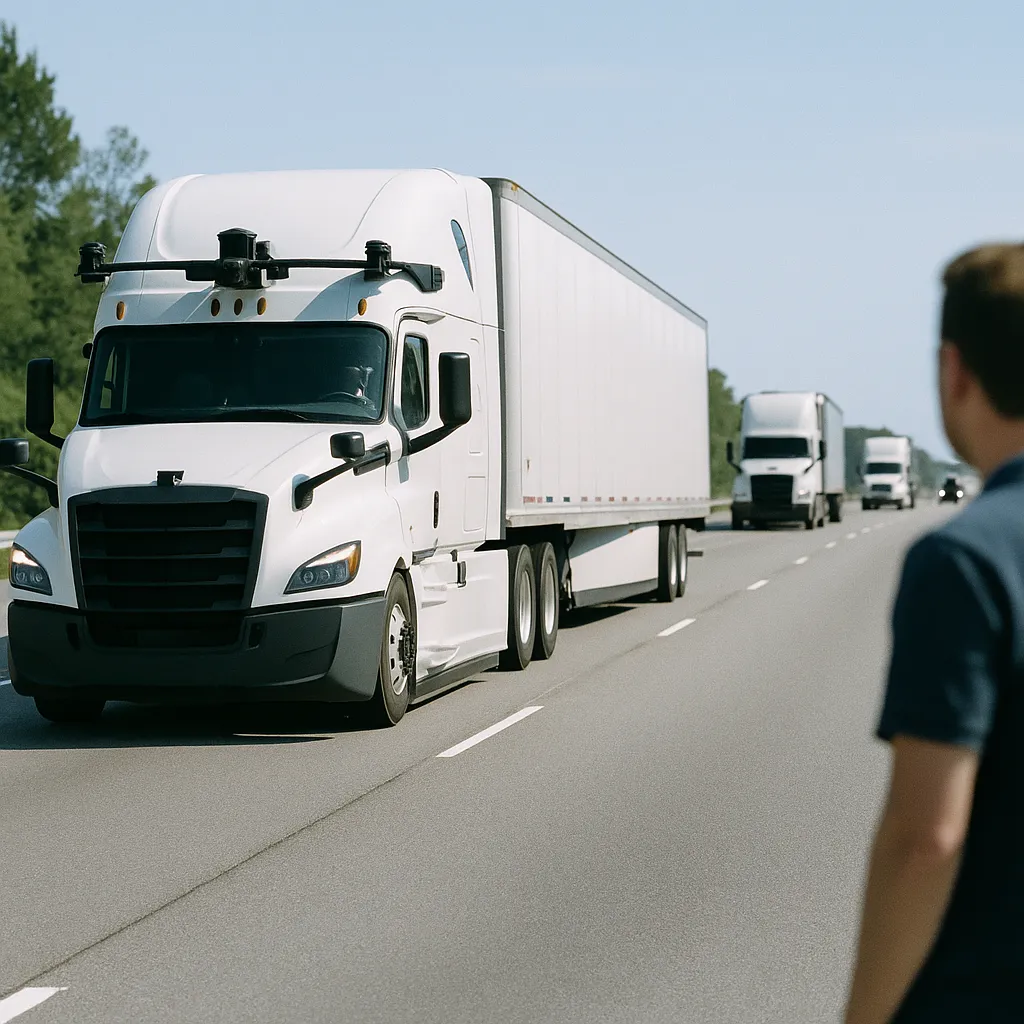
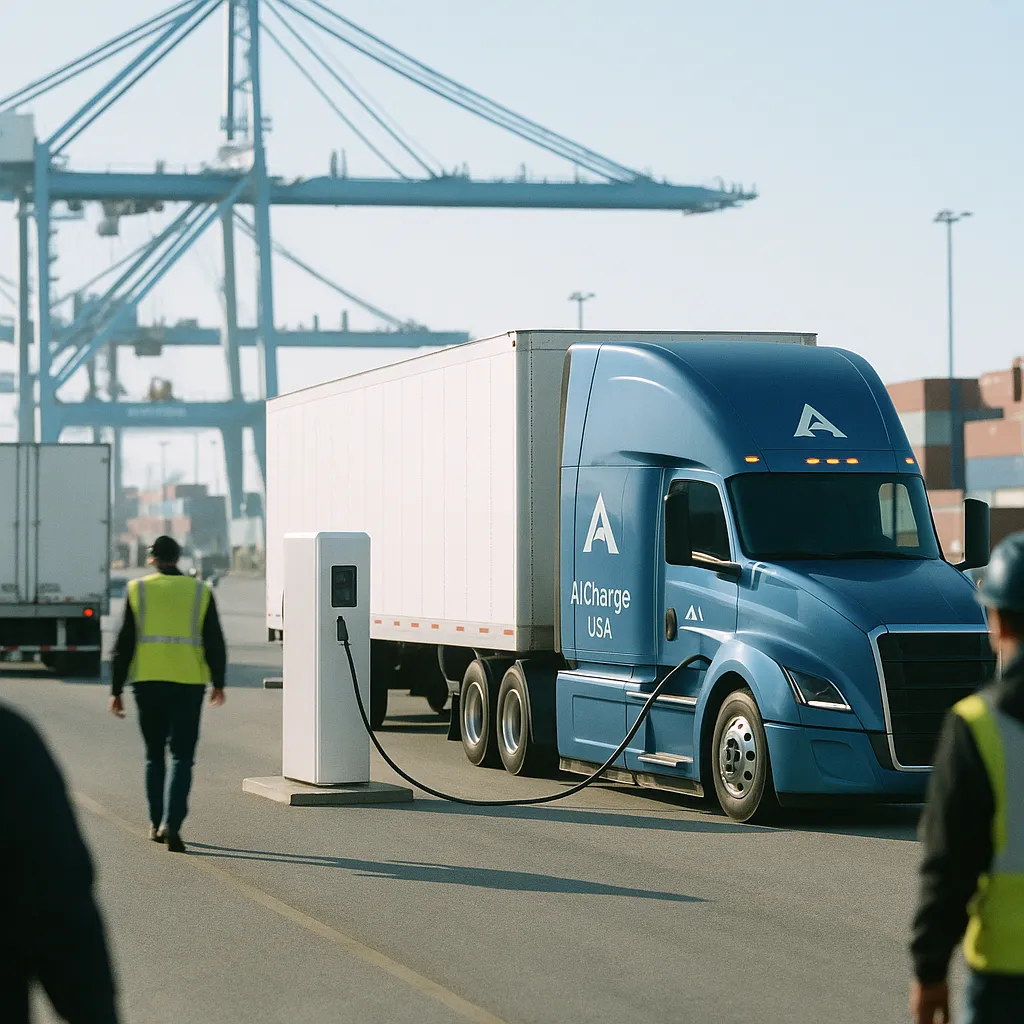
Venti Technologies deployed North America's first autonomous truck fleet inside a live intermodal rail yard, with vehicles loading and moving containers entirely without human operators and 40–70% logistics cost reductions reported.
Venti Deploys North America's First Autonomous Truck Fleet Inside Live Rail Yards
By Hector Herrera | October 4, 2026
Autonomous trucks have been working toward the highway. Venti Technologies just moved them somewhere harder. The company deployed North America's first autonomous truck fleet operating inside a live intermodal rail yard — vehicles loading, relocating, and placing shipping containers without any human operator involvement. The company reports that AV operations within port and rail yard environments can cut logistics costs 40 to 70 percent.
The deployment marks the first time autonomous vehicle technology has been proven in the most complex layer of the freight supply chain: the intermodal handoff point where cargo moves between ship, rail, and road.
Why Rail Yards Are a Different Problem Than Highways
Highway autonomous driving, despite years of headlines, has a relatively structured environment: lanes, signals, defined rules, predictable human behavior within bounds. Rail yards are fundamentally different.
An intermodal rail yard is a 24/7 operation with dozens of moving pieces operating simultaneously — locomotives repositioning rail cars, overhead cranes stacking containers, yard trucks moving chassis, and workers performing manual tasks throughout the facility. There are no lane markings. Obstacles appear without warning. Containers must be placed precisely on specific chassis or within defined stack locations. The cost of an error — a misplaced container, a collision with a crane leg, a container dropped on a chassis — is measured in thousands of dollars and potential injury.
Previous autonomous vehicle deployments in logistics have been either highway-based (Kodiak Robotics, Aurora Innovation, Gatik) or in highly controlled warehouse environments. A live intermodal rail yard, with its dynamic environment and tight tolerances, has been widely considered one of the harder autonomous deployment targets in freight.
What Venti Actually Built
Venti Technologies developed its system specifically for constrained, complex logistics environments rather than open road. Their vehicles use a combination of LiDAR, cameras, and high-definition facility maps to navigate rail yard environments where GPS alone is unreliable due to signal obstruction by overhead structures and dense metal equipment.
The deployed fleet operates what the industry calls "yard truck" or "spotter truck" functions: moving shipping containers on chassis from one location to another within the yard, positioning them for crane pickup, and staging them for outbound rail loading. These movements are repetitive, precision-critical, and currently require skilled human operators working in challenging physical conditions.
Get this in your inbox.
Daily AI intelligence. Free. No spam.
Key details from the announcement:
- Fleet deployment: Multiple vehicles operating simultaneously in a live U.S. intermodal rail yard
- Operation type: Loading, relocating, and unloading shipping containers without human operators
- Cost reduction: 40–70% logistics cost reduction within port and rail yard facilities
- Regulatory context: Rail yard AV operations are governed differently from public road deployments, with fewer federal restrictions — a practical advantage over highway AV programs
The Economic Case
The 40 to 70 percent cost reduction claim is the number that will drive adoption decisions.
Rail yard operations are expensive. Yard truck drivers work around the clock in demanding conditions, commanding wages commensurate with the skills and hours involved. Insurance costs for yard operations are high due to the frequency of minor incidents. Equipment damage — from bumped containers to damaged chassis — is a recurring operational expense.
Beyond direct cost, autonomous yard operations enable higher throughput. Human drivers require breaks, shift changes, and sleep. Automated vehicles don't. A yard that currently processes X containers per shift with human operators can theoretically process more with autonomous vehicles that operate continuously without fatigue-related performance degradation.
The port industry has been under severe cost pressure since the supply chain disruptions of 2021–2023. Major U.S. ports — Los Angeles, Long Beach, Savannah, New York — have been investing in automation at container terminals for years. Autonomous yard trucks extend that automation from the terminal to the intermodal rail interface, closing a gap in end-to-end freight automation.
What It Opens Up
Venti's deployment matters beyond its immediate rail yard application because it proves the technical case for AV operations in constrained, complex environments at commercial scale.
Ports are the next obvious target. The container terminal yard environment shares characteristics with the intermodal rail yard — tight tolerances, mixed human and machine traffic, high-precision container placement requirements. Several major ports are already in discussions with autonomous equipment vendors; Venti's deployment provides a commercial proof point that accelerates those conversations.
Construction sites, mining operations, and agricultural facilities present similar constrained-environment autonomy opportunities. Each has been discussed as an AV target for years; actual commercial deployments in similarly complex environments have been rare.
What to Watch
The specific rail yard and railroad partner were not identified in Venti's announcement. Watch for named customer announcements — the first major Class 1 railroad to publicly partner with Venti will validate the commercial model and accelerate competitor interest. Terminal operating companies (like ICTSI, Maher Terminals, or SSA Marine) managing intermodal facilities are the logical next customer tier.
Whether the 40–70% cost reduction figure holds at larger scale and across multiple yard types will be the determining factor for widespread adoption. Early-deployment economics are typically favorable; the real test comes at the tenth and twentieth facility.
Hector Herrera is the founder of NexChron and builds AI systems at Hex AI Systems.
Did this help you understand AI better?
Your feedback helps us write more useful content.
Get tomorrow's AI briefing
Join readers who start their day with NexChron. Free, daily, no spam.