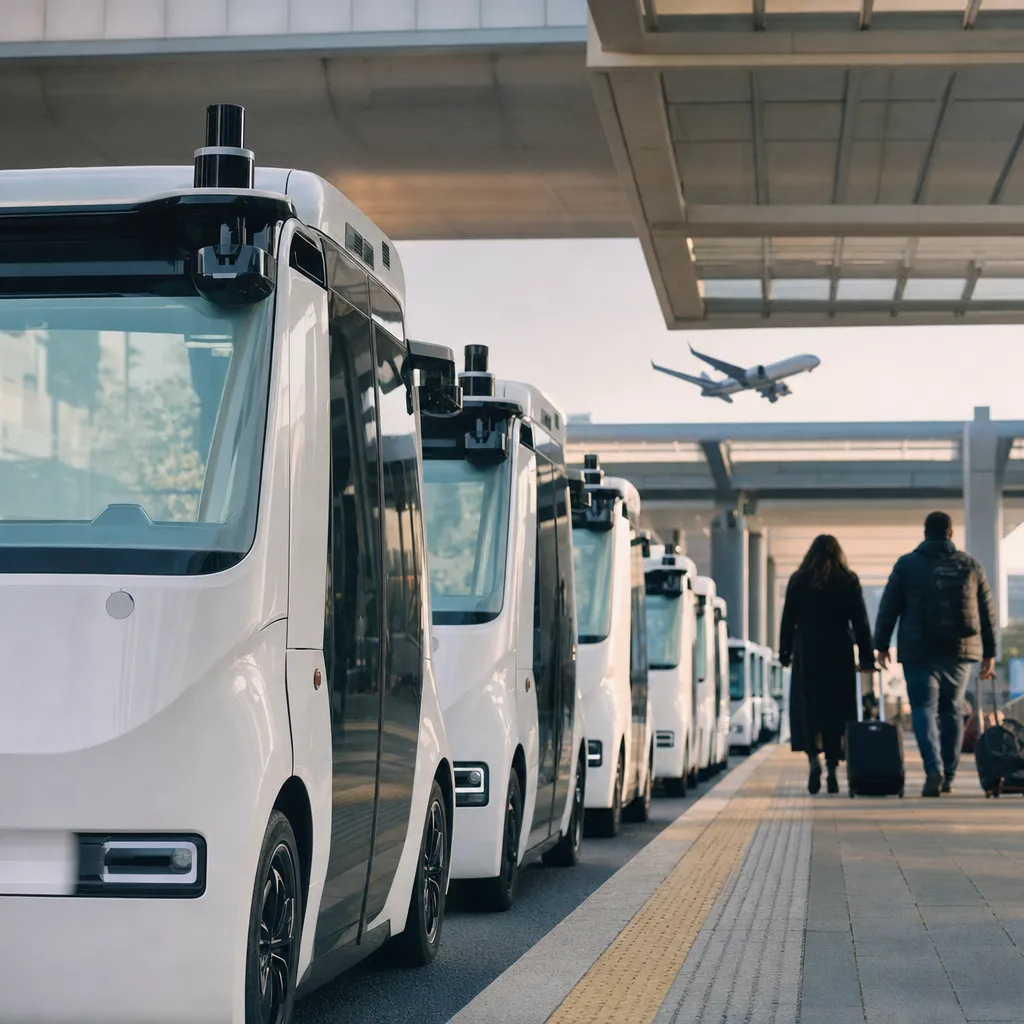
May Mobility is targeting more than 10,000 autonomous vehicles by 2031, using Volkswagen's electric platform as the hardware base, as the AV industry enters a second investment boom.
By Hector Herrera | November 17, 2026
May Mobility has set a target of deploying more than 10,000 autonomous vehicles through 2031, using Volkswagen's electric vehicle platform as the hardware base. The announcement, made the week of November 16, comes as the AV industry enters what investors are calling a second, larger investment boom — with venture fund Trucks VC reporting it received pitches from 81 new AV startups in 2026, two-thirds more than the year before. If May hits its target, it would rank among the largest autonomous vehicle operators in the world.
The first AV investment wave — which ran roughly from 2017 to 2022 — ended in a series of high-profile shutdowns, funding cuts, and pivots to limited geofenced operations. The companies that survived did so by narrowing scope: smaller operational areas, specific vehicle classes, defined use cases. May Mobility has operated in that more pragmatic mode, running AV shuttle services in several U.S. cities with safety drivers transitioning out of vehicles as the technology matured. The 10,000-vehicle target signals confidence that the technology is now ready to scale beyond city-by-city demonstration projects.
The Volkswagen Platform Partnership
The hardware base matters as much as the software. Building autonomous vehicle systems on purpose-designed platforms — rather than retrofitting existing consumer vehicles — reduces integration complexity, but creating those platforms from scratch is expensive and creates supply chain exposure. May Mobility's partnership with Volkswagen's electric vehicle architecture addresses both problems.
Volkswagen's EV platform was designed for high-volume manufacturing and consistent component supply. By building its autonomous system on that base, May gains access to proven manufacturing scale, an established service network for maintenance, and a hardware foundation that VW is already investing billions to develop. As sensor and compute costs continue falling, the VW platform evolves alongside them rather than requiring May to manage its own hardware supply chain.
Get this in your inbox.
Daily AI intelligence. Free. No spam.
The specific Volkswagen model or platform has not been publicly disclosed, but the partnership follows an established pattern in the AV industry: software-focused autonomy companies teaming with automakers to solve the hardware scaling problem. Waymo partnered with Jaguar and Zeekr; Cruise built on GM's Cruise Origin platform before its restructuring.
The AV Market's Second Boom
The investor activity data is striking context. Trucks VC — a venture fund focused on freight and logistics technology — received pitches from 81 new AV startups in 2026 versus roughly 49 in 2025. That growth is not simply early-stage capital chasing hype. It reflects a cohort of founders and engineers who watched the first wave, waited for sensor costs and AI capabilities to reach viability thresholds, and are now launching with better technology and more grounded business models.
The difference from 2019-era AV pitches is in the deployment assumptions. First-wave companies frequently projected full autonomy across all road conditions within two to three years, with consumer robotaxi revenue following shortly after. The current cohort is more likely to present geofenced routes, specific use cases — airport transfers, fixed-schedule logistics, campus and retirement community mobility — and unit economics based on cost savings against human drivers rather than general consumer subscriptions.
May Mobility has consistently operated this way. Its services have been deployed in Providence, Rhode Island; Ann Arbor, Michigan; and Sun City, Arizona — focused on routes where known environments and fixed schedules reduce the complexity that defeats autonomous systems in unpredictable conditions.
What 10,000 Vehicles Would Actually Mean
Scale matters for AV economics in a way it does not for most hardware businesses. Software-defined autonomous driving systems have high fixed development costs that fall sharply on a per-vehicle basis as fleet size grows. The cost-per-mile difference between a 500-vehicle fleet and a 10,000-vehicle fleet is substantial — which means the first companies to reach operational scale have a durable cost advantage over later entrants.
At 10,000 vehicles, May Mobility would also be generating safety and reliability data across a wide variety of conditions, routes, and weather events. That data record is what regulators and municipal partners require before approving expansion to new markets. It is also what insurance underwriters need to price AV coverage at rates that make commercial deployment financially viable.
The public commitment to a 10,000-vehicle timeline also sets expectations for investors, municipal partners, and VW. It is a forcing function.
What to Watch
Whether May hits this target depends on two things: regulatory clearance in new markets and demonstrated per-vehicle economics at scale. Watch for new city announcements and any public data on cost-per-mile as the fleet grows. The specific terms of the VW platform agreement — particularly who bears manufacturing risk and how pricing scales with volume — will also shape how quickly the fleet can grow in the 2028-2031 window.
Did this help you understand AI better?
Your feedback helps us write more useful content.
Get tomorrow's AI briefing
Join readers who start their day with NexChron. Free, daily, no spam.