Experts warn China's AV industry — led by Baidu, WeRide, and Xpeng — is closing the technology gap with Waymo and Tesla FSD at a pace that could shift the global competitive balance within years.
China's autonomous vehicle industry is closing the technology gap with U.S. leaders Waymo and Tesla FSD at a pace that has experts warning the American lead may not hold. The assessment — drawn from engineers and automotive analysts surveyed by The Detroit News — reflects years of rapid Chinese development fueled by structural advantages U.S. competitors cannot simply match with more investment.
How the Gap Closed
Three years ago, Chinese AV companies were largely characterized as fast followers — adapting technology developed in Silicon Valley and Pittsburgh at lower cost but trailing on the core capability that separates genuine autonomy from driver-assistance: handling unpredictable edge cases without human intervention.
That characterization is increasingly outdated.
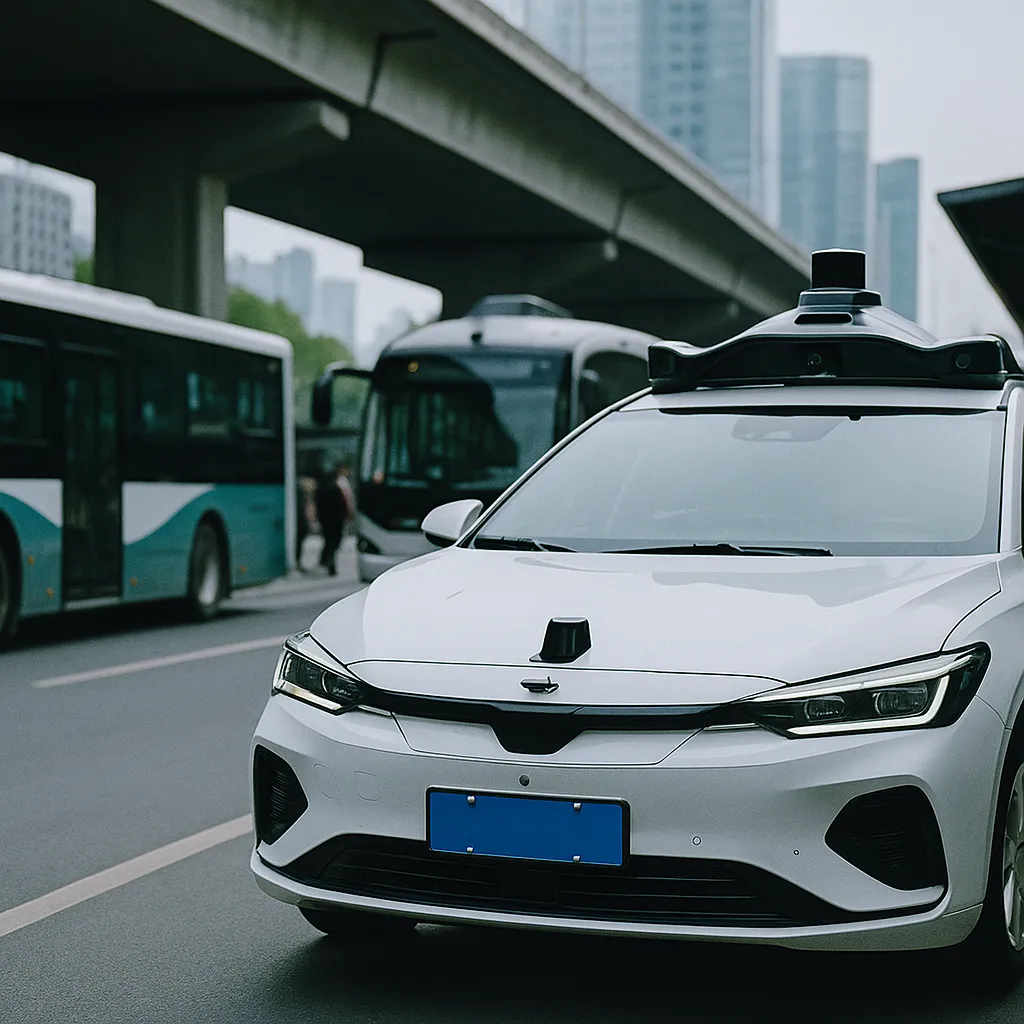
Baidu Apollo now operates the largest robotaxi fleet in China, with over 1,000 commercial vehicles running without safety drivers across ten cities including Wuhan and Chongqing. WeRide secured fully driverless commercial ride approval in Guangzhou in 2024 and has since expanded to Dubai and Saudi Arabia — international markets where it competes directly with Waymo's overseas ambitions. Xpeng has deployed end-to-end AI driving across its consumer fleet, running a data flywheel strategy that parallels Tesla's approach at a fraction of Tesla's brand recognition.
Three Structural Advantages
The analysts interviewed by the Detroit News identified three conditions that give Chinese manufacturers a compounding edge:
Regulatory speed. Chinese cities can approve and expand AV operating zones in months. The multi-year permitting process that governed Waymo's San Francisco rollout has played out in 12 to 18 months across multiple Chinese cities simultaneously. This is not simply bureaucratic ease — it is a data accumulation engine. More cities, faster approvals, and more operational hours translate directly into more training data and faster improvement cycles. Waymo spent six years earning a driverless commercial permit in San Francisco. Baidu earned comparable permits in five cities in the same period.
Get this in your inbox.
Daily AI intelligence. Free. No spam.
Integrated development. Most Chinese AV companies develop their own vehicle platforms, sensor suites, AI chips, and software under tightly controlled supply chains. That vertical integration means when the software team changes a model, the hardware team can validate it within weeks rather than waiting on an OEM partner's production calendar. U.S. competitors generally depend on automotive partnerships — Waymo with Jaguar, Cruise with GM — where development cycles are constrained by partners who are optimizing for different timelines and incentives.
State coordination. Chinese AV development receives direct government funding, preferential infrastructure access including dedicated AV lanes in pilot cities, and coordinated national research programs that feed into commercial applications. The total value is difficult to quantify but extends well beyond visible subsidy dollars. It includes priority permitting, shared sensor infrastructure in test zones, and data-sharing agreements between competitors that would face antitrust scrutiny in the United States.
Where the U.S. Still Leads
The United States maintains meaningful advantages, particularly at the frontier of performance in genuinely complex environments.
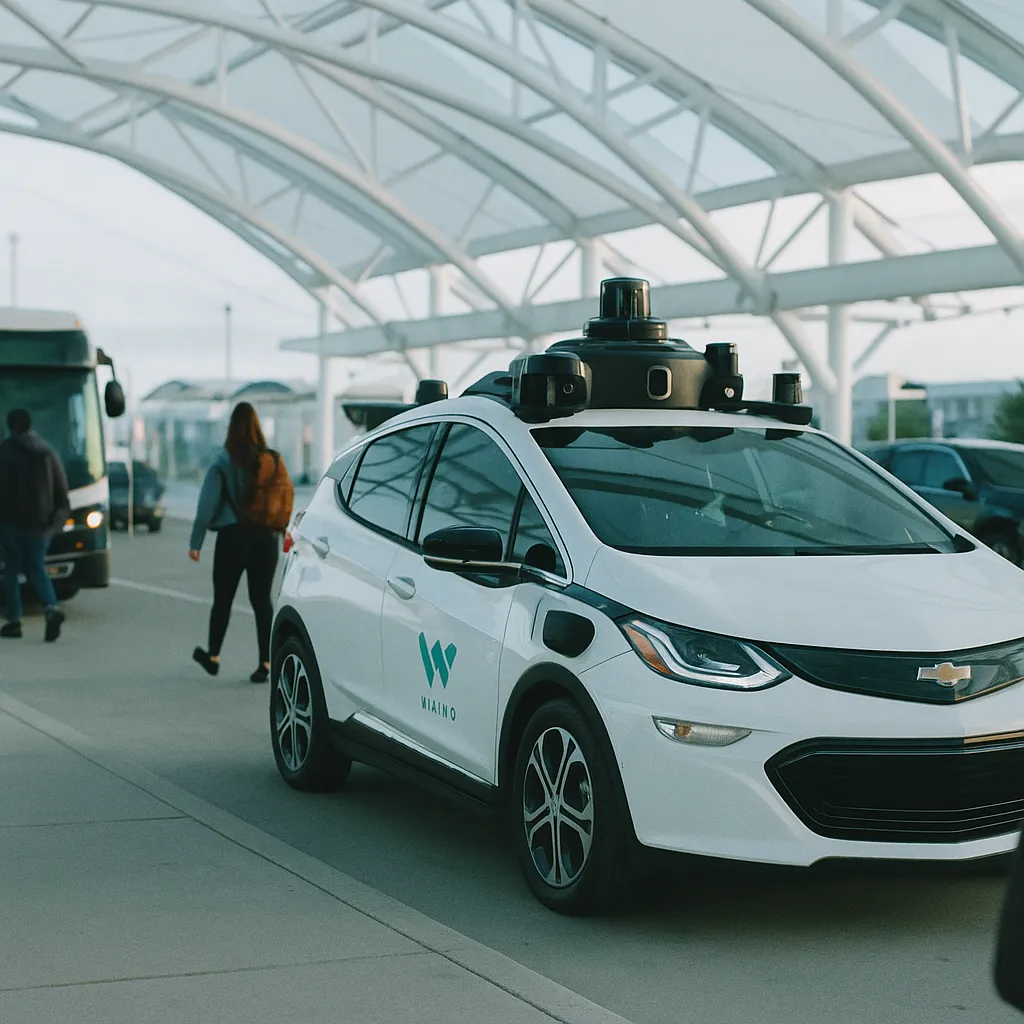
Waymo's commercial fleet has now logged more than one million driverless rides in San Francisco, Phoenix, and Austin — accumulating edge case data at real commercial scale under adversarial regulatory scrutiny that forces rigorous safety validation. Tesla's FSD system benefits from approximately five million vehicles globally contributing shadow mode data to its training pipeline, an order of magnitude more data collection than any single Chinese competitor.
U.S. companies also have full access to NVIDIA's most advanced AI training chips. Chinese AV developers face export controls on NVIDIA's highest-end hardware, forcing investment in domestic alternatives — Huawei Ascend, Cambricon — that remain behind on raw training throughput. Those controls have created meaningful near-term constraints on Chinese frontier model development, though they are not a permanent ceiling.
What to Watch
The competitive gap will narrow fastest in international markets where neither country has home-field regulatory advantage. WeRide and Baidu are actively building commercial operations in the UAE, Saudi Arabia, and Singapore. Waymo's international expansion is at an earlier stage.
Watch the trajectory of domestic Chinese AI chip development. If Huawei Ascend or a successor product reaches computational parity with NVIDIA's export-controlled chips within two to three years — which Chinese officials have publicly targeted — the hardware moat disappears. At that point, the structural advantages in regulatory speed and vertical integration compound without constraint.
U.S. policymakers debating export control strategy need to weigh the chip restrictions not just as a near-term brake on Chinese capability but as an accelerant on Chinese domestic semiconductor investment.
By Hector Herrera
Did this help you understand AI better?
Your feedback helps us write more useful content.
Get tomorrow's AI briefing
Join readers who start their day with NexChron. Free, daily, no spam.