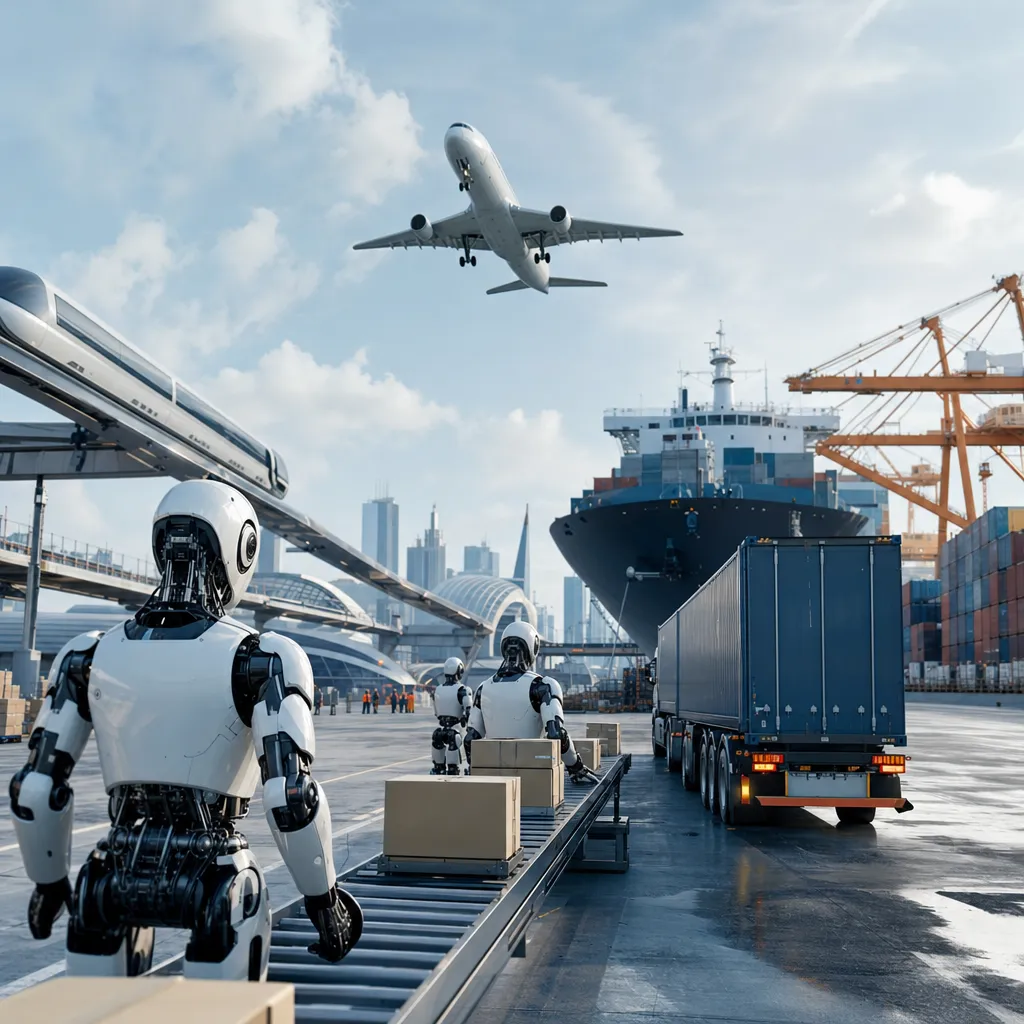
Expoline completed the first fully documented commercial logistics project purpose-built for humanoid AI robots, coordinating multimodal transport across international borders.
Expoline has completed what appears to be the first fully documented commercial logistics project purpose-built for advanced humanoid AI robots — coordinating air, sea, and ground transport across international borders to deliver oversized robot units under complex customs and regulatory requirements. The project, completed November 14, marks the beginning of a logistics specialization that the physical AI industry will need at scale.
What Happened
Expoline, a logistics company specializing in complex freight, completed a multimodal international shipment of physical AI humanoid robots — moving units across borders using a combination of air freight, ocean shipping, and ground transport. According to Robotics and Automation News, the project required navigating customs requirements, export control classifications, and oversized cargo handling across multiple jurisdictions.
Specific details about the customer, the robot manufacturer, origin and destination countries, and unit count were not disclosed in the November 14 announcement.
Why Standard Freight Chains Can't Handle This
Humanoid AI robots present logistics challenges that standard freight operations are not designed for:
Get this in your inbox.
Daily AI intelligence. Free. No spam.
- Size and weight — most humanoid robots are 1.5–2 meters tall and weigh 50–80 kg, requiring oversized cargo handling across all transport modes
- Fragility and calibration sensitivity — precision sensors, joints, and onboard computing hardware can be damaged by vibration, temperature swings, or improper orientation during transit
- Export control complexity — advanced AI robots frequently contain controlled hardware components (chips, sensors) subject to export licensing under U.S. BIS regulations and equivalent frameworks in other jurisdictions
- Customs classification ambiguity — humanoid robots don't fit cleanly into standard HS tariff codes, requiring customs specialists at each border crossing
- Insurance and liability — per-unit replacement cost for humanoid robots currently runs $50,000–$300,000+, requiring bespoke cargo insurance coverage that standard freight policies don't provide
Expoline's completed project demonstrates that a logistics specialist with expertise across each of these dimensions can execute a full-chain international humanoid robot shipment — something that until now remained largely ad-hoc and undocumented at commercial scale.
The Logistics Layer Physical AI Needs
The physical AI hardware market is entering a phase where delivery logistics becomes a meaningful constraint on deployment speed. Boston Dynamics, Figure, Agility Robotics, 1X Technologies, and Unitree have all announced production scale-up plans through 2026–2027. As unit volumes rise from dozens to hundreds to thousands per year, the logistics question transitions from "can we move this one robot" to "can we build a reliable supply chain for ongoing deployment."
This mirrors what happened in semiconductors in the 1990s, aerospace components, and high-value medical devices — categories where specialized logistics providers built durable competitive advantages around deep expertise in a single freight category's regulatory, handling, and insurance requirements. Expoline's completed project is early evidence that a specialized logistics layer for physical AI is beginning to form.
The timing is relevant. If humanoid robot production scales as announced — several manufacturers have cited 2027 as the year they reach four-digit annual unit shipments — the logistics bottleneck could become a material constraint on deployment timelines within 18 months. Companies that solve it now own the reference relationships.
What to Watch
Watch for Expoline and competitors to announce dedicated physical AI logistics services in 2027. The more important signal will be which humanoid robot manufacturers announce commercial distribution agreements — those announcements will reveal which logistics partners have been vetted for this category, and whether the specialization is consolidating around one or two providers or remaining fragmented.
Source: Robotics and Automation News
Did this help you understand AI better?
Your feedback helps us write more useful content.
Get tomorrow's AI briefing
Join readers who start their day with NexChron. Free, daily, no spam.