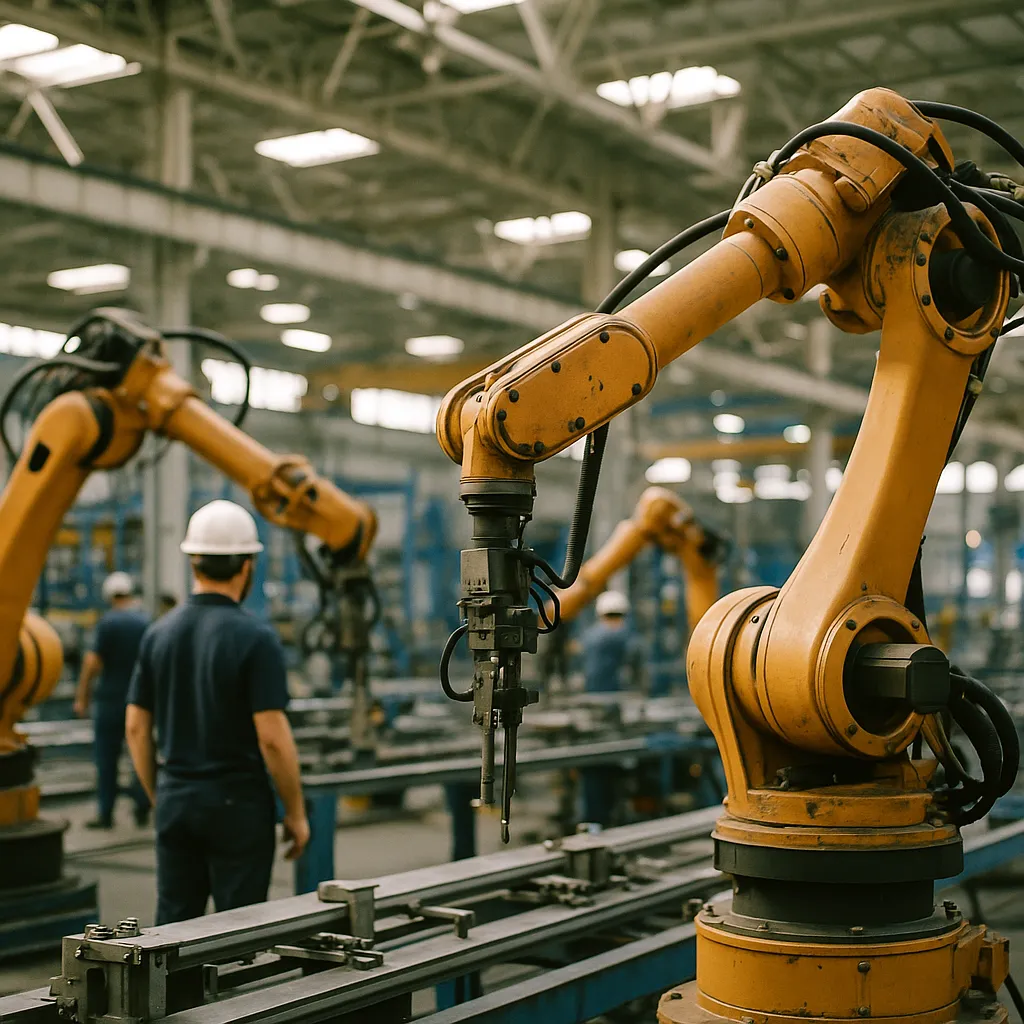
HII launched the HYPR program with Path Robotics and GrayMatter Robotics — combining AI welding, autonomous surface treatment, and automated inspection to target a 15% Navy production increase.
America's Largest Shipbuilder Launches AI Robotics Program to Push Navy Production Up Another 15%
HII — the company that builds more U.S. Navy ships than any other — launched a formal AI robotics program this month targeting a 15% increase in production throughput, following a 14% gain it achieved through earlier automation efforts in 2025. The High-Yield Production Robotics (HYPR) program combines AI-driven robotic welding, autonomous surface treatment, and automated quality inspection into a unified assembly system — and full pilot deployments are planned for 2027.
At a moment when the U.S. Navy is publicly struggling with shipbuilding capacity, HYPR represents the most concrete step yet toward AI-driven production at industrial military scale.
Why Shipbuilding Is a Hard Problem for Robotics
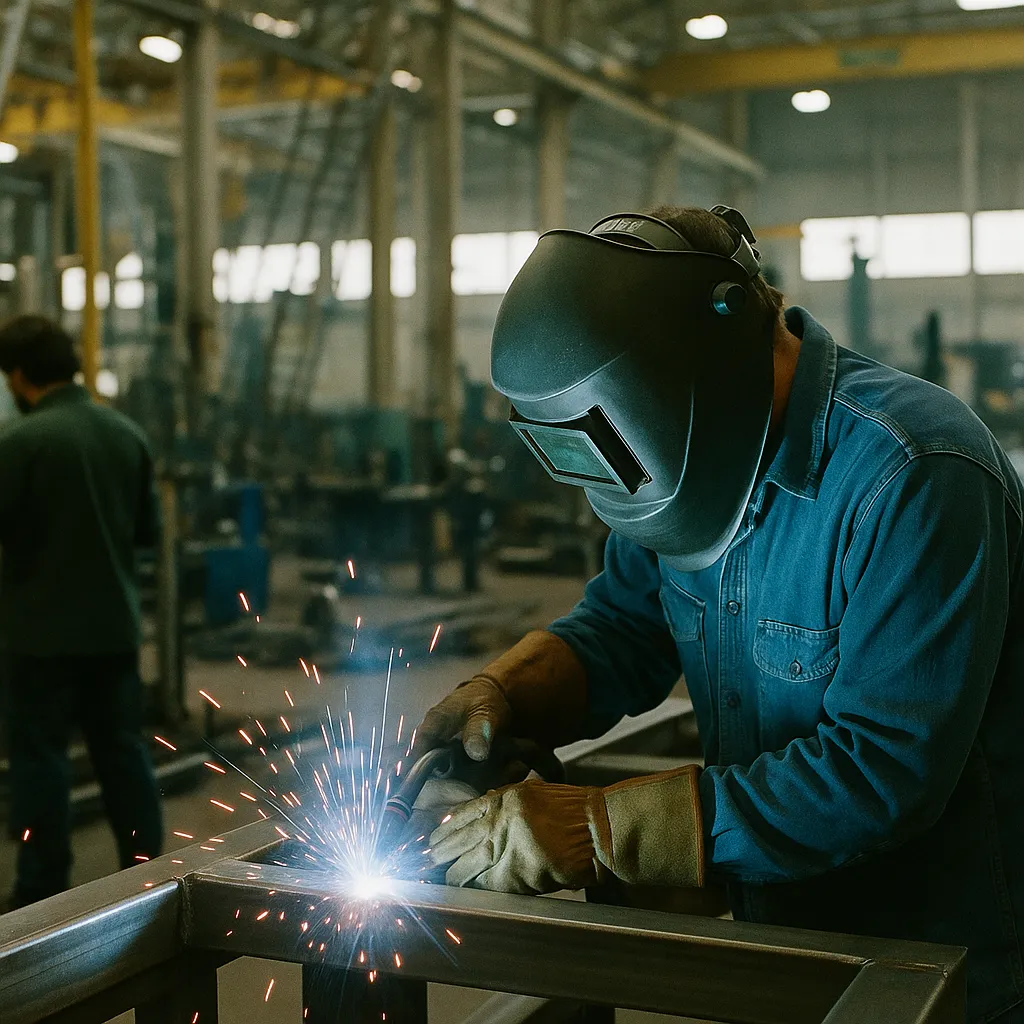
Shipbuilding is not a clean manufacturing environment. Unlike automotive production, which takes place in controlled facilities with standardized components and predictable workflows, shipbuilding involves large, irregular structures, difficult-to-access work zones, continuous design variation across vessel classes, and welding conditions that change with every joint. These characteristics have made full automation resistant to the approaches that transformed other heavy industries.
The progress that has been made came from combining AI-driven systems with robotic hardware specifically designed for unstructured industrial environments. Path Robotics specializes in AI-powered welding robots that can handle weld joint variation without pre-programmed fixtures — a critical capability in shipbuilding where no two welds are perfectly identical. GrayMatter Robotics handles autonomous surface treatment — hull preparation, coating application — tasks that are physically demanding, chemically hazardous, and difficult to staff reliably.
What HYPR Actually Deploys
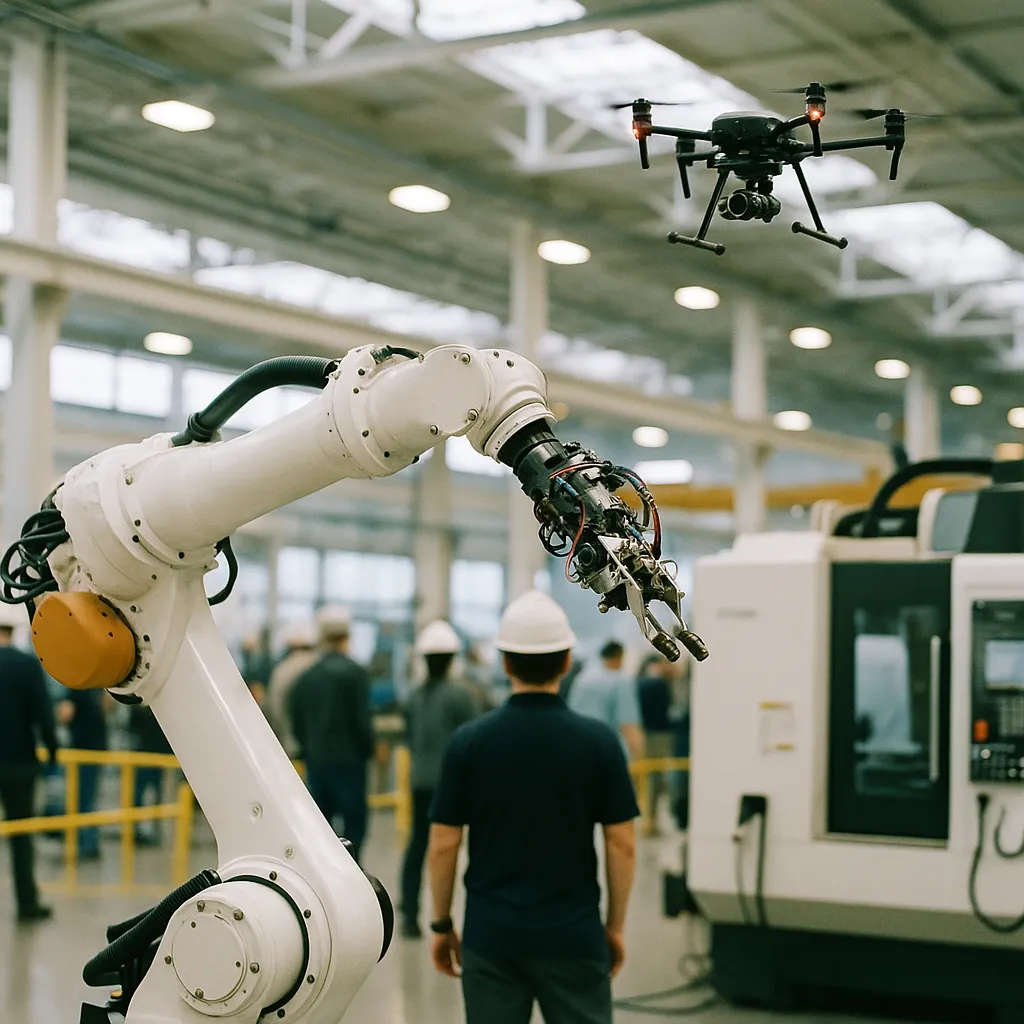
The HYPR program integrates three AI-driven robotic functions into a connected production system:
Get this in your inbox.
Daily AI intelligence. Free. No spam.
- AI robotic welding (Path Robotics): Robots that use computer vision and AI to identify weld joints, adapt to material variation, and execute consistent welds without hard-coded fixture requirements. This is the core bottleneck HII is targeting — welding is both the most labor-intensive and most quality-critical step in hull construction.
- Autonomous surface treatment (GrayMatter Robotics): Automated systems for abrasive blasting, surface prep, and coating application. These tasks currently require significant manual labor in conditions that cause long-term health effects and high turnover.
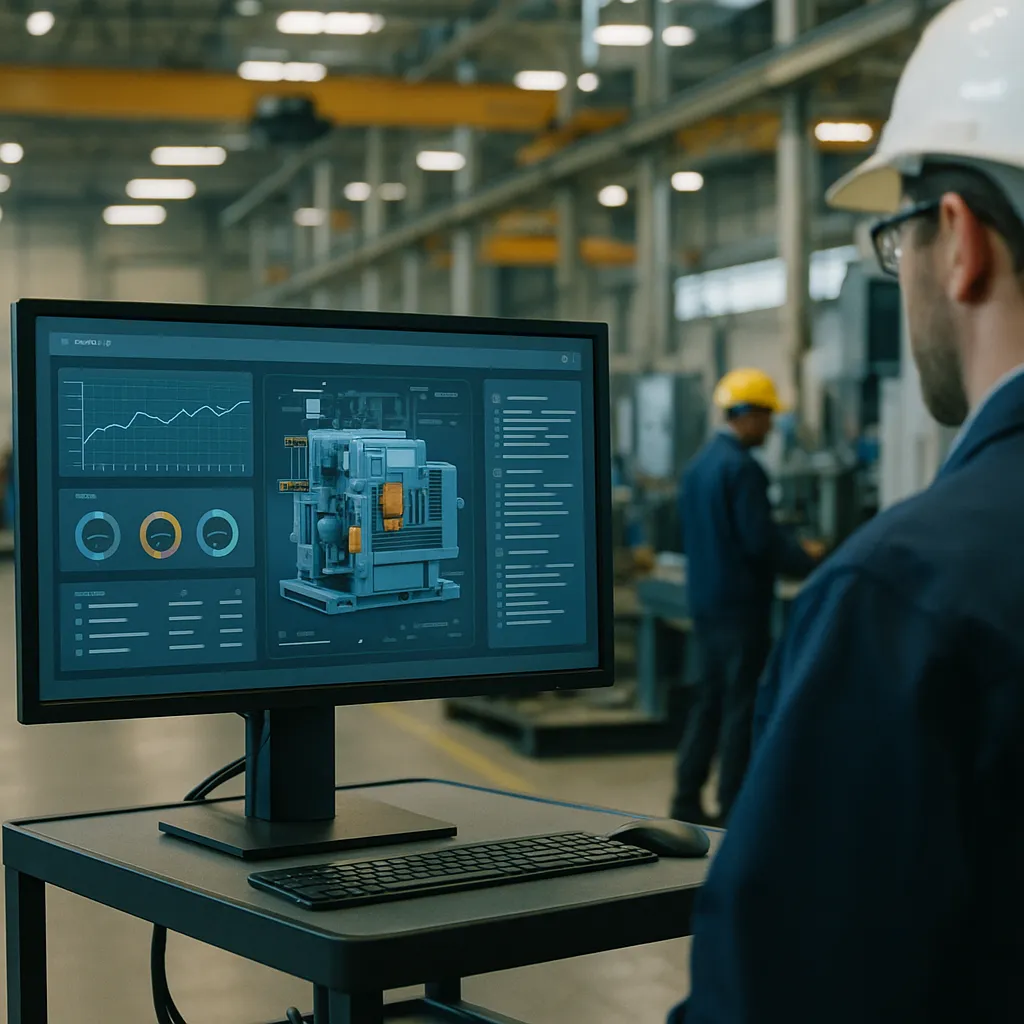
- Automated quality inspection: AI vision systems that inspect welds and surfaces in real time rather than relying on periodic manual inspection. This addresses a major production delay: defect detection at the end of a process, when rework is expensive, versus detection in-process, when correction is cheaper.
The integration of all three into a unified production workflow — rather than deploying them as isolated improvements — is what makes HYPR a structural program rather than an incremental upgrade.
The Navy Context
HII's production capacity is not an abstract industrial metric. The U.S. Navy has documented a shipbuilding backlog that affects its ability to maintain fleet size against strategic requirements. A 15% throughput increase at HII's major shipyards would translate directly into more vessels delivered per year — or existing vessels delivered faster, reducing the time between contract and operational deployment.
The 14% throughput increase HII achieved in 2025 established the baseline that HYPR is building on. That earlier gain came from the first wave of automation investments — less integrated, less AI-intensive. The move to full AI-driven robotics in HYPR represents a second-generation approach where the systems learn from production data over time rather than operating on fixed programs.
Full pilot deployments are planned for 2027. That timeline is significant. Pilots at industrial scale require substantial infrastructure, safety validation, and workforce adaptation before they run at full production rates. A 2027 pilot timeline means HII is betting that the underlying AI and robotics systems are production-ready now, and that the remaining work is deployment engineering rather than technology development.
What This Means for Defense Manufacturing
HII's HYPR program is being watched across the defense industrial base as a proof point for whether AI-driven robotics can actually move the needle on large-scale military production — not just improve efficiency at the margin, but close a structural capacity gap.
If HYPR achieves its 15% target, it will accelerate pressure on other defense contractors to adopt comparable approaches. The aerospace sector — where similar AI robotics programs exist at Boeing and Northrop Grumman for aircraft assembly — has already shown that AI-driven automation can function in complex, variable manufacturing environments. Shipbuilding was the harder case. HII cracking it changes what other defense manufacturers believe is possible.
What to Watch
Watch the 2027 pilot launch timelines for concrete production data. HII will face pressure to report throughput results publicly given the defense capacity narrative surrounding the program. Also watch for workforce implications: both Path Robotics and GrayMatter Robotics have positioned their systems as augmenting skilled workers rather than replacing them — whether that framing holds at full deployment scale will be a test of what AI robotics actually means for manufacturing employment in defense-critical industries.
By Hector Herrera
Did this help you understand AI better?
Your feedback helps us write more useful content.
Get tomorrow's AI briefing
Join readers who start their day with NexChron. Free, daily, no spam.