While autonomous trucks grab headlines, AI is already reshaping the $906 billion trucking industry at the operational layer — from freight brokerage automation to predictive maintenance.
AI Is Already Transforming Trucking — Just Not the Way You Think
By Hector Herrera | May 6, 2026 | Transport
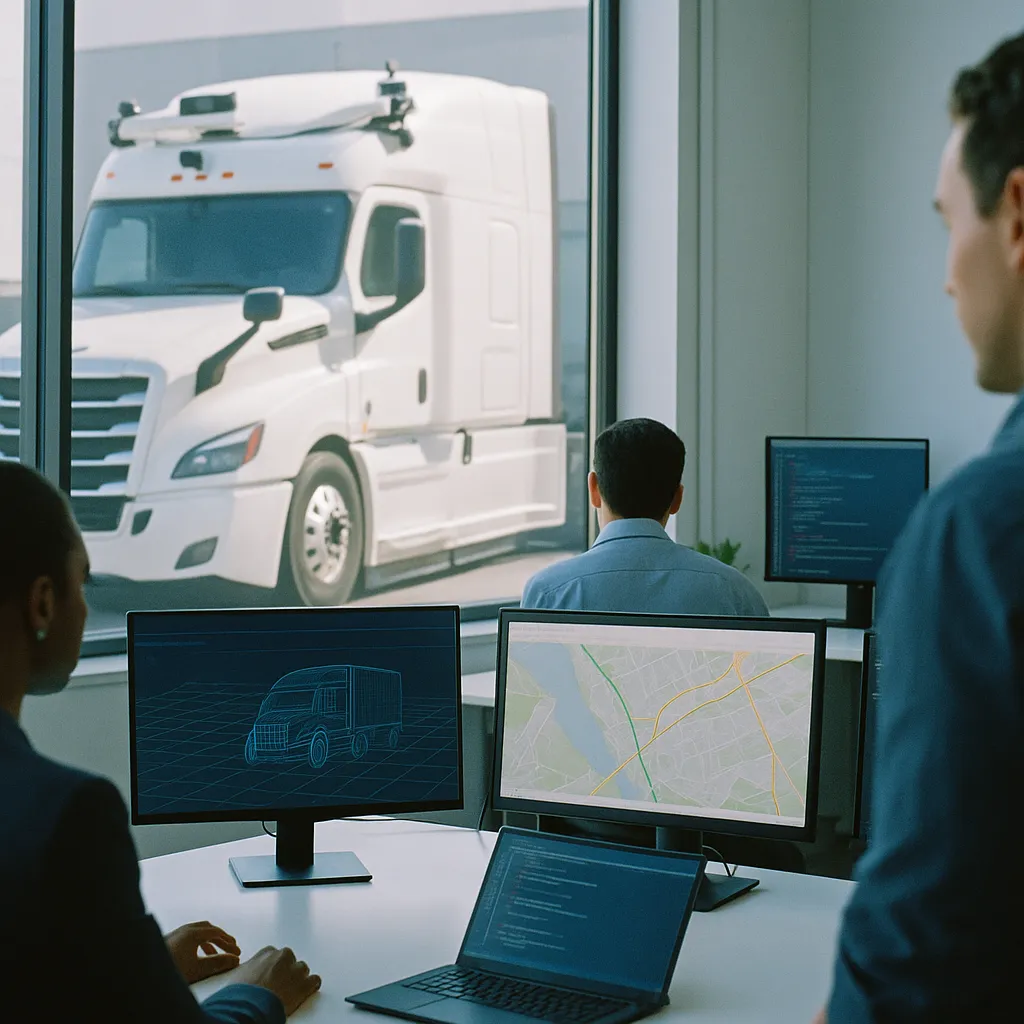
Forget the self-driving truck for a moment. AI is already reshaping the $906 billion U.S. trucking industry — quietly, at the operational layer — from freight brokerage automation and billing to predictive maintenance and real-time vehicle diagnostics. A deep look at trucking in 2026 finds that while autonomous driving timelines remain cautious, the operational AI transformation is well underway and measurable.
C.H. Robinson — the nation's largest freight brokerage — has now completed over 3 million AI-automated shipping tasks, a figure that would have required thousands of additional staff just five years ago. That's not a pilot program. That's production-scale deployment.
The Part Nobody Is Covering
The public conversation about AI and trucking defaults to two extremes: autonomous long-haul trucks that will eliminate drivers, or nothing. The reality in 2026 is richer and more nuanced. AI is penetrating every layer of trucking operations in ways that don't generate headlines but are fundamentally changing the economics of moving freight.
Here is where AI is actually being deployed today:
Back-office automation
- Freight matching and load boards: AI models analyze lane history, shipper behavior, and capacity availability to make routing and pricing decisions faster than human brokers
- Billing and invoicing: Automated document parsing handles bills of lading, proof-of-delivery, and accessorial charges — a major source of disputes and payment delays
- Carrier compliance: AI reviews driver qualification files, insurance certificates, and safety scores continuously rather than at annual audit cycles
Fleet and maintenance operations
Get this in your inbox.
Daily AI intelligence. Free. No spam.
- Predictive maintenance: Sensors on engines, brakes, and tires feed data to models that flag components approaching failure before they cause a breakdown — or a crash
- Real-time vehicle diagnostics: Shop-floor AI systems analyze fault codes and maintenance history to prioritize which trucks need attention, reducing diagnostic time and unplanned downtime
- Fuel optimization: Route and load AI reduces empty miles and optimizes fuel consumption across fleets that may run thousands of trucks
Dispatch and routing
- Dynamic rerouting: AI adjusts routes in real time based on weather, traffic, hours-of-service limits, and shipper time windows
- Load planning: Optimization models maximize payload utilization within weight and dimensional limits — a surprisingly complex logistics problem at scale
Why the Back Office Is Where the Money Is
It is tempting to focus on the cab. But the economics of trucking are primarily won and lost in the back office and the shop. A single back-office error — an incorrect delivery address, a missed appointment window, a billing dispute — can cost more than a day of driving revenue. AI systems that reduce these errors at scale create compounding cost advantages.
The human brokerage model also struggles with the information asymmetry of freight markets. Shippers don't know what capacity is available; carriers don't know where demand will spike. AI that processes lane data across millions of loads daily can price more accurately and match more efficiently than any individual broker — which is why the large brokerages are investing heavily and why smaller operations face real margin pressure.
The Autonomous Driving Reality Check
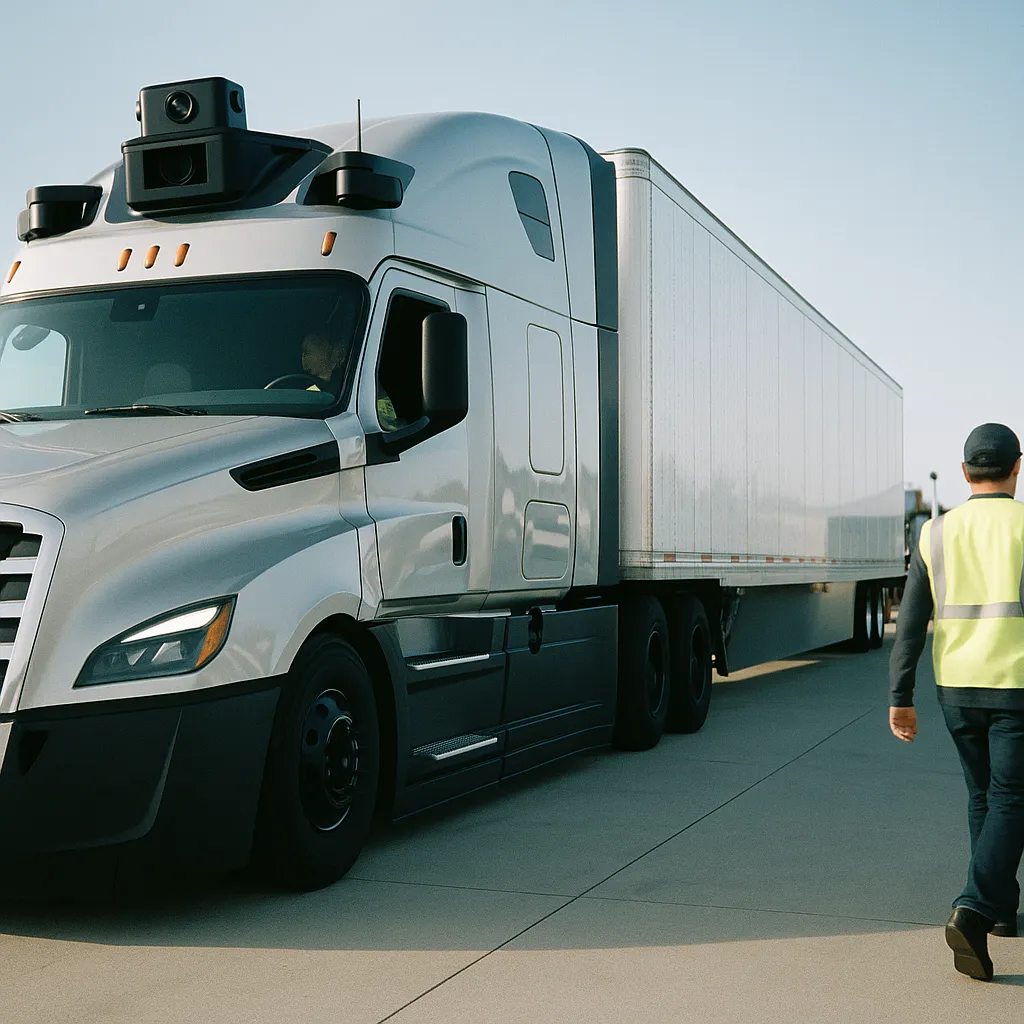
To be clear: fully autonomous long-haul trucks are not in mass deployment. The commercial-readiness debate has matured considerably since the early predictions of autonomous trucks everywhere by 2023. The focus has shifted to specific lane autonomy — high-volume, predictable interstate corridors where the operational case is clearest — rather than door-to-door autonomy.
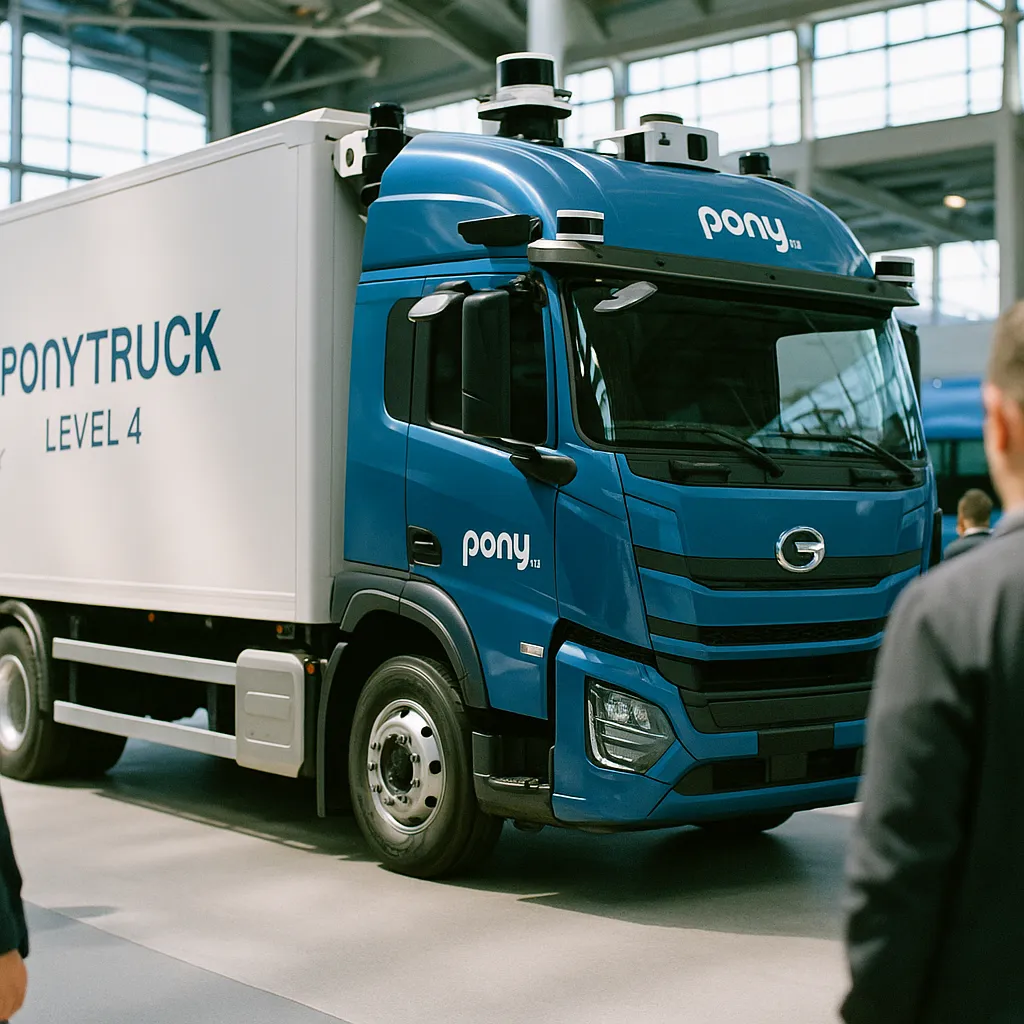
Several companies remain active in Level 4 development, but the path to profitability requires regulatory clarity, insurance frameworks, and shipper willingness to commit to autonomous-only lanes. None of those conditions are fully in place.
What is in place: driver-assist technology — lane keeping, following distance automation, emergency braking — that is becoming standard on new commercial trucks and reducing accident rates and insurance costs.
What This Means for Carriers and Drivers
For fleet operators and carriers, the operational AI layer is shifting from competitive advantage to table stakes. The carriers that deployed freight matching and predictive maintenance early have lower cost structures. Those that haven't are facing margin compression from competitors who have.
For drivers, the immediate AI impact is not job replacement but task change. The administrative burden of trucking — logging, routing decisions, load coordination — is increasingly handled by software, leaving drivers to focus on driving. That's not a bad outcome in a profession that has historically papered over labor shortages with paperwork.
The longer-term picture depends on how quickly lane-specific autonomy matures. A gradual deployment over 10–15 years, which is the most credible timeline, allows workforce adjustment through attrition. A faster deployment in specific corridors will require active policy and retraining investment.
What to Watch
Watch C.H. Robinson's quarterly earnings calls and the operational metrics they share on AI task automation — it's the best public window into how fast back-office AI is scaling in freight. For autonomous driving, the key regulatory milestone is FMCSA (Federal Motor Carrier Safety Administration) guidance on Level 4 commercial operations, which has been under development and will define the deployment parameters for the next phase.
Did this help you understand AI better?
Your feedback helps us write more useful content.
Get tomorrow's AI briefing
Join readers who start their day with NexChron. Free, daily, no spam.