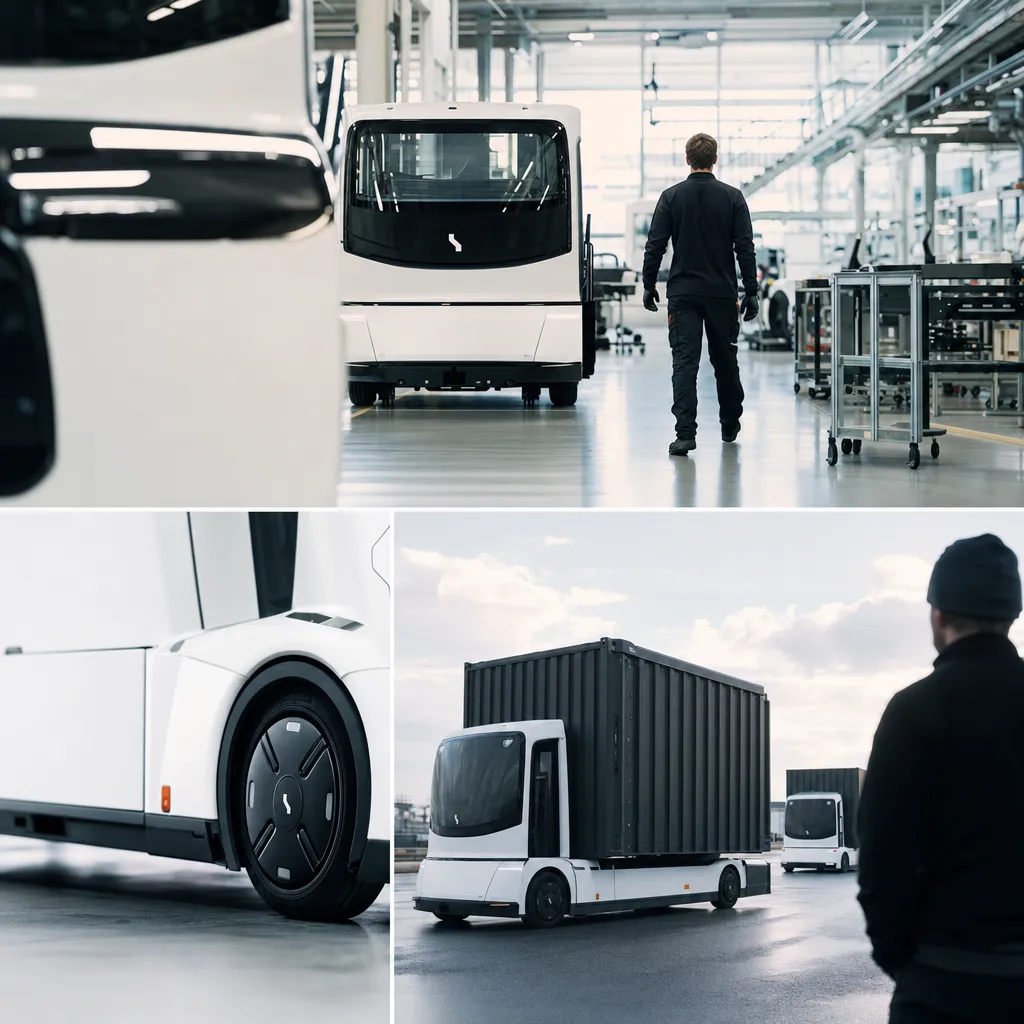
Einride and snack manufacturer Lorenz have deployed four autonomous electric vehicles for in-plant logistics at a German production facility, using Einride's Saga AI platform to coordinate routing and task assignment.
Einride and Lorenz Deploy Four Autonomous Electric Vehicles at German Production Facility
Einride and snack manufacturer Lorenz have deployed four autonomous electric vehicles for in-plant logistics at Lorenz's production facility in Neunburg vorm Wald, Germany — a commercial deployment that moves autonomous freight technology from road demonstrations to controlled factory environments where the business case is immediate and regulatory constraints are lower.
The partnership pairs Einride's Saga AI coordination platform with Lorenz's internal logistics operations, handling the movement of goods between production stages and storage areas on private facility grounds. It is a commercial deployment in live production use, not a pilot program.
How the Deployment Works
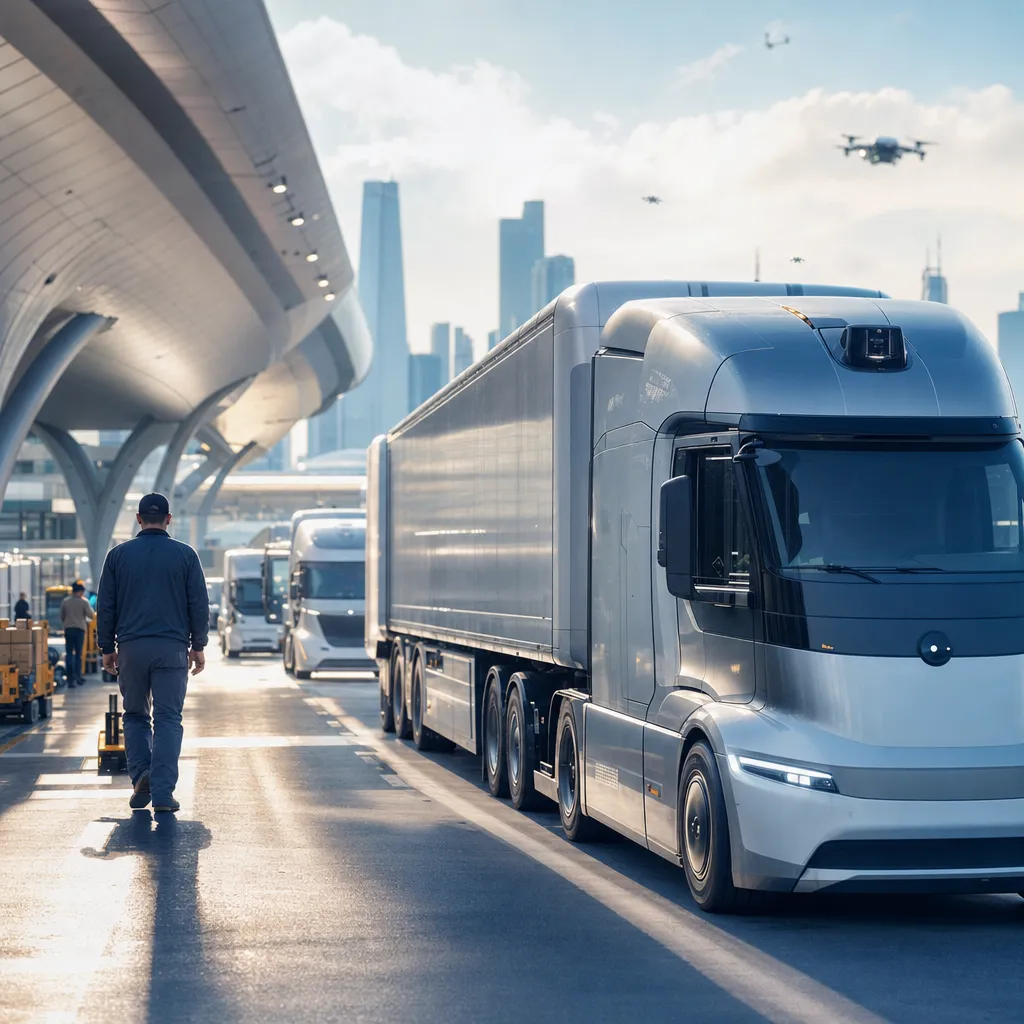
According to Einride and Lorenz, the deployment uses Einride's Saga platform as the operations layer — dispatching vehicles to loading points, managing schedules, coordinating routes across the facility campus, and monitoring fleet performance in real time. The vehicles themselves are Einride's purpose-built autonomous electric freight trucks, designed for yard and campus logistics.
The Neunburg vom Wald facility is a private industrial campus. Vehicle operations occur on internal roads, loading docks, and production yards rather than public streets. That matters for deployment speed: on private grounds, autonomous vehicles are not subject to the same regulatory approval requirements that govern public road operations in Germany and across the EU, where autonomous vehicle legislation is still evolving toward commercial scale.
Why Factory Campuses Are the Right Starting Point
Industrial campuses offer the conditions that make autonomous vehicle deployment tractable today: controlled environments, predictable routes, defined operating hours, and workforces that can be trained around the new equipment. The variables that make public roads difficult for AV systems — unpredictable pedestrians, construction zones, mixed vehicle types, adverse weather — are either eliminated or significantly reduced on factory grounds.
For Lorenz, the business case is operational efficiency. Human-operated forklifts and logistics vehicles require shift scheduling, training, and present workplace safety risks that autonomous systems reduce. For facilities running three shifts a day, the ability to run autonomous logistics vehicles continuously — without fatigue, shift changes, or staffing constraints — represents a meaningful operational lever that compounds over time.
Get this in your inbox.
Daily AI intelligence. Free. No spam.
For Einride, the Lorenz deployment adds a named consumer brand customer and a European manufacturing reference to a customer portfolio that has previously skewed toward freight logistics and retail distribution.
The Broader AV Wave in Industrial Settings
The Einride-Lorenz deployment is one data point in a larger 2026 trend toward factory and logistics campus AV deployments. Autonomous vehicle startups that pitched investors in 2026 numbered 81 new companies — roughly two-thirds more than the prior year — with factory and industrial logistics applications representing the fastest-growing segment of that cohort.
The economics of industrial AV deployments are more immediate than consumer ride-hailing or public road freight: the customer base is a defined set of large manufacturers and logistics operators, the use cases are repetitive and high-frequency, and the return on investment can be modeled directly against labor cost reductions in shift-based logistics roles.
The German manufacturing sector — one of Europe's largest and most automated — has been systematically integrating industrial automation for the past decade. Autonomous AI-driven vehicles represent the latest deployment layer on top of existing factory floor investments in robotics, sensor infrastructure, and manufacturing execution systems. For OEMs and tier-one suppliers evaluating AV deployment, a commercial reference from Lorenz — a mid-size food manufacturer, not a tech company — is more persuasive than a hyperscaler pilot.
What This Means for Logistics and Manufacturing Operators
For manufacturers evaluating autonomous logistics, the Lorenz deployment provides a concrete reference for European industrial AV on private grounds. Seeing a food manufacturer successfully deploy and operate a small fleet in a live production environment moves autonomous logistics from "emerging technology" to "procurement consideration" in many enterprise buying cycles.
For logistics operators outside manufacturing — distribution centers, cold storage facilities, rail yards — private-grounds AV deployments like this one establish the operational blueprint. Scaling from four vehicles to forty is fundamentally a fleet management challenge; the core technology and coordination infrastructure are proven at this stage.
What to Watch
Whether Einride expands this deployment to additional Lorenz facilities in Germany or elsewhere in Europe, and whether the company accelerates customer announcements in German manufacturing using Lorenz as a reference case. The EU's evolving regulatory framework for autonomous vehicles on private industrial grounds will also determine how quickly deployments like this can replicate across the continent's manufacturing base.
By Hector Herrera
Did this help you understand AI better?
Your feedback helps us write more useful content.
Get tomorrow's AI briefing
Join readers who start their day with NexChron. Free, daily, no spam.