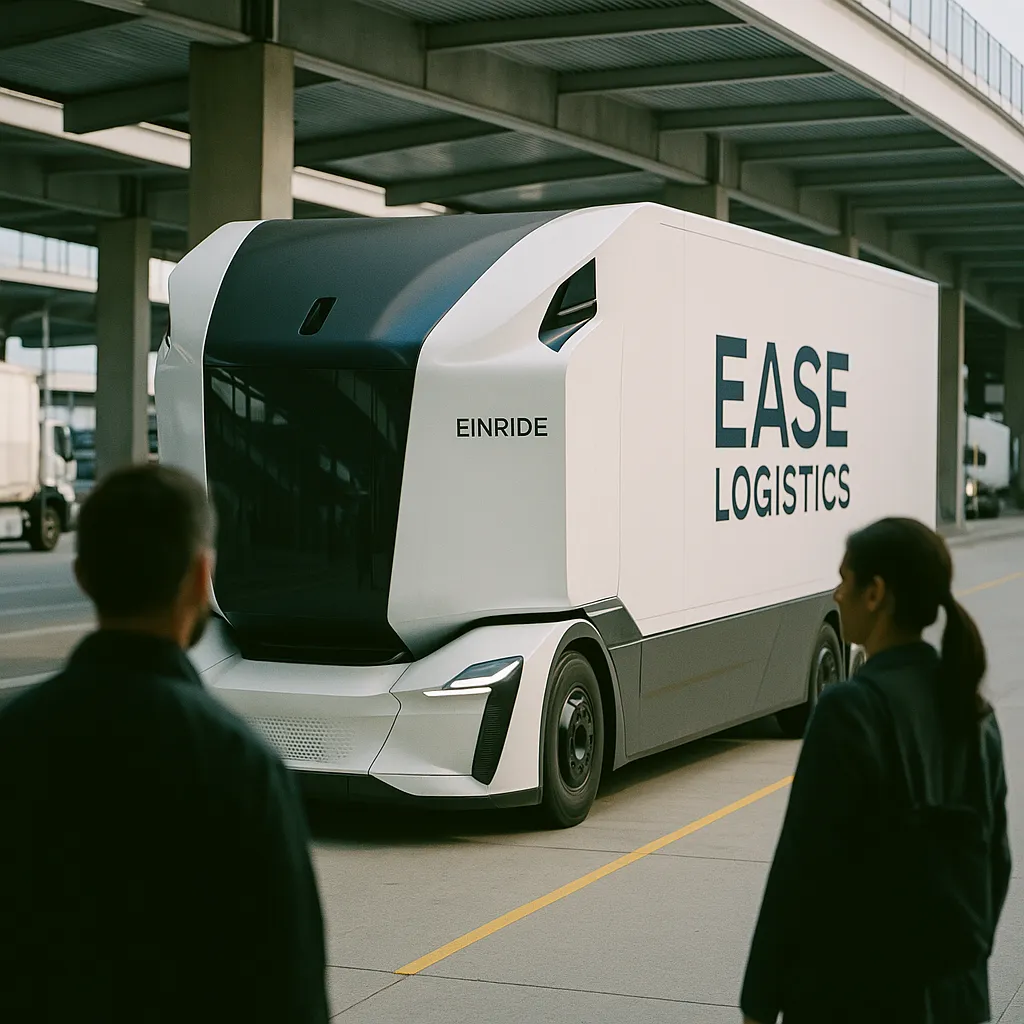
Einride and EASE Logistics have begun daily Level 4 driverless freight operations in Marysville, Ohio with no safety driver on board — among the first ongoing, fully autonomous commercial trucking deployments in the U.S. Midwest.
Einride and EASE Logistics have begun daily SAE Level 4 autonomous electric truck operations between EASE warehouses in Marysville, Ohio — with no safety driver on board — as part of the Ohio-Indiana Truck Automation Corridor. It is among the first ongoing, fully driverless commercial freight operations in the U.S. Midwest, and one of the clearest demonstrations yet that autonomous trucking is moving from press-release pilots to recurring industrial work.
ABC 6 On Your Side confirmed the deployment is active, with real payload and commercial revenue attached to each run.
What Is Actually Happening
The deployment is operationally distinct from the robotaxi pilots and test corridors that have dominated autonomous vehicle news cycles. This is an industrial freight application: fixed routes, predictable loads, controlled environments, and recurring commercial commitments between two logistics facilities.
Einride's electric autonomous trucks are operating between EASE Logistics' Marysville warehouses — a region that sits at the intersection of Ohio and Indiana supply chains, with major automotive, manufacturing, and consumer goods operations in the area. The Ohio-Indiana Truck Automation Corridor is a multi-stakeholder infrastructure project involving the Ohio Department of Transportation (ODOT), designed to support exactly this kind of Level 4 commercial deployment.
SAE Level 4 means the vehicle handles all driving tasks within its operational design domain without human intervention — including responding to unexpected situations — with no safety driver available to take over. It is the practical threshold for commercial driverless freight operations. SAE Level 5 (fully autonomous in any conditions) remains a research goal; Level 4 is where actual businesses are built.
Why the Midwest Location Matters
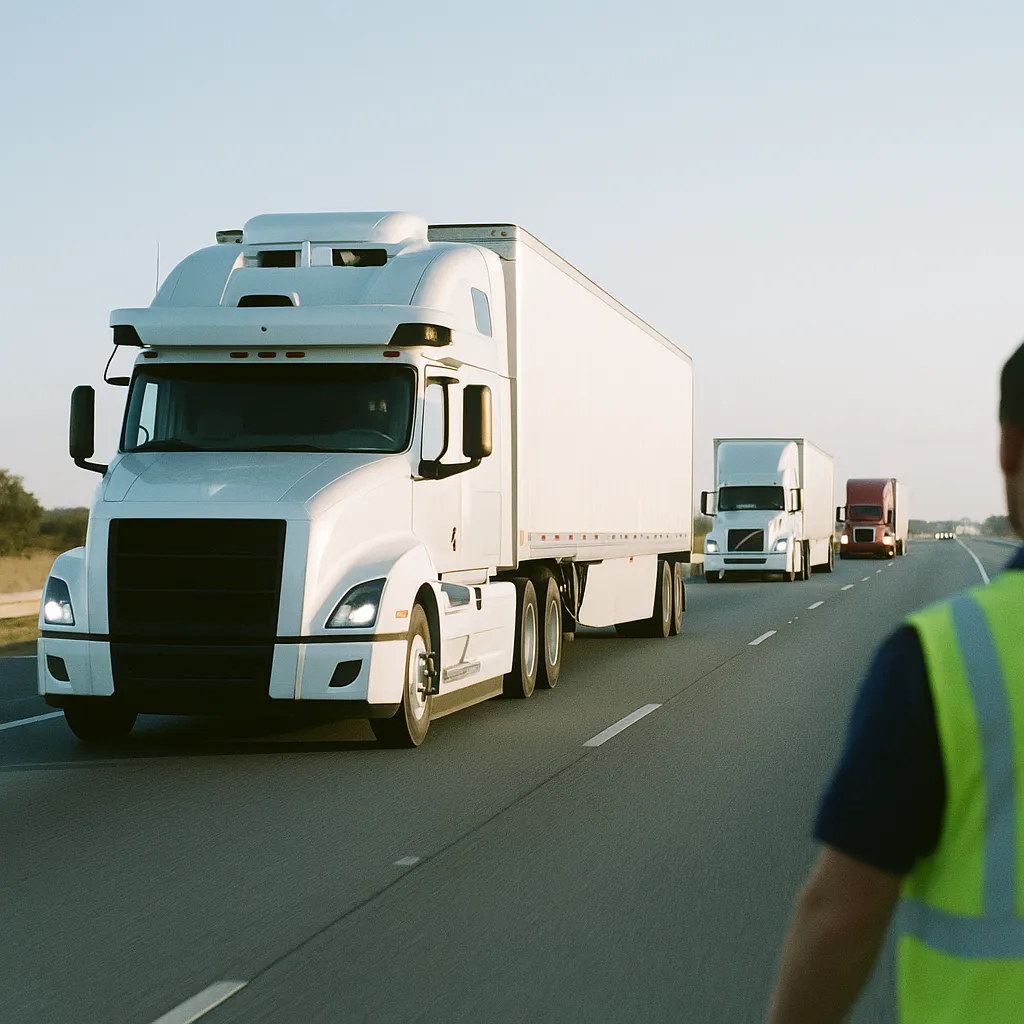
Autonomous trucking news has been dominated by Texas. Aurora launched commercial driverless operations between Dallas and Houston on Interstate 45. Kodiak's permit for California-to-Texas perishable freight made news in September. The geographic concentration matters because Texas's regulatory environment, highway infrastructure, and weather conditions are favorable for autonomous deployment.
Ohio is different terrain — literally and regulatorily. The state has colder winters, a denser network of regional logistics operations, and a regulatory framework built through the Ohio-Indiana Corridor project rather than inherited from California's CPUC rules. A successful commercial deployment in Ohio validates that Level 4 autonomous freight can work outside the Texas conditions that critics point to as unusually favorable.
Get this in your inbox.
Daily AI intelligence. Free. No spam.
For Midwest manufacturers and logistics operators — who collectively move enormous volumes of goods across Ohio, Indiana, Michigan, and Illinois — a successful Ohio deployment answers the question of regional applicability in a way that Texas operations do not.
The Einride Context
Einride has taken a different architectural path from most autonomous trucking companies. Its T-pods are purpose-built electric autonomous vehicles designed from the ground up for freight rather than retrofitted from conventional diesel trucks. The company operates its own fleet and provides freight-as-a-service rather than licensing technology to carriers.
That model has advantages for controlled industrial deployments: Einride manages the vehicle hardware, the software stack, and the operational parameters simultaneously. When something goes wrong, there is no finger-pointing between the OEM, the autonomy stack provider, and the carrier.
The Marysville deployment is also Einride's first major U.S. commercial freight operation outside of customer trials, which makes it a significant test of whether the company's European operational model scales into the American logistics market.
What This Means for Freight Operators
For regional logistics companies, the EASE deployment is a data point rather than a decision trigger — but it is a meaningful one. The question that has held back autonomous freight adoption among mid-size logistics operators is not whether the technology works in ideal conditions. It is whether it works reliably enough, in real commercial use, to justify the operational restructuring required to deploy it.
A successful sustained run in Ohio — measured in on-time delivery rates, incident frequency, and cost per mile — will move that question toward resolution. EASE, as a Midwest-focused logistics company, is exactly the customer segment that the broader autonomous trucking industry needs to convince.
For incumbent carriers, the Einride-EASE deployment accelerates the timeline of a question they cannot avoid: at what per-mile cost differential does a shipper switch from a human-driven truck to an autonomous one? The answer is not purely economic — reliability, liability, and shipper risk tolerance all factor in — but cost per mile is the floor under the decision.
What to Watch
Three metrics will determine whether this deployment accelerates sector adoption or becomes a cautionary case study:
- Operational reliability: Does the fleet maintain the run schedule, or do technical interventions or failures interrupt service?
- Cost performance: Does Einride and EASE disclose enough operational data to establish a meaningful cost-per-mile comparison?
- Corridor expansion: The Ohio-Indiana Corridor was designed for multi-operator, multi-route deployment. Whether Einride adds routes — or whether other operators follow with their own deployments on the corridor — is the signal for regional scale.
The Aurora and Kodiak deployments established that Level 4 autonomous trucking works commercially in Texas. Einride in Ohio is making the case that it works everywhere the infrastructure supports it. If that case holds through winter operations, the regional expansion argument becomes significantly harder to dismiss.
Did this help you understand AI better?
Your feedback helps us write more useful content.
Get tomorrow's AI briefing
Join readers who start their day with NexChron. Free, daily, no spam.