Amazon-owned Zoox has partnered with Uber to make its purpose-built robotaxis bookable through the Uber app in Las Vegas — the first non-Waymo autonomous vehicle available on a major ride-hailing platform.
Amazon's Zoox Robotaxis Are Now Bookable on Uber in Las Vegas
By Hector Herrera | November 24, 2026
Amazon-owned Zoox has partnered with Uber to offer its purpose-built robotaxis through the Uber app in Las Vegas — the first time a non-Waymo autonomous vehicle can be hailed through a major ride-hailing platform. The partnership, reported by AutoConnectedCar, marks a significant shift in how autonomous vehicle companies approach commercial distribution. Zoox is betting that Uber's installed rider base is more valuable than building its own app.
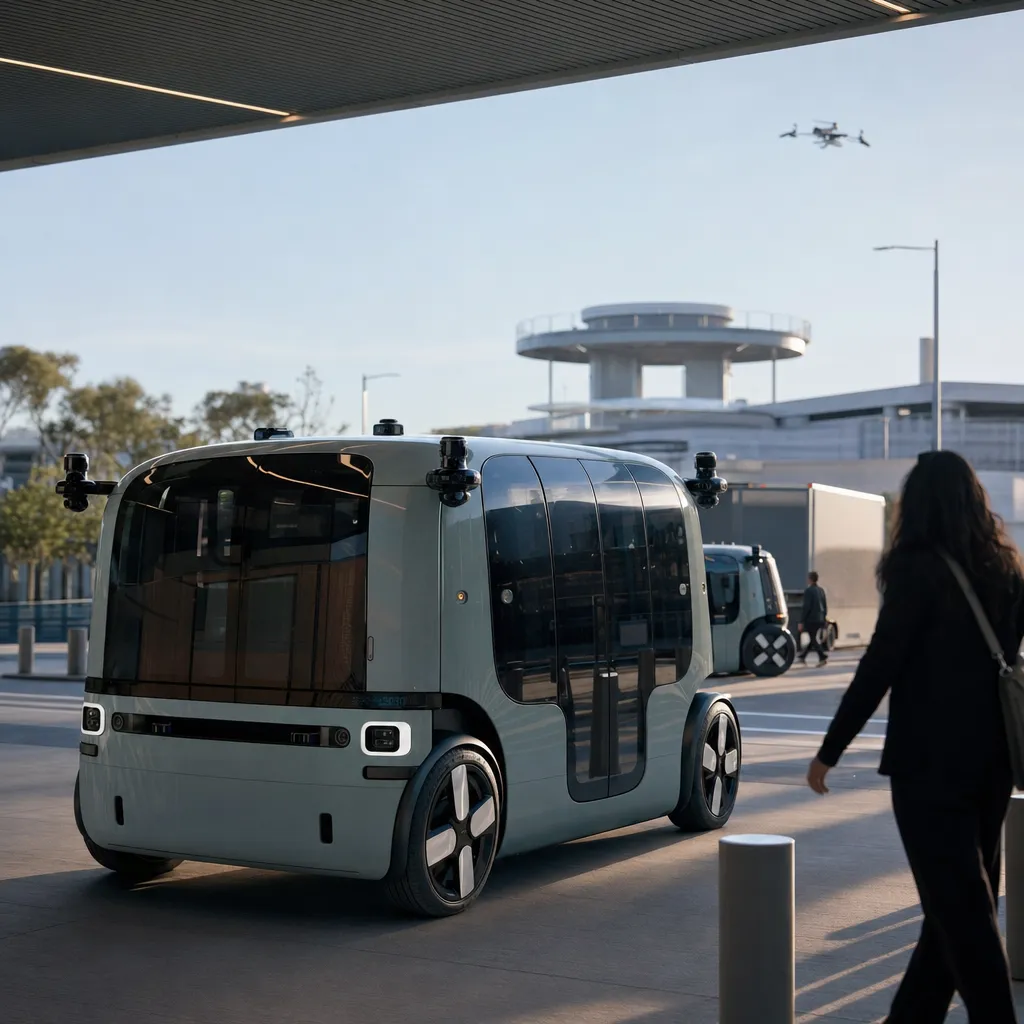
For consumers in Las Vegas, it means a fully autonomous, purpose-built vehicle may show up when they tap for a ride — no driver's seat, no steering wheel, four passengers facing each other.
What Makes Zoox Different
Zoox occupies an unusual position in the AV landscape. While most autonomous vehicle programs — Waymo, Cruise, Aurora — started with production vehicles retrofitted with self-driving hardware, Zoox designed its vehicle from the ground up to be a robotaxi. The result is a bidirectional vehicle (it drives equally well in both directions, eliminating the need to turn around at the end of a trip) with no driver controls at all.
Amazon acquired Zoox in 2020 for approximately $1.2 billion. Development proceeded relatively quietly for several years, with limited commercial testing in San Francisco and Las Vegas. The Uber partnership is the first major commercial distribution move.
Waymo, by contrast, has operated the Waymo One app since 2018 and has been bookable through its own platform in Phoenix, San Francisco, and other cities for years. It launched a Waymo-on-Uber integration in select markets earlier in 2026, expanding its commercial scale in the process. The Zoox-Uber deal creates a second AV option on Uber's platform.
Get this in your inbox.
Daily AI intelligence. Free. No spam.
The Distribution Logic
The strategic logic of the Uber partnership is straightforward: distribution is expensive to build and Uber already has it.
Building a consumer-facing ride-hailing app requires payment infrastructure, customer support operations, dynamic pricing systems, driver recruitment (or in Zoox's case, rider acquisition), and significant marketing spend. Uber has spent roughly fifteen years and tens of billions of dollars building all of that. For an AV company whose core competency is vehicle technology and fleet operations, offloading the distribution layer to Uber eliminates a large category of non-core cost.
The arrangement also solves a chicken-and-egg problem: an AV company launching its own app in a new city needs enough vehicles to offer acceptable wait times, but needs enough rider demand to justify operating enough vehicles. Uber's existing demand base in Las Vegas means Zoox vehicles have riders from day one.
For Uber, the arrangement expands its vehicle supply without capital investment. Each Zoox ride earns Uber a marketplace fee. As AV operators scale their fleets, Uber's marketplace position becomes more valuable — a classic platform dynamic.
What This Means for the AV Industry
The Zoox-Uber deal suggests a commercial model emerging for AV companies that aren't competing directly with Uber and Lyft: integrate rather than compete. This is a meaningful strategic divergence from early AV industry thinking, which often assumed that autonomous vehicles would vertically integrate into full ride-hailing services.
That assumption is being revised. The companies with the most capable AV technology — Zoox, Aurora on the trucking side, May Mobility on fixed-route transit — are increasingly focusing on the hardware, software, and operations layer while routing consumer distribution through existing platforms.
For consumers, the signal is straightforward: fully autonomous vehicles in major US cities are transitioning from demonstration projects to everyday transportation options available through apps people already use. The friction barrier — downloading a new app, creating an account, learning a new interface — disappears when the vehicle shows up inside Uber.
What to Watch
Watch whether Zoox expands the Uber partnership to its other operational cities, and whether the Waymo-Uber integration deepens in response. Also watch fleet utilization data: the commercial viability of the AV model ultimately depends on vehicles being occupied rather than repositioning empty. High utilization in Las Vegas would give Zoox the evidence it needs to justify accelerating fleet expansion.
Did this help you understand AI better?
Your feedback helps us write more useful content.
Get tomorrow's AI briefing
Join readers who start their day with NexChron. Free, daily, no spam.