European logistics startup PORT raised €14.5 million to build an AI-coordinated urban delivery network combining autonomous robots and microhubs, with Royal Mail testing robotic last-mile delivery in UK cities.
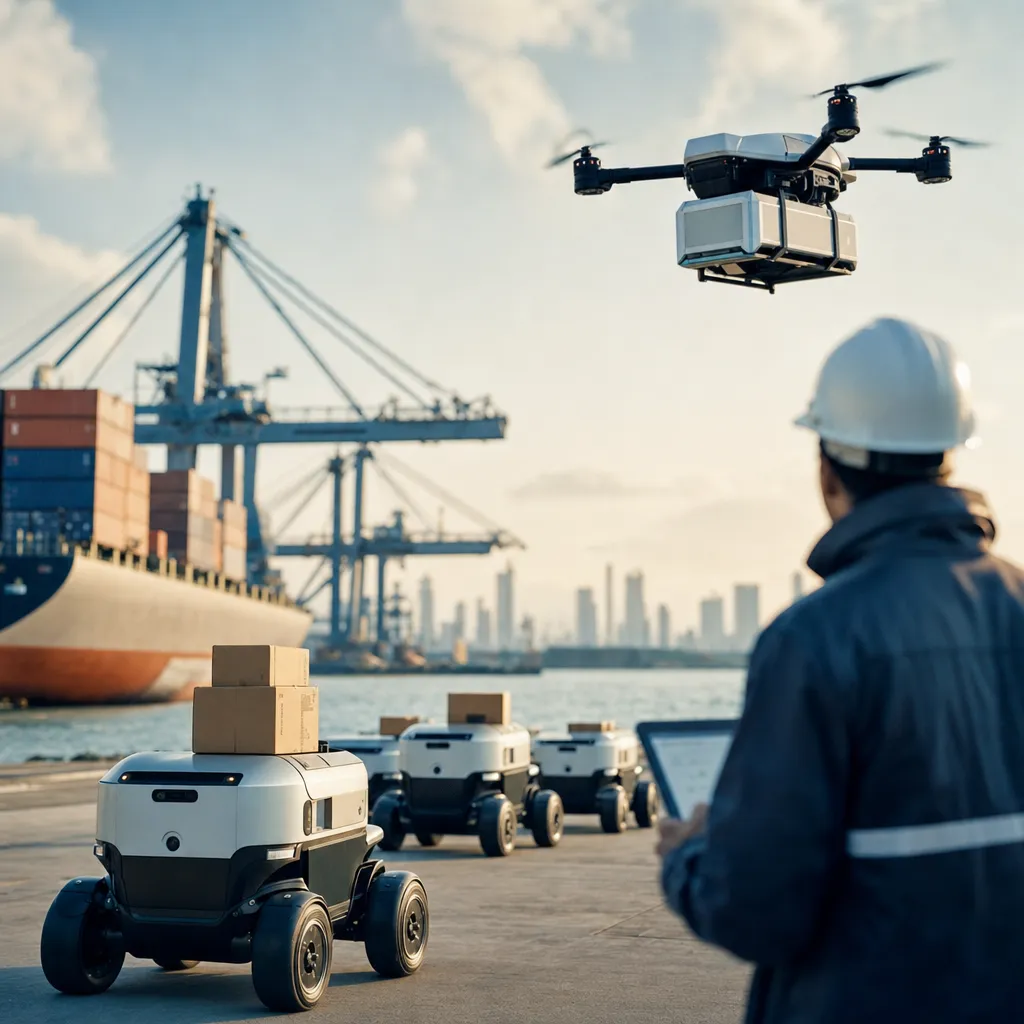
European logistics startup PORT has raised €14.5 million to build an AI-coordinated urban delivery network combining autonomous robots, neighborhood microhubs, and AI routing software — an approach designed to cut the cost of last-mile delivery in dense cities without the airspace permits and public opposition that have slowed drone delivery programs across Europe.
Last-mile urban delivery — the final leg from distribution center to doorstep — is the most expensive segment of e-commerce logistics, consuming an estimated 40 to 50 percent of total shipping cost. City center delivery density is too high for conventional van routes to be economically efficient at scale, and drone delivery has faced persistent regulatory and safety hurdles in populated European urban environments. PORT is betting that autonomous ground robots, coordinated by AI routing software, can fill that gap.
What PORT is building
Tech.eu reports that the €14.5 million round will fund expansion of PORT's integrated urban delivery platform from e-bikes and cargo bikes into AI-guided autonomous robots working alongside human riders within a microhub network. The company is partnering with Royal Mail to test robotic last-mile delivery in UK cities — giving PORT access to an established postal infrastructure and consistent delivery density at scale.
Get this in your inbox.
Daily AI intelligence. Free. No spam.
The microhub model is central to the PORT approach. Rather than dispatching robots from large suburban warehouses, the network uses smaller neighborhood-scale distribution points that reduce robot travel distance and allow faster, more flexible routing. AI software coordinates across all delivery modes — human riders, e-bikes, and autonomous robots — assigning tasks in real time based on current conditions.
The investment thesis
Continued funding for urban autonomous logistics reflects a view in the investment community that the drone delivery opportunity in European cities has narrowed significantly, at least in the near term. Ground-based autonomous delivery avoids most airspace and regulatory barriers, though it introduces different constraints around sidewalk access, weather performance, and the ability to access apartment buildings and secured delivery points.
PORT's Royal Mail partnership is the strategically significant element. Royal Mail delivers to virtually every address in the UK, and integration with its existing route density and customer relationships gives PORT a testing environment that most autonomous delivery startups lack access to. It also creates a clear commercial path if the pilot demonstrates cost savings at scale.
What to watch
PORT has not disclosed which UK cities will host the Royal Mail pilot or when robotic deliveries will begin. The key question for investors and the broader logistics sector is whether the AI routing system can coordinate mixed human-robot fleets efficiently enough to show measurable cost reduction versus conventional delivery — and whether Royal Mail uses the pilot results to pursue a wider rollout or benchmarks them against competing solutions.
Did this help you understand AI better?
Your feedback helps us write more useful content.
Get tomorrow's AI briefing
Join readers who start their day with NexChron. Free, daily, no spam.