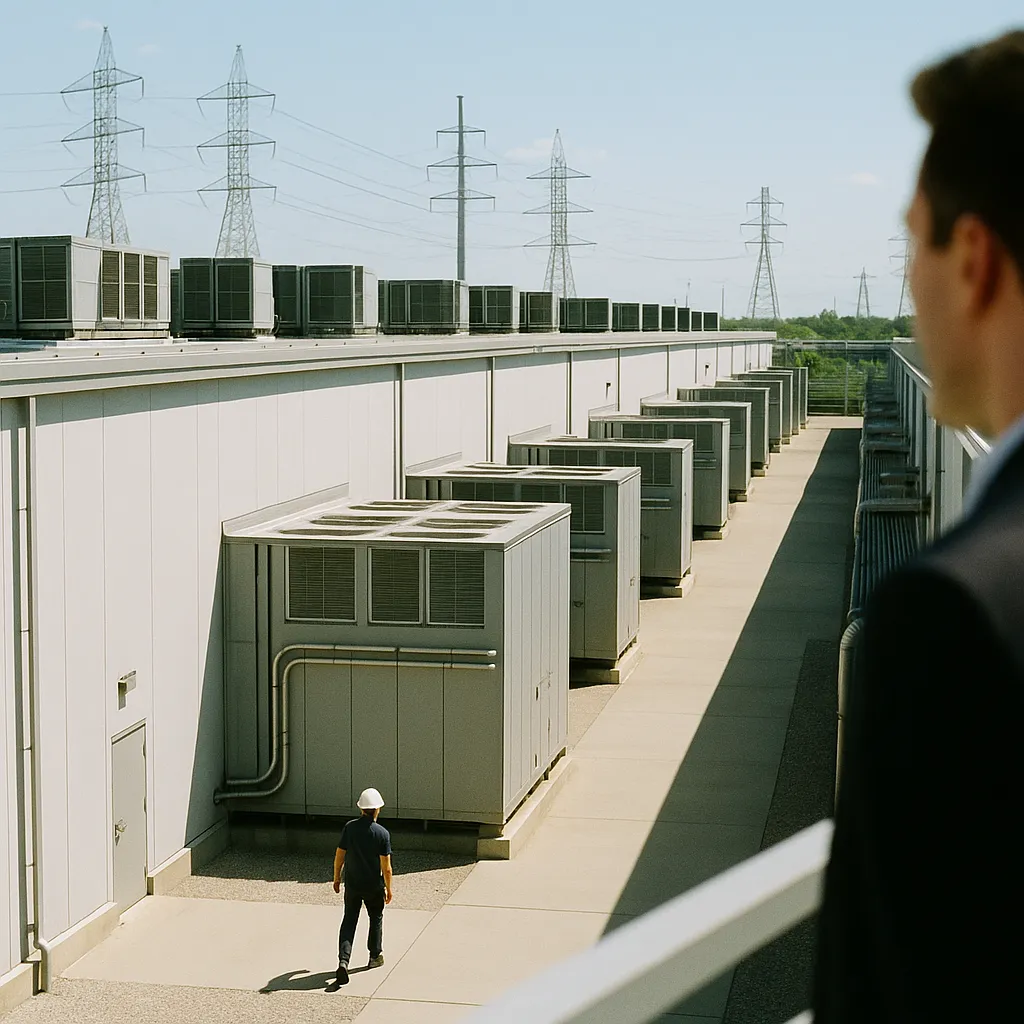
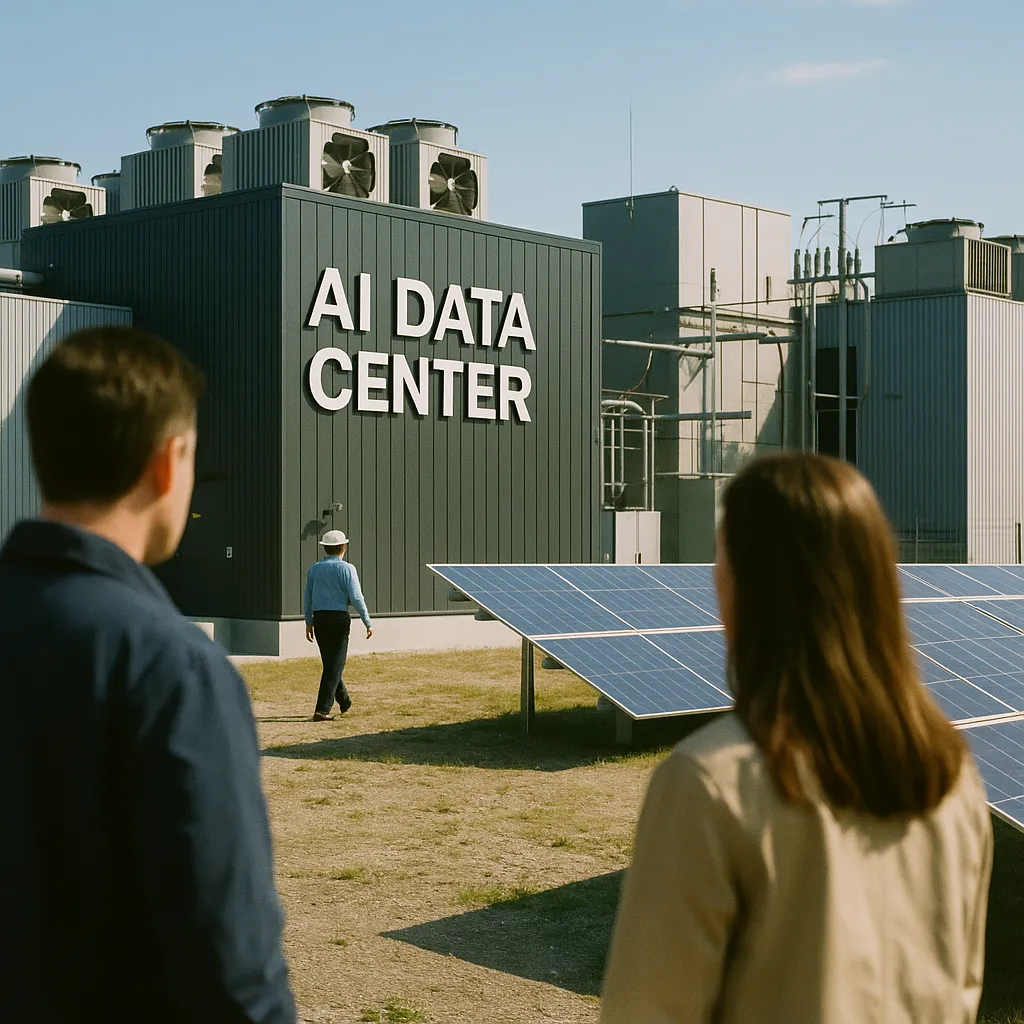
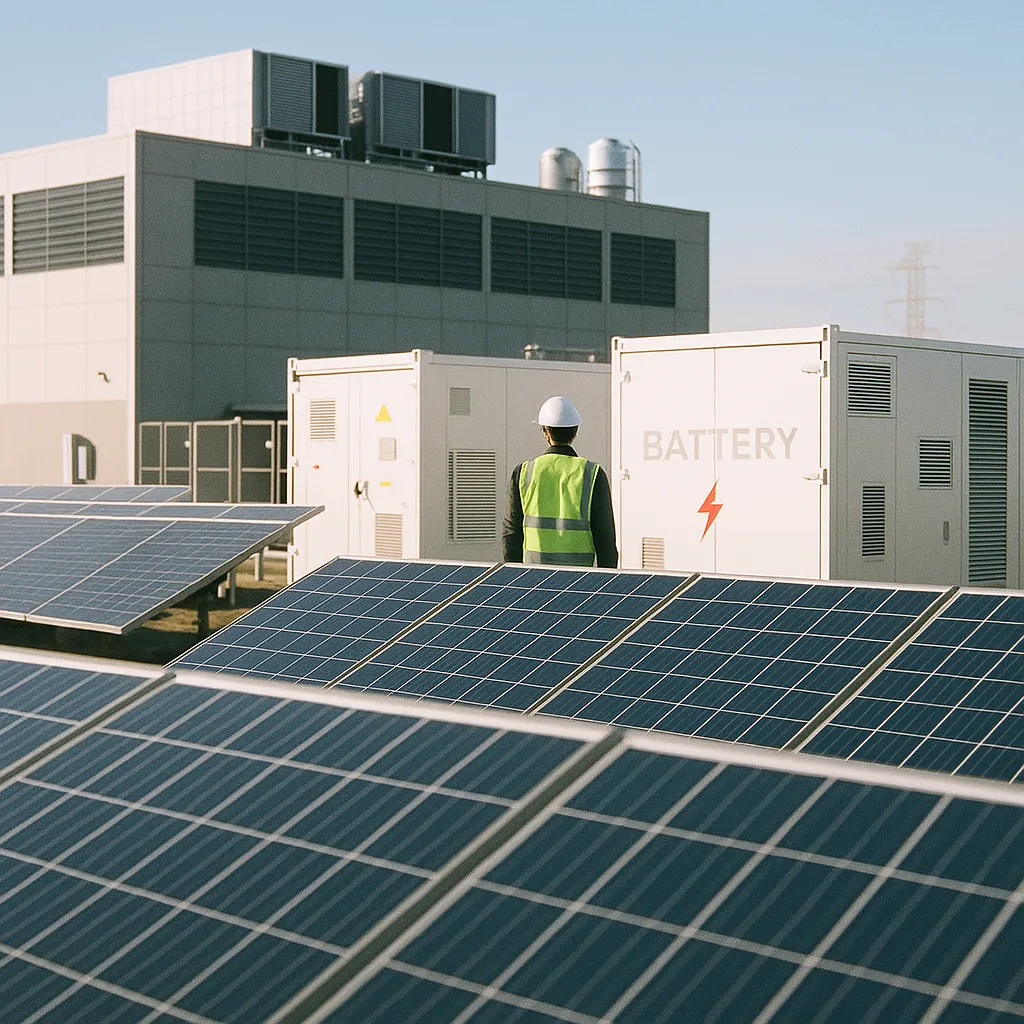
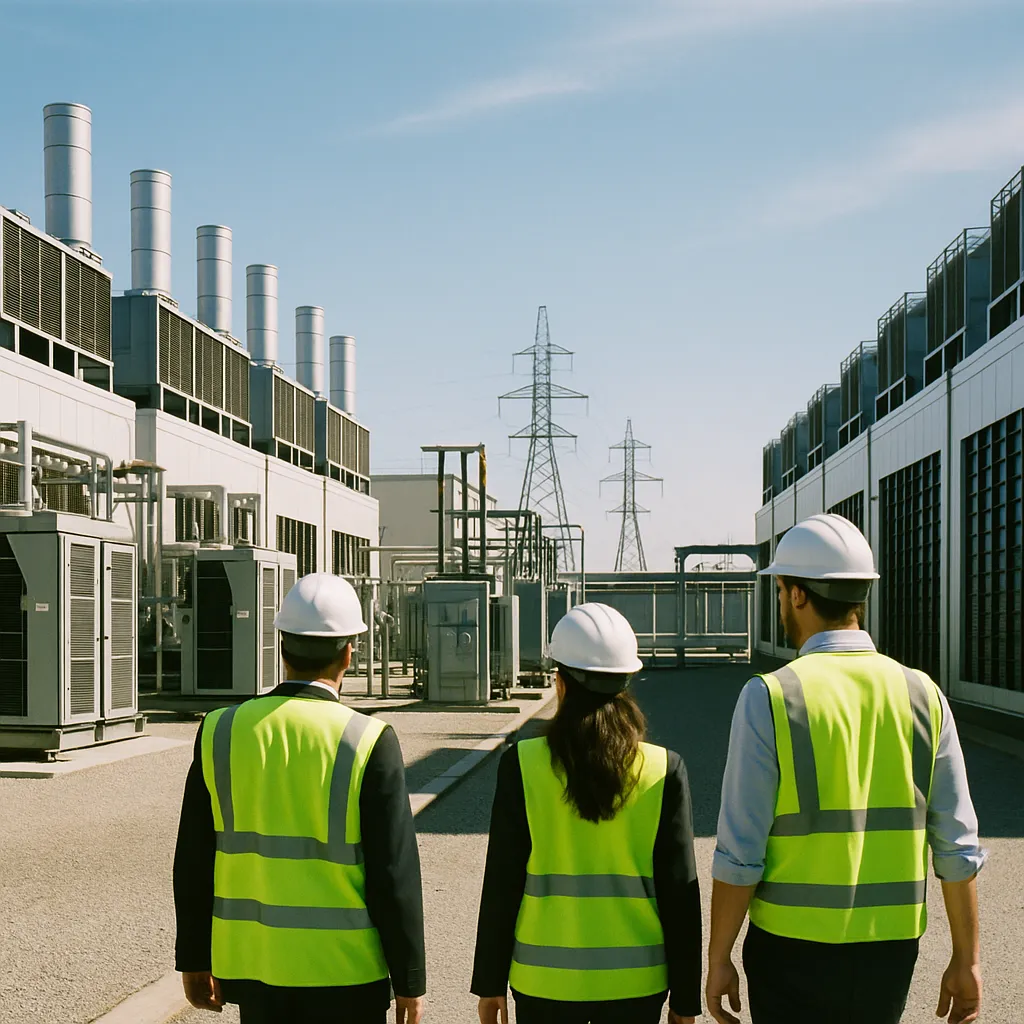
A new U.S. energy outlook projects AI data centers will account for 55% of all electricity demand growth through 2050 — stressing the grid while paradoxically accelerating the renewable energy build-out as hyperscalers buy clean power at scale.
AI Data Centers Will Drive 55% of U.S. Electricity Demand Growth Through 2050
By Hector Herrera | May 2, 2026 | Energy
A new U.S. energy outlook projects that data centers running AI workloads will account for 55% of all electricity demand growth over the next 25 years — putting the power grid under sustained pressure while simultaneously accelerating clean energy investment at a pace that wasn't expected for another decade. Whether AI's energy appetite becomes a catalyst or a threat to the renewable transition depends almost entirely on how fast utilities can build.
The analysis, published by GreenTech Lead, projects that solar, wind, and natural gas will climb from 60% of total U.S. electricity generation in 2025 to nearly 80% by 2050 — driven in significant part by the need to build new capacity fast enough to meet data center demand.
The Numbers
The headline figure — 55% of all demand growth attributed to AI data centers — requires context to interpret correctly.
Total U.S. electricity demand has been essentially flat for two decades, as efficiency gains in lighting, appliances, and industrial processes offset population and economic growth. AI data centers are breaking that trend. The projections in this outlook indicate:
- Data center electricity consumption is expected to roughly triple from current levels by 2035, before growth moderates as efficiency improvements in AI chips catch up to capacity expansion
- AI workloads — training and inference for large language models, image generation, video, and agentic AI — are the primary driver of that growth, distinct from the more stable demand profile of traditional cloud computing
- Clean energy share is projected to rise not because fossil fuel plants are retiring faster than expected, but because new capacity built to serve data centers is predominantly solar and wind — the cheapest sources to build at scale in 2026
The 55% figure covers cumulative growth through 2050. In near-term intervals (2026-2030), the data center share of incremental demand is even higher — closer to 70% as the current hyperscaler buildout peaks.
The Grid Stress Problem
More electricity demand is, in principle, solvable: build more generation capacity and transmission infrastructure. The problem is speed.
New power plants require siting approvals, environmental review, interconnection studies, and construction time — a process that currently takes 5-10 years from application to energization in most U.S. markets. The transmission lines needed to move power from where it's cheaply generated (sun-rich Southwest, wind-rich Midwest) to where it's consumed (data center hubs in Virginia, Texas, Arizona) face similar timelines.
Get this in your inbox.
Daily AI intelligence. Free. No spam.
Hyperscalers — the term for companies like Amazon, Google, Microsoft, and Meta that operate massive data center infrastructure — are moving faster than the grid can accommodate them. The result is a growing backlog of approved data center projects waiting for utility connections, and rising power purchase agreement (PPA) prices as demand for clean energy contracts outstrips supply.
The grid stress is real today. PJM Interconnection, which manages the grid for a large portion of the eastern U.S., has a transmission queue backlog of over 300 gigawatts of projects — more than triple the installed nuclear fleet. Many of those requests are from data centers seeking connections.
The Renewable Acceleration Paradox
Here is where the outlook becomes counterintuitive: AI's energy appetite is accelerating the clean energy build-out in ways that wouldn't have happened without it.
Hyperscalers have made aggressive net-zero commitments, which means their data center power contracts are overwhelmingly for solar and wind. When Microsoft or Amazon signs a 20-year PPA for 500 megawatts of solar capacity, that contract provides the financing certainty developers need to build. The renewable energy industry has, in effect, acquired a major new class of anchor tenants.
Between 2024 and 2026, corporate clean energy procurement — dominated by tech companies — accounted for a larger share of new renewable capacity additions than utility procurement for the first time. That's a structural shift in how the energy transition gets financed.
The paradox: the technology consuming enormous amounts of electricity is simultaneously the most powerful financing mechanism for building the clean generation that must serve it.
What This Means for Utilities and Energy Policy
For utilities: The demand growth projections in this outlook justify capital investment in grid infrastructure that utilities have struggled to resource for years. The business case for transmission expansion and grid modernization is now being made by data center developers who will sign long-term contracts to underwrite the investment. Utilities that move quickly to serve data center demand will have a significant advantage over those that don't.
For clean energy developers: The outlook is favorable but competitive. As more developers chase data center PPAs, price competition will increase and the advantage will shift to operators with the lowest cost structure and fastest interconnection timelines. The companies that secured transmission rights and interconnection positions in 2022-2024 are sitting on increasingly valuable assets.
For policymakers: The grid buildout required to serve AI data center demand without reliability crises will require permitting reform that has been stalled in Congress for years. The bipartisan pressure from data center operators — who represent significant economic development and tax revenue in many states — may be the political catalyst that grid modernization legislation has lacked.
For AI companies: Energy availability and cost are becoming key constraints on AI development timelines. The companies building the most capable future AI systems will be, in part, the companies that secured reliable low-cost power before the competition for it intensified.
What to Watch
Watch Q2 and Q3 2026 utility earnings calls for guidance on data center connection backlogs and capital expenditure plans — these will be the most current signal of how quickly the grid is responding to demand. Also watch federal permitting reform legislation: the current congressional session has seen bipartisan interest in accelerating transmission approvals, and data center energy demand is now the most politically legible argument for moving faster.
Source: GreenTech Lead
Did this help you understand AI better?
Your feedback helps us write more useful content.
Get tomorrow's AI briefing
Join readers who start their day with NexChron. Free, daily, no spam.