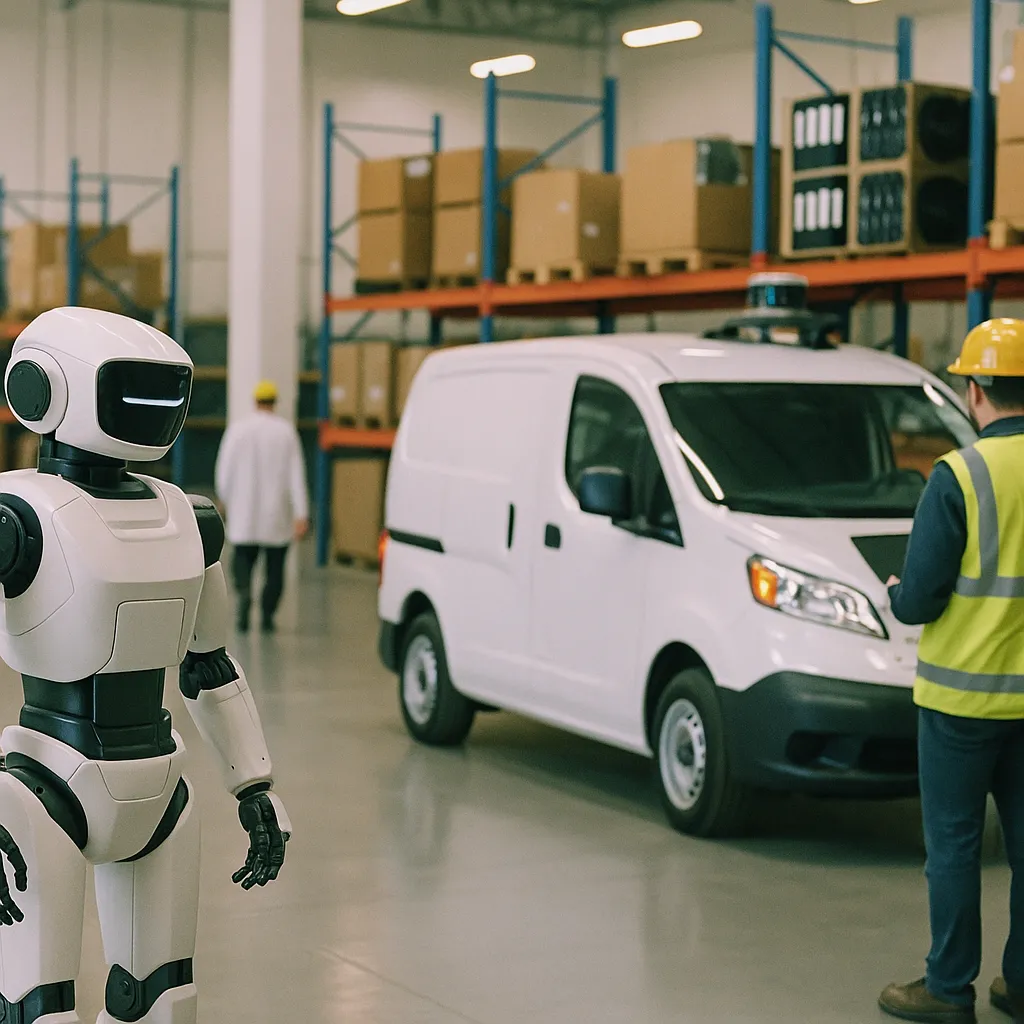
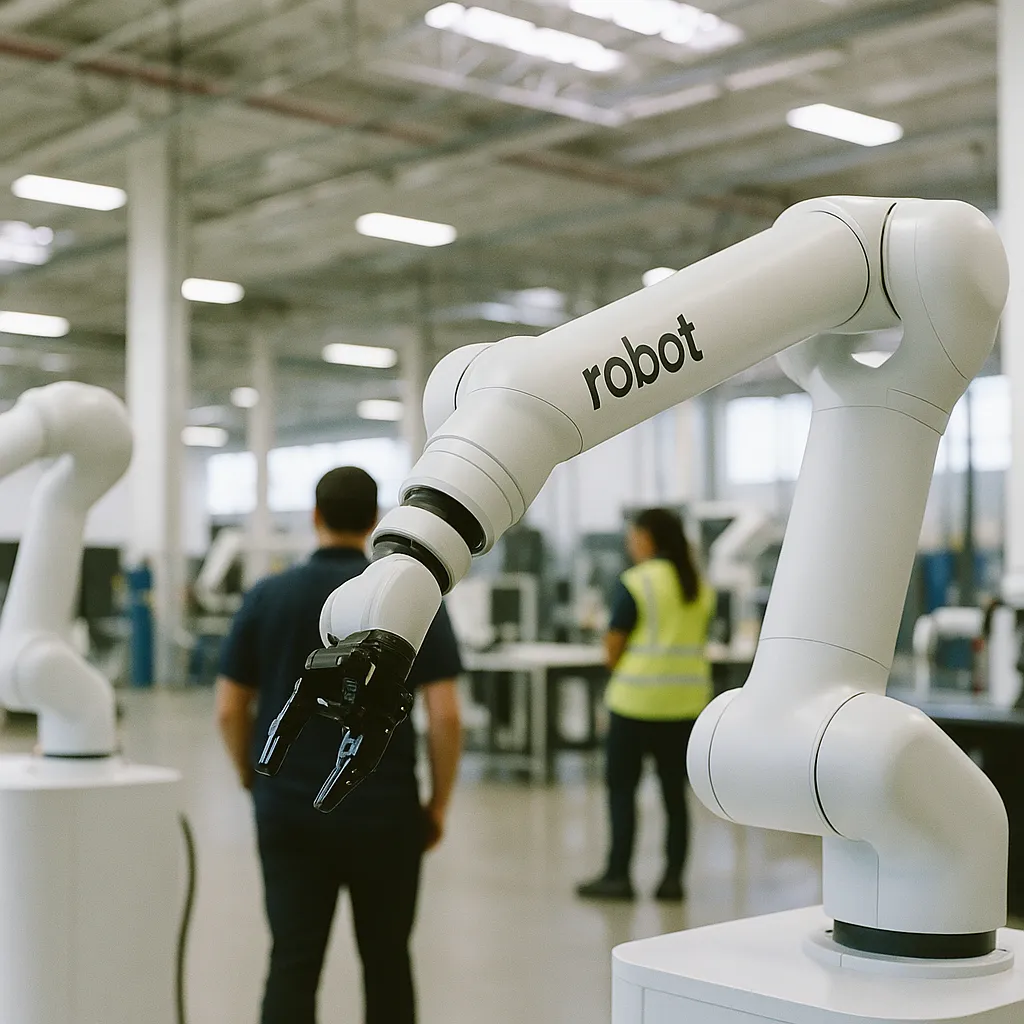
Generalist AI closed a $400 million round at a $2 billion valuation — backed by NVIDIA, Bezos, and Fei-Fei Li — to build foundation models that run across any type of robot hardware.
Nvidia-Backed Generalist AI Raises $400M at $2 Billion Valuation to Build Physical AGI
By Hector Herrera | June 4, 2026 | Science
Generalist AI has closed a $400 million funding round at a $2 billion valuation — one of the largest robotics AI raises of 2026 — to build foundation models (AI systems trained broadly enough to operate across many different tasks and hardware) that can run on any type of robot. The round signals that the race to create physical AGI (artificial general intelligence capable of acting in the real world) is now capitalized at a scale that rivals frontier language model companies.
Who's Behind It
The round was led by Radical Ventures and drew participation from NVIDIA, Bezos Expeditions (Jeff Bezos's personal venture vehicle), and 8VC. Angel investors include Fei-Fei Li — Stanford AI professor and former Google Cloud AI chief — and Naval Ravikant, AngelList co-founder. The backing from NVIDIA is particularly significant: it gives Generalist AI preferential access to GPU compute at a moment when physical robot training runs require enormous amounts of simulation data processed on accelerated hardware.
Generalist AI's total funding now exceeds $500 million.
What the Company Is Building
Generalist AI is developing multi-embodiment foundation models — a term for AI systems trained to control different types of robot bodies from a single underlying model, rather than building separate software for each hardware design.
The target platforms include:
Get this in your inbox.
Daily AI intelligence. Free. No spam.
- Humanoid robots (bipedal, human-shaped)
- Warehouse robotic arms (fixed industrial systems)
- Autonomous mobile platforms (ground vehicles, logistics bots)
The challenge this solves is real: today, most robot AI is hardware-specific. Train a model on one robot arm and it breaks when you swap in a different arm from a different manufacturer. Generalist AI's bet is that the same architectural approach that made large language models generalize across tasks — training on diverse data at scale — can be applied to robotic embodiment.
The $400 million will fund three areas: model expansion, real-world physical data collection (gathering sensor and movement data from actual robots in operation, not just simulated environments), and commercial deployments with early enterprise customers.
Why This Round Matters
Physical AI is the next frontier that every major lab is racing toward. OpenAI has invested in humanoid startup Figure AI. Google DeepMind published RT-2 and subsequent robotics models. NVIDIA launched its Isaac robotics platform for simulation and training. But foundation models that work across heterogeneous hardware — not just one robot type in controlled settings — remain unsolved.
Generalist AI's approach is to collect data across a heterogeneous fleet from day one, building a model that sees robot diversity as training signal rather than noise. Fei-Fei Li's involvement is notable here: her career-defining work on ImageNet demonstrated that scale and data diversity, not clever algorithms alone, unlock generalization in AI systems. That thesis applied to robotics is exactly what Generalist AI is chasing.
The $2 billion valuation places it well below the multibillion-dollar figures attached to humanoid robot companies like Figure or 1X, but at a higher multiple than pure hardware plays — suggesting investors are pricing the foundation model layer, not the steel.
What This Means for Industry
For enterprise buyers evaluating robotics, this round matters because it signals a potential platform shift. If a single foundation model can run across multiple robot types, procurement decisions change: companies could standardize on a model provider rather than locking into a single hardware vendor's proprietary AI stack.
For NVIDIA, the strategic rationale is clear: every robot running on a Generalist AI foundation model needs GPUs — both for training in the cloud and increasingly for edge inference. The investment is a bet that physical AI will require as much compute as language AI, channeled through NVIDIA silicon.
What to Watch
Watch for Generalist AI's first announced commercial deployments, which will reveal which industries (logistics, manufacturing, agriculture) it's targeting first. The technical proof point to watch: whether their cross-embodiment model achieves competitive performance on standard robotics benchmarks against hardware-specific models — the moment that will determine whether the foundation model thesis holds in physical AI.
Sources: Bloomberg
Did this help you understand AI better?
Your feedback helps us write more useful content.
Get tomorrow's AI briefing
Join readers who start their day with NexChron. Free, daily, no spam.