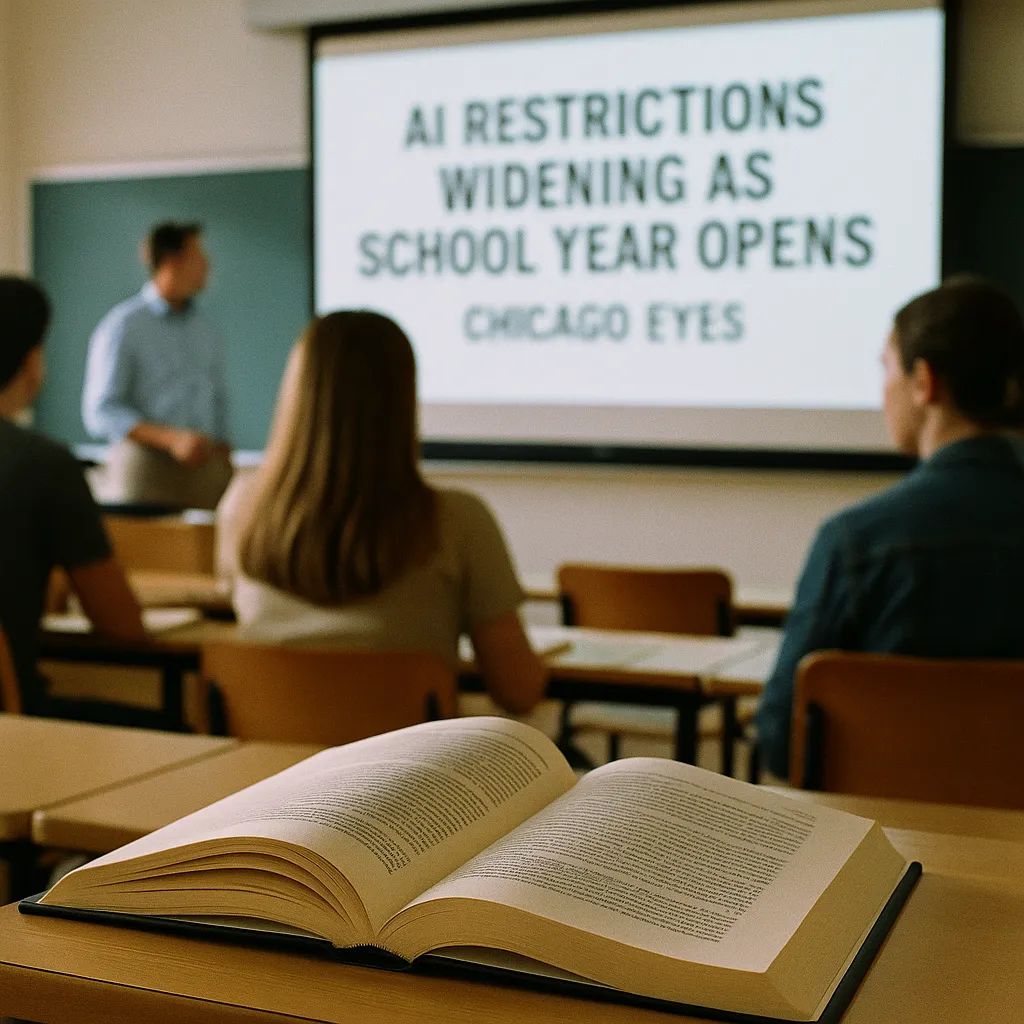
Iowa, Illinois, Ohio, Alabama, and Missouri are advancing bills to require AI literacy coursework as a condition for high school graduation — the first coordinated wave of mandatory AI education policy in the U.S.
Five States Are Moving to Make AI Literacy a High School Graduation Requirement
Iowa, Illinois, Ohio, Alabama, and Missouri are advancing legislation that would require AI literacy coursework as a condition for high school graduation — the first coordinated wave of mandatory AI education policy in the United States. More than 20 state legislatures are actively debating similar mandates, according to a legislative tracker updated May 6, reflecting bipartisan agreement that the workforce entering the labor market in 2028 and beyond needs structured AI fluency, not optional electives.
What the Bills Require
While the specific language varies by state, the legislation advancing in these five states shares a common structure: a dedicated AI literacy curriculum requirement, integrated into either a computer science graduation track or as a standalone course, with minimum competency standards defined at the state level.
The core competencies being targeted include:
- Understanding how AI systems work — training data, model outputs, limitations, and error types including hallucination
- Critical evaluation of AI outputs — distinguishing AI-generated content from human-authored work, identifying bias and unreliability
- Practical AI use — how to use AI tools responsibly in academic and professional contexts
- Ethical dimensions — privacy, intellectual property, automation and labor, and civic implications of AI deployment
The tracker notes that implementation timelines in the advancing bills range from the 2026–27 school year (Iowa) to 2027–28 (Missouri and Illinois), giving districts one to two years to develop curriculum before the mandate kicks in.
Why This Wave Is Happening Now
The policy push reflects a recognition that AI fluency is becoming a functional literacy requirement — not a specialized technical skill. Every sector these students will enter in the next five years already uses AI tools in some form. The question is whether graduates can evaluate those tools critically, use them effectively, and recognize their failures.
Get this in your inbox.
Daily AI intelligence. Free. No spam.
The bipartisan character of the legislation is notable. AI education bills in Alabama and Iowa are advancing with Republican sponsorship; Illinois and Ohio bills have cross-aisle co-sponsors. This is not a culture war issue at the K–12 level — it's treated as a workforce preparation issue, similar to the computer science graduation requirements that spread rapidly across states in the 2015–2020 period.
The 2026 [Farm Bill](/agriculture/farm-bill-ai-subsidy-big-tech-land)'s AI subsidy provisions and the federal government's executive orders on AI workforce development have also given states political cover to move quickly. Federal signals that AI education is a priority make state mandates easier to justify to skeptical constituencies.
What Schools Must Actually Build
The challenge is not political — it's operational. AI literacy as a subject doesn't have a 30-year curriculum development history the way algebra or English composition does. Districts are looking at:
- Teacher training: Most current secondary educators have not received formal AI literacy instruction. States will need to fund professional development pipelines, and those pipelines don't yet exist at scale.
- Curriculum materials: The major curriculum vendors (Khan Academy, College Board, code.org) are developing AI literacy tracks, but none have been through the kind of multi-year validation process that established curricula have. Districts will be piloting.
- Assessment: Defining what AI literacy mastery looks like — what a passing score means, what the test covers — is an open question. Several states are using the CSTA AI standards as a baseline but have not finalized assessment frameworks.
- Equity: Students in under-resourced districts have less consistent access to the devices and connectivity needed to practice with AI tools. Mandating the coursework without addressing infrastructure will produce credential gaps across district lines.
The Gap Between Mandate and Readiness
Every state that passed a computer science graduation requirement in the 2015–2020 wave ran into the same teacher pipeline problem: you can mandate a course, but you cannot mandate qualified instructors into existence. In many rural and low-income districts, the CS requirement was filled by re-credentialing existing teachers who had minimal CS training — producing wide variation in instructional quality.
AI literacy carries the same risk. If states move on the 2026–27 timeline without substantial investment in teacher development, the graduation requirement will exist on paper while the instructional reality is inconsistent.
What to Watch
The bills in Iowa and Illinois are furthest along. Passage in either state by the end of the current legislative session would accelerate action in the remaining three. Watch also for whether any of the mandates include state funding for curriculum development and teacher training — unfunded mandates produce checklist compliance, not genuine learning outcomes.
By Hector Herrera
Did this help you understand AI better?
Your feedback helps us write more useful content.
Get tomorrow's AI briefing
Join readers who start their day with NexChron. Free, daily, no spam.