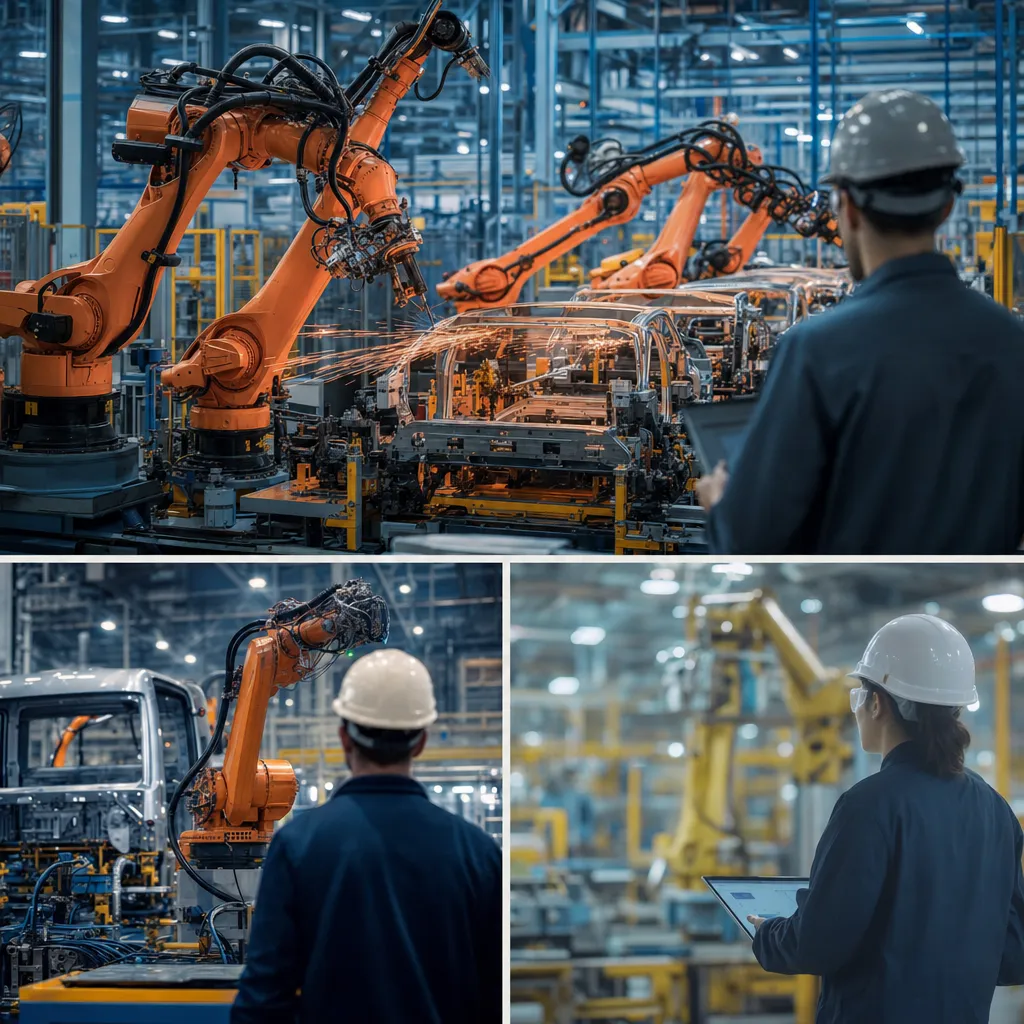
General Motors will increase robotic deployments across North American plants by 20% by 2028, making GM one of the first legacy automakers to quantify automation expansion as a direct response to tariff-driven reshoring costs.
GM Targets 20% More Robotics at North American Factories by 2028 to Offset Labor Costs
By Hector Herrera | November 19, 2026
General Motors announced plans to increase robotic and automation deployments across its North American manufacturing plants by 20% by 2028, citing rising labor costs and the financial pressure of onshoring production under tariff-driven reshoring mandates. The announcement makes GM one of the first legacy automakers to quantify automation expansion as a direct financial response to U.S. trade policy — not just an efficiency initiative.
The 20% target is significant because GM's existing automation footprint is already substantial. A 20% increase on a large installed base represents a meaningful capital commitment and a clear signal about how the company plans to manage the cost structure of building in the United States as labor costs climb.
What GM Is Planning
According to the Manila Times, the expansion covers:
- Scope: North American manufacturing plants across the U.S., Canada, and Mexico
- Target increase: 20% more robotic and automation deployments
- Timeline: Complete by 2028
- Primary drivers: Rising labor costs and tariff-driven onshoring pressure
- Integration: Part of GM's broader AI-integrated factory roadmap
GM did not specify which facilities will see the heaviest deployment, but the company operates assembly plants, stamping facilities, and powertrain plants across the continent — all of which are candidates for expanded automation.
Get this in your inbox.
Daily AI intelligence. Free. No spam.
The Reshoring Cost Problem
The political push to manufacture more in the United States comes with a structural cost problem: American manufacturing labor is significantly more expensive than the offshore alternatives it's meant to replace. For automakers, that math is especially visible in final assembly — a process that remains heavily labor-intensive despite decades of automation investment.
The 20% robotics expansion is GM's stated answer to that math. By deploying more AI-integrated automation — picking robots, collaborative robots (cobots) working alongside humans, vision systems for quality inspection, and AI-driven process optimization — GM aims to reduce per-unit labor hours without reducing production volume or quality.
This is the same calculation that virtually every major manufacturer is running right now. Tariffs make offshore production more expensive. Reshoring raises labor costs. Automation narrows the gap. The question isn't whether to automate — it's how fast to get there before the cost pressure becomes unsustainable.
Headcount and Workforce Implications
A 20% robotics increase across North American plants will reshape headcount planning at multiple facilities over the next 24 months. That doesn't necessarily mean mass layoffs — historical automation deployment at automakers has more often shifted job mixes than eliminated them entirely, with workers moving from physically intensive line roles to equipment monitoring, maintenance, and quality oversight.
What is changing:
- Role mix: More maintenance technicians, automation systems operators, and AI-system monitors; fewer traditional line workers in high-repetition tasks
- Skills demand: Workers who can interface with AI-driven quality and process systems will be more valuable; those without digital skills face displacement pressure
- Training investment: GM will need to invest in workforce transition or face the alternative — contracting for skills it doesn't have internally
The UAW's response to this announcement will be a critical data point. The union negotiated AI and automation disclosure provisions in its 2023 contract; how those provisions interact with a 20% robotics ramp is a live question.
What to Watch
Watch for GM's capital expenditure guidance in its next earnings report — the 20% robotics expansion will show up as a line item in plant investment. Also watch how the UAW responds publicly, as the balance between automation and employment guarantees will define the next round of contract negotiations in 2027.
Did this help you understand AI better?
Your feedback helps us write more useful content.
Get tomorrow's AI briefing
Join readers who start their day with NexChron. Free, daily, no spam.