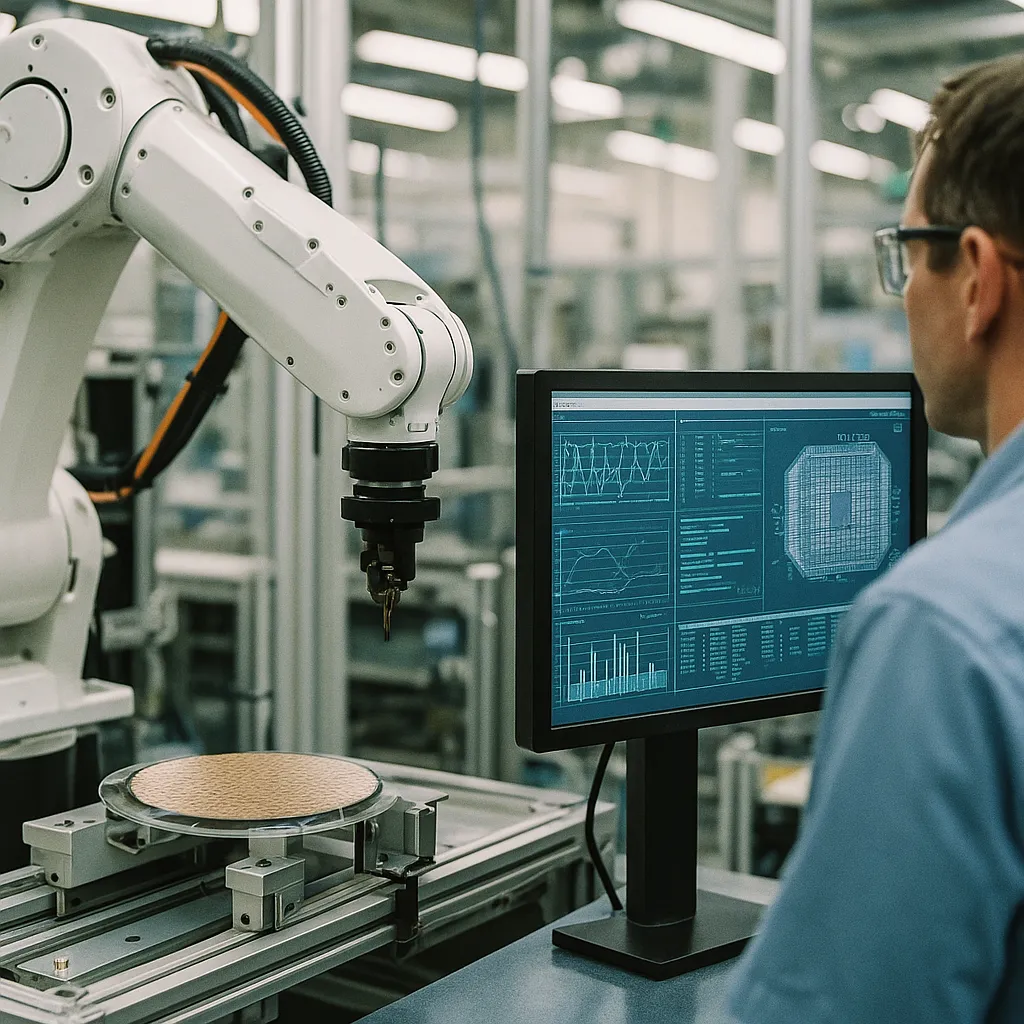
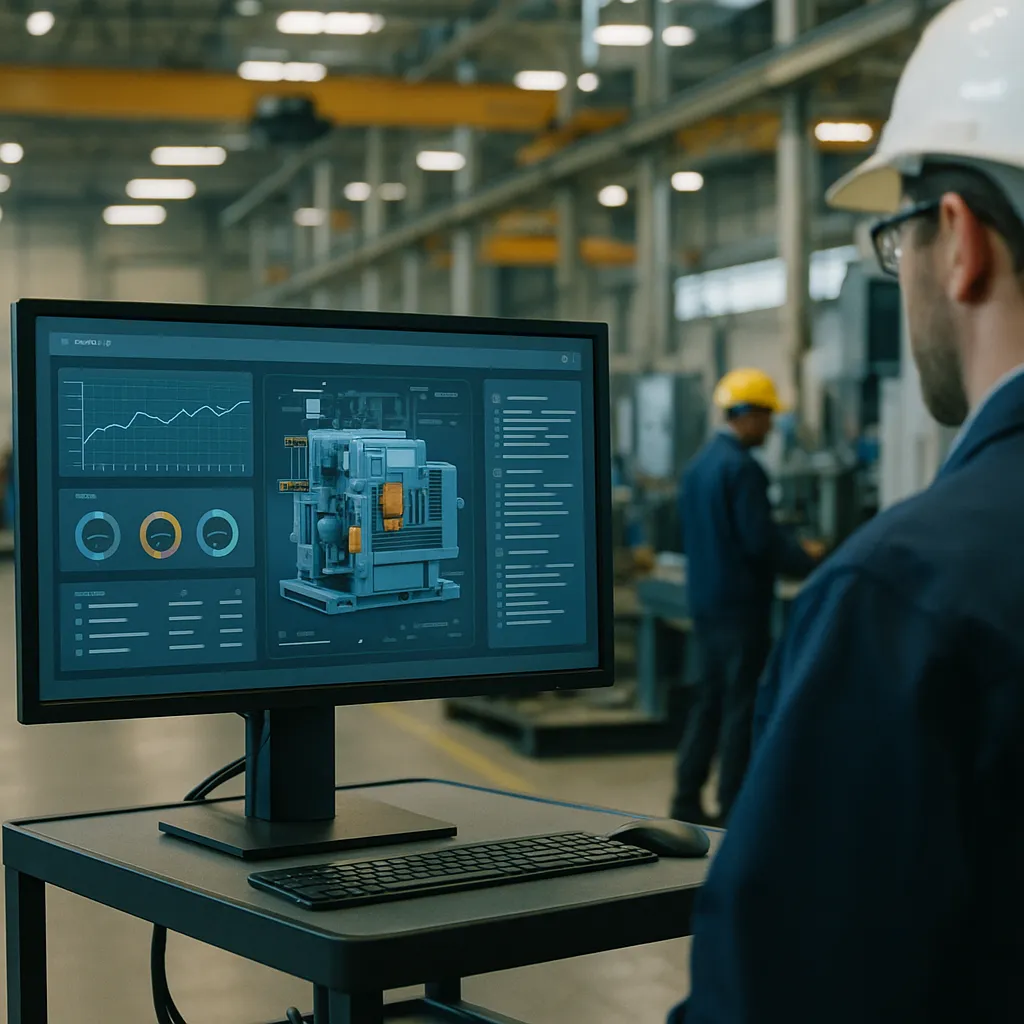
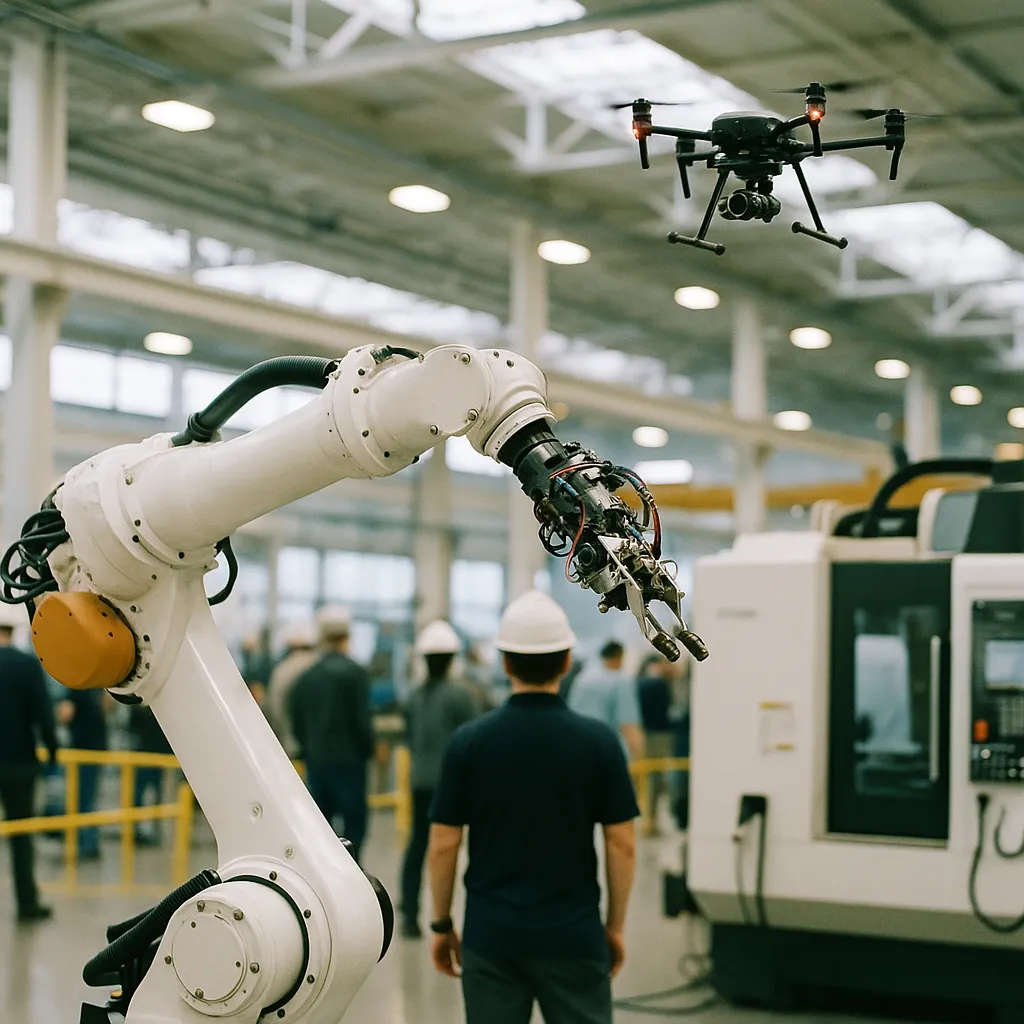
NVIDIA released the Factory Operations Blueprint (FOX), an open AI architecture that connects robot fleets, quality systems, and machine data into a single real-time decision layer for factory operations.
NVIDIA's Factory Operations Blueprint Gives Manufacturers a Single AI Brain for the Shop Floor
By Hector Herrera | June 17, 2026 | Manufacturing
NVIDIA has released a software architecture designed to give manufacturers what they've been missing as they deploy robotics and AI tools piecemeal: a single AI system that can see and coordinate everything happening on the factory floor in real time. The Factory Operations Blueprint—referred to as FOX—connects robot fleets, quality inspection systems, machine data streams, work instructions, and operational alerts into one unified decision layer, replacing the fragmented monitoring systems that most manufacturers currently rely on.
This isn't a product announcement for a turnkey system. It's a reference architecture—a documented blueprint that manufacturers and their systems integrators can build on using NVIDIA's AI infrastructure. The distinction matters because it makes FOX accessible to companies that don't have the engineering staff to design AI orchestration from scratch, while remaining flexible enough for large manufacturers with existing investments in specific robotics platforms or equipment.
What the Shop Floor Problem Actually Looks Like
Manufacturing's AI adoption challenge isn't a lack of technology—it's a lack of integration. Most factories running modern equipment already generate enormous volumes of operational data: CNC machines reporting tool wear, vision systems flagging defects, conveyor sensors tracking throughput, quality management systems logging test results. The problem is that each of these data sources typically feeds a separate monitoring system, and those systems don't talk to each other in real time.
An operator on the floor might notice a quality inspection flag on a screen, while the root cause—a tool that's been wearing down and producing out-of-tolerance parts for the past six hours—is visible only in a different system that nobody happened to be monitoring during that shift. The failure gets caught, but later than it should, and the fix requires manual investigation across multiple platforms.
FOX is built to close that gap. According to Robotics and Automation News, the blueprint establishes:
- A unified data ingestion layer that pulls from machine sensors, robotic control systems, quality databases, and ERP (enterprise resource planning) systems in real time
- An AI reasoning engine that correlates data across those inputs to identify anomalies, predict failures, and surface actionable alerts
- Workflow orchestration that allows the AI to push updated work instructions to operators, adjust robot task assignments, or escalate issues to supervisors without requiring manual data compilation
- An open hardware-agnostic architecture that supports robot fleets from different vendors and integrates with existing factory equipment, not just new NVIDIA-based hardware
That last point is strategically significant. Many AI factory initiatives get stuck in pilot stages because they require replacing functional but legacy equipment with new AI-native hardware. FOX is designed to layer over what manufacturers already have.
Get this in your inbox.
Daily AI intelligence. Free. No spam.
Why NVIDIA Is Building This
NVIDIA's business model has evolved well beyond graphics cards. The company now sells the computing infrastructure—Jetson edge processors, DGX AI servers, and the CUDA software ecosystem—that powers AI applications across industries. Every factory that deploys FOX is a potential customer for NVIDIA compute: the AI inference workloads required to process real-time sensor data, run quality inspection models, and coordinate robot fleets all run on hardware that NVIDIA sells or licenses.
Releasing FOX as an open blueprint is a customer-acquisition strategy as much as a technical contribution. By giving manufacturers and integrators a proven architecture, NVIDIA accelerates deployment timelines and creates demand for the underlying compute stack. It's the same playbook the company ran with CUDA in the scientific computing market: make the software ecosystem compelling enough that organizations build their workflows around NVIDIA hardware as a consequence.
The timing is also deliberate. NVIDIA's Cosmos platform—announced for autonomous vehicles and robots at CVPR 2026—established the company as the AI-in-the-physical-world infrastructure provider. FOX extends that positioning into manufacturing specifically, where global AI-in-manufacturing spending is projected to reach $20.8 billion by 2028.
What This Means for Manufacturers
The FOX blueprint lowers the minimum viable AI investment for factory operators who want to move beyond isolated pilot projects. Previously, building an integrated AI operations layer required either a major systems integration engagement with a firm like Siemens Digital Industries or Rockwell Automation, or an in-house engineering team large enough to design and maintain custom middleware. FOX provides the architecture that defines what such a system should look like, reducing scoping work and integration risk.
For companies already running NVIDIA-based infrastructure—Jetson processors for edge AI, or DGX systems for training—the blueprint provides a structured migration path toward full shop-floor AI orchestration. For companies running heterogeneous environments, FOX's hardware-agnostic design means integration work is more about data connectors and API development than wholesale infrastructure replacement.
The practical questions manufacturers will face:
- Data quality first. FOX's value depends on clean, well-labeled operational data. Factories with inconsistent sensor configurations, manual data entry workflows, or fragmented ERP integrations will need to resolve those issues before a unified AI layer can function effectively.
- Integration complexity. Connecting legacy CNC machines, robot arms from three different vendors, and a quality system built on a 2018 software stack to a single AI orchestration layer is a substantial systems integration project, even with a blueprint to guide it.
- Skills and maintenance. Operating a unified AI factory management system requires different skills than operating individual machines. Workforce training and IT/OT (operational technology) staff capacity are real constraints.
What to Watch
NVIDIA is expected to release FOX integration guides and reference implementations for specific industrial environments—automotive assembly, semiconductor packaging, food and beverage processing—over the next two quarters. Partnerships with industrial automation integrators will be a key signal of how quickly FOX reaches real manufacturing deployments versus staying in proof-of-concept mode.
The broader competitive response to watch is from Siemens (whose Industrial AI partnership with NVIDIA was announced in June 2026) and Rockwell Automation, both of which have their own AI factory platform ambitions. FOX creates pressure for those incumbents to accelerate their own orchestration layer offerings or risk ceding the architecture-level conversation to NVIDIA.
— Hector Herrera
Did this help you understand AI better?
Your feedback helps us write more useful content.
Get tomorrow's AI briefing
Join readers who start their day with NexChron. Free, daily, no spam.