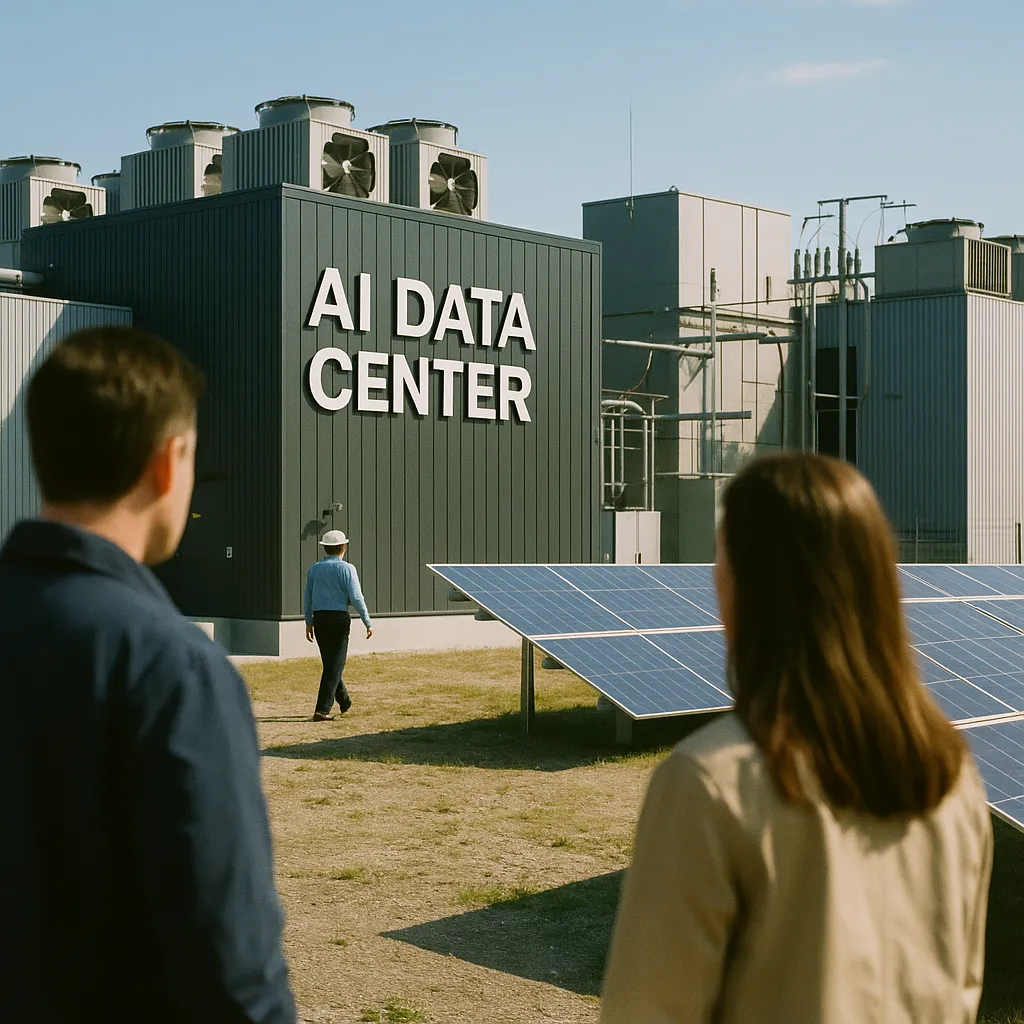
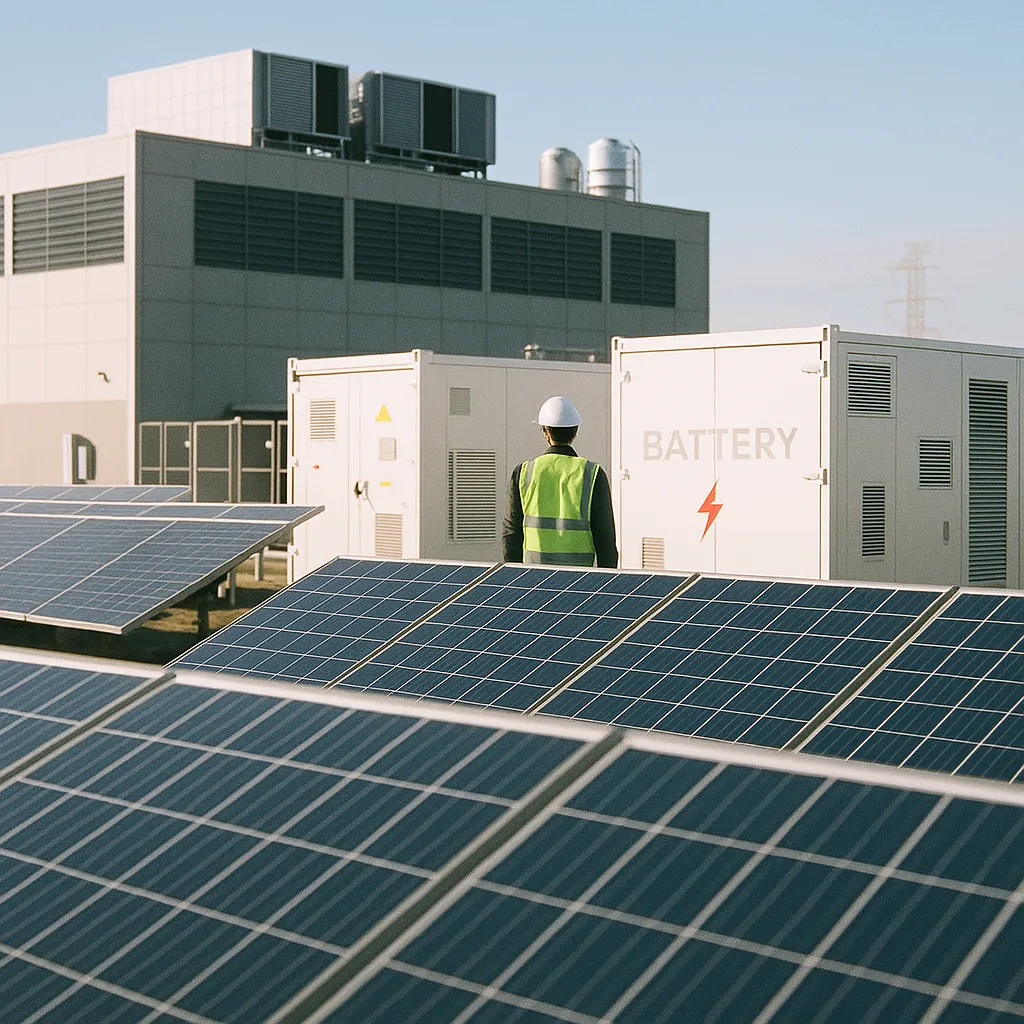
Bloom Energy and Oracle are powering AI data centers with on-site fuel cells that can be deployed in weeks, bypassing the years-long utility grid expansion that is the primary bottleneck for AI infrastructure growth.
Bloom Energy and Oracle Partner to Build Off-Grid AI Data Center Power with Fuel Cells
By Hector Herrera | April 19, 2026 | Energy
Bloom Energy and Oracle are partnering to power AI data centers with stationary fuel cells that can be deployed directly on-site in weeks—bypassing the years-long utility grid expansion timelines that are the primary constraint on AI infrastructure growth. Bloom's stock surged roughly 15% on the announcement. The deal represents one of the most structurally novel answers yet to the AI energy crisis.
What Happened
Bloom Energy and Oracle announced a partnership to power Oracle's AI data centers using Bloom's solid oxide fuel cells, which generate electricity through an electrochemical process rather than combustion. The fuel cells are modular, can be deployed at data center sites, and operate completely independently of the utility grid.
The announcement caused Bloom's stock to surge approximately 15%—a market signal that investors see the partnership as a material commercial development, not a routine vendor deal.
Context
The AI infrastructure buildout has run directly into a power availability problem. AI training clusters and inference data centers consume electricity at a scale that is straining existing grid capacity. U.S. data center electricity demand is projected to reach approximately 100 GW by 2035, up from roughly 20 GW today. The utility grid expansion required to serve that demand takes five to ten years to permit, finance, and build.
That timeline creates a structural bottleneck: AI companies want to build data centers now, but the power they need won't be available from the grid for years. The responses to this problem have included nuclear power purchase agreements (Microsoft with Three Mile Island, Google with Kairos Power), natural gas generation on data center sites, and—now—fuel cells.
Get this in your inbox.
Daily AI intelligence. Free. No spam.
Bloom Energy's fuel cell technology uses natural gas or hydrogen to generate electricity through an electrochemical reaction. Key characteristics relevant to the data center use case:
- Deployable in weeks, not years
- On-site generation that bypasses utility interconnection queues
- High efficiency (50-65% electrical efficiency, versus 35-40% for gas turbines)
- Modular and scalable—capacity can be added incrementally as data center loads grow
- Low emissions relative to conventional gas generation, with a clear path to zero-emission operation if fueled by green hydrogen
Details
- Partners: Bloom Energy (fuel cell manufacturer) + Oracle (cloud and AI infrastructure)
- Application: Powering AI data centers with on-site stationary fuel cells
- Key advantage: Deployment timeline of weeks vs. years for utility grid expansion
- Off-grid capability: Complete independence from utility grid and interconnection queues
- Market signal: Bloom stock +~15% on announcement
- U.S. data center demand projection: ~100 GW by 2035 (current: ~20 GW)
Oracle is one of the largest cloud infrastructure providers in the world and has made significant AI infrastructure investments. Its partnership with Bloom is a production-scale commitment, not a pilot.
Impact
For AI companies: The fuel cell approach provides a new procurement path for power. A company that needs 200 MW of data center capacity in 18 months has options it didn't have two years ago: on-site generation using fuel cells can be operational within that timeline. The cost per kilowatt-hour is higher than grid power in many markets, but availability often matters more than unit cost when capacity is the constraint.
For utilities: On-site power generation that bypasses the grid entirely is a structural challenge to the utility business model. If large technology companies routinely deploy their own generation, the utility loses a customer segment that was expected to drive significant revenue growth over the next decade. This doesn't eliminate the utility's role, but it reduces it and complicates the investment case for grid expansion.
For energy transition: The Bloom/Oracle partnership is primarily fueled by natural gas, which produces CO₂ emissions. The partnership is framed as a stepping stone toward hydrogen, which can power the same fuel cells with zero direct emissions. How quickly that transition happens—and whether it happens before or after a large installed base of gas-fueled data center generation locks in decades of emissions—is the critical question for environmental advocates.
For Bloom Energy: The deal validates the commercial thesis for grid-independent power generation at hyperscale. If Oracle is a customer, other cloud providers will pay attention. Amazon Web Services, Microsoft Azure, and Google Cloud all face the same power availability problem. Bloom's challenge is manufacturing capacity: fuel cells are complex to manufacture, and scaling production to meet potential demand is a real operational constraint.
For smaller data center operators: The 15% stock jump signals market confidence in the fuel cell path—but most of the financial and execution capacity for this approach currently sits with very large operators. Smaller colocation and cloud providers face the same power constraints without the procurement leverage to negotiate custom fuel cell deployments at scale.
What to Watch
The Oracle/Bloom partnership will be a proof point for on-site fuel cell generation at AI data center scale. Watch for the first announced deployment—how many megawatts, at which facility, on what timeline—and for the operational performance data that follows. If the fuel cells deliver reliable power at the stated efficiency levels in a production AI environment, expect rapid adoption by other hyperscalers.
Hector Herrera covers energy and AI for NexChron.
Did this help you understand AI better?
Your feedback helps us write more useful content.
Get tomorrow's AI briefing
Join readers who start their day with NexChron. Free, daily, no spam.