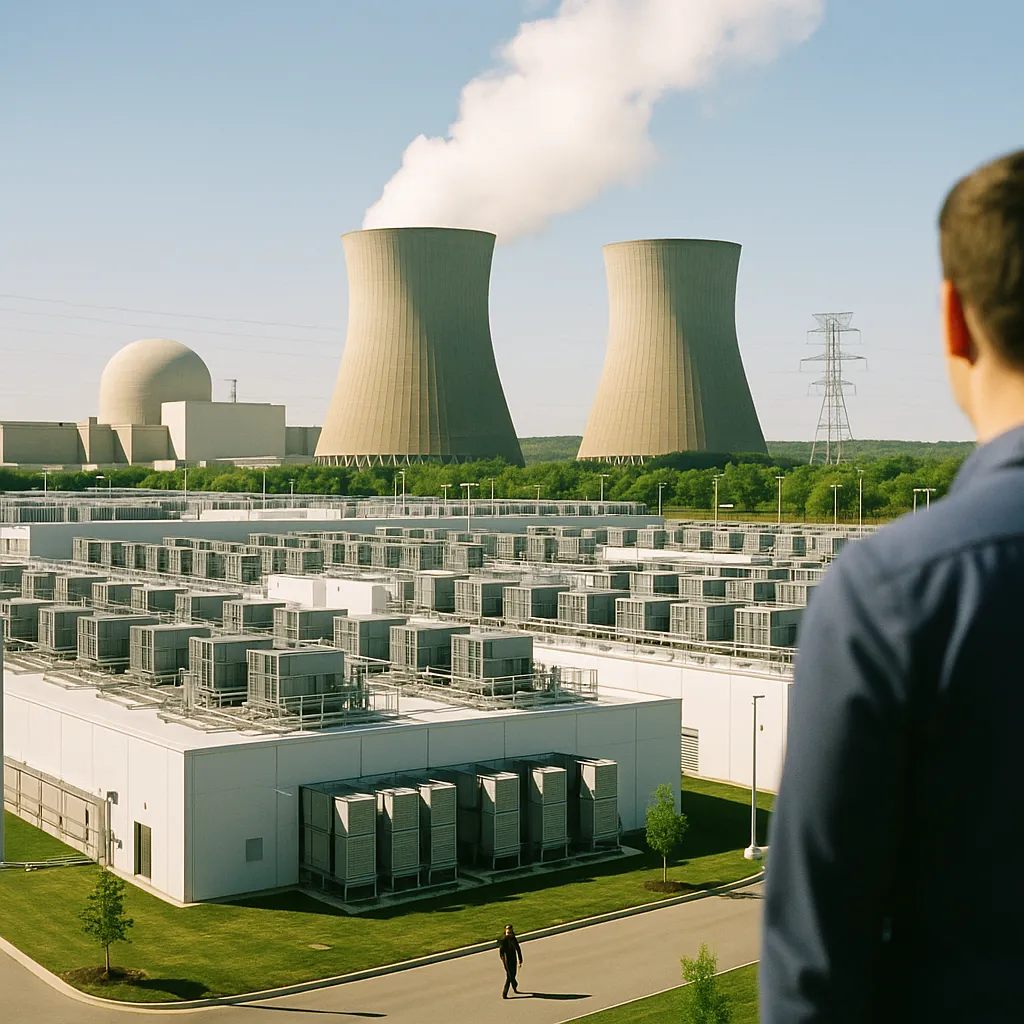
Google signed a 20-year power purchase agreement with Constellation Energy for 890 megawatts of nuclear generation across 11 reactor units in Illinois, Pennsylvania, and New Jersey — the largest AI-driven nuclear deal on record.
Google has signed a 20-year power purchase agreement with Constellation Energy covering 890 megawatts of nuclear generation across 11 reactor units in Illinois, Pennsylvania, and New Jersey — the largest AI-driven nuclear deal yet, and a signal that tech giants are committing to long-term clean baseload power at a scale that will reshape electricity markets. The deal sends power into the PJM Interconnection, the grid serving roughly 65 million people across the mid-Atlantic and Midwest.
Bloomberg reported the agreement as US power consumption heads toward record highs in 2026 and 2027, driven primarily by the energy demands of AI training runs and inference workloads. Nuclear is emerging as the preferred answer for tech companies that need large amounts of clean, firm power — electricity that flows reliably regardless of weather, unlike solar and wind.
The Structure of the Deal
The 20-year PPA means Google is committing to purchase nuclear-generated electricity through at least 2046. That duration is not incidental — it matches the operational lifespan planning horizon of large data center infrastructure and gives Constellation the long-term revenue certainty it needs to justify capital investment in the 11 reactor units covered by the agreement.
Those upgrades matter because many US nuclear plants have been running on extended licenses with deferred capital maintenance. Guaranteed long-term offtake from a creditworthy buyer like Google changes the investment case, enabling upgrades that improve reliability and potentially extend plant lifespans further.
The 11 units are spread across three states:
Get this in your inbox.
Daily AI intelligence. Free. No spam.
- Illinois — home to several of Constellation's largest nuclear plants, including the Braidwood and Byron stations
- Pennsylvania — including Three Mile Island Unit 1, which Constellation restarted in 2024 in a prior deal with Microsoft
- New Jersey — including the Salem and Hope Creek stations on Delaware Bay
Why Nuclear Now
The proximate cause is AI infrastructure buildout. Training large AI models and running inference at scale requires continuous, uninterruptible power. A solar farm that produces nothing on overcast days or a wind farm that cuts out during calm weather cannot support workloads that run 24 hours a day, 365 days a year. Nuclear plants run at capacity factors above 90%, making them the only low-carbon source currently capable of serving that requirement at scale.
The deeper cause is Google's own emissions commitments. Like Microsoft, Amazon, and Meta, Google has made public pledges to match its electricity consumption with clean energy. Renewable energy certificates — paper instruments that allow companies to claim clean power without physically connecting to a clean source — are increasingly insufficient to satisfy investor and regulatory scrutiny. Long-term PPAs tied to specific generating assets are becoming the credibility standard.
Google was also involved in one of the first tech-nuclear deals when it signed an agreement in 2023 to purchase power from Kairos Power's next-generation reactor project, though that facility is years from operation. The Constellation deal delivers actual nuclear output from existing operational plants — no construction risk, no regulatory uncertainty over new plant licensing.
The Grid Impact
Adding 890 megawatts to the PJM grid through contracted nuclear capacity is not a marginal change. PJM is already under capacity pressure as coal retirements outpace new generation additions and demand growth accelerates. Tech-driven nuclear procurement is effectively substituting private investment for the public utility planning processes that historically managed grid capacity — a structural shift that grid regulators are still working to account for in their modeling.
The deal does not directly increase nuclear generation capacity on the PJM system — the 11 units already exist. What it does is secure long-term financial support for plants that might otherwise have been at risk of early retirement on economic grounds, and funds the upgrades needed to extend their productive lives.
What Other Tech Companies Are Doing
Google is not alone. The competitive dynamic among tech companies for clean baseload power is now one of the stronger tailwinds for the US nuclear industry:
- Microsoft signed an agreement to restart Three Mile Island Unit 1 in 2024, with Constellation as operator
- Amazon purchased a data center campus adjacent to the Susquehanna nuclear plant in Pennsylvania
- Meta issued an open RFP for nuclear power developers in early 2026, signaling intent to follow
The concentration of these deals at Constellation — the largest nuclear operator in the US — gives the company unusual leverage in a power market that is tightening faster than it has in decades.
What to Watch
The regulatory pathway for the nuclear unit upgrades covered by this deal involves Nuclear Regulatory Commission approval for any changes to operating licenses. That process is well understood but not fast. The more significant variable is whether PJM's capacity market rules evolve quickly enough to appropriately value long-term clean baseload commitments of this type, or whether regulatory lag slows the next wave of similar deals. Expect at least two more major tech-nuclear announcements before year-end.
Did this help you understand AI better?
Your feedback helps us write more useful content.
Get tomorrow's AI briefing
Join readers who start their day with NexChron. Free, daily, no spam.