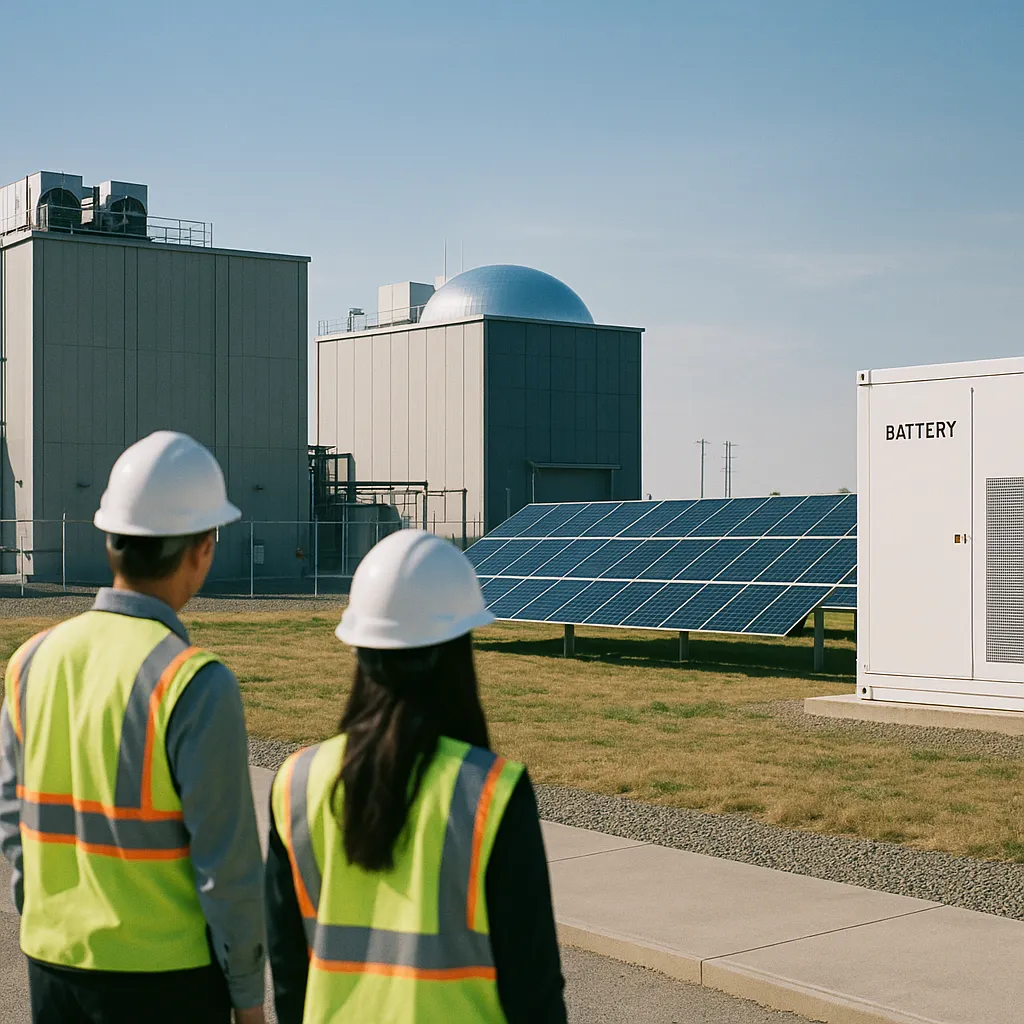
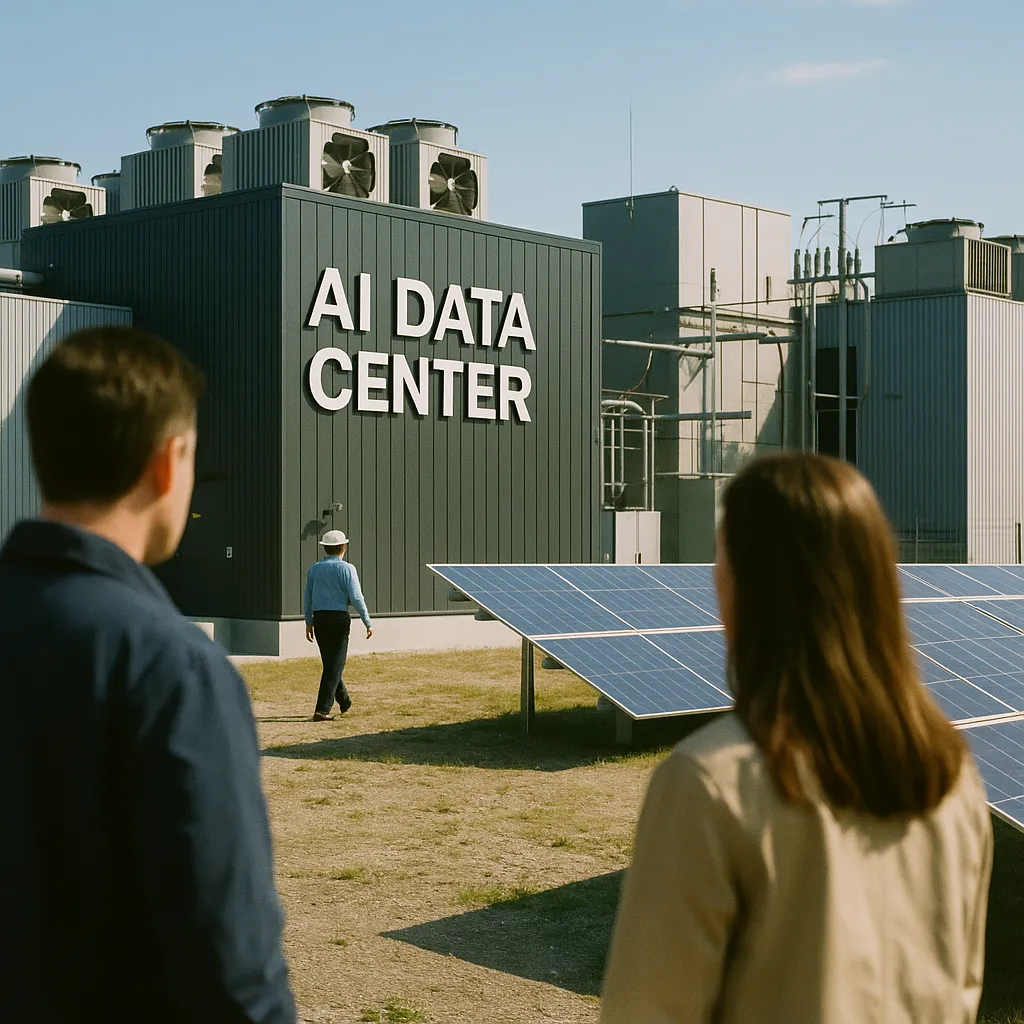
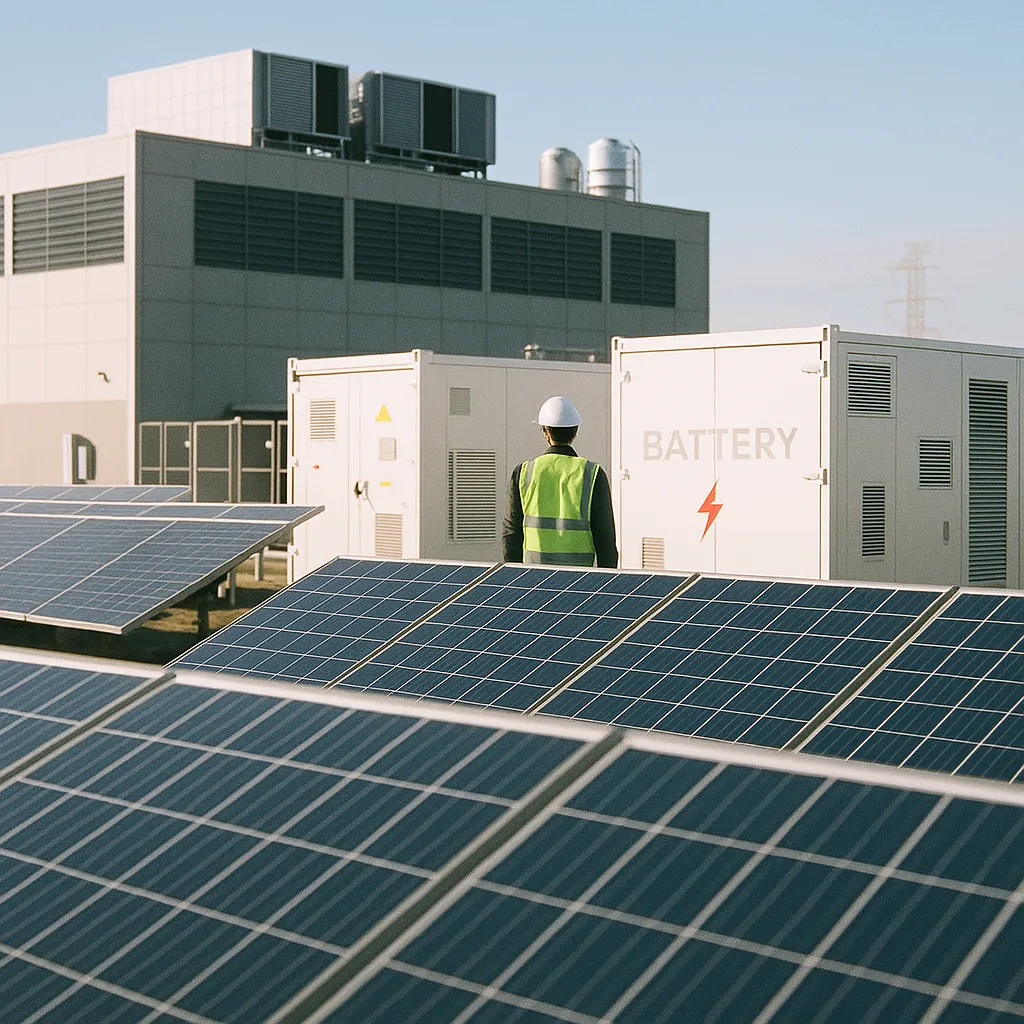
U.S. data centers will drive 55% of new electricity demand growth over five years. Researchers say conventional grid expansion can't keep pace — and space solar plus multi-day storage may be the only answer.
Space Solar and Multi-Day Storage: The Only Grid Solutions Built for AI's Energy Appetite
U.S. data centers are on track to account for 55% of new electricity demand growth over the next five years, and researchers and investors are concluding that conventional grid expansion — new transmission lines, ground-based solar farms, more natural gas peakers — cannot be built fast enough to meet that demand, according to analysis in Renewable Energy Magazine. The emerging consensus points to two technologies previously considered exotic: space-based solar power collection and multi-day energy storage systems — as the only approaches capable of delivering power at AI infrastructure scale.
Context
The AI energy problem is not simply that data centers use a lot of electricity. It's that they need reliable, always-on power in locations that are increasingly difficult to serve from the existing grid. A hyperscale AI training cluster — the kind used to train frontier models — draws several hundred megawatts continuously. A large inference deployment is smaller but still demands consistent power around the clock, regardless of weather, season, or grid congestion.
The standard solutions have known limitations at this scale:
- Ground-based solar generates power only during daylight hours. Lithium-ion battery storage (the most deployed technology today) provides 4-hour backup at best — enough for evening demand, not for cloudy weeks or multi-day grid stress events.
- New transmission lines take 10-14 years from planning to energization in the U.S. due to permitting, right-of-way acquisition, and regulatory review. AI infrastructure buildout is on a 2-4 year cycle.
- Nuclear (small modular reactors) remains the most discussed solution but the fastest SMR timeline in the U.S. is the late 2020s, and construction cost overruns are endemic.
The gap between the pace of AI infrastructure expansion and the pace of grid development is structural, not cyclical.
Space-Based Solar Power
Space solar power — collecting sunlight in orbit and transmitting it to Earth via microwave or laser — delivers power with a fundamental advantage: no atmosphere, no night, no clouds. A satellite in geostationary orbit receives solar energy 24 hours a day, 365 days a year, at approximately 8 times the intensity available at the ground. The energy is then converted to microwaves and beamed to a receiving antenna (a rectenna) on the ground, which converts it back to electricity.
This is not science fiction. The European Space Agency has active demonstration programs. Japan has been developing the technology for twenty years. The U.S. Naval Research Laboratory demonstrated wireless power transmission in 2023. The remaining engineering challenges are mass-to-orbit costs (declining with launch cost reductions), the scale of the rectenna on the ground, and efficiency losses in the transmission chain.
Get this in your inbox.
Daily AI intelligence. Free. No spam.
Meta has announced partnerships targeting space solar as part of its long-term energy diversification strategy for data center power. When a company building AI infrastructure at Meta's scale begins making investments in space solar, the technology crosses from research interest to industrial planning horizon.
Multi-Day Energy Storage
Multi-day storage — systems capable of holding energy for 48 to 100+ hours — addresses the gap that lithium-ion cannot. Several technologies are advancing toward commercial deployment:
- Iron-air batteries — use the rusting and un-rusting of iron to store and release energy. Long discharge duration, uses abundant materials, low projected cost per kilowatt-hour. Form Energy has deployed early commercial systems.
- Compressed air energy storage (CAES) — stores energy by compressing air into underground caverns, releases it through turbines. Works at utility scale, geographically constrained.
- Hydrogen storage — electrolyze water with surplus power, store hydrogen, combust or fuel-cell it back to electricity when needed. High round-trip efficiency losses; improving with better electrolyzer and fuel cell technology.
- Thermal storage — store energy as heat in molten salt or rocks, recover it via turbines. Mature technology from concentrated solar deployments; expanding to grid-scale applications.
None of these is a perfect solution. All of them become competitive when the alternative is 14 years of transmission line permitting.
Why the Grid Expansion Timeline Doesn't Work
The analysis in Renewable Energy Magazine is blunt: conventional grid infrastructure cannot be permitted, approved, and built at the rate AI infrastructure is being deployed. The U.S. has roughly 1,000 gigawatts of renewable generation projects waiting in the interconnection queue — the administrative backlog before a project can even begin construction. Average wait times have stretched to five to seven years.
Meanwhile, the largest AI infrastructure announcements — Microsoft's $80 billion datacenter commitment, Amazon's $100 billion cloud infrastructure pledge, Meta's $65 billion capital expenditure plan for 2026 — are being built on timelines that assume power will be available when the buildings are done. It frequently is not.
The gap is being papered over right now with diesel backup generators, temporary grid connections, and agreements to absorb grid power only during off-peak hours. These are not sustainable solutions for facilities intended to run at capacity for decades.
What to Watch
The next 18 months will determine whether space solar transitions from industrial planning to active procurement, and whether multi-day storage deployments at AI datacenter campuses establish commercial proof of concept at scale. Watch also for regulatory developments: the FCC and FAA have jurisdiction over wireless power transmission that space solar requires, and neither agency has a defined review framework for commercial space solar licensing.
By Hector Herrera | NexChron | April 29, 2026
Did this help you understand AI better?
Your feedback helps us write more useful content.
Get tomorrow's AI briefing
Join readers who start their day with NexChron. Free, daily, no spam.