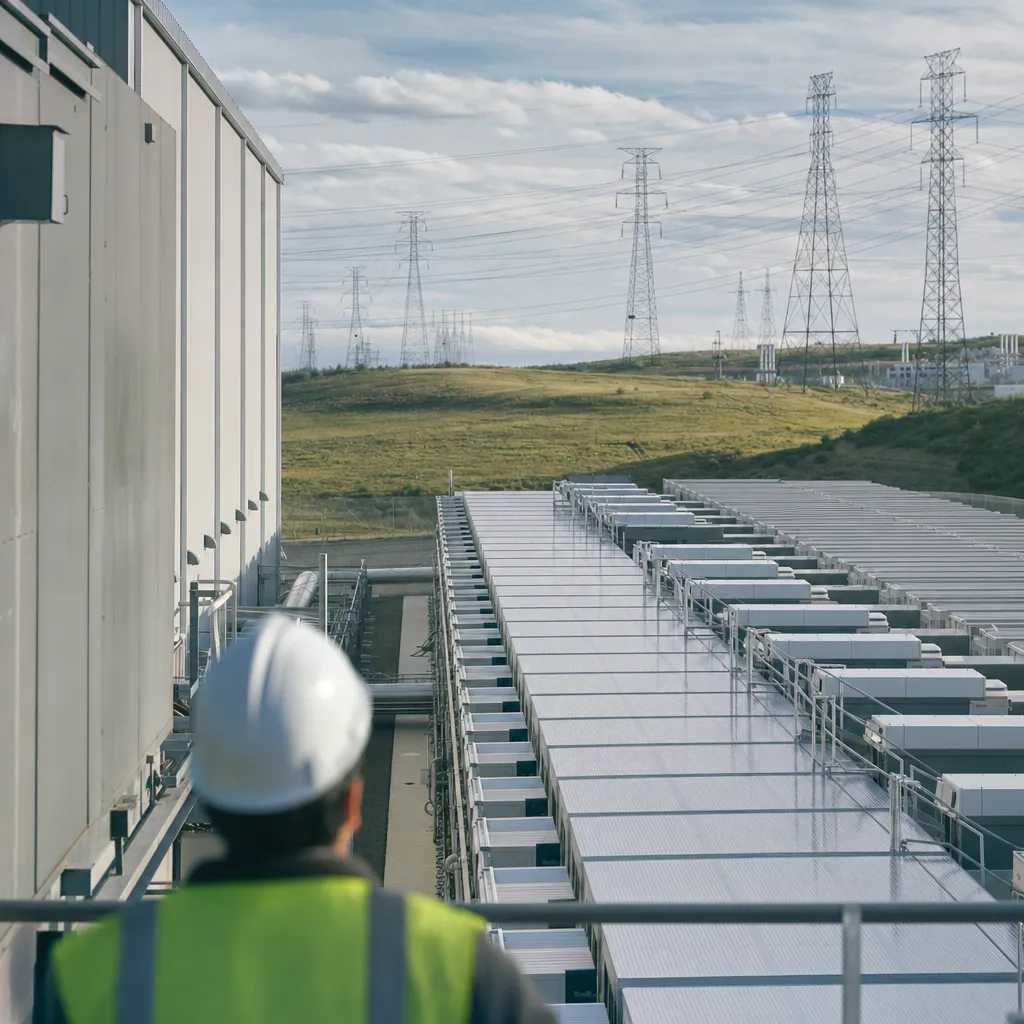
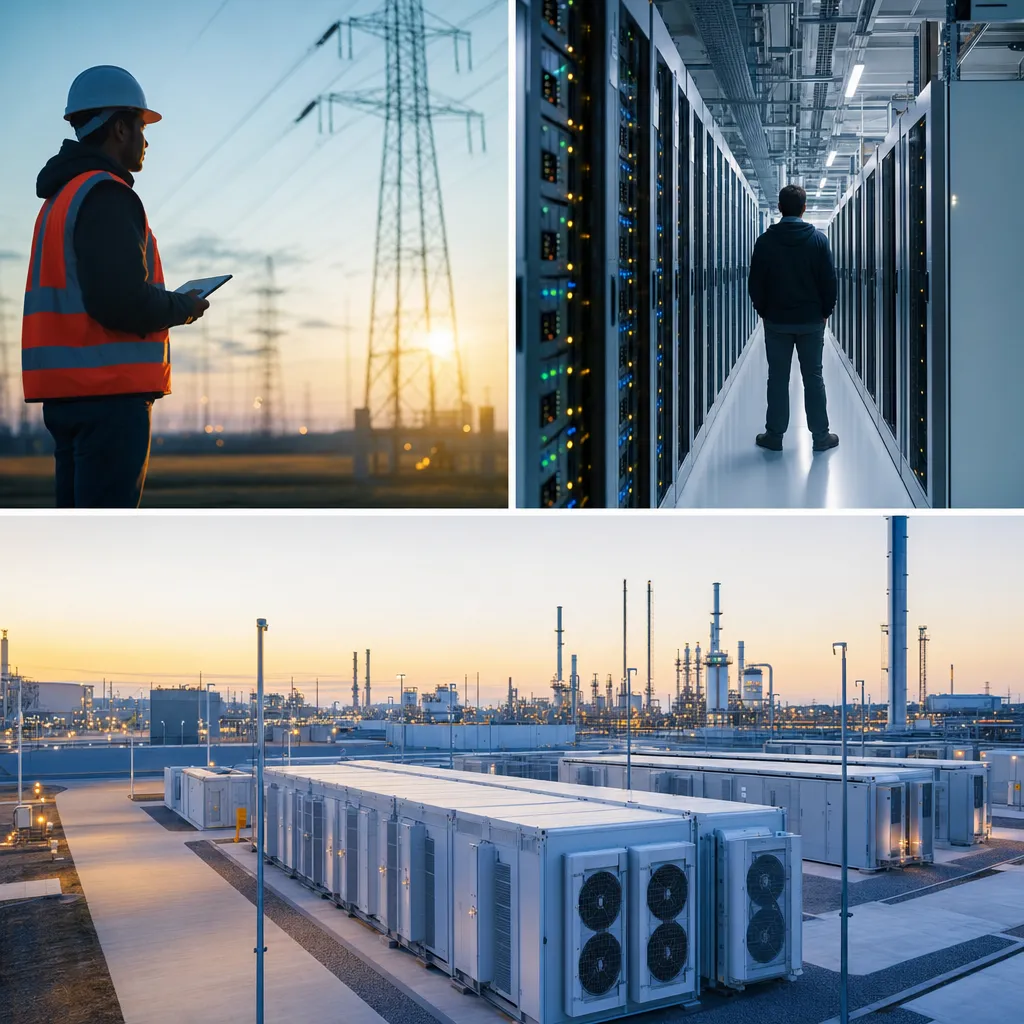
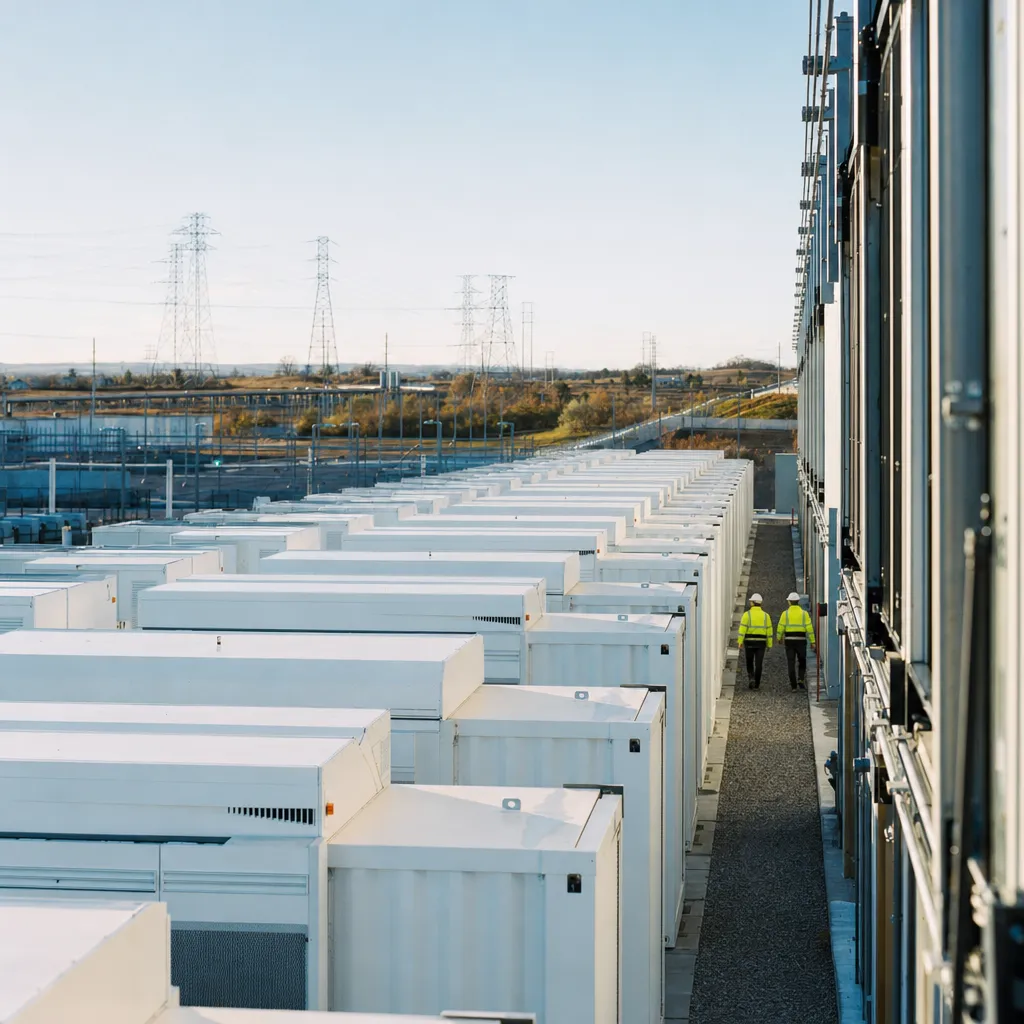
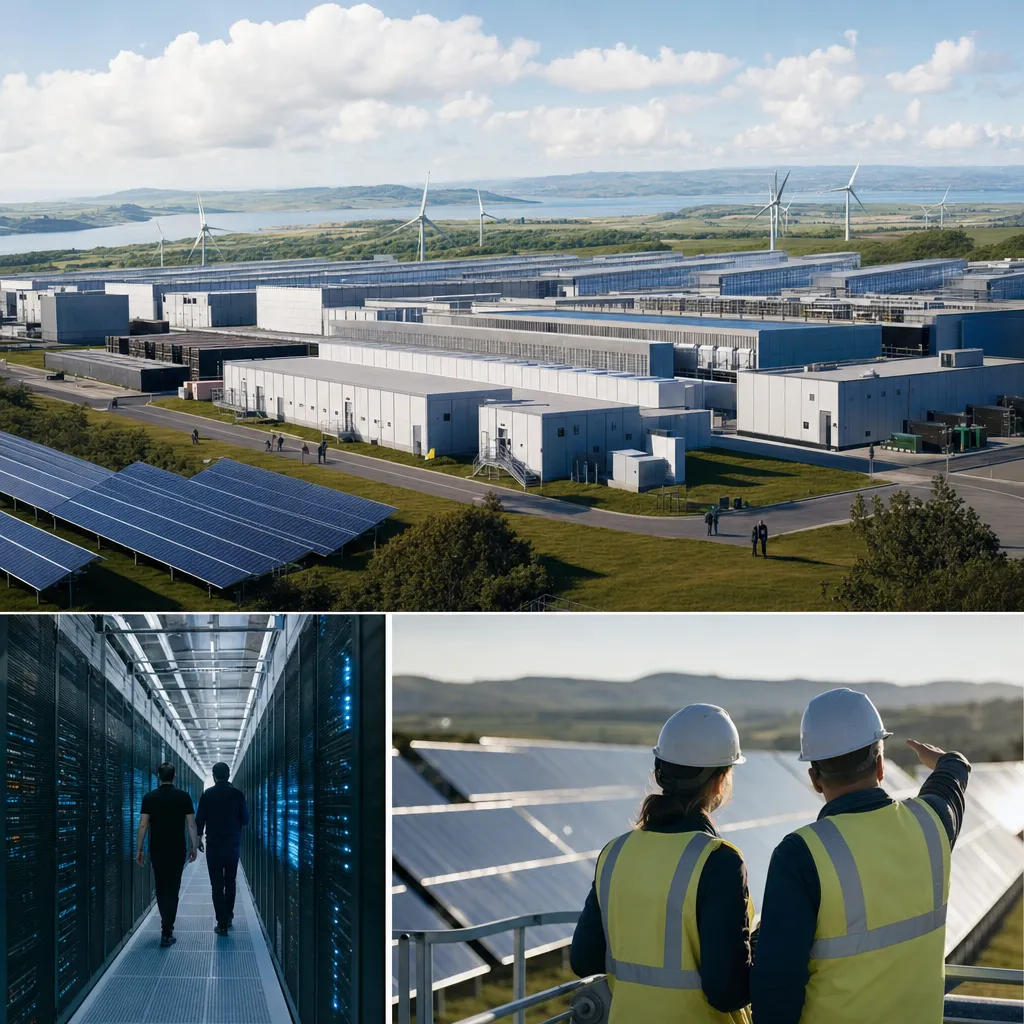
A bipartisan federal bill introduced November 19 would require AI data center operators to pay directly for the grid upgrades their facilities demand, potentially injecting $35 billion into US electric infrastructure.
A new bipartisan federal bill introduced November 19 would require AI data center operators to pay directly for the grid upgrades their facilities demand, potentially injecting $35 billion into US electric infrastructure over the next decade. The legislation targets what backers call a fundamental cost-shifting problem: AI-driven electricity demand is straining the grid, but those costs are currently distributed across all ratepayers rather than charged to the facilities creating them.
The bill faces significant industry opposition, with tech groups arguing it would slow data center investment and AI development at a critical juncture.
The Core Mechanism
According to Inside Climate News, the bill — introduced with bipartisan cosponsors — would establish a direct cost allocation framework for large-scale power consumers. Under current Federal Energy Regulatory Commission (FERC) interconnection rules, the costs of grid upgrades triggered by new power load are largely socialized: utilities upgrade transmission infrastructure and spread the cost across all customers in the service territory.
The proposed legislation would change that model for facilities above a certain megawatt threshold — a threshold that covers large AI data centers, which typically draw 50–500 MW each and are increasingly clustered in regions where grid capacity is already constrained.
Key provisions as reported:
- Data centers above a threshold MW draw must fund grid interconnection upgrades their load requires
- $35 billion in total infrastructure investment is the projected impact over 10 years
- Applies to new construction and major expansions, not existing facilities
- FERC would administer the program with new oversight authority
Why This Is Happening Now
US electricity demand from data centers has been rising faster than grid infrastructure can accommodate. The numbers are stark:
- AI data centers are projected to consume 12–15% of US electricity by 2030, up from under 2% in 2023, according to Goldman Sachs Research
- Utility interconnection queues in AI-heavy states (Virginia, Texas, Georgia, Arizona) have grown to 5–7 year waits for new large-scale power connections
- Grid operators in PJM, ERCOT, and CAISO have all flagged AI data center load growth as a primary reliability concern
The current interconnection cost system wasn't designed for facilities that can materially change local grid load conditions. When a 300 MW data center connects to a grid built for a region drawing 1,000 MW total, the infrastructure gap is significant — and under current rules, everyone connected to that grid pays for the upgrade.
Get this in your inbox.
Daily AI intelligence. Free. No spam.
The ratepayer equity argument is the bipartisan bridge: conservatives focused on utility rate protection for rural and industrial customers find common ground with progressives focused on corporate cost externalization. That coalition is unusual enough in the current Congress to give the bill a path that single-party legislation would not have.
Industry Response
Tech industry groups have moved quickly to oppose the legislation. The core arguments:
- The bill would slow data center investment in the US at a moment when international competition — particularly from China — is intensifying
- Cost uncertainty would make the US less attractive for AI infrastructure investment compared to jurisdictions with clearer development frameworks
- The $35 billion figure overstates actual incremental costs because the grid would need upgrades regardless, as overall electricity demand grows from electric vehicles, electrification of heat, and industrial applications
The counterargument from bill supporters: the grid upgrades AI data centers require are not marginal capacity additions — they are often major transmission infrastructure investments that serve a single new facility and benefit primarily that facility. The socialization of those costs is not an accident of planning; it's a policy choice that amounts to a subsidy for the most capital-intensive industry in the US economy.
State-Level Context
This federal legislation follows years of mounting tension at the state level. Virginia, which hosts the world's highest concentration of data centers in its "Data Center Alley" (Ashburn/Loudoun County), enacted partial cost-causation rules requiring large power customers to fund some interconnection costs. Texas and Georgia have resisted similar measures under tech industry lobbying.
A federal floor that overrides state variations would eliminate the ability of accommodating states to offer cost-shifted advantages as a competitive differentiator for data center siting decisions — a significant change to how the data center real estate market currently functions.
What It Means for AI Infrastructure Plans
For companies with large-scale AI data center construction underway — Microsoft, Google, Amazon, Meta, CoreWeave, and Oracle have all announced multi-billion dollar US data center investments in 2026 — the legislation introduces cost uncertainty that wasn't in prior financial models.
The practical impact varies significantly by location:
- Facilities in grid-constrained regions (Northern Virginia, Arizona desert corridors, parts of Texas) where significant transmission upgrades are needed would face the largest additional costs
- Facilities co-located near existing generation (hydropower in the Pacific Northwest, nuclear in the Midwest) where interconnection costs are minimal would face minimal impact
- Greenfield builds in lower-cost grid regions may accelerate as developers seek to avoid cost-allocation exposure in constrained markets
What to Watch
The bill has been introduced but not yet referred to committee as of publication. Its bipartisan framing gives it more runway than a single-party proposal, but tech industry opposition will be intense and focused. Key signals to monitor:
- Committee referral and hearing scheduling — a hearing signals real momentum
- FERC response — the commission may propose rule changes that preempt the need for legislation, as it did with interconnection reform in 2023
- Utility industry positioning — utilities want the investment but prefer flexible cost recovery mechanisms and may not uniformly support the bill's specific approach
- State-level reactions — data center-dependent states like Virginia and Texas will lobby aggressively against federal preemption
The fundamental tension the bill is trying to resolve — who pays when a new industry imposes large infrastructure costs on shared systems — is not going away regardless of this specific bill's fate. The $35 billion figure and the AI industry's projected electricity footprint make this a policy question that will recur in every session of Congress through the decade.
Did this help you understand AI better?
Your feedback helps us write more useful content.
Get tomorrow's AI briefing
Join readers who start their day with NexChron. Free, daily, no spam.