AI data centers are adding grid loads equivalent to mid-sized cities while simultaneously becoming the largest driver of new renewable energy procurement globally — forcing utilities to rethink decades-long planning timelines.
AI Data Centers Are Consuming Power Like Small Cities. Utilities Weren't Ready.
By Hector Herrera | May 5, 2026 | Energy
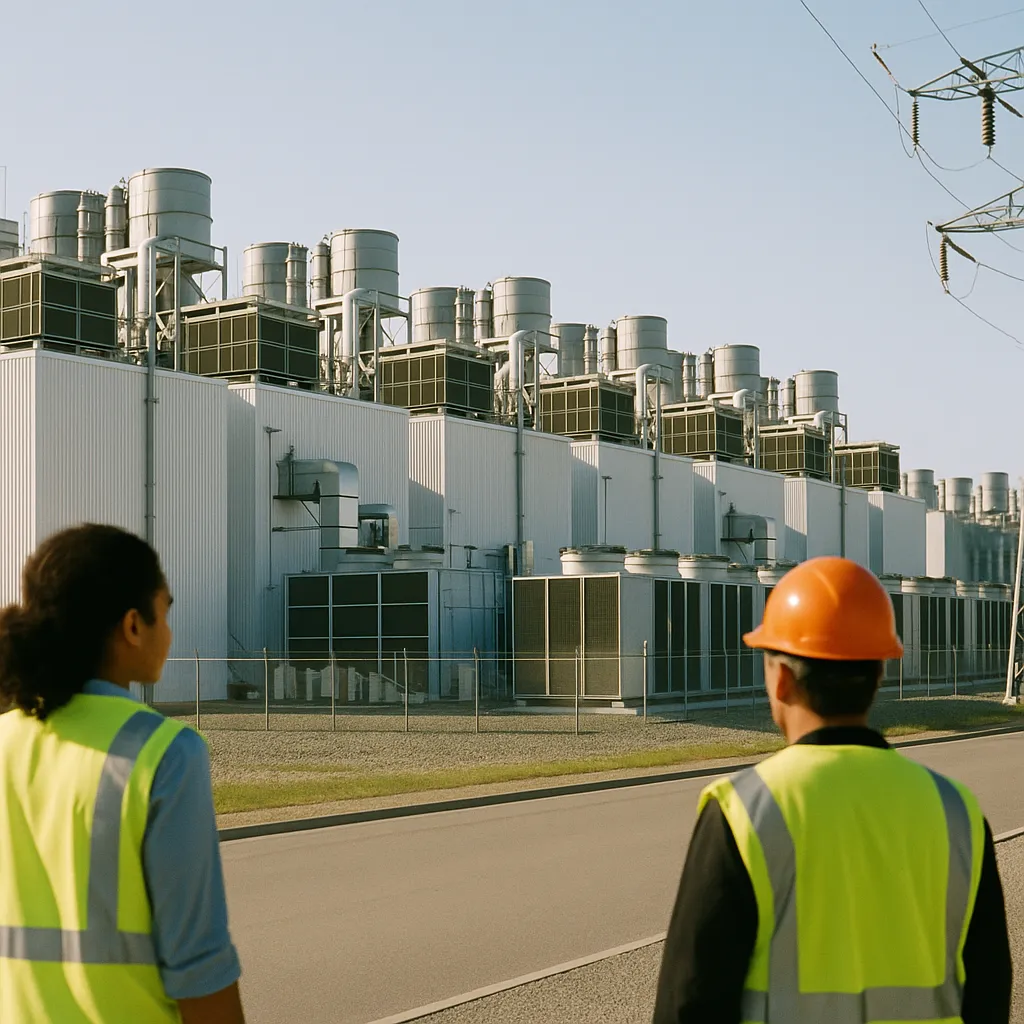
AI data centers are now adding electricity loads to the grid equivalent to mid-sized cities — in geographically concentrated clusters — and utility companies designed for gradual, predictable growth are scrambling to keep up. At the same time, the same AI buildout has become the single largest driver of new renewable energy procurement globally, according to new analysis published this week. The result is a paradox: AI is the biggest new source of carbon-heavy grid strain and simultaneously the biggest buyer of new clean energy capacity.
The Infrastructure Mismatch
Power grids were not designed for AI. The planning and build cycle for major transmission infrastructure runs 10 to 15 years. The build cycle for hyperscale AI data centers is running 12 to 36 months. When those two timelines collide, the grid loses — at least in the short term.
Utility planners who spent careers managing gradual, predictable load growth now face demand projections they filed with regulators two years ago that are already materially out of date. Actual demand in regions with AI data center concentration is running ahead of most models. One industry analyst described the situation as "a decade of load growth arriving in 18 months."
The Numbers
The new analysis quantifies what grid engineers have been managing in real time:
- AI data center clusters in Northern Virginia, Phoenix, Iowa, Dublin, and Singapore are individually adding loads equivalent to mid-sized cities in concentrated geographic zones
- Grid interconnection queues — the waiting lists for new power projects to connect to transmission infrastructure — have grown from manageable to multi-year backlogs in the heaviest-concentration regions
- Load forecast revisions are happening mid-cycle at multiple utilities, something that rarely occurred before 2023
- Renewable energy purchase agreements (PPAs) signed by AI companies — led by Microsoft, Google, Amazon, and Meta — are now the primary driver of new clean energy contracting globally
The PPA numbers are significant. AI companies have the balance sheets and long planning horizons to sign 20-year renewable energy contracts that smaller commercial buyers cannot. That financial strength is pulling forward solar and wind projects that might otherwise have waited years for a creditworthy buyer.
The Carbon Accounting Problem
The sustainability math is genuinely complicated, and the industry's PR on this topic is ahead of the underlying reality.
A hyperscale data center running on 100% renewable energy purchase agreements is not, in practice, running on 100% clean electricity. The grid mixes power from all generation sources simultaneously. The question of "additionality" — whether the renewable energy being purchased actually displaces fossil generation rather than just adding to an already-renewable bucket — is actively contested by environmental groups and energy economists.
What the data shows:
Get this in your inbox.
Daily AI intelligence. Free. No spam.
- AI data centers are large, net-new electricity consumers — they add to total grid demand, they don't replace existing demand
- The renewable energy they procure often comes online in different locations and timeframes than the data centers themselves
- Short-term, before renewable projects are built and connected, most AI data center power comes from the existing grid — which is not 100% clean anywhere in the United States
The honest framing is that AI companies are accelerating the clean energy build-out while simultaneously requiring more total energy. Whether the net effect is carbon-positive or carbon-negative depends on regional grid mix, PPA additionality, and timelines that vary significantly by location.
What This Means for Utilities
For electric utilities, the AI buildout is simultaneously a financial opportunity and an operational crisis.
The opportunity: Large, creditworthy customers signing long-term contracts are ideal utility customers. AI companies are willing to pay for dedicated infrastructure, fund grid upgrades, and commit to long-term agreements that reduce utility revenue risk.
The crisis: Delivering power to AI data centers requires infrastructure that takes years to permit, site, and build. Transmission lines face land acquisition and NIMBY opposition. Substation upgrades require equipment with 12-18 month lead times. The speed of data center deployment has no equivalent in utility construction timelines.
Several utilities in Virginia, Arizona, and Texas have publicly stated they are revising demand projections upward mid-cycle. The North American Electric Reliability Corporation (NERC) flagged AI-driven load growth as a grid reliability concern in its most recent annual assessment.
The Community Dimension
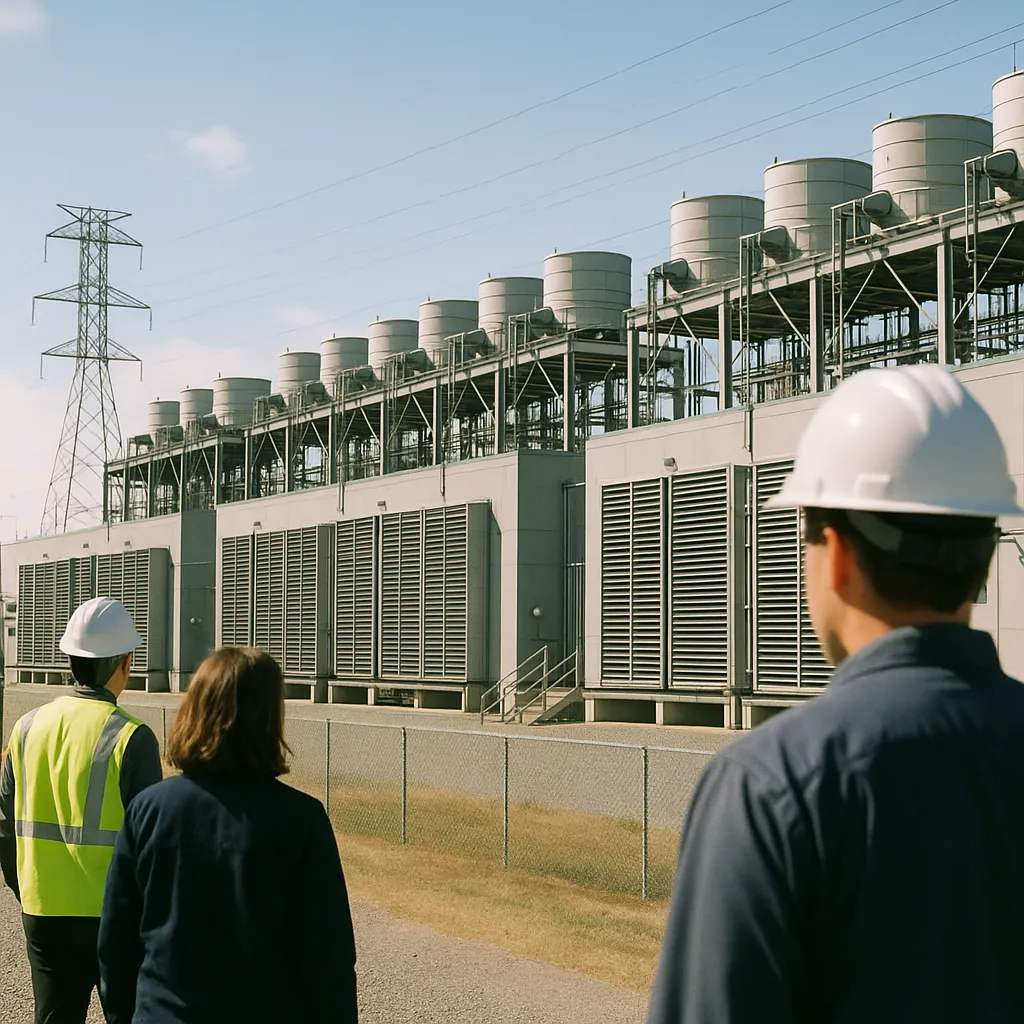
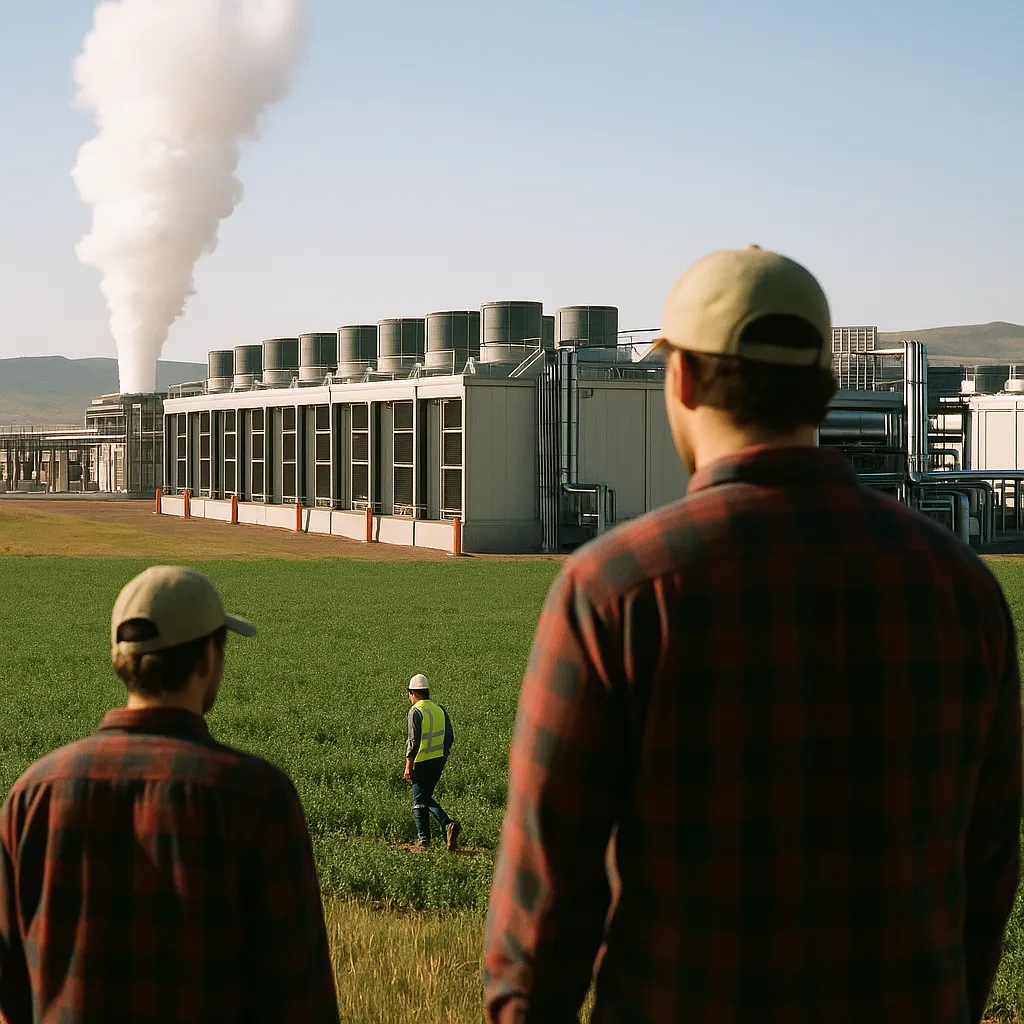
The geographic concentration of AI data centers creates local effects that don't register in macro energy statistics. Communities adjacent to major data center clusters are experiencing rapid grid upgrades — a practical benefit. They are also experiencing noise from cooling systems, concerns about water consumption (data centers use significant cooling water), and uncertainty about long-term property value impact.
The Redfin survey released this week found 47% of Americans oppose AI data center construction in their neighborhoods — a NIMBY dynamic that is increasingly shaping where the buildout can go. (More on that in a separate NexChron report.)
What to Watch
Two regulatory processes will determine how fast infrastructure can catch up to AI demand:
FERC transmission planning rules govern how grid infrastructure is planned, funded, and built across regional interconnections. Pending rulemakings could either accelerate or further complicate the interconnection queue problem.
DOE grid modernization funding under the Infrastructure Investment and Jobs Act is flowing toward transmission upgrades, but the pace of disbursement and project completion is slower than the pace of data center construction.
If interconnection queues don't clear — and there is no current evidence they will in the near term — AI data center construction will hit a hard power availability constraint regardless of how much capital is available to invest. The bottleneck is not money. It is permitted, interconnected megawatts. That problem has no fast solution.
Hector Herrera covers AI in energy and infrastructure for NexChron. Source: Science-Technology News, May 2026.
Did this help you understand AI better?
Your feedback helps us write more useful content.
Get tomorrow's AI briefing
Join readers who start their day with NexChron. Free, daily, no spam.