GPU-backed debt structures and hyperscale AI data center construction are straining commercial insurance markets with novel risk profiles that existing products weren't designed to cover.
AI Data Centers Are Growing Faster Than the Insurance Industry Can Price Them
By Hector Herrera | April 30, 2026
The AI data center boom is creating a stress test for commercial insurance markets that underwriters weren't designed for, according to reporting from CNBC. GPU-backed debt structures, hyperscale construction timelines, and novel operational risk profiles are combining to produce insurance exposure that existing products weren't built to cover — and the gap is growing as private capital floods into AI infrastructure faster than insurers can model it.
This is not a theoretical future problem. The AI infrastructure sector is already deploying capital at a pace that has outrun the actuarial frameworks governing how underwriters price risk. The consequences of that mismatch — inadequate coverage, uncovered losses, or mispriced premiums that collapse under a major incident — could ripple well beyond the data center industry.
Why AI Data Centers Are Different Risks
Commercial real estate, power plants, and traditional data centers have established insurance products built on decades of claims data and actuarial models. AI data centers break several of the assumptions those models were built on.
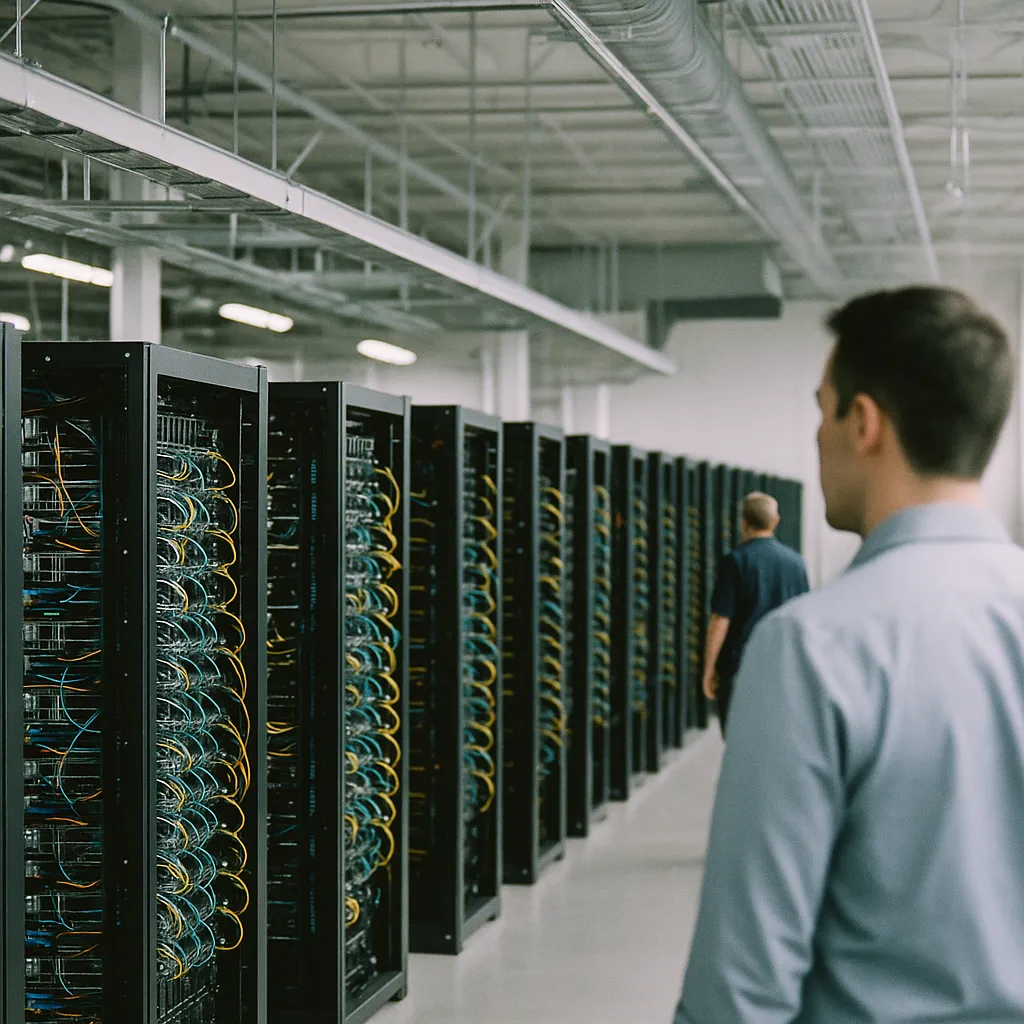
GPU concentration risk — a modern AI training cluster may contain $500 million or more in GPU hardware — primarily NVIDIA H100 or B200 chips — within a single facility. The supply chain concentration for these chips (TSMC fabricates them, NVIDIA designs them, a handful of partners package them) means that a major incident affecting one facility cannot be hedged by substituting from alternative supply quickly. Replacement timelines for high-end AI accelerators can run six months or longer. Existing "business interruption" insurance products weren't written to price a six-month GPU replacement cycle in a market where compute time is sold by the second.
Novel fire and thermal risk — high-density GPU clusters generate heat loads and fire risk profiles that differ materially from traditional server infrastructure. The power density in AI training racks — measured in kilowatts per rack — runs far higher than conventional data center equipment, creating cooling and fire suppression requirements that standard commercial property underwriting hasn't fully incorporated.
Get this in your inbox.
Daily AI intelligence. Free. No spam.
Catastrophic power failure scenarios — an AI training cluster that loses power mid-run can suffer both hardware damage and the complete loss of the training run itself — representing both physical asset loss and the computational value of weeks or months of AI training work. Pricing the loss of an in-progress AI model training run requires actuarial frameworks that don't yet exist at scale.
The Capital Is Moving Faster Than the Underwriting
Private capital flowing into AI infrastructure has accelerated deal velocity to a point where the underwriting process is struggling to keep pace. Hyperscalers — Microsoft, Google, Amazon, Meta — are committing to multi-billion-dollar data center builds on timelines measured in months. Private equity and infrastructure funds are racing to capture the AI compute market with build-to-lease facilities. The announced capital deployments dwarf the existing stock of built AI infrastructure.
The insurance market's response to fast-moving new asset classes has historically lagged deal velocity by several years, as actuaries accumulate loss data and underwriters develop pricing confidence. In the AI data center context, that lag is compressing against a deployment surge that is outpacing historical precedent.
The result: some large AI infrastructure deals are being closed with coverage gaps — either intentional self-insurance by well-capitalized operators, or unintentional gaps where operators believe they have coverage that insurance products don't actually provide under the specific loss scenarios that matter most.
The GPU-Backed Debt Problem
The CNBC reporting highlights a specific financing structure creating additional underwriting complexity: GPU-backed debt, where AI hardware assets are used as collateral for project financing. This is a newer structure in the infrastructure finance world, and it carries risks that traditional asset-backed lending frameworks weren't built to handle.
GPU values depreciate rapidly — NVIDIA releases new architectures on roughly annual cycles, and the market value of prior-generation hardware drops significantly with each release. A loan collateralized by H100 GPUs in 2025 may be backed by assets worth significantly less by 2026, particularly if NVIDIA's next-generation products have deployed at scale. Insurers asked to cover the underlying assets in GPU-backed debt structures are being asked to price a combination of physical risk and technology obsolescence risk that hasn't been packaged this way before.
What to Watch
The first major insurance loss event at an AI data center — a fire, flood, power failure, or catastrophic cooling system failure affecting a facility with high GPU density — will trigger an actuarial reckoning that reshapes how this sector is underwritten. Watch for specialty insurance markets (Lloyd's of London, in particular) to move first on developing AI infrastructure-specific products, as they have historically taken on novel risks ahead of traditional commercial carriers.
Also watch the emerging market for AI compute insurance: standalone products that cover the value of interrupted AI training runs as a separate insurable interest from the underlying hardware. If that product category matures, it will be a signal that the actuarial frameworks have caught up to the risk — and that AI infrastructure has become a fully institutionalized asset class.
Note: This article covers commercial insurance and financial risk. It does not constitute financial or investment advice.
Did this help you understand AI better?
Your feedback helps us write more useful content.
Get tomorrow's AI briefing
Join readers who start their day with NexChron. Free, daily, no spam.