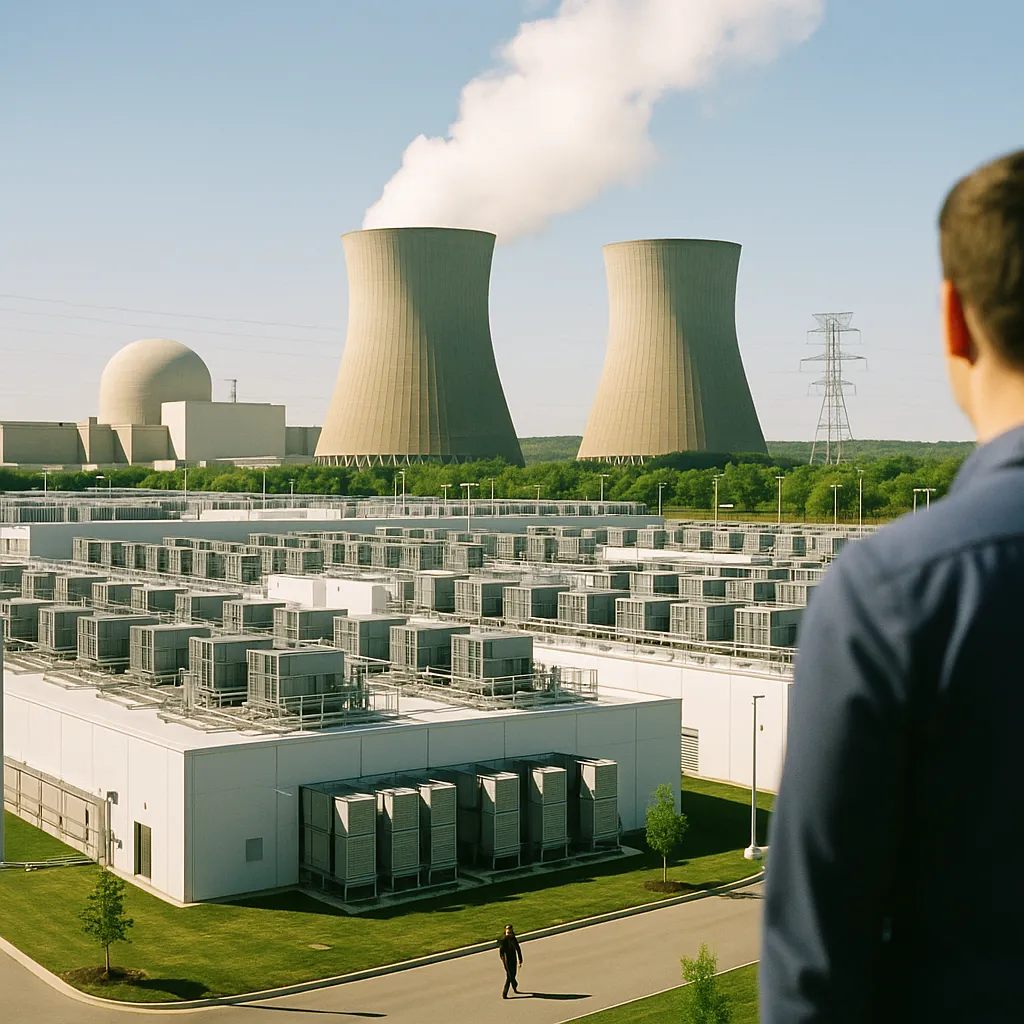
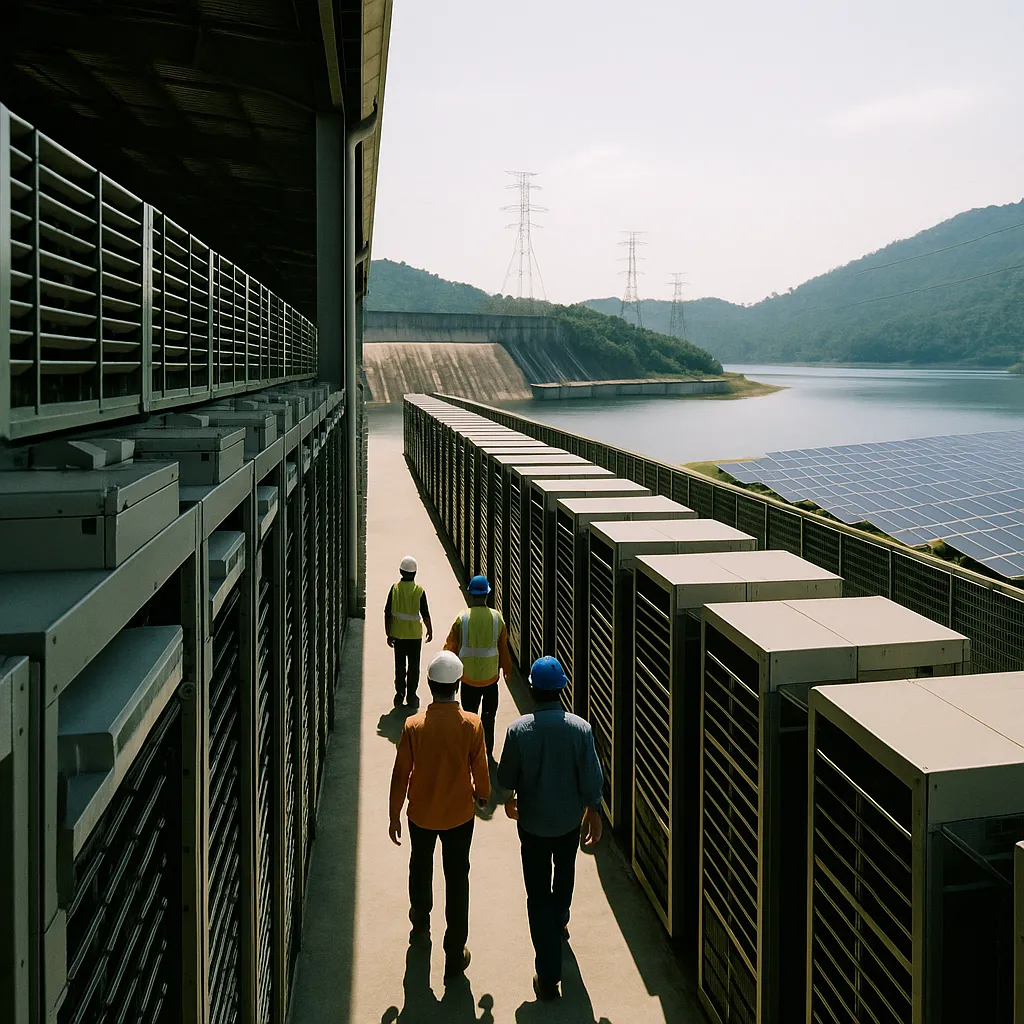
Renewable power sellers without integrated AI forecasting and storage scheduling are losing supply contracts to competitors who can guarantee predictable clean power delivery to AI data centers and industrial buyers.
Renewable energy sellers without integrated AI forecasting, storage scheduling, and transfer matching are losing supply contracts to competitors who can guarantee predictable clean power delivery, according to Digitimes analysis published October 7. What was a competitive advantage twelve months ago has become a baseline requirement — and operators who haven't built it are being filtered out of the most valuable contract processes.
Why predictability became the requirement. The surge in AI data center demand for clean energy changed what renewable power buyers need. A hyperscaler building a facility that consumes 200+ megawatts continuously cannot sign a supply agreement with a seller who can only commit to "we produce when conditions allow." Data center operators need delivery windows, load guarantees, and forecast fidelity far enough ahead to manage their own purchasing and power hedging. Without AI-assisted forecasting and storage optimization, renewable sellers cannot offer that.
What AI forecasting enables. Accurate AI-powered production forecasting — drawing on weather data, grid conditions, historical generation performance, and real-time sensor feeds — gives renewable sellers the ability to commit to delivery schedules that would be impossible to promise based on raw generation alone. When forecasting is combined with battery storage scheduling (charging during excess generation, discharging when demand exceeds supply), a solar farm or wind installation can behave much more like a dispatchable power plant. That is what large-scale buyers require.
The competitive split. Digitimes documents how this capability gap is sorting the market. Sellers with AI capability compete for premium, large-volume, long-term contracts. Those without compete for what remains — shorter contracts, more volatile pricing, buyers with less demanding delivery requirements. The bifurcation is compounding: winners in the premium segment build more capital, invest in more AI infrastructure, and attract the next large buyer. The gap widens.
Get this in your inbox.
Daily AI intelligence. Free. No spam.
The four-layer stack required. Building the AI capability to compete in this market means more than buying a software subscription:
- High-resolution sensor infrastructure at generation sites for real-time monitoring of production conditions
- Weather data integration with calibrated local models, not generic regional forecasts
- Storage management software that optimizes charge/discharge cycles against price signals and delivery commitments simultaneously
- Grid integration tools that match actual production to committed transfer schedules in real time
This represents a significant capital and operational commitment for sellers who were previously focused entirely on building generation capacity, not data infrastructure.
The energy-AI feedback loop. There is a reinforcing dynamic here that is easy to miss: AI data center demand is driving the shift toward renewables, and the same AI capability driving that demand is now the prerequisite for supplying it. The companies building AI infrastructure are structurally reshaping the energy market they buy from — without intending to, and without necessarily understanding the downstream effects on smaller operators.
What this means for the energy transition. The renewable energy transition has always faced the intermittency problem: solar and wind generate on nature's schedule. AI forecasting and storage optimization is the technology layer that begins to close the gap commercially. As the tools improve and storage costs fall, more renewable sellers will meet the new threshold. But in the near term, sellers who invested in AI infrastructure first are capturing the most valuable contracts — and those contracts are funding their next investments.
What to watch. How quickly affordable AI forecasting and storage optimization tools reach smaller renewable operators, and whether grid operators begin requiring demonstrated AI forecasting capability as part of interconnection agreements or supply contracts.
Did this help you understand AI better?
Your feedback helps us write more useful content.
Get tomorrow's AI briefing
Join readers who start their day with NexChron. Free, daily, no spam.