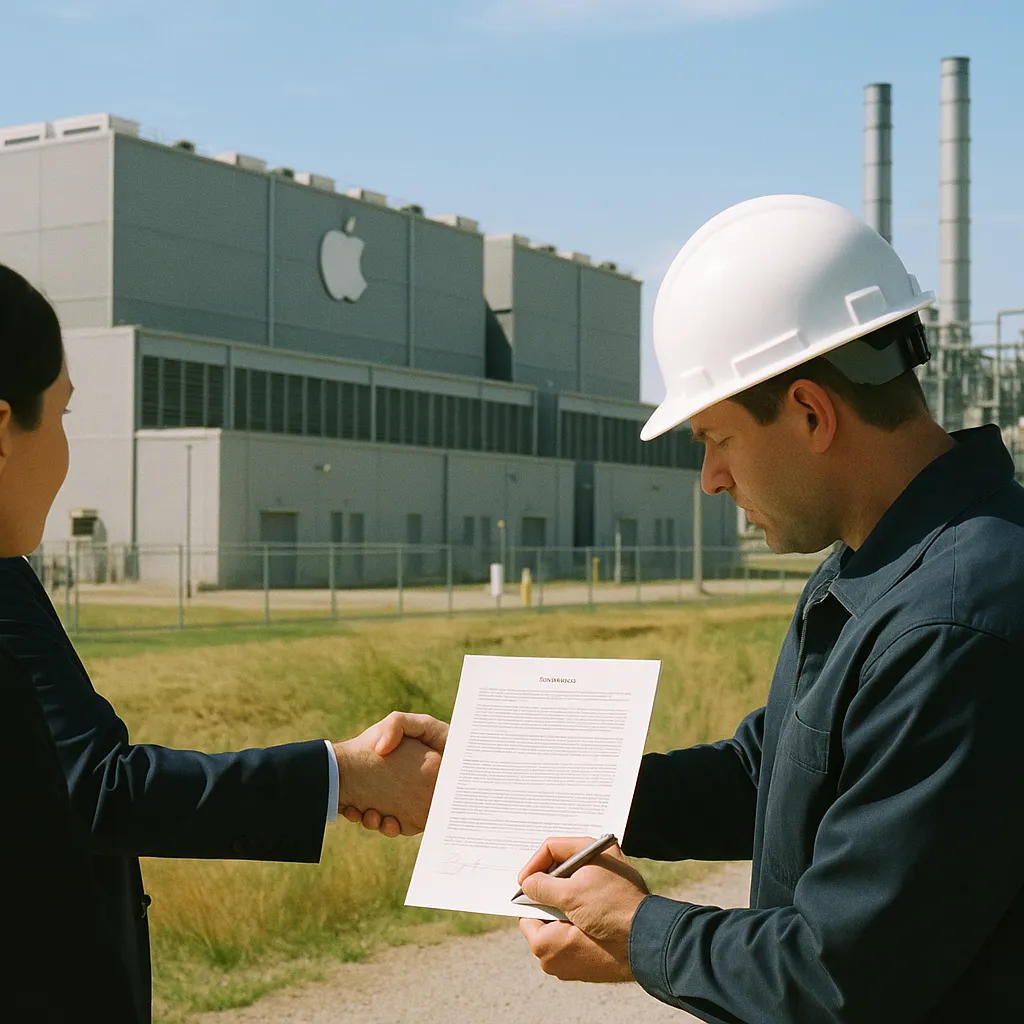
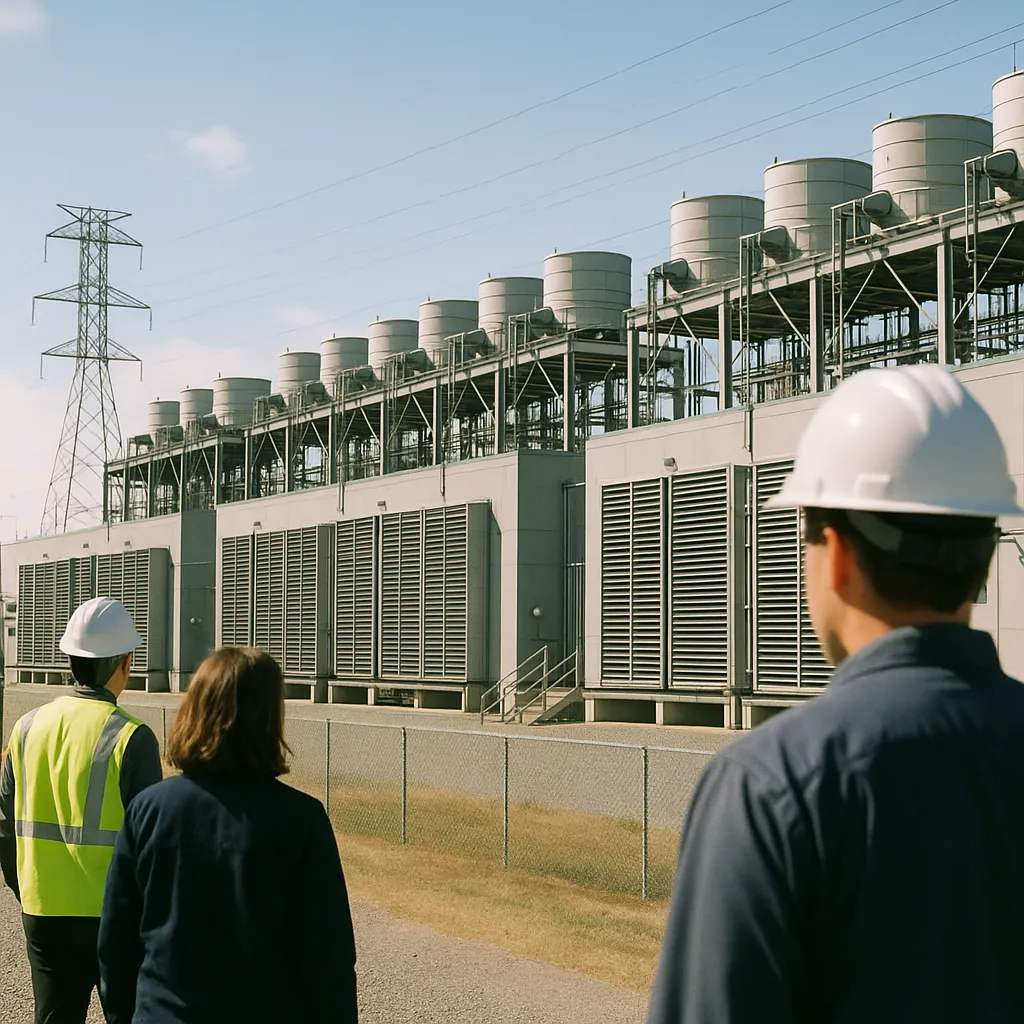
Google signed a 3.6-gigawatt power agreement with Constellation Energy — the largest deal on the PJM grid — with nuclear accounting for 25% of supply to power AI data centers starting in 2028.
Google has signed a 3.6-gigawatt (GW) power purchase agreement with Constellation Energy — the largest deal ever executed on the PJM Interconnection grid — to feed its AI data centers with a mix of nuclear, wind, and solar power. The deal is a direct bet that nuclear power is the only energy source that can match the around-the-clock demand profile of large-scale AI infrastructure.
The Scale of the Deal
CNBC reported the agreement is structured as a long-term power purchase agreement (PPA) — a contract where a buyer commits to purchasing a set amount of power at a fixed price, giving the generator enough revenue certainty to justify new investment.
Key figures:
- Total capacity: 3.6 GW — equivalent to roughly three large nuclear reactors running at full output
- Nuclear share: ~25% of total supply (approximately 900 MW)
- New Constellation investment triggered: $4.3 billion to uprate 11 nuclear reactors
- States covered: Illinois, Pennsylvania, and New Jersey
- First delivery: Expected 2028
- Grid: PJM Interconnection, the largest wholesale electricity market in the world, serving 13 states and Washington D.C.
Background
The AI industry's energy problem is structural. Data centers running large language models (LLMs) — the neural networks that power tools like Google Gemini, ChatGPT, and Claude — need electricity 24 hours a day, seven days a week. Solar and wind generate power intermittently; storage technology at grid scale remains expensive. Nuclear power generates continuous, carbon-free electricity at high density, which makes it the most direct match for AI's demand profile.
Google has been an active buyer of clean energy for over a decade, but its previous agreements focused mainly on wind and solar. The explicit inclusion of nuclear capacity in a flagship deal marks a strategic shift. Constellation Energy is the largest nuclear fleet operator in the United States, with 21 reactors across 12 plants.
Get this in your inbox.
Daily AI intelligence. Free. No spam.
The "Uprate" Strategy
The $4.3 billion in new investment goes toward uprating existing reactors — a process that increases a plant's licensed power output by upgrading equipment like steam generators, turbines, and fuel configurations. Uprates typically add 1-20% output to an existing reactor without the decade-long permitting timeline required to build a new one.
This approach is faster and cheaper than new construction, and it uses proven infrastructure. For Constellation, Google's long-term purchase commitment is the revenue guarantee needed to justify the capital expenditure.
Impact
For the energy sector: A 3.6 GW, $4.3 billion nuclear deal from a single buyer signals that Big Tech is willing to directly finance nuclear capacity additions. That's a structural change in how nuclear plants — historically dependent on regulated utility rates — find capital.
For AI companies: Every major AI lab and cloud provider faces the same data center power constraint Google is solving here. Expect Microsoft (which has already signed nuclear deals with Constellation), Amazon, and Meta to accelerate similar agreements. The PPA template Google is using will likely become the industry standard.
For grid reliability: PJM has been flagging capacity shortfalls as coal plants retire faster than new generation comes online. A 3.6 GW addition to the PJM grid — even if contractually earmarked for Google — adds generation that improves overall grid stability for everyone in the region.
For Constellation Energy: The deal reinforces the company's strategy of selling directly to large industrial buyers rather than relying solely on regulated utility contracts. Its stock has been one of the top performers in the S&P 500 over the past two years as that strategy gained traction.
What to Watch
The 2028 first-delivery date means this deal's real-world impact is two years out. In the interim, watch for whether Google's agreement triggers a wave of competitive nuclear PPAs from other AI hyperscalers — and whether the NRC (Nuclear Regulatory Commission) uprate approval pipeline can handle the volume. Regulatory bottlenecks, not capital, may become the binding constraint on nuclear's AI-era expansion.
Did this help you understand AI better?
Your feedback helps us write more useful content.
Get tomorrow's AI briefing
Join readers who start their day with NexChron. Free, daily, no spam.