AI grid management tools are cutting operating reserve costs by up to 15% and dramatically reducing renewable curtailment — as aging infrastructure buckles under AI data center demand and accelerating electrification.
AI Cuts Grid Reserve Costs 15%, Tames Curtailment
By Hector Herrera | June 8, 2026 | Energy | Vertical Article
TL;DR
- AI grid management tools are cutting operating reserve costs by up to 15% — real savings for utilities and ratepayers.
- Renewable curtailment (deliberately wasting generated clean energy when the grid cannot absorb it) is falling as AI coordinates supply and demand in real time.
- The stakes are high: two simultaneous forces — AI data center power demand and broad electrification — are pushing aging U.S. grid infrastructure to its limits.
AI-powered grid management is delivering measurable results where grid operators need them most: cutting the cost of keeping backup power on standby and reducing the amount of clean energy that gets thrown away before it can reach anyone. These are not pilot-program numbers — grid operators across the country are now treating AI as an essential management layer, not an optional optimization experiment.
The timing is not coincidental. The U.S. power grid is absorbing stress from two directions at once, and the traditional tools for balancing supply and demand are no longer keeping pace.
Why the Grid Is Under Strain
The U.S. electric grid was designed and built over decades for a relatively predictable world: demand grew slowly, generation was mostly dispatchable (meaning operators could turn it up or down on command), and the biggest shocks were weather events. That world no longer exists.
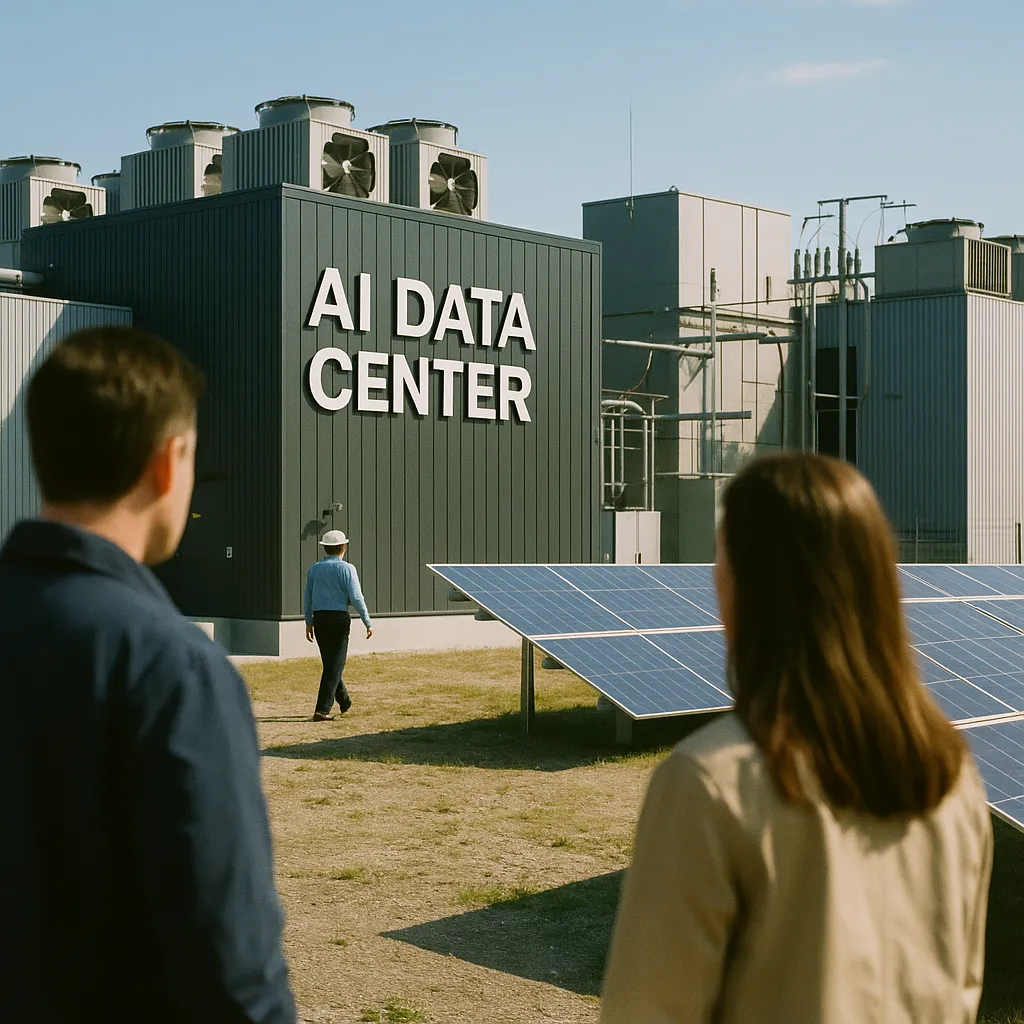
AI data centers are adding load to the grid at a pace that has no historical precedent. A single large-scale AI training and inference facility can consume 100 to 500 megawatts — the equivalent of a small city. Dozens of these facilities are under construction or in permitting simultaneously, and they run at high utilization around the clock, which makes them particularly difficult to accommodate on a grid designed for variable demand.
At the same time, electrification is accelerating. Electric vehicles, heat pumps replacing gas furnaces, industrial processes moving from fossil fuels to electricity — all of these add load that is often lumpy and hard to predict. A cold snap in a region that recently electrified heating looks very different to grid operators than it did five years ago.
The generation side is shifting just as fast. Solar and wind are being built at record rates, which is good for emissions but challenging for grid balance. They produce power when the sun shines or the wind blows, not necessarily when demand peaks. That mismatch creates two expensive problems that AI is now being deployed to solve.
The Two Problems: Reserves and Curtailment
Operating reserves are extra generation capacity that grid operators must keep on standby at all times — power plants that are running or ready to run within seconds or minutes, held in reserve to cover unexpected demand spikes or sudden supply failures. Think of it as the grid's buffer. That buffer is expensive: plants held in reserve are burning fuel or sitting idle while being paid to be ready. In large grid regions, reserve costs run into billions of dollars annually.
Renewable curtailment is the opposite problem: too much generation, not enough grid capacity to absorb it. When solar production surges midday in a region with limited transmission to move that power elsewhere, operators instruct generators to shut down — wasting clean energy that cost money to build and produces no emissions to generate. Curtailment is growing as more renewable capacity comes online faster than transmission and storage infrastructure can keep up. In California alone, curtailment has exceeded millions of megawatt-hours in recent years, representing both an economic loss for developers and a real carbon opportunity cost.
AI addresses both problems through the same mechanism: much faster and more accurate prediction of what the grid needs, moment to moment.
Get this in your inbox.
Daily AI intelligence. Free. No spam.
How the AI Systems Work
Traditional grid management relies on forecasting models that project load and generation hours or days in advance, with operators making manual adjustments as conditions change. These models work reasonably well in stable conditions. They struggle with the speed and complexity of a grid that now integrates thousands of variable-generation sources, flexible industrial loads, and real-time pricing signals.
AI grid management systems operate differently across three interlocking functions:
Real-time synchronization of generation and consumption. Machine learning models continuously ingest data from sensors, weather feeds, market signals, and historical patterns to predict minute-by-minute imbalances before they happen. When an AI system can see a solar ramp-down coming 20 minutes out with high confidence, operators can pre-position reserves and adjust dispatch schedules rather than reacting after the fact.
Grid stress pattern analysis. AI systems identify congestion patterns — bottlenecks in the transmission network where power cannot flow freely — before they become emergencies. This allows operators to reroute power flows proactively, reducing the frequency of emergency interventions that are both expensive and damaging to grid equipment.
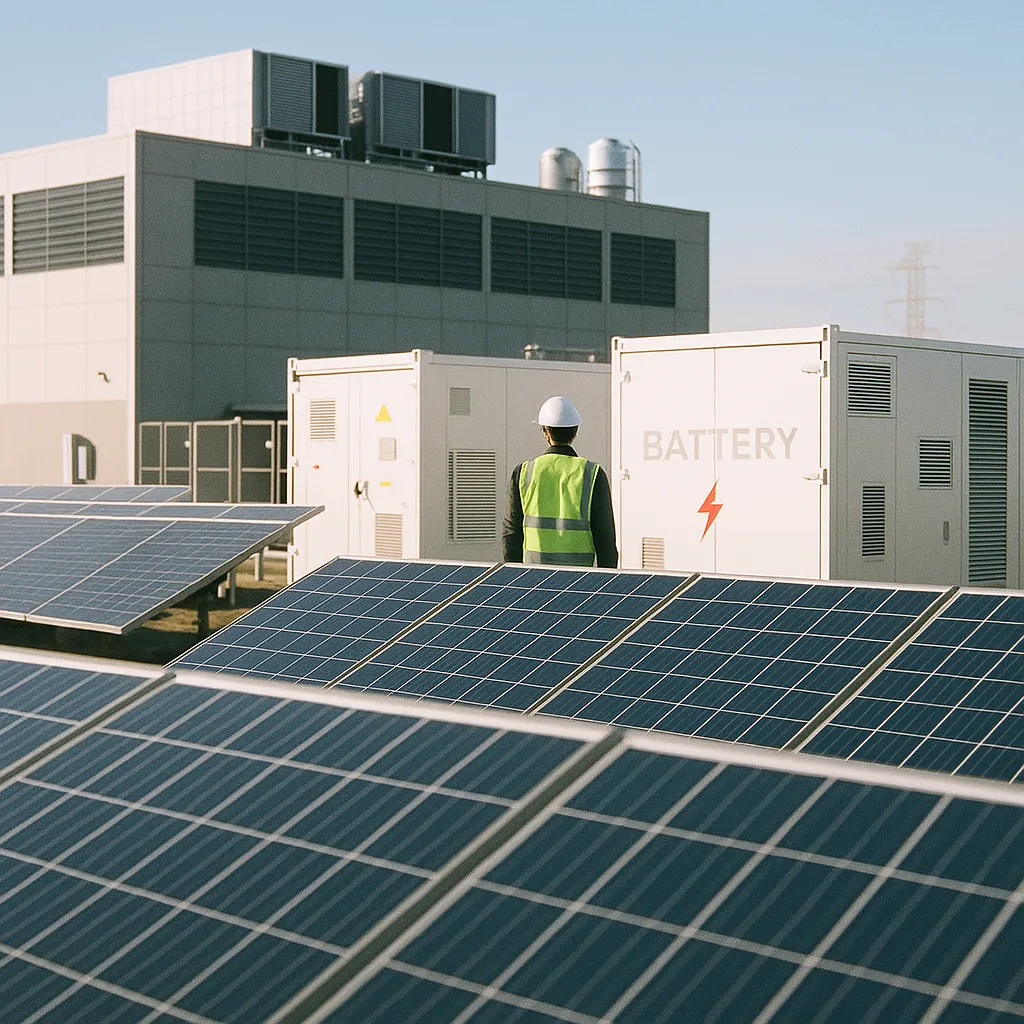
Curtailment minimization. By accurately predicting when and where renewable generation will exceed local absorption capacity, AI systems can coordinate demand response (asking large industrial users to shift load to periods of surplus generation), direct power to storage assets, and optimize transmission scheduling to move excess power to regions where it is needed. The result is that more of the clean energy that gets generated actually reaches consumers.
The 15% reduction in operating reserve costs documented by grid operators reflects a compounding of these effects. Smaller reserve margins are defensible when the AI system can predict grid state with enough accuracy that operators are not flying blind. That predictive confidence is the core value proposition.
The Impact
For ratepayers: Reserve costs are passed through to electricity bills. A 15% reduction in reserve costs translates to real, if modest, bill savings — and prevents the cost increases that would otherwise accompany the massive new load being added to the grid. The more significant benefit may be avoided reliability failures, which carry economic costs far exceeding the cost of the reserves themselves.
For renewable energy developers: Curtailment is an existential economic problem. A solar or wind project that gets curtailed 20% of its potential output earns 20% less revenue than modeled, which breaks project financing in some cases and reduces returns in all of them. AI-driven curtailment reduction directly improves the economics of renewable development, which matters for the pace of the clean energy transition.
For utilities: AI grid management reduces operational costs and improves reliability metrics — both of which affect regulatory relationships, rate cases, and capital investment decisions. Utilities that demonstrate AI-driven efficiency gains are better positioned in rate proceedings, where regulators balance ratepayer protection against utility return on equity.
For AI data center operators: This is less obvious but consequential. Data centers need reliable, low-cost power. They are often located in regions where grid stress is highest, because that is where transmission infrastructure exists. AI grid management tools that reduce the cost and volatility of grid operation make those locations more viable for continued data center expansion. The same AI that data centers strain the grid to run is, indirectly, helping the grid handle the strain.
What to Watch
Federal grid investment. The Infrastructure Investment and Jobs Act allocated roughly $65 billion for grid modernization, including transmission expansion and grid management technology. How quickly those funds move through permitting and deployment will determine whether AI grid management tools have the underlying infrastructure they need to work effectively.
AI-managed microgrids. The next frontier is not just AI management of the bulk power system but AI-coordinated microgrids — localized grids serving campuses, military bases, or communities that can island from the main grid during emergencies. Several utilities and the Department of Energy are funding pilots. If AI-managed microgrids prove reliable, they become a resilience solution for exactly the kind of extreme weather events that stress the bulk grid most.
Regulatory frameworks for AI in grid operations. The Federal Energy Regulatory Commission (FERC) and state public utility commissions are still developing frameworks for how AI decision-making fits into grid operations. Operators need clarity on liability — if an AI system makes a dispatch decision that contributes to an outage, who is responsible? These questions are not yet answered, and the answers will shape how aggressively utilities deploy AI in mission-critical grid functions.
The grid's fundamental challenge — absorbing massive new load while integrating massive new renewable generation — does not have a purely hardware solution on the timelines that matter. AI grid management is not a replacement for new wires and transformers, but it is buying time and reducing costs while that infrastructure gets built. That is exactly what the grid needs right now.
Source: Power Magazine — AI-Powered Grid Management: Reducing Renewable Electricity Curtailment
Did this help you understand AI better?
Your feedback helps us write more useful content.
Get tomorrow's AI briefing
Join readers who start their day with NexChron. Free, daily, no spam.