Solar PV accounted for 83% of all new electricity generation capacity added globally in 2025, and for the first time, renewables surpassed coal in total global electricity generation. The challenge now isn't building clean energy — it's using it efficiently.
Solar Topped 83% of New Power Capacity in 2025. AI Is Now the Key to Actually Using It.
By Hector Herrera | June 5, 2026 | Energy
Solar PV accounted for 83% of all new electricity generation capacity added globally in 2025 — and for the first time in recorded history, renewables surpassed coal in total global electricity generation. The build-out phase of the energy transition is working. The harder problem now is using all that clean energy efficiently, and RatedPower's [2026 Global](/finance/cambridge-2026-ai-financial-services-report) Renewable Energy Trends Report identifies AI as the central enabling technology — while being direct that storage constraints and grid bottlenecks are still the primary barriers between current capacity and a fully functional clean grid.
This isn't a projection. It's a measurement of where the energy system already stands, and the numbers represent a structural shift that will define grid economics and infrastructure investment for the next decade.
What the Numbers Say
793 GW of new electricity capacity was added globally in 2025, with solar PV accounting for 83% of that total. To put that in context: 793 GW is roughly equivalent to adding three times Germany's entire current generating capacity in a single year — almost entirely from panels.
The generation milestone is harder to overstate. Renewables (solar, wind, hydro, and other clean sources combined) surpassed coal as a share of global electricity generation for the first time. Coal's share had been declining for years; 2025 is the year it dropped below the renewable aggregate. That is a structural inflection point, not a single-year anomaly.
Wind contributed the majority of remaining new capacity after solar, though the report notes that wind additions slowed in several key markets due to permitting delays and supply chain constraints for large turbine components — a friction point that doesn't affect solar to the same degree.
Where AI Fits In
Adding capacity is the tractable part of the energy transition. Managing that capacity on a real-time grid is the hard part — and it's where AI has become operationally essential.
The RatedPower report identifies three areas where AI is already deployed at meaningful scale by grid operators:
Get this in your inbox.
Daily AI intelligence. Free. No spam.
Grid balancing. Solar and wind generation varies with weather and time of day. Matching variable supply to variable demand requires continuous real-time adjustment at a speed and granularity that human operators cannot sustain. AI forecasting models — trained on historical generation data, weather patterns, and demand signals — now run these predictions as standard infrastructure in advanced grid markets.
Curtailment reduction. Curtailment means forcing generators to dump renewable energy because the grid can't absorb it — a waste of clean capacity that erodes the economics of renewable projects. AI-optimized routing and demand-shaping have demonstrably reduced curtailment rates in California, Germany, and China, where the problem is most acute due to generation capacity outpacing transmission infrastructure.
Demand response. The single highest-value AI application identified in the report is AI-optimized demand response — systems that dynamically shift large industrial and commercial loads (data centers, EV charging, HVAC systems, industrial processes) to align with periods of high renewable output and low grid stress. The report projects this is the highest-return intervention available to grid operators in the next 36 months, and the case is based on measured results from current deployments, not modeling.
The Barriers That Remain
The report doesn't oversell the transition. Two structural problems still constrain how much of the renewable build-out can be fully utilized:
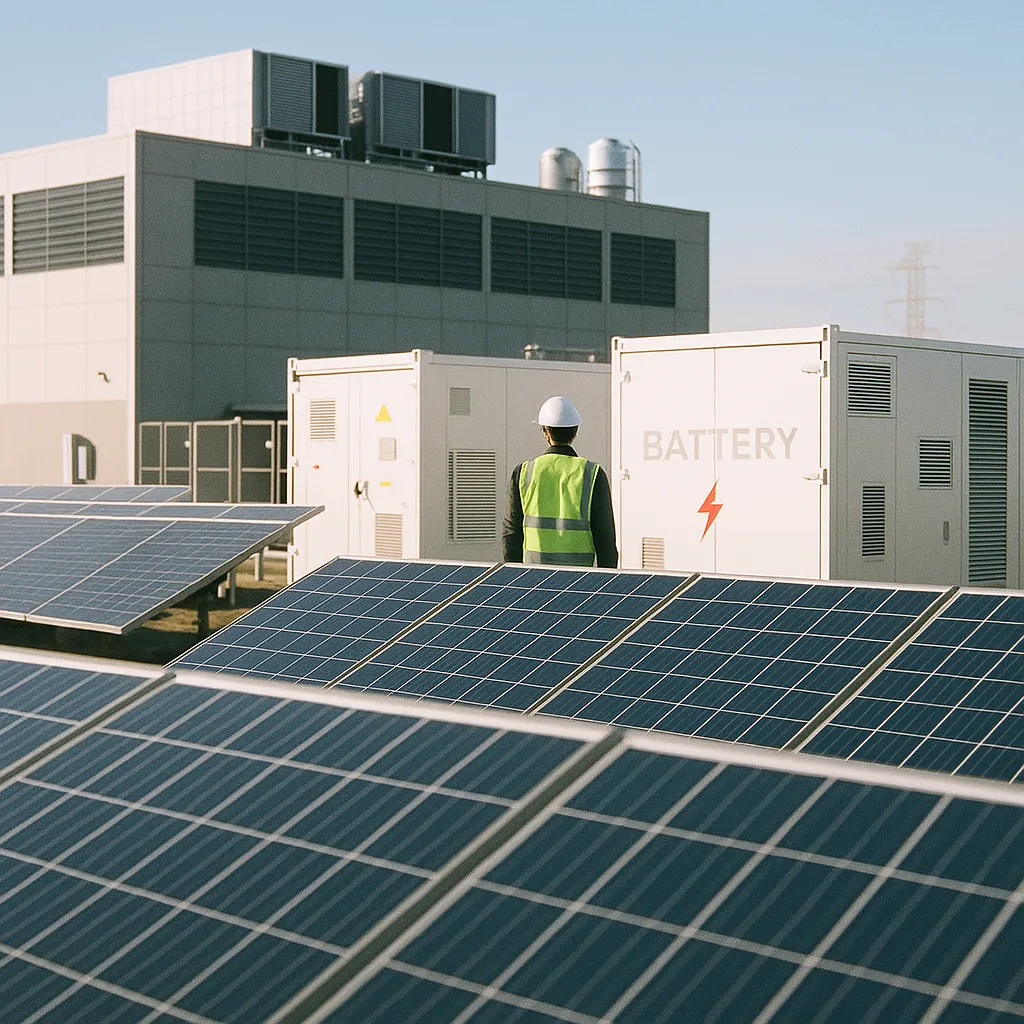
Storage. Battery storage capacity — primarily grid-scale lithium-ion — is growing rapidly but remains insufficient to cover extended periods of low solar and wind output across large grid regions. The economics of long-duration storage (anything beyond 8-12 hours) remain challenging without significant policy support or very specific site conditions. Until that changes, the grid cannot rely entirely on variable renewables during extended weather-driven lulls.
Transmission. The grid infrastructure connecting new renewable generation to demand centers was largely built for a fossil-fuel-based system, with generation near demand. Solar and wind are built where sun and wind exist — often far from cities. Permitting new transmission lines is slow, expensive, and politically contentious in most markets. AI can optimize what the grid has; it cannot substitute for physical infrastructure the grid lacks.
What This Means for Energy Investors and Operators
For project developers, the report reinforces that solar remains the dominant deployment technology — and that co-locating battery storage and investing in grid interconnection studies is now a commercial prerequisite, not an afterthought. Projects without a storage or demand-response component face increasing curtailment risk as grid interconnection queues grow.
For grid operators, the RatedPower analysis is essentially a prioritization guide: AI-optimized demand response delivers the highest return on investment available in the near term, and the evidence base is now built on measured commercial outcomes rather than projections.
For policymakers, the message is structural: the clean energy build-out is proceeding faster than the grid infrastructure needed to absorb it. The bottleneck has shifted from generation to transmission and storage, and both require policy intervention that technology alone cannot provide.
What to Watch
The report expects accelerating AI deployment across grid management globally through 2027, driven by the economics of curtailment reduction and the falling cost of AI infrastructure. The near-term policy pressure point is transmission permitting reform — the technical solutions exist across multiple markets; the political solutions remain contested in most of them.
The number to track: How much of the renewable capacity added in 2026 comes online with co-located storage. That figure, more than any other single metric, will indicate whether the grid is building toward resilience or compounding the curtailment problem with more panels on an infrastructure that can't absorb them.
Did this help you understand AI better?
Your feedback helps us write more useful content.
Get tomorrow's AI briefing
Join readers who start their day with NexChron. Free, daily, no spam.