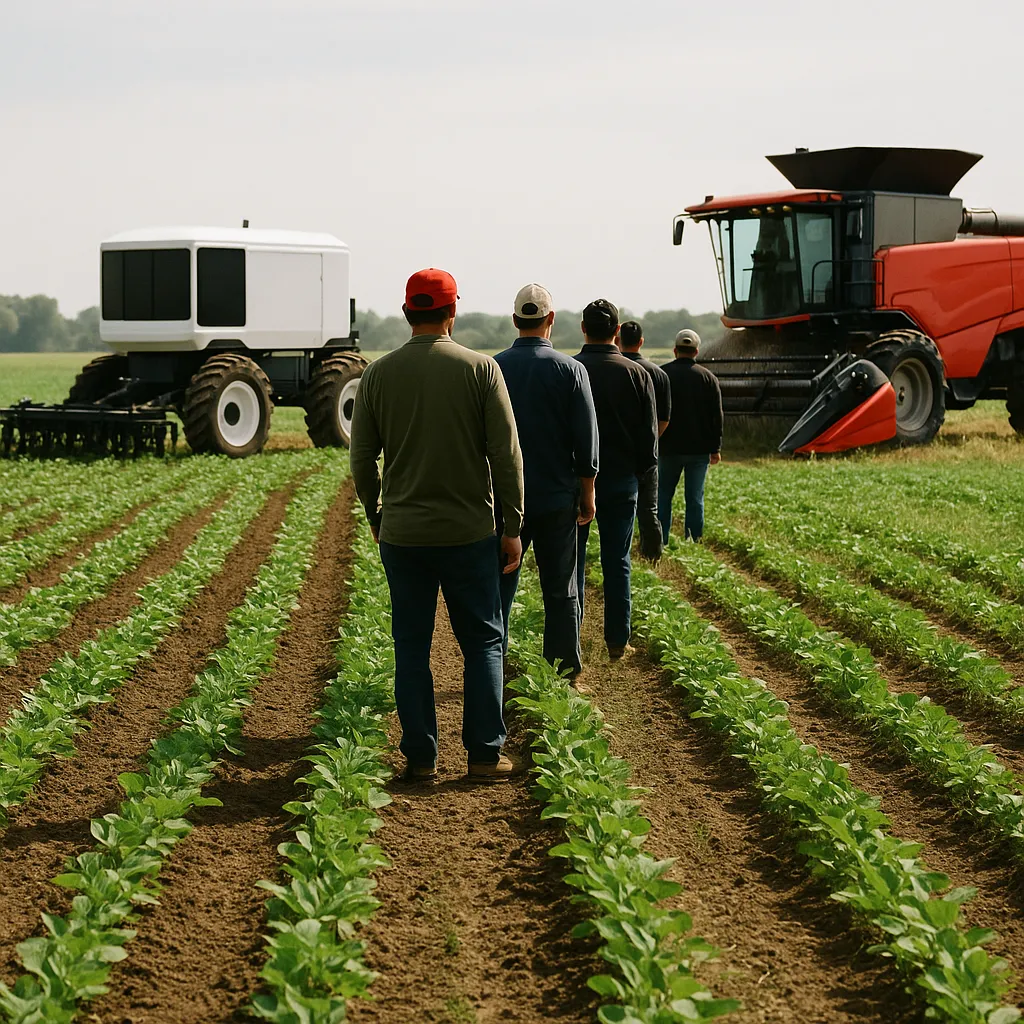
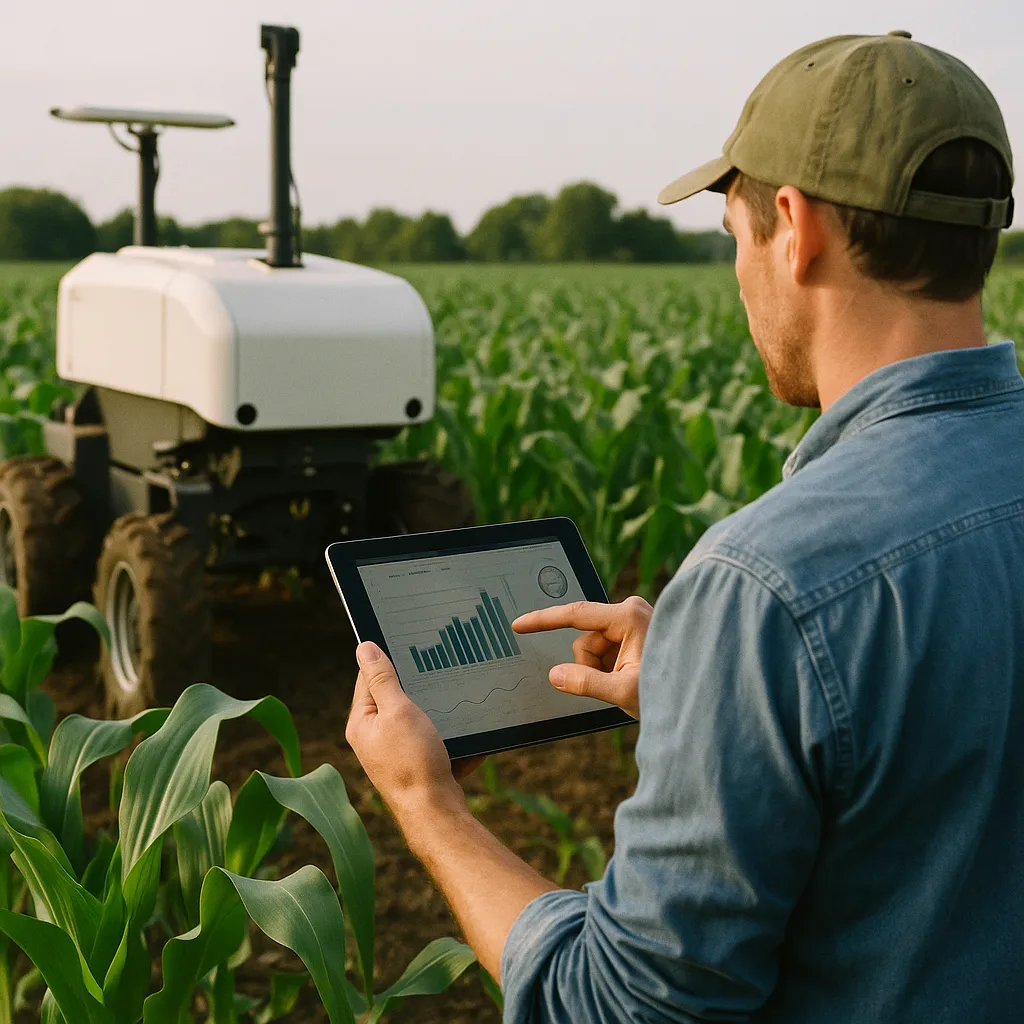
FarmBot Tech launched a voice-first AI platform on October 25, letting small farm operators ask questions about their own operational data in plain English — the first accessibility-first ag AI platform.
FarmBot Tech launched the first version of its voice-first AI platform on October 25, allowing small farm operators to ask questions about their own farm's operations aloud in plain English and receive answers drawn from their own data. The platform represents a direct attempt to close the technology gap between enterprise precision agriculture and the smaller, non-technical farms that have been largely left behind by software built primarily for large operations.
For the precision agriculture industry, this is a notable design departure. Most ag AI is built for scale: platforms that process satellite imagery, sensor arrays, and real-time market data require significant technical expertise, infrastructure investment, and often enterprise contracts. FarmBot Tech's bet is that voice removes enough friction to change who can access AI-driven farm insights — and that the small-farm market is large enough to justify building for it specifically.
How the Platform Works
According to Foreign Policy Journal, FarmBot Tech's platform allows farm operators to speak naturally and receive answers about their specific operation. Example queries: "How did my corn yield this year compare to last year?" or "Which of my fields had the best return per acre this season?" or "When was the last time I applied nitrogen to the south field?"
The system draws on the farm's own operational records — yield histories, expense logs, input costs, field notes — rather than generic agricultural databases. This is the core design choice that distinguishes it from asking a general AI assistant a farming question: the answers are personalized to the individual operation's actual data.
Voice-first means the interface is built around spoken queries rather than a keyboard and screen. The target user is a farmer who may spend most of the day outdoors or in equipment cabs, not sitting at a desk with a browser open. The interaction pattern is closer to asking a knowledgeable employee a question than to running a software report. That framing is deliberate: the company is designing for how small farm operators actually work, not for how enterprise software buyers expect software to work.
The Accessibility Gap in Ag Tech
Precision agriculture software has delivered measurable value for the farms that can adopt it. Yield optimization, variable-rate application, predictive maintenance, and soil health modeling have all demonstrated return on investment in large-scale operations. But adoption has been deeply uneven across farm size.
Get this in your inbox.
Daily AI intelligence. Free. No spam.
USDA data consistently shows that technology adoption in US agriculture is strongly correlated with farm size. Operations over 1,000 acres have adoption rates for precision agriculture tools three to five times higher than farms under 100 acres. The barriers are financial — enterprise software is expensive — but also technical: complex platforms require expertise that many farm operators don't have and don't want to acquire. A small-farm operator running a few hundred acres doesn't have an IT department or a precision ag specialist on staff.
FarmBot Tech's thesis is that voice eliminates enough friction to change the adoption math. If an operator doesn't need to learn a new software interface, navigate dashboards, or interpret charts — if they can simply ask a question and get an answer — the barrier to using AI farm tools drops significantly. The question is whether that reduction in friction is sufficient to drive adoption in a market that has historically been skeptical of ag tech promises.
What "Early Version" Means in Practice
FarmBot Tech launched an early version of the platform, which means current capabilities are limited and will expand. Early-stage agriculture AI platforms typically start with historical record queries — "what happened?" — before adding predictive and prescriptive capability — "what should I do?" and "when?" FarmBot's current scope appears focused on making existing farm records queryable in natural language. That's valuable on its own but represents a fraction of what a mature precision ag platform provides.
The company hasn't announced funding details or disclosed its pilot user base size. At this stage, the platform is best understood as a credible proof of concept with a clearly defined thesis — voice-first, accessibility-first, built for non-enterprise operations — rather than a fully mature commercial product.
Why the Small-Farm Market Matters
There are approximately 3.4 million farms in the United States. The USDA classifies roughly 2 million of them as small family farms with gross cash farm income under $350,000 per year. These operations grow a significant portion of the country's specialty crops, fruits, vegetables, and regional food system output. They are also the farms that have been most systematically underserved by the precision agriculture industry.
If the voice-first approach actually lowers the adoption barrier — if small farm operators start using AI insights they previously couldn't access — it opens a market that the precision ag industry has largely treated as not worth targeting. That's a large addressable market if the accessibility thesis is validated in the field.
The competitive question is how the established precision agriculture platforms respond. Granular, Climate Corporation, and Trimble Agriculture all have the technical capability to build voice interfaces. The question is whether they treat FarmBot Tech's approach as validation of an underserved market — and build for it — or continue focusing product development on their existing large-farm customer base.
What to Watch
FarmBot Tech's next product announcement will signal whether the platform is expanding into predictive recommendations — what to plant, when to apply inputs, where to invest — or staying in the historical-query lane for now. The predictive layer is where the most significant farm value is created; getting there requires both better data integration and a more complex model.
Also watch USDA adoption data in 2027 — specifically whether small-farm technology adoption rates show any movement. If voice-first AI tools are genuinely closing the access gap, it should show up in the data. If adoption numbers stay flat despite new platforms entering the market, it suggests the barriers are more structural than interface-level friction alone.
Did this help you understand AI better?
Your feedback helps us write more useful content.
Get tomorrow's AI briefing
Join readers who start their day with NexChron. Free, daily, no spam.