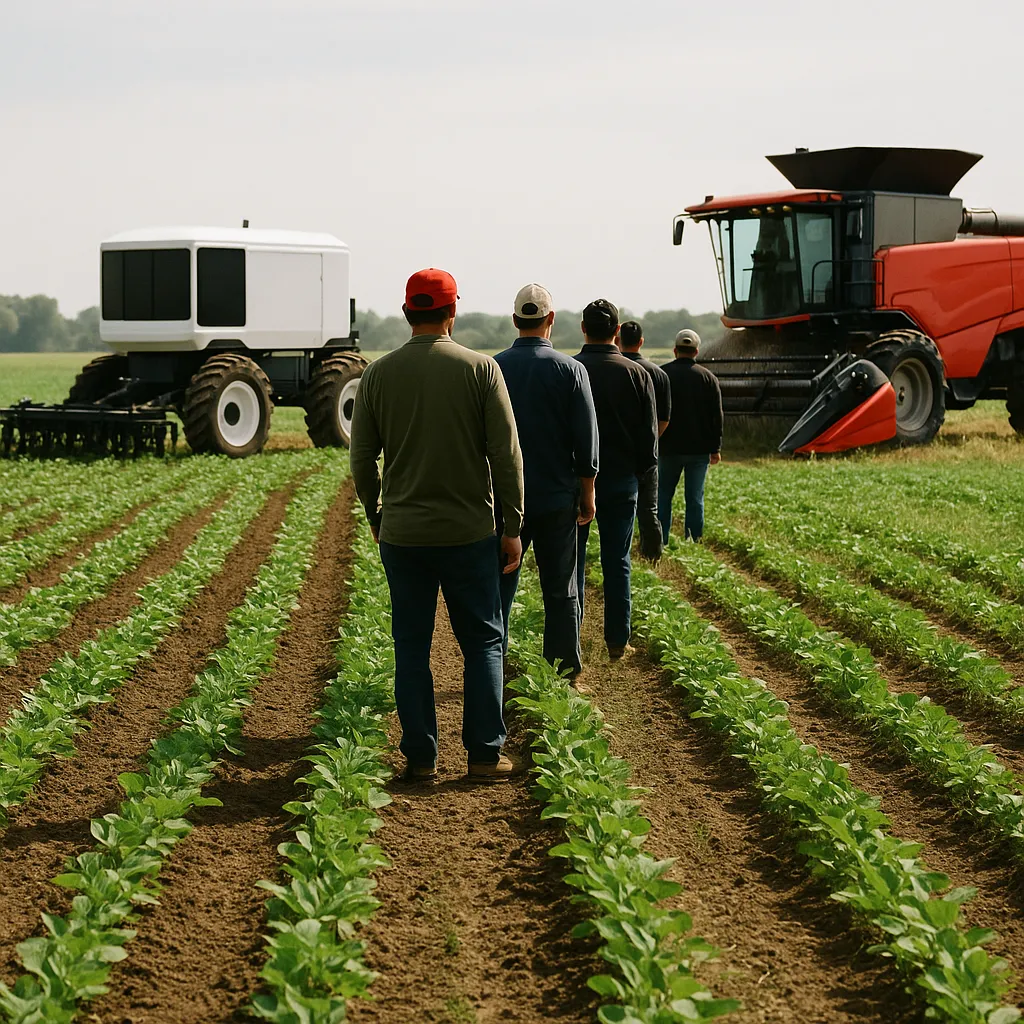
Niqo Robotics launched the F50, an AI precision weeding robot with a 46-foot working width — the widest in its class — bringing herbicide-free weed control to commodity-scale corn and soy operations.
Niqo Robotics has launched the F50, an AI-powered precision weeding robot with a 46-foot working width — the widest in its class — targeting large-scale corn and soy operations where the economics of mechanical and chemical weed control are increasingly unfavorable.
The F50 matters because precision weeding at commodity crop scale has been the missing piece in agricultural AI robotics. Most AI weeding hardware launched in the past four years has targeted specialty crops: strawberries, lettuce, vineyards — high-value acreage where the per-unit economics justify narrow, slower machines. Row crop commodity agriculture — the 90 million acres of corn and 87 million acres of soybeans planted in the U.S. annually — requires coverage rates competitive with conventional equipment. At 46 feet wide, the F50 is built to compete on those terms.
How the F50 works
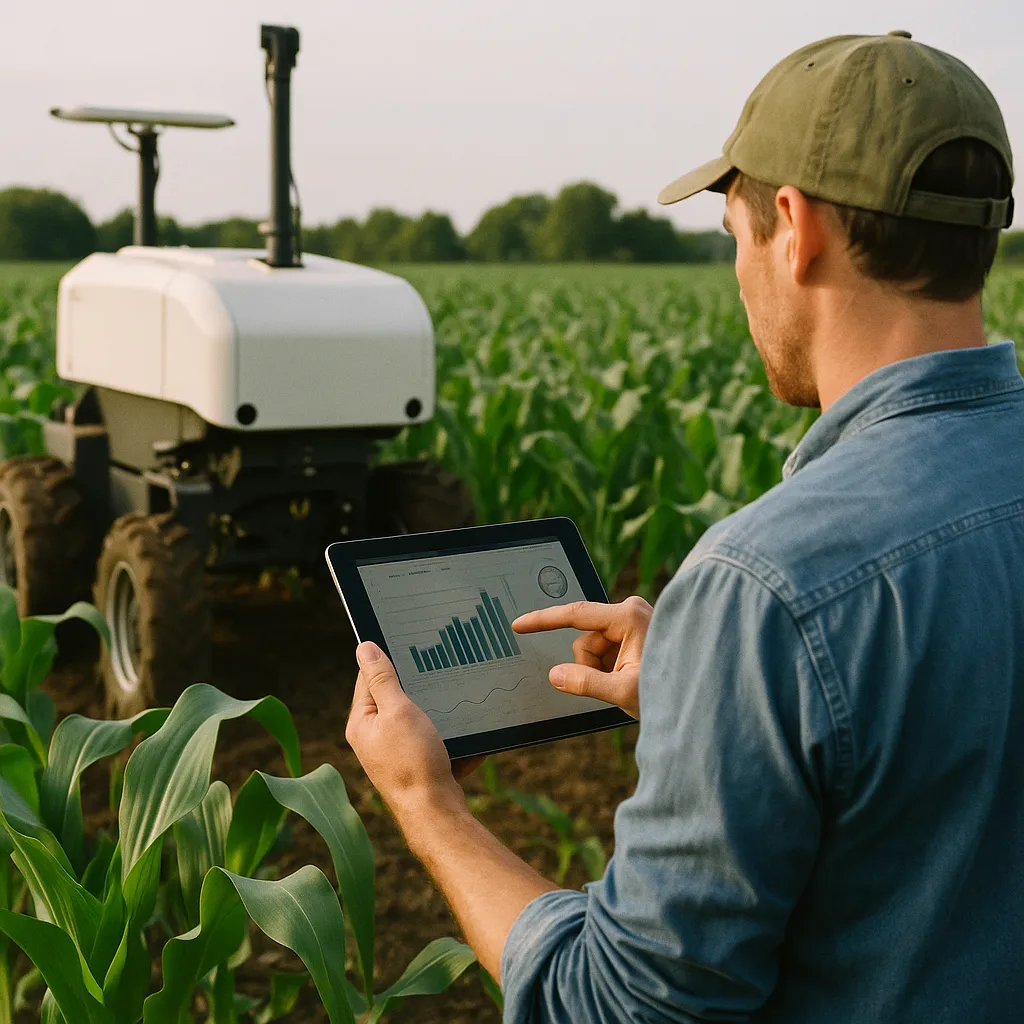
According to [Precision Farming](/agriculture/precision-ag-rural-broadband-gap-fba) Dealer, the F50 uses real-time computer vision and onboard AI inference to identify and eliminate weeds at the root while leaving crop plants untouched. The system operates without herbicides, cutting weed material mechanically at speeds Niqo says are competitive with conventional cultivation equipment.
The AI model distinguishes between crop and weed plants at field speed — differentiating corn seedlings from broadleaf weeds or grass, for example, at a pass rate fast enough to keep up with a tractor moving at field-standard speeds. The inference runs on onboard compute rather than a cloud connection, meaning the system operates in areas with no cellular coverage, which covers a significant portion of the corn belt.
The economics driving adoption
Get this in your inbox.
Daily AI intelligence. Free. No spam.
Herbicide-resistant weeds are an accelerating problem in commodity agriculture. Waterhemp, Palmer amaranth, and marestail — the three most problematic species in Midwest corn and soy systems — have developed resistance to glyphosate, ALS inhibitors, and in some populations, multiple herbicide modes of action. Farmers who relied on chemical programs are now layering more expensive herbicide packages on top of each other to achieve control, with diminishing efficacy and rising input costs.
Mechanical weed control eliminates the resistance evolution problem entirely — a weed can't become resistant to being cut. The barrier has always been speed and scale. Narrow robots that travel two miles per hour can work specialty crop rows. They cannot cover a 2,000-acre corn farm economically.
At 46 feet wide and competitive travel speeds, the F50's economics change the calculation. Niqo hasn't published cost-per-acre figures for the F50, but the benchmark it needs to compete against is a pass of a cultivator plus a herbicide application — currently running $25 to $45 per acre depending on product mix and resistance pressures.
Where the market is heading
The F50 follows a pattern visible across agricultural AI hardware in 2026: platforms that launched at smaller scale in specialty crops are pushing into commodity scale with second- and third-generation machines. John Deere's See & Spray, Carbon Robotics' LaserWeeder, and now Niqo's F50 are all targeting the same transition — from proof-of-concept on high-value acres to commercial-scale deployment on commodity acres.
The inflection point for widespread adoption will be whether the machines can demonstrate total cost of weed control below the chemical alternative on a per-acre basis, including capital cost amortization. At the volumes where commodity grain farmers operate, small per-acre differences in input cost compound to large absolute figures. A $5/acre saving across 3,000 acres is $15,000 annually — real money in a business where corn margin per acre can be $30 in a good year.
What to watch
Niqo hasn't published availability dates, pricing, or financing terms for the F50. Early commercial deployments in the 2027 planting season — covering corn and soy in Illinois, Iowa, Indiana, and Ohio — will be the first real test of whether the machine's claimed speed and accuracy hold up in diverse field conditions across a full growing season.
Independent agronomic testing comparing weed control efficacy and total cost per acre against conventional chemical programs will be the deciding metric for large-scale farm buyers.
Did this help you understand AI better?
Your feedback helps us write more useful content.
Get tomorrow's AI briefing
Join readers who start their day with NexChron. Free, daily, no spam.