Global precision agriculture is on track to nearly double to $17.29 billion by 2031, with AI-powered variable-rate tools and drone sensing displacing broad smart-farming platforms that failed to prove per-acre returns.
Precision Agriculture Market Doubles to $17 Billion by 2031 as Investors Demand Per-Acre ROI
The global precision agriculture market will nearly double from $9.5 billion in 2025 to $17.29 billion by 2031, growing at a 10.5% annual rate, according to a market forecast released September 28. The growth story has shifted: money is no longer flowing into broad "smart farming" platforms — it is moving toward narrow AI tools that show measurable returns on each acre.
The Numbers
- 2025 market size: $9.5 billion globally
- 2031 projected size: $17.29 billion
- Growth rate: 10.5% compound annual growth rate (CAGR)
- Primary drivers: AI-powered variable-rate application, drone remote sensing, AI decision support tools
A 10.5% CAGR is roughly twice the pace of global agricultural output growth, meaning farmers and their suppliers are spending an increasing share of input costs on data and automation rather than on traditional inputs alone.
What Precision Agriculture Actually Is
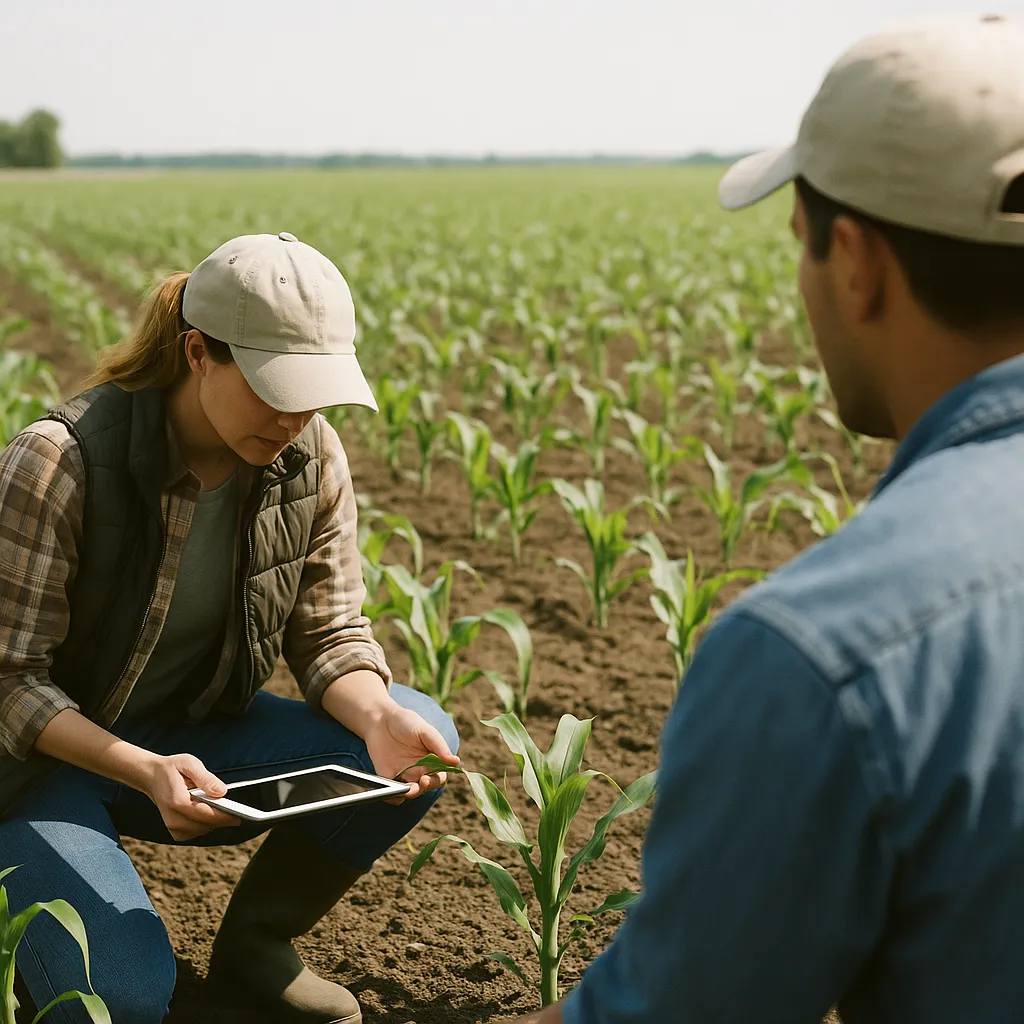
Precision agriculture uses sensors, drones, satellite imagery, and AI-powered analytics to optimize farming decisions at the field or plant level. Variable-rate application (VRA) — letting equipment apply different amounts of seed, fertilizer, or pesticide at each GPS coordinate based on AI-generated prescription maps — is the most commercially deployed AI technique in the sector today. Field trials consistently show 10 to 20 percent input cost reductions with equivalent or better yields when VRA replaces uniform application across a field.
Three Forces Driving Growth
Get this in your inbox.
Daily AI intelligence. Free. No spam.
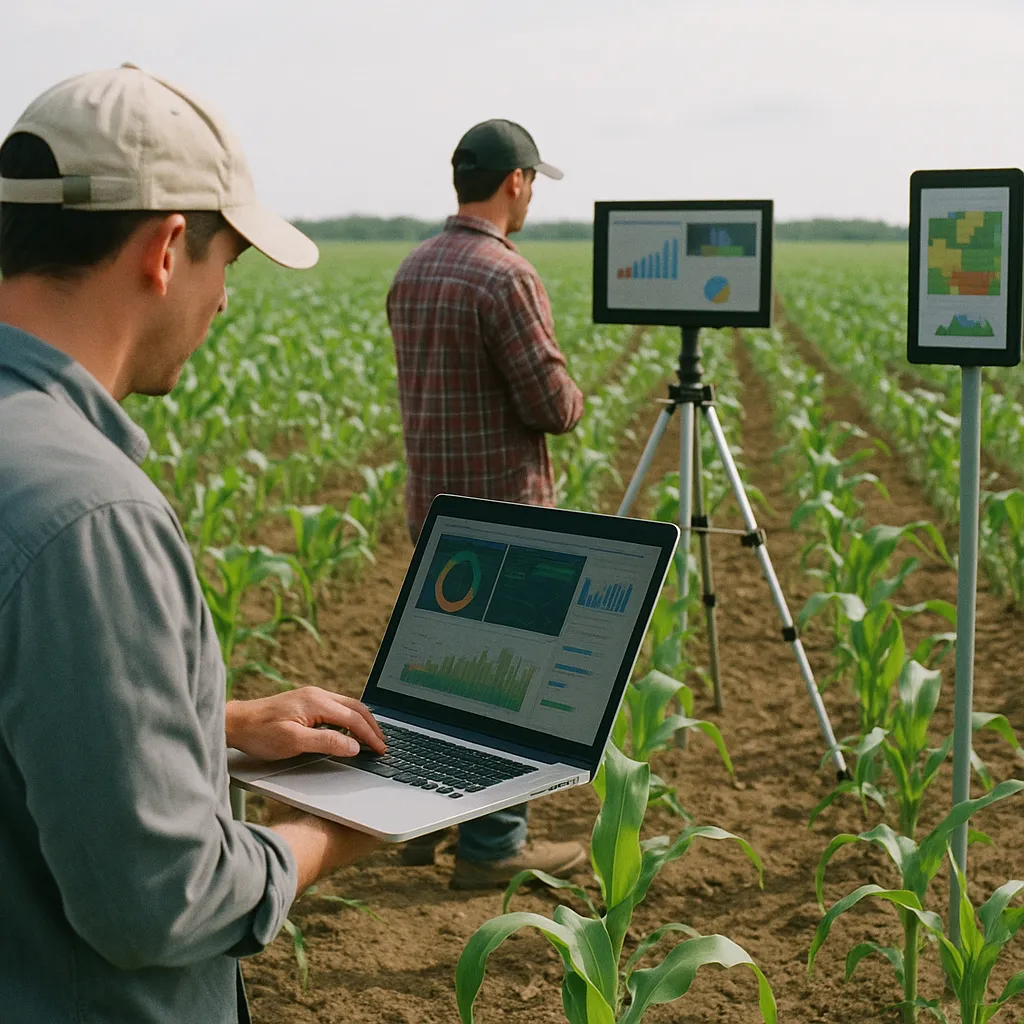
1. AI-powered variable-rate application at scale. VRA systems have crossed from research pilot to standard commercial practice for large row-crop operations. The AI models behind them are trained on soil samples, historical yield data, and satellite imagery — outputs that have become cheaper to collect and process every year. What required a specialist agronomist and a custom software contract five years ago can now be run on standardized platforms at a cost per acre that pencils out for farms above roughly 500 acres.
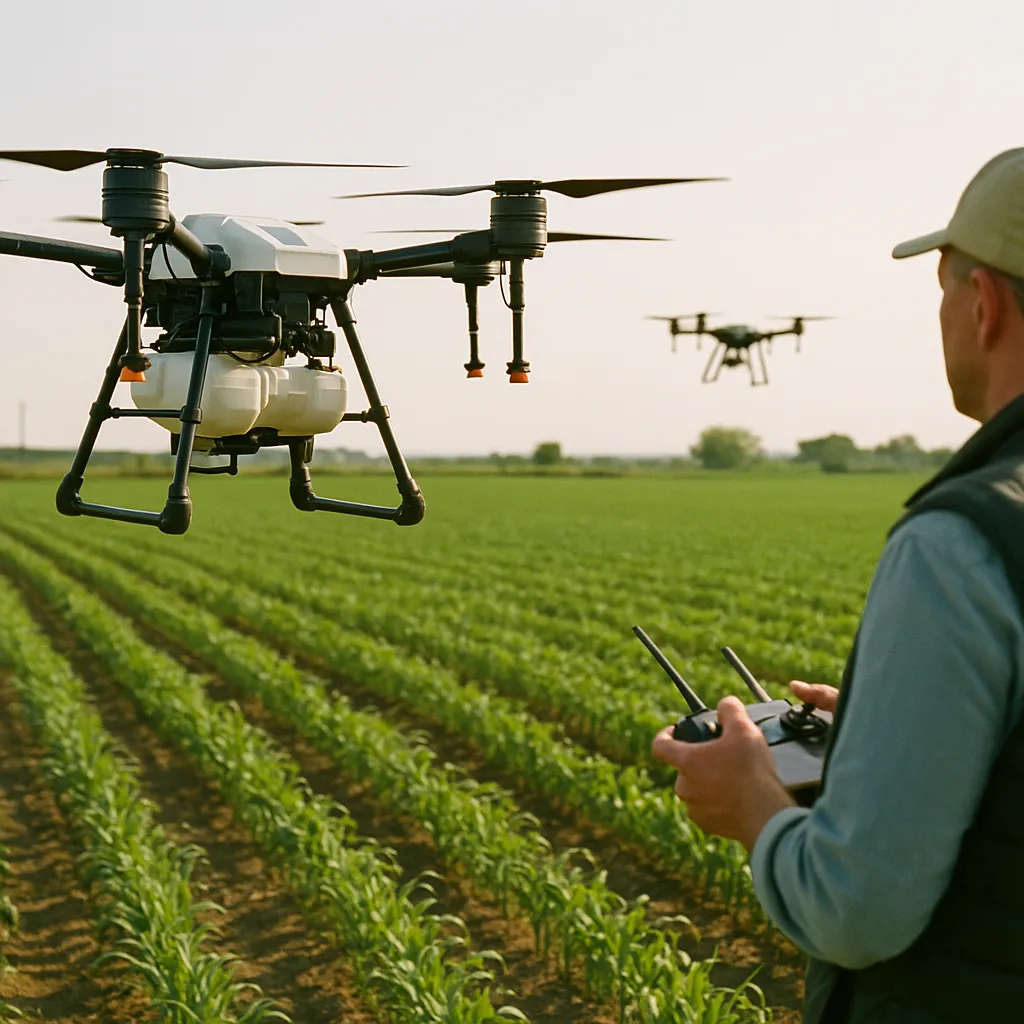
2. Drone remote sensing moving faster than expected. Agricultural drone fleets now generate plant-level health data — identifying disease, nutrient deficiency, and irrigation stress — at a per-acre cost that was commercially unviable before 2022. AI image recognition models have matured to the point where early detection happens before crop damage is visible to the human eye, allowing interventions that were previously impossible.
3. Investor discipline forcing market maturity. The venture capital and private equity money that once flowed into broad "digital farming platform" plays has shifted toward specific, deployable AI tools with documented per-acre economics. School district-style procurement — buyers demanding measurable outcome data before signing contracts — has arrived in agtech. That shift is uncomfortable for early-stage companies still building toward product-market fit, but it accelerates commercialization of tools that actually work.
What This Means
For farmers, the practical implication is that AI-powered precision tools are now available at commercial scale rather than as aspirational technology. The gap between what large grain operations and smaller farms can access is narrowing as input costs for these tools fall.
For agtech startups, the investor shift toward ROI accountability changes the fundraising landscape. Generic "AI for farming" pitches without third-party performance data are no longer competitive. The companies growing into the $17 billion market will be those that can show cost-per-acre improvements verified by independent agronomic trials.
For equipment manufacturers, the forecast creates pressure to accelerate AI software subscription revenue. John Deere's Operations Center, AGCO's Fuse platform, and CNH Industrial's AFS Connect all have the distribution scale to capture a large share of this market — if they move faster than standalone AI vendors building direct-to-farm sales channels.
What to Watch
The key market structure question for 2027 is whether consolidation accelerates around OEM-led platforms or remains fragmented across specialist vendors. A John Deere or AGCO acquisition of a leading AI crop-monitoring company would signal the former. A continued proliferation of well-funded specialist startups landing direct contracts with agricultural cooperatives would signal the latter. The answer will define who actually captures the growth in the forecast.
Did this help you understand AI better?
Your feedback helps us write more useful content.
Get tomorrow's AI briefing
Join readers who start their day with NexChron. Free, daily, no spam.