Three AI-driven precision agriculture technologies hit commercial deployment in September 2026. Satellite crop mapping, autonomous sprayers, and AI yield models are operating on real farms — and mainstream investment is following.
Three AI-driven precision agriculture technologies reached genuine commercial deployment in September 2026 — not pilots, not advanced trials, but revenue-generating production systems operating on real farms. After nearly a decade of perpetual "almost ready," the farm AI sector crossed a threshold last month.
That transition changes the investment calculus. When AI tools deliver measurable ROI on actual acreage, mainstream adoption follows. The question is no longer whether AI can outperform traditional methods in controlled conditions. It's whether the surrounding infrastructure — insurance, regulation, data policy — can move fast enough to support it.
Three Technologies That Crossed the Line
According to an October 2026 sector recap from Ag Navigator, three distinct AI-driven capabilities made the leap from test environments to commercial operations last month:
Satellite AI Crop Mapping Reaches West Africa's Smallholder Farms
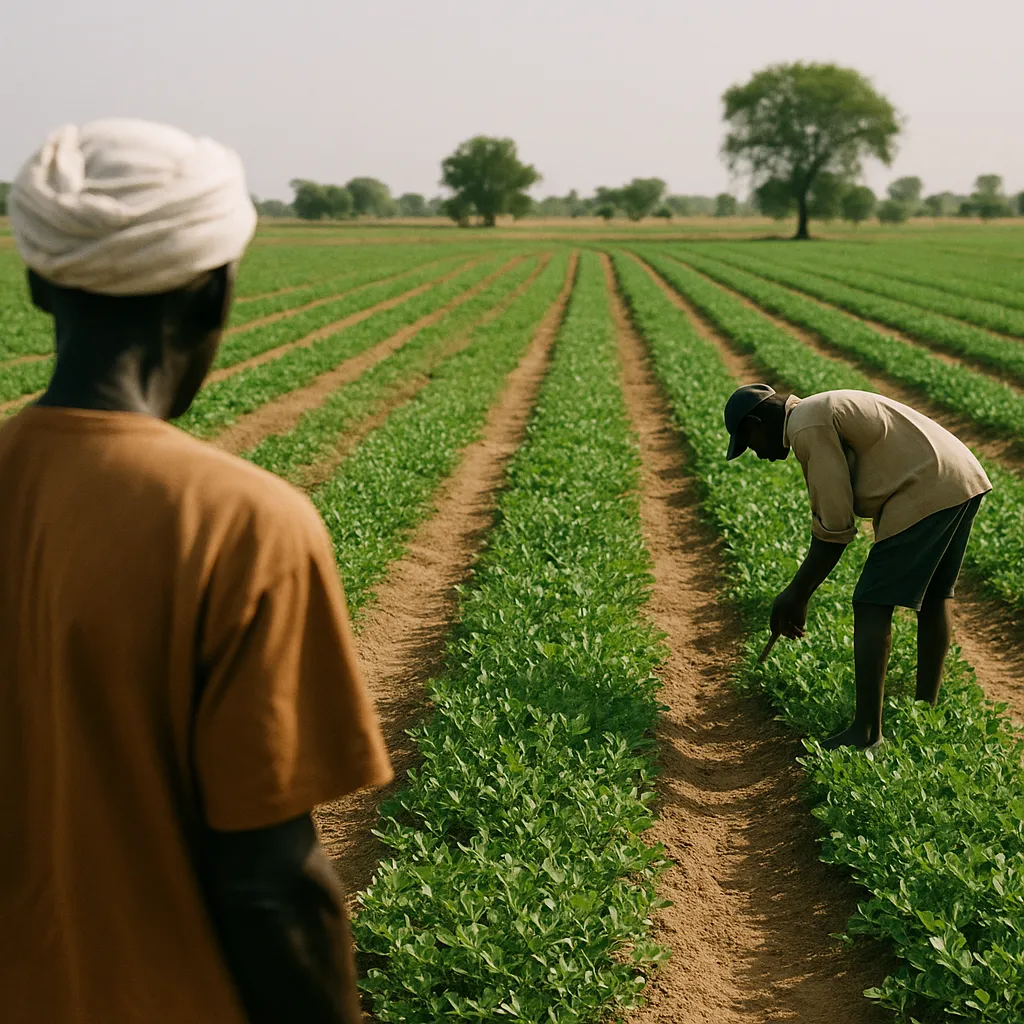
The most structurally significant development is geographic. Satellite-based AI crop mapping systems now cover smallholder farms in West Africa — and they work reliably with minimal ground-truth calibration data.
Ground-truth data is the physical, on-the-ground measurement used to train and validate what satellite imagery shows. Traditional precision agriculture systems required extensive sensor networks and manual sampling to function accurately at scale. The new generation of models achieves reliable performance with sparse calibration inputs, opening precision farming to the roughly 70% of the world's food that grows on smallholder plots in regions without precision farming infrastructure.
This is a commercial product, not a humanitarian pilot. Its primary customers are agricultural lenders, commodity buyers, and development finance institutions that need reliable yield estimates for crop financing decisions. Smallholder farms that were previously too costly to monitor individually are now economically mappable at scale.
Autonomous Sprayers and Weeders Go Commercial in North American Grain
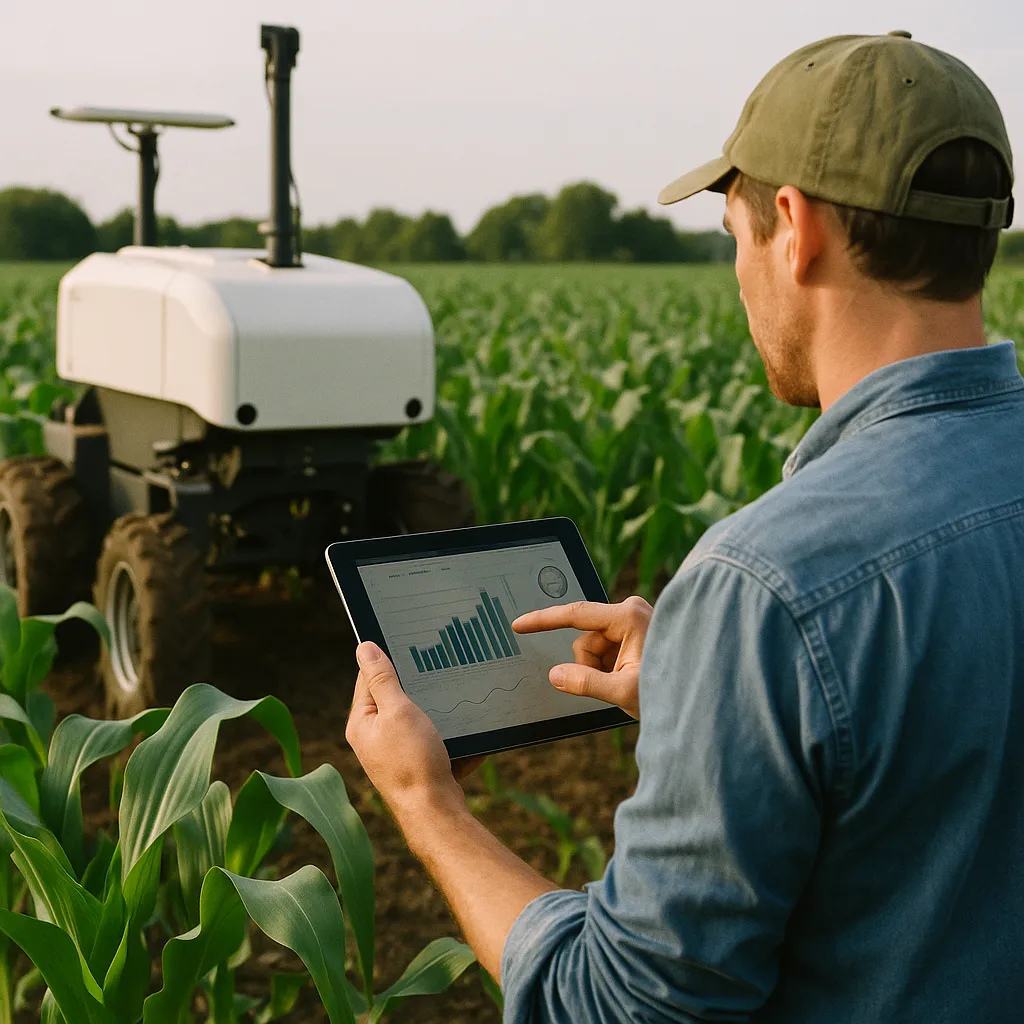
Autonomous spraying and weeding robots are operating at commercial scale across large-scale North American grain operations. These AI-guided field systems differentiate crop from weed at the individual plant level — a computer vision task requiring both model accuracy and mechanical precision at field speeds.
Get this in your inbox.
Daily AI intelligence. Free. No spam.
Commercial adoption is driven primarily by labor economics and chemical management. Herbicide-resistant weeds require precise application to avoid overuse and regulatory exposure. Human labor for manual weeding at grain-farm scale is expensive and increasingly scarce. Autonomous systems address both problems simultaneously while generating per-field application data that manual operations cannot produce.
AI Yield Prediction Outperforms Agronomists in Replicated Trials
AI yield prediction models outperformed experienced human agronomists in replicated field trials across multiple crop types. This benchmark matters because agronomist expertise is the established gold standard in agricultural decision-making. AI systems that measurably exceed that standard in controlled conditions give procurement officers and farm managers the confidence to commit operational budgets — not discretionary R&D funds.
These models integrate satellite imagery, soil sensor data, weather pattern analysis, and historical yield records to generate probabilistic yield forecasts with narrower confidence intervals than expert human estimates.
What Drove the Commercial Shift
Three converging forces pushed these technologies across the commercial threshold last month:
- Model accuracy floors reached. Multiple systems hit the performance thresholds required for commercial insurance and warranty coverage. Vendors can now offer performance guarantees — a prerequisite that pilot programs cannot provide.
- Equipment financing standardized. Agricultural equipment lenders have added AI-enabled machinery to their standard product catalogs, making it accessible through the same financing pathways as conventional tractors and combines.
- Interfaces simplified. Tablet-based dashboards have replaced the software-heavy systems of earlier generations, dropping the technical complexity barrier for farm operators without dedicated IT staff.
The Infrastructure Lag
Precision agriculture AI is deploying faster than the systems designed to support it.
Crop insurance has not adapted to AI-enhanced yield predictability. Most products still price risk based on historical weather patterns and regional averages — a methodology that AI-managed operations with demonstrably lower yield variance makes obsolete. An AI-managed grain farm with documented yield consistency should qualify for materially lower premiums. Most crop insurers have not built that pricing capacity.
Regulatory frameworks in North America and the EU still treat autonomous field equipment as experimental in many jurisdictions. Safety standards for autonomous operation on public road segments — which planting and harvesting equipment regularly crosses between fields — are inconsistent across states and EU member countries. Commercial operations are proceeding, but liability exposure for autonomous equipment incidents remains murky.
Data ownership is contested. Satellite crop mapping generates high-resolution agricultural data with significant commercial value to commodity traders, lenders, and supply chain operators. Who owns that data — the farmer, the AI platform provider, or the satellite operator — is unsettled in most jurisdictions, and the stakes increase as the data becomes more operationally critical.
What to Watch
The next inflection point is crop insurance repricing. When one major insurer builds an AI-enhanced yield product that offers documented AI-managed farms a premium discount, the rest of the industry will reprice quickly. Watch also for the USDA's pending precision agriculture data standards — expected in early 2027 — which will determine how AI-generated yield data is verified and used in federal commodity support programs. Those standards will either legitimize AI yield data as the basis for government programs or require a parallel verification layer that raises costs and slows adoption.
Did this help you understand AI better?
Your feedback helps us write more useful content.
Get tomorrow's AI briefing
Join readers who start their day with NexChron. Free, daily, no spam.