A new in-parlor AI monitoring system scores every dairy cow's body condition daily after milking, making herd health analytics previously available only to large industrial dairies accessible to small and mid-size operations.
AI Camera System Scores Every Dairy Cow Daily, Bringing Precision Analytics to Small Farms
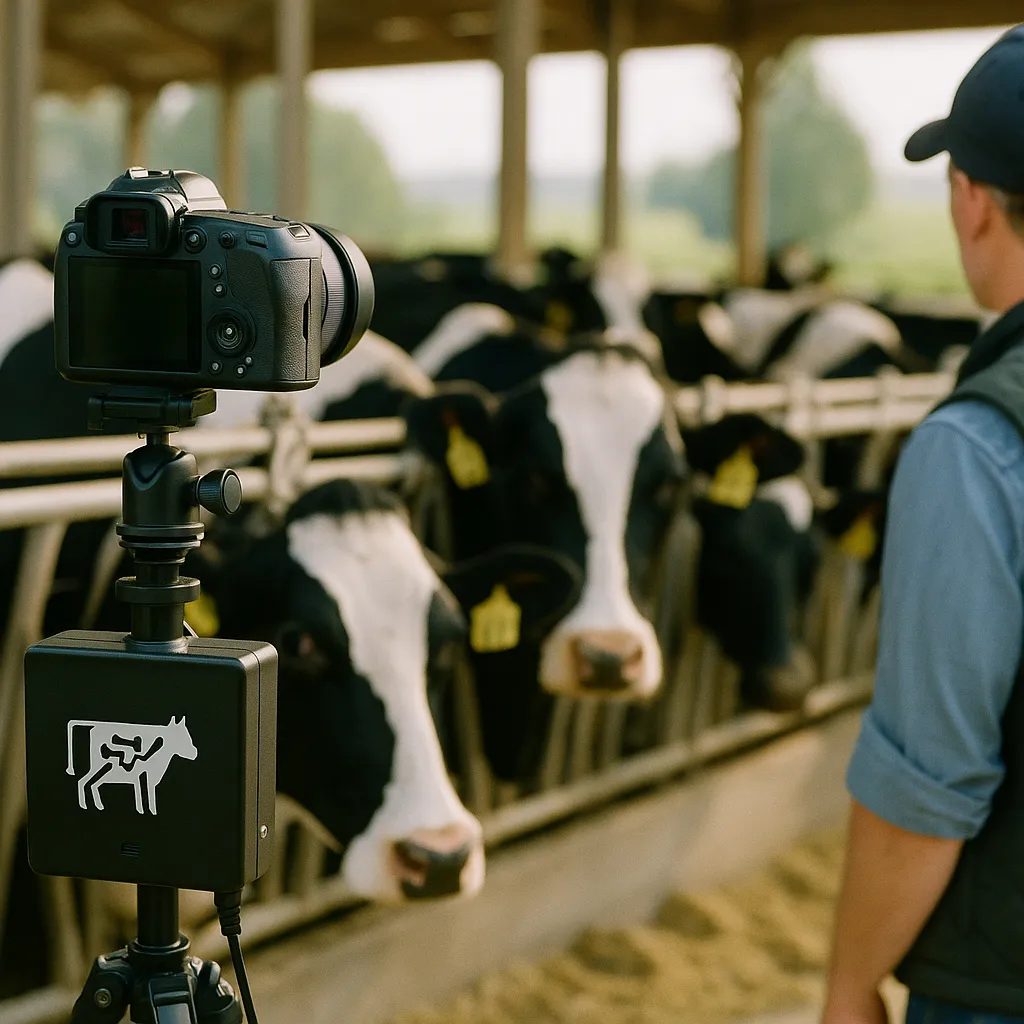
A new AI monitoring system is bringing herd health analytics to small and mid-size dairy operations that have historically lacked access to data-driven management tools. The technology — described by Brownfield Ag News — uses cameras installed at the exit of the milking parlor to photograph every cow after each milking and generate automated daily body condition scores, without additional labor from farm staff.
Body condition scoring, or BCS, is a standardized scale for assessing how much fat reserve a dairy cow carries — typically evaluated by observing the animal's spine, hips, and ribs. It's a foundational metric in dairy herd management: cows that lose body condition too rapidly after calving face elevated risk for metabolic disorders, reduced fertility, and lower milk output. Traditionally, BCS assessment requires a trained nutritionist or veterinarian to walk the herd periodically — an expense and logistical constraint that limits how often smaller operations can get it done.
How the System Works
The AI system places cameras at a fixed position every cow passes after leaving the milking parlor, capturing a consistent vantage point at a consistent moment in each animal's daily routine. The system scores every cow every day and delivers results through a customizable producer dashboard.
What changes in daily practice:
- Manual BCS is typically performed every four to eight weeks on a sample of the herd; AI scoring covers every animal after every milking
- Continuous individual scoring creates a longitudinal health record for each cow that periodic point-in-time assessments don't produce
- The dashboard flags animals with significant BCS change since their last scoring — a signal that can precede visible health or nutritional problems by days or weeks
Early detection of BCS decline can prompt targeted nutritional intervention before clinical signs appear. The economics are straightforward: preventing a metabolic event costs far less than treating one, and early intervention also reduces the likelihood that affected animals require veterinarian visits that add direct and labor costs.
Get this in your inbox.
Daily AI intelligence. Free. No spam.
Who the Technology Is Built For
Body condition monitoring tools have existed in various forms for years, deployed primarily at large industrial dairy operations with hundreds or thousands of cows, in-house nutritionists, and data infrastructure capable of handling continuous health metrics.
The system Brownfield Ag News describes is specifically designed for operations under 500 head — the range that includes a significant majority of U.S. dairy farms. By eliminating the need for additional farm labor and delivering scores through an accessible dashboard, the technology brings precision livestock management to operations that have largely been priced out of it.
That accessibility matters in an industry under persistent economic pressure. Feed cost volatility, milk price cycles, and labor shortages have pushed smaller dairy operations to reduce the frequency of professional herd health visits. An AI system that provides daily individual health signals extends the effectiveness of periodic veterinarian and nutritionist consultations by giving producers specific data to discuss — individual animals, BCS trajectories, trend deviations — rather than general impressions from a walkthrough.
The dairy AI scoring system fits a pattern visible across agricultural technology in 2026: precision management tools that were economically viable only at large scale are moving down the size curve to reach mid-size and small operations.
The USDA's AI [precision agriculture](/agriculture/ai-precision-agriculture-smallholder-digital-divide-2026) standards incorporated in the 2026 Farm Bill create an incentive structure that favors adoption of validated AI monitoring tools. Operations that can demonstrate AI-assisted herd management may gain advantages in future USDA program participation. A Cambridge satellite crop mapping study, also published in early October, highlighted how AI monitoring is delivering smallholder farming analytics that were previously available only to large commercial operations — the same accessibility dynamic playing out in dairy.
What to Watch
The deployment timeline and pricing structure for the system weren't disclosed in the Brownfield Ag News coverage. The key adoption question is whether per-cow monthly pricing can be structured to deliver positive ROI for operations under 200 head — the range where analytics value is highest but available capital for technology investment is most constrained.
If the unit economics work at small scale, daily AI body condition scoring could become standard practice in the same way that automated milk production tracking became standard over the past decade: not as a technology upgrade, but as basic herd management infrastructure that makes every other health and nutrition decision more informed.
Did this help you understand AI better?
Your feedback helps us write more useful content.
Get tomorrow's AI briefing
Join readers who start their day with NexChron. Free, daily, no spam.